



K Series

**Engines Mazda K Series K Series**
Mazda's K Series engines are a range of inline-four gasoline engines that are known for their compact size, lightweight design, and high specific output. The K Series engines were first introduced in 1999 and have since been used in a wide range of Mazda vehicles, including the Mazda3, Mazda6, and Mazda CX-5.
The K Series engines feature a number of unique attributes that set them apart from other engines in their class. These attributes include:
* A high compression ratio of 13.0:1, which helps to improve fuel efficiency and power output.
* A lightweight design, which helps...

$16.99
This manual covers the second generation Mazda B2200 and B2600 pickup trucks, produced from 1985 to 1997, with a specific focus on the 1985-1993 model years across all body styles. These trucks are part of Mazda's established B-Series line, known for their durability and practical design, offering a blend of utility and straightforward engineering. Whether equipped with the 2.2L F22A or the 2.6L G6 engine, these vehicles provided reliable performance for a variety of tasks, from daily commuting to light hauling.
$16.99
This manual covers the Mazda B-Series Truck, specifically the B2200 and B2600 models from the second generation (UF Series), manufactured approximately between 1986 and 1993. Known for their robust engineering and reliability, these trucks were designed for a variety of uses, from daily commuting to light-duty hauling and work. Notable features include a range of engine options, including the 2.2-liter FE and the more powerful 2.6-liter G6 engines, available in both rear-wheel drive and four-wheel drive configurations, and offered in various body styles such as Regular Cab and Extended Cab. Mazda trucks from this era are recognized for their affordability and fuel efficiency within their class, making them a practical choice for many owners.
$16.99
This manual covers the second generation compact pickup trucks, produced from 1985 through 1993. These reliable vehicles were offered in rear-wheel drive and four-wheel drive configurations, with regular and extended cab options, and typically powered by either a 2.2L engine or a 2.6L engine. Known for their practicality and durability, these trucks served a wide range of purposes, from daily commuting to light-duty commercial use, embodying a legacy in the compact pickup segment.
$16.99
This comprehensive workshop manual covers the 1993 Mazda KJ Engine, an automotive engine designed for repair and maintenance. Known for its robust engineering, the Mazda KJ Engine has been a reliable component in various applications. This manual details its construction and operational systems, providing essential information for anyone involved with this specific engine model.

$16.99
The Mazda Millenia, a 4-door sedan produced for the 1993 model year, represents Mazda's foray into the luxury segment, built on the KJ platform and manufactured in Hofu, Japan. This model is notable for its advanced engineering, particularly the available Miller Cycle V6 engine, which offered a unique blend of performance and efficiency. The Millenia aimed to provide a premium driving experience, combining a comfortable ride with innovative technology characteristic of Mazda's brand heritage. Its design and features positioned it as a competitor in the luxury market of its time.

$16.99
The Mazda Millenia, a mid-size luxury sedan produced in 1993, represented Mazda's foray into the premium automotive market, aiming to rival established Japanese and European luxury brands. Known for its distinctive styling and refined interior, the Millenia offered a driving experience focused on comfort and dynamics. Under the hood, it typically featured a V6, DOHC engine with approximately 2.5 liters of displacement, producing around 170-190 horsepower. This model was designed to provide a sophisticated and engaging ride, embodying Mazda's commitment to innovative engineering and driver-centric design during that era.

$16.99
The Mazda Millenia, produced from 1993 to 2002, represents Mazda's endeavor into the luxury sedan market, combining refined European-inspired styling with innovative Japanese engineering. This flagship model, identified by its KJ chassis code, was notable for its advanced features, including the adoption of Mazda's supercharged Miller Cycle V6 engine, which offered a distinctive blend of power and efficiency. Known for its quiet and comfortable ride, the Millenia aimed to provide a premium driving experience, earning a spot on Car and Driver's 10Best list in 1995. It featured technologies such as automatic climate control and often came equipped with Anti-lock Braking System (ABS) and driver's side airbags, reflecting a commitment to both performance and occupant safety.

$16.99
The Mazda Protege, a versatile compact vehicle renowned for its engineering quality and sporty driving dynamics, has been a popular choice for drivers seeking reliability and value. Covering the years 1994 through 1998, this manual encompasses models from the latter part of the third generation (BG) and the initial phase of the fourth generation (BJ), offering a comprehensive look at vehicles equipped with engines like the Z5-DE, BP-ZE, and B5-ME, and available in 3-door hatchback and 4-door sedan body styles. Mazda's heritage of producing well-built, engaging vehicles is evident throughout these Protege models, which typically featured front-wheel drive and offered both manual and automatic transmission options, providing a solid foundation for everyday transportation and spirited driving.

$16.99
The Mazda Protege, produced for the North American market between 1998 and 2003, represents the second generation (BJ platform) of Mazda's popular compact sedan and hatchback. Known for its engaging driving dynamics, a hallmark of Mazda's philosophy, the Protege offered a sporty and youthful alternative in its segment, often praised for its agile handling and distinctive styling. Powered by efficient 1.8L or 2.0L DOHC inline-4 engines, these vehicles provided a balanced blend of performance and economy, competing with established models like the Honda Civic and Toyota Corolla. The Protege lineup also received recognition for its value and driving dynamics, notably appearing on Car and Driver's '10Best' list.

$16.99
This manual covers the Mazda Protege, BJ generation, produced from 1998 through 2003. Known for Mazda's signature "Jinba Ittai" driving philosophy, the Protege offered a blend of driver engagement and practicality across its sedan and hatchback body styles. This generation saw significant refinements in styling and mechanical components, aiming to provide a reliable and enjoyable driving experience. Engine options typically included efficient inline-4 gasoline engines, paired with either a 5-speed manual or 4-speed automatic transaxle. Key features often included available Anti-lock Braking System (ABS) and a driver and passenger airbag system, contributing to occupant safety.

$16.99
The Mazda Protege, specifically the BJ generation produced from 2000 to 2004, represents a continuation of Mazda's commitment to driver-focused compact vehicles. Available in sedan and hatchback body styles, this generation offered a range of efficient inline-4 engines, including 1.6L, 1.8L, and 2.0L variants, with power outputs typically ranging from approximately 105 to 130 horsepower, and a performance-oriented 170 horsepower for the Mazdaspeed model. Known for its agile handling and reliable engineering, the Protege was a popular choice for daily commuting and offered a spirited driving experience. Safety features included standard front airbags and available Anti-lock Braking System (ABS) and Traction Control System (TCS) on certain trims.

$16.99
The Mazda Protege, produced from 2000 to 2004, represents the third generation (BJ platform) of Mazda's popular compact car. Available in sedan and hatchback body styles, this generation offered a range of engine options, including the 1.6L and 2.0L DOHC inline-4, with a high-output turbocharged variant available for the Mazdaspeed model. Known for its engaging driving dynamics and reliable engineering, the Protege provided a compelling balance of performance, practicality, and value, earning positive reviews for its quality and dependability during its production run.

$16.99
The Mazda Protege, produced for the 2002 and 2003 model years under the BJ chassis code, represents a line of vehicles known for their sporty handling and value. Available in sedan and hatchback body styles, including performance-oriented variants like the Mazdaspeed Protege, these vehicles offered a range of engine options, such as the 1.6L Z5-DE and the 2.0L FS-DE. This generation of the Protege is recognized for its well-engineered chassis and responsive driving dynamics, making it a popular choice for both everyday commuting and spirited driving.

$16.99
This manual covers the Protege, chassis code BJ, for the 2002 and 2003 model years. The marque is renowned for its commitment to engineering quality and sporty handling, and the Protege exemplifies this philosophy by offering a compelling blend of performance, reliability, and value. Available as a 4-door sedan or 5-door hatchback, this vehicle offers a range of engine options, including the 1.6L 4-cylinder and the more powerful 2.0L 4-cylinder, with the variant featuring a turbocharged 2.0L engine. The Protege was recognized for its sporty handling and value in its class during its production.

$16.99
This workshop repair service manual provides comprehensive coverage for the Mazda Premacy, second generation (CP), produced between 2005 and 2010. This family-oriented compact MPV, also known internationally as the Mazda 5, is recognized for its practicality, flexible seating, and reliable engineering, originating from Japan. Chassis codes CP8W and CP9W denote variations across markets and engine configurations. The Premacy was designed to compete with other popular MPVs, offering a balance of passenger comfort and utility.

$16.99
This manual covers the Mazda Premacy, Second Generation (CR), produced from 2005 to 2010, including chassis codes CR3W and CREW. As a compact Multi-Purpose Vehicle, the Premacy was designed for families and individuals seeking versatility and practicality, offering a spacious interior with flexible seating arrangements and responsive handling, a hallmark of Mazda engineering. It competed in a segment known for practical transportation solutions, often balancing driving dynamics with everyday usability. Notable features include optional sliding rear doors and various engine options such as the 2.0L MZR (LF-DE) and 2.3L MZR (GY-DE) petrol engines.

$16.99
The Mazda Premacy, produced from 2005 to 2010, represents the second generation of this versatile compact MPV, also known as the Mazda 5 in many global markets. Designed with Mazda's signature "Zoom-Zoom" philosophy, it offers a blend of practicality, flexible seating, and engaging driving dynamics, distinguishing itself within its segment. This model typically features front-wheel drive, with optional all-wheel drive available on select configurations, and is powered by a range of MZR gasoline engines or a MZR-CD diesel engine, providing a balance of performance and efficiency. Its thoughtful engineering and emphasis on a car-like driving experience made it a well-regarded choice for families and individuals seeking a practical yet enjoyable vehicle.
$16.99
The 2011 Mazda Demio, a subcompact hatchback, is engineered to embody Mazda's "Zoom-Zoom" philosophy, offering a practical and fuel-efficient driving experience with agile handling. This third-generation model, chassis code DE, is known for its user-friendly design and reliable performance, often competing with vehicles like the Honda Fit and Toyota Yaris. Its compact dimensions and versatile 5-door body style make it an ideal choice for urban environments and everyday commuting, reflecting Mazda's heritage of creating vehicles that provide an engaging connection between driver and machine.
$16.99
The Mazda Demio DE Series, produced for the 2011, 2012, and 2013 model years, represents Mazda's commitment to delivering a practical and engaging subcompact hatchback. Designed with Mazda's "Zoom-Zoom" philosophy, it offers a balance of driving dynamics, fuel efficiency, and urban maneuverability, making it a strong contender against rivals like the Honda Fit and Toyota Yaris. Available with efficient gasoline engines, including 1.3L and 1.5L variants, and offering both manual and automatic transmissions, the Demio is engineered for economical everyday use while still providing a responsive driving experience. Its compact dimensions, with a wheelbase of approximately 2,450 mm, contribute to its agility in city environments, while its interior provides ample cargo space for its class.
$16.99
The Mazda Demio DE Series, covering model years 2011 through 2013, represents a capable subcompact hatchback renowned for its practicality, fuel efficiency, and engaging driving dynamics, embodying Mazda's 'Zoom-Zoom' philosophy. Built with a focus on reliability and cost-effectiveness, this model is an excellent choice for budget-conscious consumers, urban dwellers, and new drivers. Chassis codes include DE3FS, DE5FS, and DEJFS. The Demio's engineering quality ensures dependable performance, making it a competitive option against other vehicles in its segment, such as the Honda Fit and Toyota Yaris, while offering a rewarding ownership experience.
$16.99
This workshop repair service manual provides comprehensive technical documentation for the Mazda Demio, DE Series, covering model years 2011 through 2013. This generation of the Demio is recognized for its fuel efficiency, agile handling, and practical design, reflecting Mazda's commitment to driver engagement and dependable engineering. The manual encompasses all models, engines, trim levels, and transmission types, including chassis codes DE3FS, DE5FS, and DEJFS, offering professional-level insights equivalent to those used by dealership technicians.
$16.99
This manual covers the 2013 Mazda Demio, a subcompact hatchback renowned for its practicality, fuel efficiency, and urban maneuverability. As part of an established lineup, the Demio (often known internationally as the Mazda 2) represents a commitment to quality engineering and reliable transportation, appealing to a wide range of drivers seeking economical and agile vehicles. This particular generation, identified by the DE chassis code, offers a blend of modern design and dependable performance, making it a strong contender in its segment.
$16.99
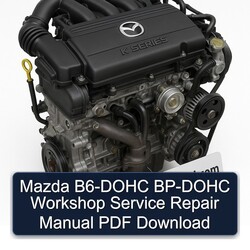
This workshop service repair manual covers Mazda vehicles equipped with B6-DOHC and BP-DOHC engines. These inline 4-cylinder engines feature DOHC valvetrain configurations and are water-cooled, utilizing fuel injection. The B6 engine has a displacement of approximately 1.6 liters, while the BP engine offers approximately 1.8 liters. This manual provides comprehensive information for maintaining and repairing these engine types.

$16.99
This workshop repair manual covers the Mazda KJ Series Engine, a gasoline-powered automotive engine designed for repair and maintenance. The KJ engine represents a commitment to engineering quality and reliability, offering robust performance for its intended applications. This manual provides comprehensive information to ensure the longevity and optimal functioning of your Mazda engine.
$16.99
This workshop repair service manual provides comprehensive technical information for the light commercial trucks and vans. These vehicles, representing a commitment to utility and durability in the commercial sector, are known for their robust engineering. This manual covers all engine types, transmission types, and trim levels, offering a complete resource for maintaining and repairing these reliable workhorses.
$16.99
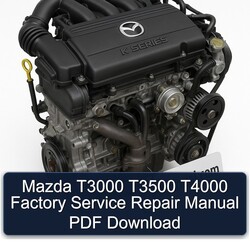
This factory service repair manual provides comprehensive information for the T3000, T3500, and T4000 series vehicles. These light commercial vehicles, produced by Mazda, are known for their utility and reliability, serving as robust platforms for various applications. The manual covers all styles and is designed to offer in-depth knowledge, reflecting Mazda's commitment to engineering quality. Whether used for daily work or specialized tasks, understanding these vehicles is made accessible through this detailed guide.
$16.99
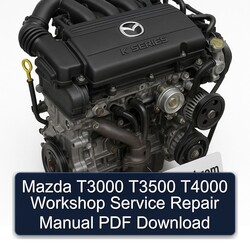
This workshop service repair manual covers Mazda T3000, T3500, and T4000 light commercial trucks and vans, likely produced from the late 1970s through the 1980s. These robust vehicles, often equipped with durable diesel engines and practical chassis designs, were popular for their reliability and utility in various global markets. This manual provides comprehensive, professional-level technical information, equivalent to that used by authorized dealer service departments, enabling owners and technicians to maintain and repair these vehicles effectively.
