



F Series

**Mazda F Series Engines**
The Mazda F Series engines are a family of inline-four gasoline engines produced by Mazda Motor Corporation. Introduced in 1989, the F Series engines are known for their compact size, lightweight construction, and high specific output. They are used in a wide range of Mazda vehicles, from the Mazda2 subcompact to the Mazda6 mid-size sedan.
The F Series engines feature a number of unique attributes, including:
* **Variable Valve Timing (VVT)**: VVT allows the engine to optimize valve timing for different operating conditions, resulting in improved power, torque, and fuel economy.
* **Variable Valve Lift (VVL)**: VVL allows the engine...

$16.99
This comprehensive service repair workshop manual covers the Mazda RX-2 and RX-3 models from the first generation, produced between 1971 and 1977. These iconic vehicles are renowned for their unique rotary (Wankel) engine technology, sporty design, and engaging driving experience, making them stand out in their era. The RX-2, with chassis code S124A, and the RX-3, with chassis codes S102A and S124A, represent Mazda's commitment to innovative engineering and performance. This manual is an essential resource for maintaining the integrity and performance of these classic rotary-powered automobiles.
$16.99
This manual covers the Mazda 929, HB generation, produced for the model years 1983 through 1986. As Mazda's flagship sedan of its era, the 929 was engineered to offer a premium driving experience, characterized by a comfortable ride, a quiet cabin, and sophisticated styling. It competed in the full-size luxury sedan segment, aiming to provide a compelling alternative to established European and Japanese luxury marques. The vehicle was equipped with a 2.0-liter FE-E inline-four engine, delivering approximately 100-110 horsepower, and was available with either a 5-speed manual or a 4-speed automatic transmission. Its design emphasized refinement and a smooth, quiet journey, making it a distinctive offering in Mazda's lineup.
$16.99
This manual covers the Mazda B2200 / B2600i Courier, a compact pickup truck produced from 1987 through 1993. Known for its durability, reliability, and capability for both work and light off-road use, this second-generation model features a robust chassis and straightforward mechanicals. It was available in 2WD and 4WD configurations, with engine options including a 2.2L R2 Diesel and a 2.6L TF Petrol. The vehicle's design prioritized functionality and dependability, making it a strong contender in its market segment against competitors like the Toyota Hilux and Nissan Hardbody.

$16.99
This manual covers the Mazda 929, specifically the HC generation (also known as the Mazda Luce), produced between 1988 and 1991. As Mazda's luxury flagship sedan, the 929 offered a compelling blend of rear-wheel-drive performance, a smooth 3.0L V6 engine, and a quiet, comfortable ride, positioning it as a strong competitor in the luxury market of its time. Its design emphasized aerodynamic styling and sophisticated engineering, making it a notable vehicle for those seeking refined transportation.

$16.99
This manual covers the Mazda Bravo / B-Series pickup trucks, specifically models B2200 and B2600 from the second generation, produced between 1988 and 1995. Known for their durability and versatility, these compact pickup trucks were designed for work utility, light-duty commercial use, and recreational applications. They feature robust construction and reliable powertrains, offering a practical solution for various hauling and transportation needs. The manual addresses vehicles sold in global markets, with a particular focus on Australia (Bravo) and North America (B-Series), and covers models equipped with the F2 (2.2L) and G6 (2.6L) engines.
$16.99
This manual covers the Mazda Bravo, B2200, and B2600 pickup trucks produced between 1988 and 1995. These vehicles, built on the second-generation Mazda Light Truck platform shared with the Ford Ranger, were designed as reliable and practical workhorses. Featuring robust unibody construction and available with 2.2L (F2) or 2.6L (G6) petrol engines, these trucks offered a solid foundation for a variety of tasks. Their market position as durable, cost-effective utility vehicles, coupled with Mazda's heritage of producing dependable trucks, made them a popular choice for owners seeking longevity and capability.

$16.99
This manual covers the Mazda B-Series pickup truck, also known as the Mazda Bravo, Mazda Proceed, Ford Courier, and Ford Ranger in various global markets. It details models B2500 and B2900 produced between 1988 and 2006, encompassing the second generation (UA/UB) and early third generation (UN) depending on market specifications. These trucks were engineered for reliability and versatility, serving a wide range of personal and commercial needs. Throughout its production, the B-Series offered various engine options, including 1.8L, 2.2L, 2.6L gasoline, and a 2.5L diesel, paired with manual or automatic transmissions, and available in different cab and bed configurations.

$16.99
This manual covers the Mazda Protegé / 323, chassis code BG, produced in 1992. Marketed as the Protegé in North America and the 323 globally, this compact car is known for its sporty styling and engaging driving dynamics, embodying Mazda's 'Jinba Ittai' philosophy. Available in 3-door and 5-door hatchback and 4-door sedan body styles, it typically features a transversely mounted inline 4-cylinder engine with DOHC valvetrain, offered in 1.6L (B6) and 1.8L (BP) displacements, with the latter also available in a turbocharged variant. The vehicle is primarily front-wheel drive, though all-wheel drive was an option on certain models. This generation of the Protegé/323 competed with other popular compact cars of its era, offering a compelling blend of performance and handling.

$16.99
This manual covers the 1995 Mazda MX-3, a compact sports coupe known for its distinctive styling and agile handling, particularly with the available V6 engine option. Built with engineering quality and reliability in mind, the MX-3 offered a lightweight chassis and a driver-focused experience, positioning it as a compelling choice against competitors like the Honda CR-X and Toyota MR2. Its unique selling proposition lay in its blend of sporty aesthetics and performance capabilities, making it a memorable entry in its class.

$16.99
The 1996 Mazda Protege represents a solid entry in the compact economy car segment, known for its blend of affordability, reliability, and engaging driving dynamics. As part of Mazda's lineage of well-engineered vehicles, the Protege offered a compelling value proposition, balancing fuel efficiency with a responsive chassis and available sporty features. This generation, often associated with the BJ chassis code and common engine families like the B6 and BP, provided a practical and dependable option for daily transportation, distinguishing itself with a reputation for straightforward mechanics and a pleasant driving experience that often outshone its competitors.
$16.99
The 1996 Mazda Protege is a compact sedan and hatchback known for its reliable engineering and driver-focused design, reflecting Mazda's reputation for producing quality vehicles. This model, part of the first generation, represented a contemporary design for its era and competed effectively in the compact car market against rivals like the Honda Civic and Toyota Corolla. Available with either a 1.5L SOHC or a 1.8L DOHC engine, the Protege offered a balance of fuel efficiency and performance, making it a practical choice for daily driving and a popular option for DIY mechanics and owners seeking a dependable vehicle.

$16.99
This manual covers the Mazda Millenia, produced between the model years 1996 and 2003. The Mazda Millenia is engineered for reliability and offers a distinct driving experience, making it a notable vehicle within its class. This comprehensive guide is designed to support owners and technicians in understanding and maintaining the vehicle's performance and longevity.
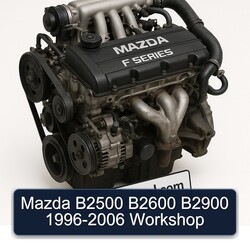
$16.99
The Mazda B-Series Truck, specifically the UF generation rebadged from the Ford Ranger, encompasses models B2500, B2600, and B2900 produced between 1996 and 2006. This robust pickup truck was engineered for utility and reliability, offering a range of engine options including the 1.8L F8, 2.2L F2, 2.6L G6, and the 2.5L WL-T diesel. Available in various cab and bed configurations, the B-Series has a strong heritage in the compact and mid-size truck market, appealing to both work and lifestyle needs.

$16.99
The Mazda Bravo B2600 / B2500 Truck, also known by aliases such as the Ford Courier and Mazda Drifter in certain markets, represents a robust line of compact pickup trucks produced between 1996 and 2009 under the UF chassis platform. Renowned for its durability, reliability, and strong off-road capability, this vehicle is particularly appreciated for its straightforward mechanical design and emphasis on low-to-mid range torque, making it well-suited for hauling and towing. It was offered with a variety of dependable engine variants, including the 2.6L G6 gasoline, 2.5L WL/WL-T diesel, 2.2L F2, and 2.0L F8/FE, all paired with either a 5-speed manual or a 4-speed automatic transmission, and available in rear-wheel drive or part-time four-wheel drive configurations.

$16.99
This manual covers the Mazda Protege, specifically the BJ (Third Generation) chassis code models BJ3P, BJ5P, and BJ8W, produced between 1999 and 2003. Known for its engaging driving dynamics and practical design, the Protege offered a range of engine options, from efficient 1.5L variants to more potent 1.8L and 2.0L configurations, paired with either manual or automatic transmissions. This compact car was designed to provide a balance of performance, fuel economy, and value, making it a popular choice for daily commuting and spirited driving alike. Mazda's reputation for building reliable and driver-focused vehicles is evident throughout the Protege line.

$16.99
This manual covers the Mazda Protege for the production years 1999 through 2003. It is a comprehensive guide designed to assist owners and technicians in understanding, maintaining, and repairing this vehicle. The Mazda Protege is known for its engineering quality and reliability, offering a practical and efficient driving experience suitable for everyday use.

$16.99
This manual covers the Mazda Protege, a compact sedan and hatchback produced from 2000 to 2004. Representing the third generation of the Protege (BJ platform), these vehicles are known for their balanced handling and driver engagement, reflecting Mazda's Jinba Ittai philosophy. Engine options varied, including 1.6L, 1.8L, and 2.0L configurations, with the sporty Mazdaspeed Protege and the practical Protege5 wagon also available. These models offered features like front disc brakes, optional rear disc brakes, and available ABS, with various trim levels providing different equipment and amenities.

$16.99
The Mazda Protege 5, model code BJ3P, represents a distinctive offering in the compact crossover/wagon segment for the 2001, 2002, and 2003 model years. This vehicle, part of the BJ generation, is recognized for its sporty styling, practical wagon versatility, and engaging driving dynamics, often highlighted in automotive reviews of its time. Built with Mazda's reputation for driver-focused engineering, the Protege 5 provides an affordable ownership experience, making it a popular choice for those seeking a blend of utility and spirited performance.
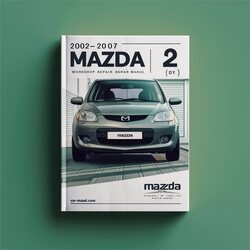
$16.99
This manual covers the Mazda Mazda2, also known by its generation code DY, produced for the model years 2002 through 2007. As a subcompact car renowned for its agile handling, fuel efficiency, and compact dimensions ideal for urban driving, the Mazda2 embodies a driving philosophy and Jinba Ittai driving feel. This generation, primarily manufactured in Japan, offered reliable engineering and value for money, making it a popular choice for young drivers and budget-conscious buyers. Key strengths include its responsive steering, comfortable ride for its class, and a practical interior for its size, typically featuring a 1.3L or 1.5L inline 4-cylinder engine paired with either a 5-speed manual or a 4-speed automatic transmission.
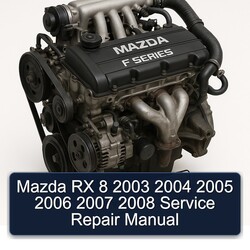
$16.99
The Mazda RX-8 is a distinctive sports coupe, produced for the model years 2003 through 2008. This vehicle is celebrated for its unique RENESIS rotary engine, rear-wheel-drive platform, and innovative suicide rear doors, offering a compelling blend of performance and practicality. Engineered for driving enthusiasts, the RX-8 provides an engaging and spirited driving experience, setting it apart in the sports car market. Its balanced chassis and high-revving rotary powerplant are hallmarks of Mazda's commitment to distinctive automotive engineering.

$16.99
The Mazda Mazda3, first generation, produced from 2003 to 2009, is a compact car renowned for its sporty handling, attractive styling, and overall reliability. Building on Mazda's heritage of creating driver-focused vehicles, this model offers an engaging driving experience, making it a popular choice in its segment, competing with vehicles like the Honda Civic and Toyota Corolla. Available in various body styles and powered by a range of MZR inline-four engines, from 1.6L to a potent 2.3L turbocharged variant, the Mazda3 is engineered for performance and everyday usability, consistently earning praise and recommendations from automotive authorities.
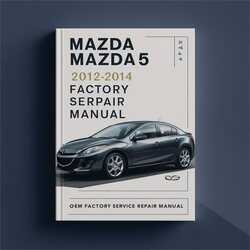
$16.99
The Mazda5, produced for the 2012, 2013, and 2014 model years, is a compact MPV designed with Mazda's distinctive 'Nagare' design language, emphasizing flowing, dynamic styling. This generation, code-named CW, offers practical versatility with sliding rear doors and flexible seating configurations, catering to families and those needing adaptable cargo space. Its engineering prioritizes Mazda's renowned Zoom-Zoom driving dynamics, providing an engaging experience uncommon in its segment, which also included competitors like the Toyota Sienna and Honda Odyssey. Notable unique selling points include its agile handling and a comfortable interior, making it a compelling choice for everyday use and family transport.

$16.99
This service manual covers the F2-2.0G and F2-2.2G models. It details various configurations including 2.0 LPG with 2-3[t] and 1-2[t] capacities, and 2.2 LPG with 2-3[t] capacity. Additionally, the manual addresses 2.0 Gas variants with 2-3[t] and 1-2[t] capacities, alongside the 2.2 Gas model with 2-3[t] capacity. These vehicles are designed for a range of operational needs, reflecting robust engineering for reliability.

$16.99
This manual covers the performance-oriented variant of the popular mid-size sedan and wagon produced between 2002 and 2008, with the model typically manufactured from 2005. Known for its sporty exterior styling and the "Jinba Ittai" driving philosophy, this model features a turbocharged 2.3-liter engine, a 6-speed manual transmission, and an all-wheel-drive system, delivering exhilarating performance. Engineered to compete with other performance sedans, it offers a compelling blend of power, handling, and practicality, making it a favored choice for driving enthusiasts. The included facelift indicates updates made to the model, enhancing its already dynamic capabilities.

$16.99
This manual provides comprehensive information for the Mazda MX-3 V6, a vehicle known for its engineering quality and reliability. Designed for a range of uses, the Mazda MX-3 V6 offers unique features that enhance the driving experience. This guide is intended to support owners and technicians in understanding and maintaining this model.
$16.99
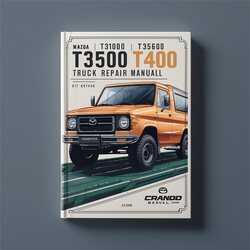
This manual covers the Mazda T3000, T3500, and T4000 series trucks and buses, likely produced from the late 1980s to the early 2000s. These vehicles are equipped with robust diesel engines, including 3.0L, 3.5L (naturally aspirated and turbocharged), and 4.0L variants, and are built on chassis codes HA, SL, SL Turbo, and TF. Known for their practicality and durability, Mazda's T-series commercial vehicles have a strong legacy of providing reliable service in various applications, from cargo transport to passenger mobility.
