The 250 series encompasses a range of engine models specifically designed for various applications. These engines are known for their robust construction and reliable performance, making them suitable for demanding tasks. Common uses include powering agricultural equipment, construction machinery, and specialized outdoor power tools. Their design prioritizes efficiency and durability, ensuring consistent operation under challenging conditions and contributing significantly to the productivity of the equipment they serve.
Documentation for the 250 series engines includes comprehensive service manuals, detailed repair guides, and essential technical specification sheets. These resources provide critical information on routine maintenance, diagnostic procedures, and parts identification. Owners and service...
The 250 series encompasses a range of engine models specifically designed for various applications. These engines are known for their robust construction and reliable performance, making them suitable for demanding tasks. Common uses include powering agricultural equipment, construction machinery, and specialized outdoor power tools. Their design prioritizes efficiency and durability, ensuring consistent operation under challenging conditions and contributing significantly to the productivity of the equipment they serve.
Documentation for the 250 series engines includes comprehensive service manuals, detailed repair guides, and essential technical specification sheets. These resources provide critical information on routine maintenance, diagnostic procedures, and parts identification. Owners and service technicians can utilize these manuals to perform upkeep, address malfunctions, and ensure the optimal functioning and longevity of their 250 series engines, thereby minimizing downtime and maximizing operational efficiency.
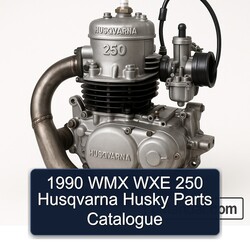
This document provides essential information for the 1990 WMX WXE 250, a motocross or enduro motorcycle renowned for its Swedish engineering heritage and performance in its era. Designed for off-road competition, this 250cc, liquid-cooled, two-stroke machine offers a potent blend of power and agility, characteristic of a long-standing reputation in the world of motorcycle sports. The WMX and WXE series represent a commitment to delivering capable and competitive off-road vehicles, with this 1990 model being a testament to the advancements in motocross technology during that period.
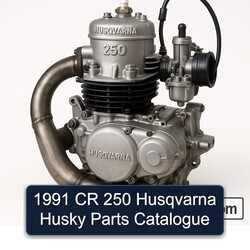
The 1991 CR 250 represents a significant entry in the motocross landscape of its time, a competitive machine built upon a long-standing heritage in motorcycle manufacturing, originating in Sweden. This 2-stroke, liquid-cooled 249cc model was engineered for performance and handling, competing directly with leading Japanese motocross bikes. Known for its robust engine and capable chassis, the CR 250 was designed for the demands of off-road racing and enthusiast riding, embodying the spirit of competition that defined the CR series.
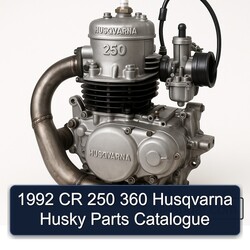
This document provides essential information for the 1992 CR 250, featuring a 360 engine variant. The CR series embodies a distinguished legacy in off-road racing, known for potent two-stroke engines and robust chassis. This particular model represents the early 1990s advancements in motocross technology, emphasizing performance and durability. It is designed for competitive off-road use, where reliability and precise part identification are paramount for maintaining peak performance and ensuring longevity.
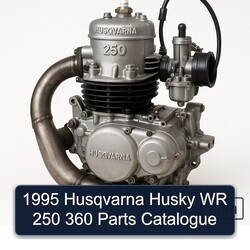
The 1995 WR 250/360, also known as the Husky, is a capable off-road motorcycle designed for enduro and cross-country riding. Known for its Swedish heritage in producing robust machines, this model series was a competitive entry into the demanding world of off-road racing. It features a liquid-cooled, 2-stroke engine with displacements of approximately 249 cc for the WR 250 and 357 cc for the WR 360, coupled with a 6-speed manual transmission and chain drive. The WR models were recognized for their lightweight construction and effective suspension systems, making them a strong competitor against other brands of the era.
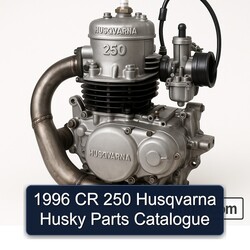
This manual provides detailed parts identification for the 1996 CR 250, a distinguished motocross motorcycle known for its performance and place in vintage racing history. As one of the oldest motorcycle manufacturers, the company has a rich heritage in off-road competition, and the CR 250 model represents a significant iteration in their 250cc motocross offerings. This machine, a 2-stroke liquid-cooled model with a 6-speed transmission, was engineered for the demands of motocross, featuring disc brakes for stopping power and a kickstarter for ignition. Its robust construction and competitive spirit make it a sought-after model for enthusiasts and restorers.
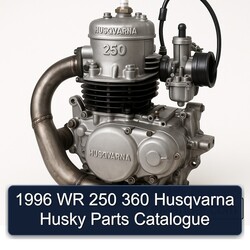
This document provides a comprehensive parts catalogue for the 1996 WR 250 and WR 360 motorcycles. These models represent dedication to off-road performance, featuring robust two-stroke, liquid-cooled engines and capable suspension systems designed for demanding enduro and motocross applications. Known for their strong heritage in competitive riding, motorcycles of this era are valued for their engineering quality and reliability. The WR series, with its wide-ratio gearbox and potent engine characteristics, has cemented its place in off-road motorcycling history, and this catalogue is an essential resource for maintaining these iconic machines.
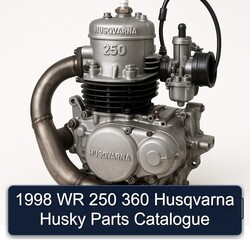
The 1998 WR 250 and WR 360 are two-stroke, liquid-cooled off-road motorcycles known for their performance and durability in enduro and cross-country racing. These models, originating from a Swedish heritage, feature a chromoly steel frame, a 6-speed sequential manual transmission with a wet, multi-plate clutch, and hydraulic disc brakes front and rear. The WR 250 typically displaces 244cc, while the WR 360 is often marketed as 360cc, with displacements around 317.4cc, both offering substantial power for their respective classes.
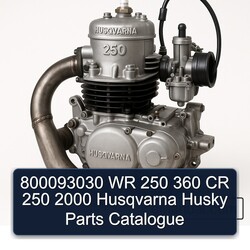
This document pertains to the WR 250, WR 360, and CR 250 models from the year 2000. These motorcycles are known for their robust 2-stroke engines, with the WR models designed for enduro riding and the CR for motocross. They feature a chromoly steel frame, a 6-speed transmission, and a wet, multi-plate clutch. The WR 250 and CR 250 models typically produce around 35-40 horsepower, while the WR 360 offers approximately 40-45 horsepower. With a dry weight of around 105-108 kg and a fuel tank capacity of 9-10 liters, these machines are built for performance and durability in off-road conditions, reflecting a Swedish heritage and strong racing pedigree.
This manual covers the 2000 WR 250 and WR 360 CR 250, renowned competition off-road motorcycles built for demanding terrain. With a heritage dating back to 1903, the brand has established itself in the off-road market, and these models are designed to deliver potent power delivery, robust suspension travel, and enduring reliability. They represent a significant part of the development in the off-road segment, offering riders a competitive edge in Enduro and Motocross disciplines through their focus on performance and durability.
The 250/360, a 2001 off-road motorcycle, embodies Swedish engineering renowned for its performance and durability in demanding terrain. Built on a heritage of high-performance off-road vehicles, this model represents a specific era of development, focusing on lightweight construction and robust handling essential for motocross and enduro disciplines. Its design philosophy prioritizes rider capability and machine resilience, making it a capable machine for competitive riding and challenging off-road adventures.
The WR/CR 250 and WR 360 motorcycles, produced in 2002, represent potent off-road machines renowned for their agile handling and strong two-stroke power delivery. Engineered for performance enthusiasts, these motorcycles cater to both motocross (CR) and enduro/cross-country (WR) riding disciplines. With a heritage rooted in Swedish engineering and a focus on off-road competition, the manufacturer delivered robust construction and a riding experience characterized by responsiveness and capability across varied terrains.
This manual covers the 2002 WR and CR models, specifically the 250cc and 360cc displacements. These motorcycles were engineered as competitive off-road machines, with WR (Wide Ratio) variants offering versatility for various terrains and CR (Close Ratio) variants optimized for motocross track performance. Known for their robust 2-stroke engines, capable chassis, and quality suspension, these models represent a significant offering in the off-road segment, competing with other prominent European and Japanese brands. Their design emphasizes performance and durability, catering to riders focused on the demands of competition and rigorous off-road riding.
This document pertains to the 2002 WR 250, CR 250, and WR 360 models, renowned off-road motorcycles celebrated for their strong, torquey two-stroke engines and capable chassis. These models represent a commitment to performance and durability in the demanding world of motocross and enduro riding. With a legacy rooted in Swedish engineering and a history of racing success, motorcycles from this era are recognized for their robust construction and competitive edge, designed to withstand the rigors of off-road competition and enthusiastic use.
This manual covers the 2003 CR WR 250, a robust Motocross/Off-Road Motorcycle renowned for its performance and durability. As one of the oldest motorcycle manufacturers, the brand brings a rich heritage of off-road innovation to this model, which represents a period of refinement in their dedicated racing platforms. Engineered for demanding off-road conditions, the CR WR 250 is a testament to the brand's commitment to quality and rider-centric design, making it a capable machine for both competition and recreational riding.
The 2003 WR CR 250 is a performance-oriented off-road motorcycle, engineered for motocross and enduro riding. This model features a lightweight chassis, a potent 2-stroke engine, and advanced suspension, offering rider-focused ergonomics for demanding conditions. Competing in a segment known for its high performance, the WR CR 250 is recognized for its strong power delivery and capable handling, building on a long heritage in off-road disciplines. Its design prioritizes pure mechanical operation, delivering an engaging and competitive experience for off-road enthusiasts.
This manual serves as a comprehensive Parts Catalogue for the 2004 Husqvarna CR WR 250, an off-road motorcycle renowned for its performance in enduro and motocross disciplines. Building on Husqvarna's rich heritage, established in 1903, the CR WR 250 represents a lineage of robust, competition-focused machines. This specific model, powered by a liquid-cooled, two-stroke, single-cylinder 249cc engine, features a 6-speed manual transmission and a wet, multi-plate clutch, delivering an estimated 40-50 horsepower. Its engineering quality is evident in its durable chassis, effective suspension, and high-performance braking system, making it a direct competitor in its segment.
The 2004 WR CR 250 is a robust off-road motorcycle, renowned for its performance in motocross and enduro disciplines. Building on a long heritage in motorsport, this model embodies a blend of power and agility, featuring a liquid-cooled, 2-stroke engine with a displacement of 249 cc. Its design prioritizes rider control and durability, making it a capable machine for both competitive racing and demanding trail riding. The engineering quality is evident in its reliable components and efficient power delivery, characteristic of a commitment to off-road excellence.
The 2004 WR CR 250 is a capable off-road motorcycle designed for performance in motocross and enduro disciplines. Building on extensive heritage in off-road racing, this model was engineered to compete with leading machines in its class, offering a potent two-stroke engine and a chassis optimized for agility and responsiveness across varied terrain. Its design prioritizes rider control and machine performance, reflecting a commitment to durable and high-performing off-road vehicles.
This manual covers the WR 250, a 2005 model renowned for its 2-stroke, 249 cc liquid-cooled engine and 6-speed manual transmission. Designed for off-road performance, this model features a wet multi-plate clutch, disc brakes front and rear, upside-down telescopic forks, and a monoshock rear suspension with linkage. Its robust engineering ensures reliability for demanding terrain, making it a capable machine for enthusiasts.
The 2005 WR 250 is a distinguished off-road and enduro motorcycle, built upon a rich heritage of performance and durability. As one of the oldest motorcycle manufacturers, there is a legacy of engineering excellence, particularly in competitive off-road riding. The WR 250, known for its potent 2-stroke engine and agile handling, is designed for riders seeking a robust and capable machine for challenging terrains. Its construction, often featuring a durable chromoly steel frame, reflects a commitment to both performance and longevity, making it a respected choice among off-road enthusiasts.
This manual covers the 2005 TE/TC 250, 450, and 510 off-road motorcycles. Known for their European heritage and performance-oriented design, these models represent a robust era of off-road machinery. There is a long-standing reputation in off-road competition, and these motorcycles are built for demanding terrain, featuring liquid-cooled, four-stroke engines, 5-speed manual transmissions, and hydraulic disc brakes. The TE and TC lines are dedicated to enduro and motocross riding, respectively, offering riders a competitive and capable machine.
The WR 250, a 2005 model, is a robust off-road motorcycle designed for enduro and motocross applications. Known for its 2-stroke, liquid-cooled, single-cylinder engine and advanced suspension systems, including upside-down telescopic front forks and a Monoshock rear with linkage, this machine offers spirited performance. With a heritage dating back to 1903, the brand is recognized for its contributions to motorcycle engineering, and the WR series exemplifies this with a focus on power, agility, and durability in demanding off-road environments.
This manual covers the 2006 Husky, a line of performance off-road motorcycles designed for motocross and enduro riding. The Husky series, with variants including the 250cc, 450cc, and 510cc models, builds on a long heritage as one of the world's oldest motorcycle manufacturers. These machines are engineered for demanding terrain and competitive use, offering powerful single-cylinder engines and robust chassis components. Known for their off-road prowess, the Husky models are equipped with advanced suspension systems, potent braking, and reliable powertrains, reflecting a commitment to performance and durability in the competitive powersports market.
This manual provides comprehensive technical information for the 2006 WR 250, an off-road motorcycle renowned for its performance in enduro and motocross disciplines. Building on a long heritage, originating in Sweden in 1903, the WR 250 is a potent 2-stroke machine that offers a competitive edge in its class. Its engineering emphasizes reliability and rider engagement, making it a favored choice for both competitive riders and enthusiasts seeking a capable and responsive off-road experience. The 2006 model represents a refinement of this established platform, known for its potent engine and adaptable chassis.
This document provides essential information for the 2006 Husqvarna WR 250, a 2-stroke, liquid-cooled, single-cylinder off-road motorcycle renowned for its performance in demanding conditions. With a heritage rooted in Swedish off-road racing, the WR 250 offers robust engineering and capable handling. This parts catalogue details components across all major assemblies, including the engine, fuel and ignition systems, transmission, suspension, braking systems, wheels, controls, electrical system, frame, and bodywork. It is designed to facilitate accurate part identification and procurement, ensuring owners and technicians can maintain this historic model effectively.
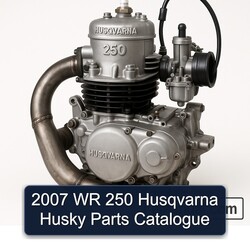
The 2007 WR 250 is a potent 2-stroke enduro motorcycle, designed for demanding off-road riding and competition. Known for its robust engineering and performance heritage, there is a long history in off-road motorsports, with the WR series representing a lineage of capable machines. This model, powered by a liquid-cooled 249cc engine and featuring a 6-speed transmission, is built to handle challenging terrains. Its design prioritizes agility and power delivery, making it a respected choice for riders seeking a competitive edge in motocross and enduro disciplines.
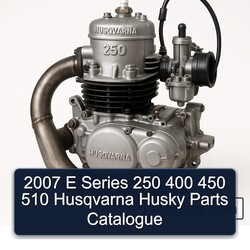
This manual covers the 2007 E Series off-road motorcycles, including the 250, 400, 450, and 510 models. These performance-oriented machines are built for demanding off-road use, embodying a heritage as a leading manufacturer in motocross and enduro racing. The E Series models are characterized by their robust four-stroke engines, advanced chassis designs, and a focus on delivering competitive performance. As one of the oldest motorcycle manufacturers, a legacy of engineering excellence and a commitment to quality are brought to these versatile off-road machines.
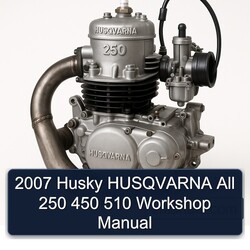
This manual covers the 250/450/510 motorcycle models from the 2007 production year. These motorcycles are known for their robust engineering, reflecting a long heritage in off-road racing and performance. The 2007 models represent a significant period of development, building on a common platform with specific updates for that year, designed for demanding off-road use and delivering potent performance with engine displacements around 250cc, 450cc, and 510cc, typically featuring single-cylinder, four-stroke liquid-cooled engines.
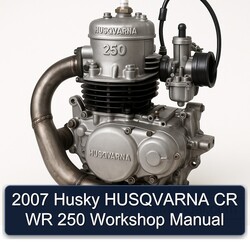
The 2007 CR WR 250 is a potent two-stroke off-road motorcycle, celebrated for its Swedish engineering and competitive spirit. Designed for the rigors of motocross and enduro riding, this model embodies a rich heritage in off-road racing. It features a liquid-cooled, approximately 249 cc engine known for its strong power delivery, typically producing around 45-50 horsepower. Key components include a 6-speed transmission, hydraulically actuated wet multi-plate clutch, and a robust chassis with hydraulic disc brakes front and rear. Its agile handling and performance-oriented design make it a formidable machine for both competition and spirited off-road exploration.
The WR 250 is a 2-stroke, single-cylinder competition motorcycle with a displacement of 249 cc, designed for off-road use. Building on a rich heritage in motorsports, originating in Sweden in 1903, the 2007 WR 250 model exemplifies advancements in chassis design, engine performance, and suspension technology characteristic of its era. This model is engineered for demanding enduro events and trail riding, featuring a robust frame, powerful Brembo braking system, and responsive handling, reflecting its dedicated off-road purpose.
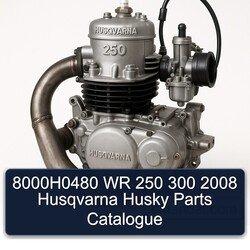
The 2008 WR series, encompassing the WR 250 and WR 300 models, represents a distinguished line of two-stroke enduro motorcycles. These machines are recognized for their Scandinavian heritage, performance-oriented engineering, and suitability for demanding off-road riding. Building upon a rich history in off-road competition, the brand has consistently delivered machines focused on agility and power, competing with other leading European and Japanese manufacturers in the enduro segment. The WR models are characterized by their robust chassis, liquid-cooled engines, and responsive suspension systems, designed to provide riders with control and confidence in challenging terrain.
This document provides comprehensive parts information for the 2008 WR 250. Engineered for off-road performance, the WR 250 is a 2-stroke, liquid-cooled motorcycle renowned for its agility and capability in enduro and cross-country riding. Its robust construction, featuring a chromoly steel perimeter frame, and its powerful 249.2 cc engine, deliver a potent combination of performance and durability. The WR series, with its Swedish heritage dating back to 1903, has a long-standing reputation in competitive off-road disciplines, making the 2008 WR 250 a significant model for enthusiasts and racers alike.
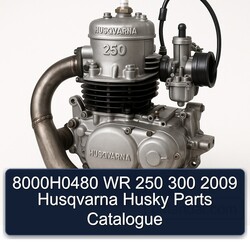
The WR 250 and WR 300, produced in 2009, are robust off-road motorcycles renowned for their potent two-stroke engines and agile chassis, designed for competitive enduro and cross-country riding. These models represent a deep heritage in motorsport, offering a pure riding experience with a focus on performance and durability. Engineered with a liquid-cooled, 2-stroke engine available in 249 cc and 293 cc displacements, and featuring a strong chromoly steel perimeter frame, the WR series is built to withstand demanding terrain.
This manual pertains to the 2010 TC 250, a robust motocross motorcycle engineered for performance and agility. Built upon a rich heritage in off-road competition, the TC 250 is designed for demanding terrain and racing environments. Its four-stroke, single-cylinder engine, displacing 249.5 cc, delivers ample power, complemented by a responsive chassis, advanced suspension, and high-performance braking systems. This model represents a blend of proven engineering and the specific technological advancements characteristic of that era, making it a capable machine for dedicated riders.
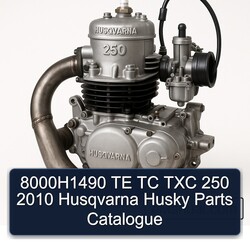
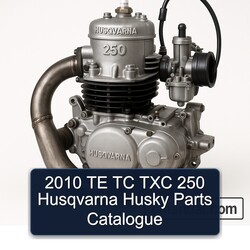
This manual covers the 2010 TE250, TC250, and TXC250 off-road motorcycles. These models are engineered for spirited riding and competition, with the TE variant suited for enduro, the TC for motocross, and the TXC for cross-country disciplines. They feature lightweight chassis, powerful 250cc four-stroke engines, advanced suspension systems, and robust braking capabilities. With a heritage dating back to 1903, the brand is renowned for its innovation and success in off-road racing, and these 250cc models represent a refined iteration within that lineage, designed for enthusiast riders who demand performance and reliability.
This manual covers the TE/TC/TXC 250 models from the 2010 model year. With a heritage dating back to 1903, there is a long-standing reputation for producing capable off-road motorcycles. The 250cc line, including the TE (Enduro), TC (Motocross), and TXC (Cross-Country) variants, represents a significant part of their modern development prior to later ownership changes. These motorcycles are engineered for performance and durability in demanding off-road conditions, offering riders a blend of power and agility.
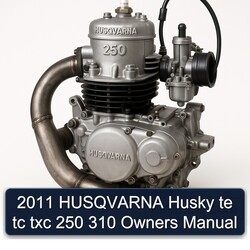
This manual covers the 2011 TE 250, TC 250, TE 310, TXC 250, and TXC 310 models. With its Swedish origins, it is one of the oldest motorcycle manufacturers, renowned for its strong heritage in off-road and enduro racing. These particular models, produced during the period when the company was owned by BMW Motorrad, are characterized by their four-stroke, liquid-cooled, single-cylinder engines with DOHC valve trains, available in approximately 250cc and 310cc displacements. They feature a chromoly steel trellis frame, a 6-speed manual gearbox with a hydraulically operated wet multi-plate clutch, and hydraulic disc brakes front and rear. These motorcycles were generally well-regarded for their performance and handling within the off-road community.
This workshop manual covers a range of Husqvarna outdoor power equipment, including models such as the 265, 250, 252, 240, 245, 225, 232, 235, 240RBD, 322, 325, 122, 32, Mondo 250PS, 235P, 225H60, 225H75, 225AI15, 225AI25, 18H, 140B, 141B, 132HBV, 225BV, and 225HBV. These 2-stroke engines, typically ranging from 25cc to 65cc with power outputs from 1.0 HP to 3.5 HP, are designed for demanding outdoor tasks. The manual provides detailed information on their robust construction, including aluminum alloy cylinders with cast iron liners and diaphragm-type carburetors, ensuring reliable performance.
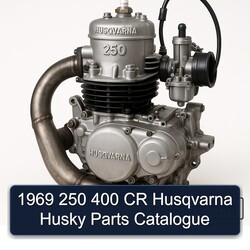
This manual pertains to the 250 CR and 400 CR models from 1969. A Swedish manufacturer with a rich heritage dating back to 1903, is celebrated for its pioneering role in off-road and competition motorcycles. The CR series, signifying Competition/Cross Country, represents purpose-built machines designed for demanding terrains and racing environments, including motocross and enduro. These models were engineered for performance, featuring robust two-stroke engines, lightweight construction, and advanced suspension for their time, making them highly regarded in the world of off-road sport.
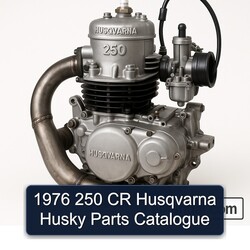
The 1976 250 CR, often referred to as the "Husky," represents a significant piece of off-road motorcycle history. Renowned for its Swedish engineering and robust performance, this model was built for the rigors of motocross and enduro riding. The heritage in motorsport is evident in the 250 CR's design, which prioritizes durability and capability in challenging terrain. This particular iteration of the 250 CR embodies the commitment to delivering reliable and competitive off-road machines during a pivotal era of motorcycle development.
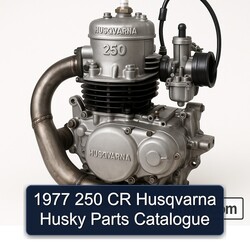
The 1977 250 CR is a distinguished off-road motorcycle, representing a significant iteration in motocross lineage. Renowned for its Swedish engineering prowess and competitive spirit, this 2-stroke, air-cooled machine was built for the rigors of competition. Its robust construction, a hallmark of the brand’s heritage in off-road racing, combined with a powerful approximately 245 cc engine, delivered performance sought after by riders in the 1970s. The 250 CR embodies the era's focus on agility and power, making it a respected model in vintage motocross circles.
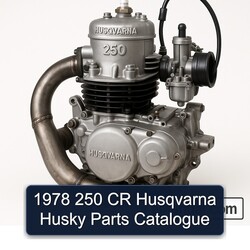
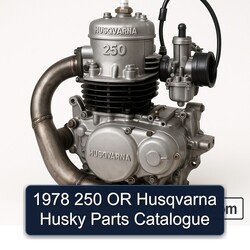
The 1978 250 CR represents a significant piece of motocross history, embodying the brand's dedication to performance and off-road prowess. Known for its robust engineering and competitive edge during the late 1970s, this model is a sought-after machine for enthusiasts and collectors. The 250 CR is characterized by its air-cooled, 2-stroke, single-cylinder engine, a 6-speed manual transmission, and a focus on rider control and agility essential for motocross competition. The heritage in off-road racing is evident in the model's design, which emphasizes durability and the performance capabilities expected from a machine of this era.
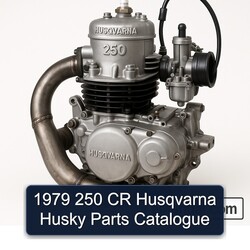
The 1979 250 CR is a celebrated off-road competition motorcycle, renowned for its powerful two-stroke engine, lightweight construction, and robust suspension systems. Developed by a Swedish manufacturer with a long heritage in motorcycle production, this model was a formidable contender in motocross and enduro racing during the 1970s. Its design philosophy prioritized performance and durability, making it a popular choice for riders seeking a competitive edge in demanding off-road conditions. Owning a piece of this racing legacy means appreciating the engineering that contributed to significant championship success.
This document pertains to the 250 OR, a model from 1978 renowned for its Swedish engineering and strong heritage in off-road and motocross racing. Designed for competitive enduro and cross-country events, this two-stroke, single-cylinder motorcycle typically features a 250cc engine, air-cooled for reliable performance in demanding conditions. Its robust build, characterized by a steel dual cradle frame, and a 6-speed transmission, made it a capable machine for its era, embodying a commitment to durability and performance in off-road disciplines.
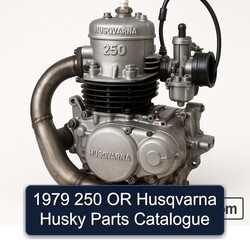
This document pertains to the 1979 250 OR, a robust off-road motorcycle renowned for its durability and success in competitive events. As a Swedish-manufactured machine, it has a rich heritage in off-road racing, and this model exemplifies the brand's commitment to performance and resilience in demanding conditions. The 250 OR, likely an enduro or cross-country variant, features a two-stroke, single-cylinder engine with approximately 244cc displacement, air-cooling, and a reliable magneto ignition system. Its design prioritizes rider control and mechanical capability, with a focus on strong low-to-mid range power delivery characteristic of its era.
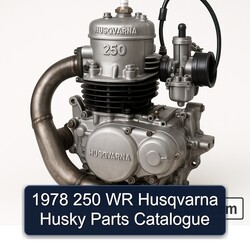
This document pertains to the 250 WR, often referred to as the "Husky," a celebrated off-road motorcycle manufactured in Sweden during the 1970s and 1980s. Known for its robust two-stroke engine and durable chassis, the 250 WR series represents a strong heritage in enduro racing. This model is characterized by its air-cooled, approximately 250cc, single-cylinder engine, a 6-speed sequential manual transmission, and a focus on performance suitable for demanding off-road conditions. Its design emphasizes reliability and capability, reflecting a long-standing reputation for building competitive and resilient machines for the trials and motocross disciplines.
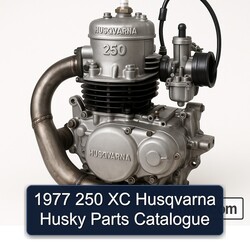
The 1977 250 XC is a distinguished off-road motorcycle renowned for its Swedish engineering and prowess in enduro and motocross disciplines. This model represents a significant period in the brand's history, a time when the company was a dominant force in international racing, celebrated for its robust construction and powerful, performance-oriented engines. Designed for demanding off-road terrain, the 250 XC embodies the brand's legacy of building durable, competitive machines that excel in challenging conditions. Its engineering quality and reliability were key factors in its success, making it a favored choice for riders and competitors seeking a capable and resilient off-road companion.
This supplemental workshop manual provides essential information for the maintenance and repair of outdoor power equipment. Designed for a range of brush cutters, trimmers, pruners, pruning saws, hedge trimmers, ice drills, and blowers, this English-language manual, published in 1999, covers numerous models including the Mondo 122L, Mondo Max 225L/LD, 232L, Mondo Mega 225R/RD, and many others listed within. The brand is recognized for its commitment to engineering quality and reliability in outdoor power tools.