The E Type category encompasses a distinct line of iconic sports cars renowned for their blend of performance, advanced engineering, and striking aesthetic design. These vehicles, produced during a specific era, represent a significant milestone in automotive history, characterized by their powerful inline-six engines, sophisticated independent suspension systems, and aerodynamic bodywork. Their applications range from exhilarating road driving and competitive motorsport to collector ownership, embodying a spirit of speed and luxury.
Documentation for E Type models typically includes comprehensive workshop manuals detailing maintenance schedules, repair procedures for all major mechanical and electrical systems, and detailed technical specifications. Owners and technicians will...
The E Type category encompasses a distinct line of iconic sports cars renowned for their blend of performance, advanced engineering, and striking aesthetic design. These vehicles, produced during a specific era, represent a significant milestone in automotive history, characterized by their powerful inline-six engines, sophisticated independent suspension systems, and aerodynamic bodywork. Their applications range from exhilarating road driving and competitive motorsport to collector ownership, embodying a spirit of speed and luxury.
Documentation for E Type models typically includes comprehensive workshop manuals detailing maintenance schedules, repair procedures for all major mechanical and electrical systems, and detailed technical specifications. Owners and technicians will also find diagnostic guides, parts catalogs, and troubleshooting resources designed to assist with upkeep and repair, ensuring these classic vehicles can be maintained to their original standards.
This workshop service repair manual covers Jaguar MK1, MK2, 240, and 340 models produced between 1955 and 1967. These iconic British saloons, powered by the renowned XK Series engines (commonly 3.4L and 3.8L), are celebrated for their elegant design, sporting performance, and advanced engineering for their era, including unitary body construction and four-wheel disc brakes on many models. This manual is an essential resource for owners and technicians dedicated to maintaining the originality and functionality of these classic vehicles.
The Jaguar Mark X (MK10), produced in 1960, represents a pinnacle of British automotive luxury and engineering from its era. As a flagship executive sedan, it was designed to compete with the finest vehicles globally, offering a sophisticated blend of performance, comfort, and distinctive aerodynamic styling penned by Malcolm Sayer. Powered by a robust 3.8-liter inline-six 'XK' engine and featuring Jaguar's renowned independent suspension, the MK10 provided an exceptional ride quality and handling. Its spacious interior and advanced features for the time underscored its position as a grand touring automobile, embodying Jaguar's legacy of producing beautiful, high-performance vehicles.
The Jaguar E-Type Series I, produced from 1961 to 1968, is a legendary sports car celebrated for its breathtaking design, exceptional performance, and innovative engineering. Launched with a potent 3.8-liter SOHC inline-six engine, this Grand Tourer offered supercar performance at a significantly lower cost than its European counterparts, establishing it as a benchmark in automotive history. Its revolutionary monocoque chassis construction, derived from aircraft design, contributed to its remarkable agility and handling. Known for its iconic status and considered by many to be one of the most beautiful cars ever created, the E-Type Series I, particularly the 1961-1964 models covered herein, represents a pinnacle of automotive design and engineering from its era.
Introducing the Jaguar E-Type Series I, a legendary sports car produced from 1961 to 1964, powered by a 3.8L inline-six engine. Renowned for its iconic styling by Malcolm Sayer, monocoque chassis construction, and impressive performance, the E-Type set a benchmark for automotive design and driving dynamics, often competing with marques like Ferrari and Aston Martin. This model, available in Roadster (OTS) and Fixed Head Coupe (FHC) body styles, offered a captivating blend of beauty and speed, making it a celebrated icon of its era.
The Jaguar E-type, produced between 1961 and 1970, stands as one of the most celebrated sports cars of all time, renowned for its stunning aerodynamic design and exhilarating performance. This iconic vehicle, a direct descendant of Jaguar's racing heritage, evolved from the original 3.8L XK engine in Series I models to the more potent 4.2L XK engine in Series II variants. Available in Open Two Seater (OTS), Fixed Head Coupe (FHC), and 2+2 Coupe body styles, the E-type offered a compelling blend of beauty, engineering prowess, and driving dynamics, solidifying its status as a true automotive masterpiece.
The Jaguar E-Type, produced between 1961 and 1970, is an iconic sports car renowned for its exquisite design and exhilarating performance. Available with either a 3.8L or 4.2L Jaguar XK Inline-6 engine, this vehicle represents a pinnacle of automotive engineering from its era. Its sophisticated independent suspension, powerful four-wheel disc brakes, and advanced (for the time) chassis construction contribute to its legendary handling and driving experience. Whether in its Open Two Seater (OTS), Coupe, or 2+2 configurations, the E-Type embodies a blend of luxury, speed, and aesthetic beauty, making it a highly sought-after classic.
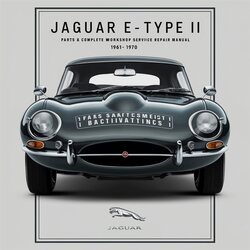
This manual covers the iconic E-Type, produced between 1961 and 1970, encompassing both Series I and Series II variants. Renowned for its groundbreaking design, exceptional performance, and engineering prowess, the E-Type, with its 3.8L and 4.2L inline-six engines, represented a pinnacle of automotive achievement and is widely regarded as one of the most beautiful cars ever created. This comprehensive guide is designed for owners and enthusiasts seeking to understand and maintain these classic vehicles, highlighting their unique blend of luxury, speed, and sophisticated styling that cemented their place in automotive history.
The Jaguar E-Type, a celebrated icon of automotive design and performance, represents a pinnacle of 1960s and early 1970s engineering. Produced across Series I and II variants from 1961 through 1970, this legendary sports car is renowned for its breathtaking aerodynamic styling, powerful Jaguar XK inline-six engines, and advanced independent suspension. Whether equipped with the 3.8-liter or the later 4.2-liter engine, the E-Type offered exhilarating performance that rivaled and often surpassed its contemporary European competitors. Its elegant lines and dynamic capabilities have secured its place as one of the most beautiful and desirable automobiles ever created, appealing to enthusiasts and collectors worldwide.
The Jaguar E-Type, produced between 1961 and 1970, represents a pinnacle of British automotive design and engineering. Renowned as one of the most beautiful cars ever created, its aerodynamic styling by Malcolm Sayer, potent inline-six engines (3.8L and 4.2L), and advanced independent suspension set it apart from contemporaries like the Ferrari 275 GTB and Chevrolet Corvette C2. Available in both coupe and roadster configurations, the E-Type offered exceptional performance and handling for its era, solidifying its status as an iconic sports car and a highly sought-after collector's item.
The Jaguar E-type, produced between 1961 and 1970, is an iconic sports car celebrated for its revolutionary design, exceptional performance, and sophisticated engineering. Representing a pinnacle of automotive artistry, the E-type, available in Series I and Series II variants, offered a compelling blend of speed and style, often compared to legendary vehicles such as the Ferrari 250 GTO and Aston Martin DB5. Its heritage is rooted in a commitment to delivering a superior driving experience, making it a highly sought-after classic automobile.
The Jaguar E-Type, produced between 1961 and 1970, stands as a legendary British sports car, celebrated for its groundbreaking design, exceptional performance, and engineering prowess. Available in Coupe, Roadster, and 2+2 Coupe body styles, this iconic vehicle captivated enthusiasts with its aerodynamic silhouette and potent inline-six engines, including the 3.8L and 4.2L XK variants. Renowned for its independent suspension, four-wheel disc brakes, and innovative monocoque construction, the E-Type offered a driving experience that set new standards for sports cars of its era, solidifying its status as an automotive masterpiece.
This manual covers the Jaguar E-Type Series I and II, produced between 1961 and 1970. Renowned as one of the most beautiful cars ever created, the E-Type embodies elegant styling, potent performance, and advanced engineering for its era, competing with prestigious marques like Ferrari and Aston Martin. This iconic British sports car, powered by 3.8L and 4.2L XK inline-6 engines, features a sophisticated monocoque chassis and independent suspension, delivering an unparalleled driving experience.
This manual covers the Jaguar E-Type, Series I & II, produced between 1961 and 1970. Renowned as one of the most beautiful cars ever created, the E-Type represents a pinnacle of automotive design and performance from its era. Available in coupe and roadster body styles, it featured advanced engineering for its time, including a monocoque construction, independent suspension, and powerful inline-six engines, initially 3.8 liters and later upgraded to 4.2 liters. This iconic sports car was built to embody luxury, speed, and sophisticated style, making it a legend in automotive history and a sought-after classic for enthusiasts worldwide.
The Jaguar E-Type, produced between 1961 and 1970, stands as an iconic automotive masterpiece, celebrated for its breathtaking design and exhilarating performance. Spanning Series I and Series II models, this legendary vehicle embodies Jaguar's rich heritage of engineering excellence and racing pedigree. Available in various body styles including the 2-seater Coupe, 2+2 Coupe, and Roadster, the E-Type offered distinct engine options, such as the 3.8L and 4.2L Inline-6, with performance variations noted for different series and states of tune. Its advanced features for the era, including four-wheel Dunlop disc brakes and rack and pinion steering, contributed to its reputation as a revolutionary sports car.
The Jaguar E-Type, produced between 1961 and 1970, stands as a universally recognized automotive icon, celebrated for its exquisite design, potent performance, and advanced engineering for its era. Available in Coupe, Roadster, and 2+2 Coupe body styles, and powered by factory-supplied inline 6-cylinder engines, including 3.8-liter and 4.2-liter variants, the E-Type embodies a rich racing heritage derived from Jaguar's successful C-Type and D-Type models. Its distinctive features, such as rack and pinion steering and four-wheel Dunlop disc brakes, contributed to its legendary status among sports cars.
The Jaguar E-Type, produced between 1961 and 1970, represents a pinnacle of automotive design and engineering from its era. Available in Series I and Series II configurations, this iconic vehicle, offered in 2-seater Roadster, 2-seater Coupe, and 2+2 Coupe body styles, is renowned for its striking aesthetic, inspired by the aerodynamic principles of Malcolm Sayer. Powered by inline 6-cylinder engines ranging from 3.8 to 4.2 liters, the E-Type delivered impressive performance, with outputs reaching approximately 265 horsepower. Its advanced features for the time included four-wheel Dunlop disc brakes with inboard rear discs and rack-and-pinion steering, contributing to its exceptional handling and driving experience. Widely celebrated as one of the most beautiful cars ever made, the E-Type remains a highly sought-after classic for enthusiasts and collectors alike.
This Workshop Service Manual provides comprehensive technical information for the Jaguar E-Type, covering Series I and Series II models produced between 1961 and 1970. Renowned as one of the most beautiful cars ever created, the E-Type, with its iconic XK engine and advanced (for its time) monocoque chassis, offered exceptional performance and handling. This manual details all model variants, including Coupe, Roadster, and 2+2 configurations, ensuring that enthusiasts and owners can maintain the integrity and performance of these classic vehicles.
The Jaguar E-Type, produced between 1961 and 1970, is a legendary automotive icon celebrated for its breathtaking aerodynamic design and potent performance, offering a remarkable blend of style and engineering prowess. This classic sports car, often considered one of the most beautiful vehicles ever created, competed with esteemed marques like Aston Martin and Ferrari, yet provided its signature performance and captivating aesthetics at a more accessible price point. Its engineering quality is evident in its robust chassis and powerful XK engines, available in 3.8L and 4.2L configurations, coupled with either a manual Moss gearbox or an optional automatic transmission, all contributing to its enduring appeal and esteemed status in automotive history.
The Jaguar E-Type, produced between 1961 and 1970, represents a pinnacle of automotive design and engineering from its era. Available across Series 1, 1.5, and 2, this iconic sports car and grand tourer was celebrated for its breathtaking aerodynamic styling, potent XK inline-6 engines, and advanced chassis technology, including a monocoque construction and independent suspension. The E-Type offered a compelling blend of exotic performance and sophisticated luxury, solidifying its reputation as one of the most beautiful and desirable vehicles ever created, competing at the highest level of the automotive market.
The Jaguar E-Type, produced between 1961 and 1974, stands as an iconic sports car renowned for its legendary styling by Malcolm Sayer and exceptional performance for its era. Spanning Series 1, Series 2, and Series 3, this British automotive masterpiece offered a range of powertrains, from the inline-six engines of the early models to the powerful V12 found in the Series 3. Whether in Roadster, Coupe, or 2+2 configurations, the E-Type was celebrated for its innovative engineering, including its integrated body-chassis construction and advanced independent rear suspension, making it a highly sought-after vehicle by collectors and enthusiasts worldwide.
The Jaguar E-Type, produced from 1961 to 1974, stands as an iconic British sports car renowned for its stunning aerodynamic styling and exceptional performance. Spanning Series 1, Series 2, and Series 3 generations, this grand tourer was engineered with a focus on driving dynamics, featuring powerful Jaguar XK inline-six engines and later a V12, advanced independent suspension, and four-wheel disc brakes. Its blend of luxurious appointments, groundbreaking design, and competitive pricing positioned it as a significant player in the international sports car market, earning it widespread acclaim and a lasting legacy in automotive history.
The Jaguar E-Type, produced from 1961 to 1974, represents a pinnacle of automotive design and engineering, celebrated for its breathtaking aesthetics and formidable performance. Spanning Series 1, Series 2, and Series 3, this iconic sports car was powered by renowned Jaguar engines, including the XK inline-six (3.8L and 4.2L) and the powerful 5.3L V12. Its innovative independent suspension, disc brakes, and aerodynamic bodywork, famously described by Enzo Ferrari as "the most beautiful car ever made," cemented its status as a legend in automotive history, competing with the finest GTs and sports cars of its era.
This workshop service repair manual covers the iconic Jaguar E-Type, spanning Series 1, 2, and 3 produced between 1961 and 1974. Renowned for its stunning design and performance, the E-Type represents a pinnacle of British automotive engineering. This manual delves into the intricacies of models equipped with the 3.8L XK I6, 4.2L XK I6, and 5.3L Jaguar V12 engines, detailing their respective carburetor and fuel systems, as well as manual and automatic transmission options. The E-Type's legacy as one of the most beautiful cars ever made is matched by its engineering prowess, making it a coveted vehicle for enthusiasts and collectors alike.
The Jaguar MK10, produced from 1961 to 1966, represents the pinnacle of Jaguar's luxury saloon offerings during its era. As the flagship model, it was engineered to provide a sophisticated grand touring experience, combining powerful performance with elegant design and a spacious, comfortable interior. Available with either a 3.8-litre or a more potent 4.2-litre XK engine, and featuring advanced independent suspension and Girling hydraulic disc brakes on all wheels, the MK10 offered a refined and capable driving experience that competed with the finest luxury vehicles globally. Its distinctive long bonnet, flowing lines, and luxurious appointments underscored Jaguar's commitment to its philosophy of 'Grace, Pace, Space.'
This manual covers the Jaguar E-Type Series I, specifically models produced between 1965 and 1968, equipped with the 4.2 Liter Inline-6 engine. Renowned as an iconic British sports car, the E-Type is celebrated for its breathtaking aerodynamic styling, powerful performance, and engineering excellence, often considered one of the most beautiful automobiles ever created. This vehicle represents a pinnacle of luxury, speed, and design from its era, competing with esteemed marques and leaving an indelible mark on automotive history.
The Jaguar Mark X (Mk10) is a distinguished luxury saloon from 1966, representing the zenith of Jaguar's engineering and design for its era. This flagship model, available with 3.8L or 4.2L XK inline-six engines and chassis codes 4500 through 4503, was celebrated for its blend of performance and opulence. Key features included independent front and rear suspension, providing a sophisticated ride, and an aerodynamic, spacious body that competed with other high-end marques. Its introduction marked a significant step in Jaguar's evolution as a builder of premium automobiles, offering a compelling combination of power, comfort, and distinctive British styling.
The Jaguar 240, produced between 1967 and 1969, is a distinguished saloon built upon the robust Jaguar Mk 2 platform. This model offered a compelling combination of Jaguar's renowned engineering quality, elegant styling, and spirited performance, making it a desirable choice in the premium market of its time. Key features include the powerful XK engine, sophisticated independent rear suspension, and effective Dunlop hydraulic disc brakes on all wheels. The 240 was positioned as an accessible yet luxurious vehicle, competing with other high-end saloons through its distinctive design and driving dynamics, embodying the heritage of Jaguar Cars.
The Jaguar Mark 10, produced in 1968, stands as a testament to British automotive luxury and performance. As Jaguar's flagship saloon, it offered a spacious and opulent interior, powered by sophisticated inline six-cylinder engines ranging from 3.8 to 4.2 liters. Its engineering prowess was evident in its advanced independent suspension systems, powerful Dunlop disc brakes, and the innovative Hydro-Steer power steering, all contributing to a refined grand touring experience. This model represented the pinnacle of Jaguar's design and engineering for its era, competing with the finest luxury vehicles globally.
The Jaguar XJ6 and Daimler models, produced between 1968 and 1979, represent the pinnacle of full-size luxury sedan engineering from their era. These vehicles, known for their long wheelbases, imposing presence, and classic styling, were designed to offer affluent buyers a refined motoring experience characterized by a plush ride, comfortable touring capabilities, and powerful performance from the renowned Jaguar XK Inline-6 engine. With supple leather interiors, polished wood veneers, and ample cabin space, the XJ6 and Daimler variants were positioned to compete with the finest luxury sedans globally, offering a blend of sophisticated design and driving dynamics that earned consistent praise from automotive journalists and collectors alike.
The Jaguar XJ6, spanning Series I and II production from 1968 to 1979, represents the pinnacle of British luxury executive sedans. Renowned for its elegant styling, plush interiors, and the powerful, smooth 4.2L Straight-6 XK engine, the XJ6 offered a refined driving experience that rivaled contemporary European luxury marques. Its design philosophy emphasized sophisticated aesthetics and a comfortable, quiet ride, making it a symbol of prestige and performance. This vehicle, produced in Coventry, England, was a significant offering in the luxury market, competing with established names and cementing Jaguar's reputation for blending performance with opulence.
The Jaguar E-Type Series II, produced between 1968 and 1971, stands as a testament to automotive design and engineering excellence. Available as a 2+2 Coupe or a nimble Roadster, this iconic sports car was powered by a potent 4.2L Inline-6 XK engine, renowned for its smooth performance and distinctive character. The Series II introduced several refinements, including updated styling and improved braking systems, to meet evolving standards while retaining the E-Type's legendary driving dynamics and breathtaking aesthetics, making it a highly sought-after classic for enthusiasts worldwide.
This manual covers the Jaguar E-Type Series II 2+2, a model produced between 1969 and 1970. As an iconic British sports car, the E-Type is renowned for its blend of aerodynamic design, powerful performance, and luxurious appeal, making it a benchmark in automotive history. This particular variant, powered by a 4.2-liter inline-six engine, offers a distinctive driving experience and continues to be celebrated for its engineering quality and lasting design legacy. Its robust construction and advanced features for its time contribute to its reputation for reliability and enduring desirability among enthusiasts.
The Jaguar E-Type Series 2, produced between 1968 and 1971, is an iconic sports car renowned for its captivating design and exhilarating performance. Powered by a potent 4.2 Liter Inline-6 engine, this vehicle offered a compelling blend of handling prowess, acceleration, and a distinctive aerodynamic profile, making it a formidable competitor in its class. Whether in coupe or open-top roadster form, the E-Type Series 2 embodies a significant era in automotive history, representing the pinnacle of affordable exotic sports car engineering and a testament to Jaguar's rich racing heritage.
The Jaguar MK10, produced from 1961 to 1970, represents the pinnacle of British luxury saloon design for its era. As a full-size luxury vehicle, it was engineered for affluent buyers seeking a refined driving experience, exceptional comfort, and potent performance. Notable features include its elegant styling, spacious interior, and the powerful 4.2 Litre DOHC Inline-6 XK engine. The MK10, particularly the Series 4 (420G) variant, was celebrated for its sophisticated independent suspension, advanced Girling hydraulic disc brakes on all wheels, and a luxurious, well-appointed interior, positioning it as a direct competitor to other prestigious marques of the time.
The Jaguar E-Type Series III, produced from 1971 to 1974, represents the pinnacle of this iconic sports car's evolution. Featuring a powerful V12 engine, it was engineered as a grand tourer, blending exhilarating performance with sophisticated design. The Series III is celebrated for its potent powertrain, refined handling characteristics, and enduring aesthetic appeal, making it a highly sought-after classic automobile. Its blend of British engineering prowess and striking visual presence solidified its status as a legendary vehicle in automotive history.
The Jaguar E-Type Series III, produced from 1971 to 1974, represents the final evolution of this iconic sports car. Powered by a formidable 5.3-liter V12 engine, it delivered approximately 272 horsepower and 304 lb-ft of torque, offering a refined and potent driving experience. Known for its distinctive longer wheelbase, flared wheel arches, and the powerful V12, the Series III is a celebrated automotive masterpiece. Approximately 15,272 units were manufactured in Coventry, England, cementing its legacy as a symbol of British automotive excellence and performance.
The Jaguar E-Type Series III, produced from 1971 to 1974, stands as a celebrated icon of automotive design and performance. This final iteration of the legendary E-Type introduced the potent 5.3-liter V12 engine, delivering impressive power and a refined driving experience. Known for its distinctive, flowing lines, luxurious interior, and advanced engineering for its era, including independent suspension and power-assisted disc brakes, the Series III was a grand tourer designed for comfortable high-speed travel. Its heritage is rooted in Jaguar's long history of creating elegant, high-performance vehicles, and it competed with other elite sports cars of its time.
The Jaguar E-Type Series III, produced from 1971 to 1974, represents a significant evolution of this iconic sports car, most notably featuring the powerful 5.3-liter V12 engine. This grand tourer, available in Coupe (XJ12C), Convertible (XJ12V), and 2+2 Coupe (XJ12A) body styles, was engineered with a long-wheelbase chassis, offering enhanced comfort and handling. Building on Jaguar's legacy of performance and elegant design, the Series III was positioned as a luxurious and capable vehicle, competing with other high-end sports cars of its era. Its V12 engine provided exceptional smoothness and torque, making it a refined machine for long-distance travel.
This workshop service repair manual provides comprehensive guidance for the Jaguar E-Type Series III, produced between 1971 and 1974. As an iconic British sports car and a celebrated Grand Tourer, the E-Type Series III is renowned for its elegant styling and powerful V12 engine. This manual covers all body styles, including the coupe, roadster, and 2+2 variants, and focuses on the 5.3L V12 engine, offering insights into its design philosophy of combining performance with comfort for long-distance touring. Its historical significance and status as a highly sought-after classic automobile are well-documented.
The Jaguar E-Type Series III V12, produced between 1971 and 1974, represents a pinnacle of British automotive engineering and design. Powered by a robust 5.3-liter V12 engine, this iconic vehicle offered exceptional performance and a luxurious grand touring experience. Renowned for its stunning aesthetics and considered one of the most beautiful cars ever created, the Series III V12 is a highly sought-after classic, embodying a blend of power, comfort, and timeless style that continues to captivate enthusiasts and collectors worldwide.
This workshop repair service manual covers the Jaguar E-Type Series III, produced between 1971 and 1974. The Series III represents the final evolution of the iconic E-Type, distinguished by its powerful 5.3-liter V12 engine and a longer wheelbase for enhanced comfort and styling. Available as a 2+2 Coupe or Roadster, this model embodies Jaguar's commitment to engineering excellence and performance. Its timeless design has earned it recognition as one of the most beautiful cars ever created, making it a sought-after vehicle for enthusiasts and collectors.
The Jaguar E-Type Series III, produced from 1971 to 1974, is a celebrated icon of automotive design, powered by a robust V12 engine. Renowned for its timeless styling, which even garnered praise from Enzo Ferrari, this vehicle represents a pinnacle of luxury sports car engineering from its era. Its legacy is built upon Jaguar's rich heritage in performance and luxury, making the E-Type Series III a highly desirable and collectible automobile.
This manual covers the Jaguar E-Type Series III, produced between 1971 and 1974. As an iconic British grand tourer, the E-Type Series III is celebrated for its timeless styling, powerful V12 engine, and luxurious appointments. Available in Roadster, Coupe, and 2+2 Coupe body styles, this model represented a significant evolution with its longer wheelbase options, distinctive open grille, and flared wheel arches. The E-Type Series III, with its 4.2L or 5.3L V12 engine, offered impressive performance for its era, competing with other luxury sports cars of the period. Its enduring legacy is cemented by its widespread recognition as one of the most beautiful cars ever created and its high collector value.
The Jaguar E-Type Series III, produced from 1971 to 1974, is a celebrated luxury grand tourer and sports car, renowned for its exquisite and timeless styling by Malcolm Sayer. This iteration of the iconic E-Type introduced a powerful V12 engine, a significant upgrade from its predecessors, offering approximately 272 bhp and 318 lb-ft of torque. Competing with legendary marques such as Ferrari, Lamborghini, and Aston Martin during its era, the Series III E-Type combined potent performance with elegant design, making it a benchmark in automotive aesthetics and engineering. Its integral body-chassis construction provided robust structural integrity, contributing to its reputation for quality and performance.
The Jaguar E-Type Series III, produced from 1971 to 1974, represents a significant evolution of the iconic E-Type lineage. Available in 2+2 Coupe and Convertible body styles, this grand tourer was distinguished by its powerful 5.3-liter V12 engine and chassis updates derived from the XJ-S program. It offered a commanding road presence, luxurious appointments, and the signature Jaguar styling that cemented its status as a desirable performance vehicle, competing with contemporary luxury sports cars from Europe. The engineering quality and reliability of the Series III, while a subject of ongoing discussion among enthusiasts, reflect the era's approach to high-performance grand touring automobiles.
This manual is a comprehensive resource for the E-Type Series 3, produced between 1971 and 1974. Renowned for its iconic design and powered by a potent V12 engine, the E-Type Series 3 represents the final evolution of this legendary sports car. This generation featured a lengthened wheelbase and flared arches, offering both Coupe and Roadster body styles. With its rich heritage in luxury and performance vehicles, the E-Type was engineered to be a pinnacle of automotive achievement, celebrated globally for its beauty and dynamic capabilities.
The Jaguar E-Type Series 3, produced between 1971 and 1975, represents a pinnacle of automotive design and engineering. This iconic 2+2 Fixed Head Coupe combines the legendary performance expected of Jaguar with a distinctive and enduring aesthetic, solidifying its status as a luxury grand tourer and sports car. Featuring the groundbreaking V12 engine, a significant engineering feat for its time, the E-Type Series 3 was crafted for affluent buyers who sought both exhilarating speed and sophisticated style. Its iconic design, attributed to Sir Alec Issigonis and Malcolm Sayer, along with its robust construction and performance capabilities, has cemented its place as one of the most beautiful cars ever made and a highly collectible classic.
The Jaguar XJ6, specifically the XJ40 generation, was produced from 1986 to 1994 and represented Jaguar's commitment to luxury and performance in the executive sedan market. Known for its distinctive styling and comfortable ride, the XJ6 was equipped with potent inline-six engines, including the 3.6L and later 4.0L AJ6 variants. This model competed against other premium vehicles of its era, offering a blend of sophisticated engineering and classic British automotive design. Its robust chassis and advanced features for the time, such as optional ABS and driver's airbags in later models, contributed to its reputation as a refined and capable luxury car.
This workshop service and repair manual covers the Jaguar XJ6, XJ40 generation, produced from 1986 to 1994. It details the 3.2L, 3.6L, and 4.0L engine variants, all featuring a naturally aspirated Inline 6-cylinder DOHC (AJ6) engine design. The XJ40 represented a significant evolution for Jaguar, blending the marque's heritage of luxury and performance with a more modern aesthetic and engineering. These vehicles were manufactured in Coventry, England, and are known for their refined ride and powerful engine options.
This manual covers the Jaguar XJ6, produced between 1986 and 1994, identified by chassis codes XJ40 and later XJ. This premium luxury sedan, Jaguar's flagship model, is renowned for its classic British styling, refined comfort, and the powerful AJ6 inline-six engine, available in 3.6L and 4.0L naturally aspirated and supercharged variants. The XJ6 offered a sophisticated driving experience, competing with other high-end luxury vehicles of its era through its blend of performance, advanced features for its time, and luxurious appointments.
This manual covers the Jaguar XJ6 Sovereign, produced between 1986 and 1994. Designed for discerning drivers, the XJ6 Sovereign represents a pinnacle of automotive engineering, blending sophisticated luxury with robust performance. Its enduring appeal lies in its commitment to quality craftsmanship, reliable operation, and a driving experience that remains a benchmark for its class.
The 1990 Jaguar XJ6 represents a pinnacle of classic British luxury, embodying a design philosophy focused on ride comfort and refined performance. As a luxury sedan, it competed with esteemed marques such as BMW and Mercedes-Benz, offering a distinct blend of elegant styling and capable engineering. This model, part of the XJ40 generation produced from 1986 to 1994, is equipped with a 4.0L AJ6 Straight-6 naturally aspirated engine, delivering approximately 221 horsepower and 277 lb-ft of torque, paired with a 4-speed automatic transmission. Its robust construction and classic British heritage contribute to its enduring appeal for enthusiasts and collectors.
The 1992 Jaguar XJ6, part of the XJ40 generation, represents a premium luxury sedan known for its distinctive styling, refined driving dynamics, and comfortable interior. This model offered a sophisticated driving experience, competing with established luxury marques of its era through its elegant design and robust engineering. Key features include its powerful inline-six engine, a smooth automatic transmission, and a high level of standard equipment, embodying Jaguar's heritage of crafting performance-oriented luxury vehicles.
The Jaguar XJ6, produced in 1993 under the XJ40 chassis code, represents a distinguished luxury sedan embodying classic British elegance and refined performance. Powered by the robust 4.0L AJ6 Inline-6 engine, known for its smooth operation and capable output, this vehicle was engineered to compete with prestigious marques such as Mercedes-Benz and BMW. Its design philosophy emphasizes a harmonious blend of luxurious appointments, comfortable ride quality, and sporty handling, making it a compelling choice for discerning drivers seeking an iconic automotive experience.
The 1993 Jaguar XJ6 represents a pinnacle of luxury sedan engineering, blending classic British styling with robust performance. Powered by a 4.0-liter Straight-6 AJ6 engine, this model offers a refined driving experience characterized by its smooth power delivery and sophisticated ride quality. Its design philosophy emphasizes elegant aesthetics and premium appointments, positioning it as a discerning choice for those seeking a stylish and comfortable automobile. The XJ6 embodies Jaguar's heritage of creating vehicles that excel in both performance and luxury.
This manual covers the 1994 Jaguar XJ6, model designation XJ40. As a full-size luxury sedan, the XJ6 represented Jaguar's commitment to blending classic styling with modern engineering, offering a premium driving experience characterized by a spacious interior, refined ride, and the smooth performance of its 4.0L Inline 6-cylinder engine. Built in Coventry, England, this final iteration of the XJ40 platform was designed to compete in the executive luxury car market, emphasizing comfort, refinement, and iconic Jaguar aesthetics.
The 1996 Jaguar XJ6, a luxury sedan from the X300 generation, is renowned for its comfortable ride, refined styling, and powerful 4.0L DOHC Inline-6 engine. This model continues Jaguar's legacy of producing high-performance GT cars and sedans, offering a luxurious driving experience that competed with contemporary offerings from brands like BMW and Mercedes-Benz. Its design philosophy emphasized traditional Jaguar aesthetics, providing owners with a blend of classic elegance and robust engineering.
The 1997 Jaguar XJ6, part of the X300 generation, is a luxury sedan renowned for its iconic styling, refined ride quality, and the powerful AJ16 inline-six engine. This model represented a significant step in build quality and design for Jaguar, blending classic aesthetics with contemporary engineering. Competing in the premium segment, the XJ6 offered luxurious interior appointments and a sophisticated driving experience, embodying the brand's heritage of elegant performance vehicles. This manual is essential for maintaining the unique character and operational integrity of this distinguished automobile.
The Jaguar S-Type, produced from 1999 to 2002, represents a luxury sport sedan that blends classic Jaguar styling with modern engineering. Built on the DEW platform, it shares its foundation with the Lincoln LS and was manufactured in Coventry, England. Available with either a 3.0L V6 or a more powerful 4.0L V8 engine, the S-Type offered a sophisticated driving experience, competing with established European luxury marques. Its design philosophy aimed for a contemporary interpretation of traditional Jaguar aesthetics, featuring a distinctive grille and flowing body lines.
The Jaguar S-Type, produced from 1998 to 2008, is a luxury sedan renowned for its blend of classic Jaguar styling and modern performance. Built on the Ford DEW98 platform, this vehicle was designed to compete in the premium segment, offering buyers a sophisticated driving experience. Available with a range of V6 and V8 engines, including the 3.0L V6, 4.0L V8, and later 4.2L V8, the S-Type provided robust power options. Its interior focused on luxury and comfort, with features like optional premium audio systems and adaptive damping for a refined ride.
The Jaguar S-type, produced between 2002 and 2008 on the X200 platform, represents a luxury sports sedan known for its distinctive styling, refined interior, and potent performance, particularly in the S-type R variant. This generation of the S-type embodies Jaguar's heritage of blending dynamic driving capabilities with opulent comfort, offering a compelling alternative within the competitive luxury market. Featuring a range of engine options, including the standard 3.0L V6 and the formidable 4.2L supercharged V8 in the R model, the S-type was engineered to deliver an engaging driving experience characteristic of the Jaguar brand.
The Jaguar S-Type, produced from 2003 to 2008, is an executive luxury sedan renowned for its elegant styling, refined interior, and sporty driving dynamics. Building on Jaguar's legacy of performance and craftsmanship, the S-Type offers a distinctive alternative in its segment, featuring a rear-wheel-drive platform and a range of powerful engine options including the 3.0L V6 and the potent 4.2L V8, with an available supercharged variant. Its design philosophy emphasizes sculpted body lines and a sophisticated presence, setting it apart from competitors like the BMW 5 Series and Mercedes-Benz E-Class.
This manual covers the Jaguar Super V8, also known as the XJ Series (X350/X358), produced between 2003 and 2010. As a full-size luxury sedan, the Super V8 is distinguished by its renowned Jaguar styling, potent 4.2-liter V8 engines, advanced aluminum chassis construction, and an emphasis on ride comfort and a luxurious interior. Key features include smooth aerodynamic lines, a lightweight and rigid aluminum body structure, and an adaptive air suspension system that provides exceptional ride quality. These elements combine to offer a compelling blend of performance, refinement, and sophisticated design, positioning the Super V8 as a notable competitor in its segment.
The Jaguar S-Type, produced for the 2004 model year, is a luxury sedan known for its elegant styling and refined interior, reflecting Jaguar's heritage of combining performance with comfort. Built on the X200 platform, this second-generation model offers a rear-wheel-drive experience and was designed to compete with established European luxury brands. Available with a range of sophisticated engines, including the 3.0L AJ-V6 and the powerful 4.2L AJ-V8 (both naturally aspirated and supercharged variants), the S-Type delivers a smooth and engaging driving experience, making it a distinguished choice for discerning buyers.
The Jaguar X-Type, produced from 2001 to 2009, represents Jaguar's foray into the compact executive segment, offering a blend of classic Jaguar styling with a more accessible platform. Based on a modified Ford Mondeo chassis, the X400 model for 2004 was primarily offered as a sedan or wagon, distinguished by its elegant lines and a standard all-wheel-drive system for enhanced stability. Available with V6 gasoline engines, including 2.5L and 3.0L variants, the X-Type aimed to compete with established German luxury brands. Its design emphasized Jaguar's heritage while adapting to a more compact and practical form factor, making it a distinctive choice in its class.
The 2008 Jaguar S-Type is a luxury executive sedan that embodies Jaguar's heritage of elegant styling and refined performance. Building on a legacy of sophisticated grand tourers, the S-Type offers a compelling blend of classic design cues and modern engineering. It was available with powerful V6 and V8 engine options, including a supercharged variant, paired with a smooth ZF 6-speed automatic transmission. This model was designed to provide a comfortable and engaging driving experience, distinguishing itself with a unique character that appealed to those who appreciated both luxury and a spirited drive.
This manual covers the 2008 Jaguar Super V8, chassis code X350/X358, equipped with the AJ-V8 Gen III supercharged engine. As Jaguar's flagship luxury sedan, the Super V8 competed with other premium marques, offering a blend of comfort, performance, and refined driving dynamics. Key features include its long-wheelbase chassis, a powerful 4.2-liter supercharged V8 engine producing 395 bhp and 411 lb-ft of torque, and an advanced adaptive suspension system. The vehicle was manufactured in Coventry, England, and represents Jaguar's commitment to elegant design and sophisticated engineering, providing a luxurious and powerful cruising experience.
This manual covers the Jaguar X-Type, model code X400, produced in 2009. As a compact executive sedan and wagon, the X-Type offered a blend of Jaguar's renowned luxury and performance with a more accessible price point, sharing its platform with the Ford Mondeo. Notable features include a standard All-Wheel Drive (AWD) system for enhanced traction and stability, and styling influenced by larger Jaguar models, aiming for classic elegance. The X-Type was powered by either a 2.5L V6 or a 3.0L V6 engine, paired with either a 5-speed automatic or an available 5-speed manual transmission.
The 2015 Jaguar F-Type (chassis code X152) represents the pinnacle of Jaguar's luxury sports car lineage, blending iconic design with exhilarating performance. As a direct descendant of legendary models like the E-Type, the F-Type embodies a commitment to driving pleasure and sophisticated engineering. Available in both Coupe and Convertible body styles, it offers a choice of potent powertrains, including a 3.0L Supercharged V6 producing up to 380 horsepower and a formidable 5.0L Supercharged V8 delivering 550 horsepower in the F-Type R variant. This vehicle is designed for enthusiasts who appreciate a blend of dynamic capability, luxurious appointments, and a captivating driving experience, positioning it as a strong competitor in the premium sports car segment.
The Jaguar XE, chassis code X760, represents Jaguar's commitment to performance, style, and refinement in the compact executive sedan segment. Produced for the 2017, 2018, and 2019 model years, the XE embodies the brand's "Art of Performance" design philosophy, featuring elegant aesthetics and a luxurious interior. Its engineering is characterized by advanced aluminum construction, contributing to a rigid chassis and dynamic handling, often powered by the 2.0L Ingenium turbocharged petrol engine (25T) which balances potent performance with efficiency. The XE competes in a segment known for its premium offerings, aiming to provide a distinctively British driving experience.
This manual covers the Jaguar E-Type (XKE) 3.8 Litre Grand Touring, produced between 1961 and 1968 as the Series 1 model. Renowned as an iconic British sports car, the E-Type is celebrated for its stunning aerodynamic design, powerful 3.8-liter DOHC inline-six engine, and advanced features for its era, including independent suspension and four-wheel disc brakes. Its exceptional engineering quality and performance positioned it as a direct competitor to luxury grand tourers from Ferrari and Aston Martin, cementing its status as one of the most beautiful cars ever made.
The Jaguar XJ (X350/X358) represents a full-size luxury sedan produced from 2003 to 2009, embodying a design philosophy that melds classic Jaguar styling with modern engineering. This generation is distinguished by its extensive use of bonded and riveted aluminum in its chassis and body, contributing to a lighter yet more rigid structure. Standard adaptive air suspension ensures a refined ride, adapting to varying road conditions. Available with either a naturally aspirated or supercharged 4.2L V8 engine, the XJ offered a compelling blend of performance and comfort, positioning itself as a strong competitor in the luxury sedan market against rivals like the BMW 7 Series and Mercedes-Benz S-Class.
The Jaguar E-Type Series 2, produced from 1968 to 1971, stands as an automotive icon, celebrated for its breathtaking aerodynamic styling, potent 4.2 Litre Straight-Six engine, and advanced independent suspension. This legendary British sports car, available as a Coupe, Convertible, or 2+2 Coupe, offered a compelling blend of performance and luxury, competing with the era's finest. Its engineering quality and distinctive design made it a benchmark for sports cars, embodying Jaguar's heritage of creating elegant and powerful vehicles.
The Jaguar E-Type Series III, produced between 1971 and 1975, represents the pinnacle of the iconic E-Type lineage, evolving into a luxurious grand tourer powered by a formidable 5.3-liter V12 engine. Available in both 2+2 Coupe and Roadster body styles, this British automotive masterpiece is celebrated for its timeless design, sophisticated engineering, and the potent combination of performance and comfort, making it a direct competitor to esteemed models of its era like the Ferrari 365 GTB/4 'Daytona'. The Series III distinguished itself with a longer wheelbase, a revised grille, and standard power steering, enhancing its already legendary appeal and solidifying its status as a highly collectible automotive icon.
The 2003 Jaguar S-TYPE is a luxury executive sports sedan that embodies classic Jaguar design with modern engineering. Available with sophisticated V6 and V8 engine options, including a powerful supercharged V8 variant, the S-TYPE offers a blend of performance and refinement. Its design philosophy aims to capture the elegance of traditional Jaguar saloons while incorporating contemporary technology for improved reliability and driving dynamics. This model competed in a segment known for its premium offerings, striving to deliver a distinctive driving experience through its luxurious interior and dynamic handling.
The 1995 Jaguar XJ Series, encompassing the XJ6 and XJ12 models, represents a distinguished era in luxury sedan design, blending classic British elegance with potent performance. These vehicles were engineered to offer a refined driving experience, competing with the best from Germany and beyond, and are characterized by their smooth ride quality, sophisticated styling, and powerful engine options, including the renowned straight-six and V12 configurations. This generation, built in Coventry, England, embodies Jaguar's heritage of crafting high-performance luxury automobiles, making them highly sought after for both daily driving and discerning restoration projects.
The Jaguar E-Type Series 3, produced between 1971 and 1974, represents a significant chapter in automotive history, embodying the marque's commitment to performance, luxury, and iconic design. As an Open Two Seater (OTS) model, it offers a blend of exhilarating driving dynamics and refined grand touring capabilities, powered by a potent V12 engine. Its aerodynamic silhouette, advanced independent suspension, and four-wheel disc brakes were hallmarks of its era, positioning it as a direct competitor to other high-end sports cars. The Series 3 E-Type is celebrated not only for its engineering but also for its enduring aesthetic appeal, earning it a place among the most beautiful cars ever created.
This manual covers the Jaguar E-Type Series 3, produced from 1971 to 1974. As the final evolution of the iconic E-Type, this model is distinguished by its XJ-S based design and the powerful 4.2L V12 engine, featuring four twin-choke SU carburetors. Known for its timeless styling and luxurious performance, the Series 3 E-Type represents a significant chapter in automotive history, building on Jaguar's heritage of engineering excellence and sporting pedigree. This vehicle is celebrated for its aesthetic appeal and dynamic capabilities, making it a highly sought-after classic.
Welcome to the comprehensive service manual for the Jaguar E-Type Series III, a celebrated luxury grand tourer and sports car produced between 1971 and 1974. This iconic vehicle, powered by a potent 5.3-liter V12 engine and known for its distinctive styling, luxurious interior, and superior handling, represented the pinnacle of the E-Type lineage. As the final iteration of a legendary model, the Series III, built in Coventry, England, offers a unique blend of performance and elegance, positioning it as a highly sought-after automobile and a testament to Jaguar's philosophy of performance, style, and luxury.
The Jaguar E-Type Series III, produced from 1971 to 1974, represents the final iteration of this iconic British sports car. Featuring the powerful V12 engine, available in 2+2 Coupe, Convertible, and Fixed Head Coupe body styles, this model was engineered for grand touring and offered a blend of exhilarating performance and refined luxury. Its design evolved the classic E-Type silhouette, incorporating a longer wheelbase and flared arches, while its handling was enhanced by independent suspension, power-assisted steering, and four-wheel disc brakes. The Series III V12 is celebrated for its smooth power delivery, distinctive styling, and its status as a cultural icon, making it a highly desirable classic automobile.
The Jaguar E-Type Series III, produced from 1971 to 1974, represents the pinnacle of this iconic sports car's evolution. Featuring a powerful 5.3-liter V12 naturally aspirated engine, this model embodies Jaguar's legacy of performance and exquisite design. Available in Coupe and Roadster variants, including 2+2 configurations, the Series III builds upon the E-Type's legendary status with enhanced comfort and power. Its robust monocoque chassis, servo-assisted disc brakes, and power steering contribute to its renowned driving dynamics, making it a highly sought-after vehicle for enthusiasts and collectors alike.
The Jaguar Series III V12 E-Type, produced from 1971 to 1974, represents an iconic chapter in automotive history. Celebrated for its stunning design and the powerful V12 engine, this model offered a blend of performance and sophisticated engineering. The Series III, in particular, introduced a longer wheelbase and the renowned V12 powerplant, delivering an approximate 244-265 bhp. Its legacy is cemented as one of the most beautiful cars ever created, embodying Jaguar's rich heritage and commitment to driver engagement.
The Jaguar E-Type Series III, produced between 1971 and 1975, represents a pinnacle of automotive design and engineering. Powered by a formidable 5.3-liter V12 engine, this iconic vehicle, available in 2+2 Coupe and Roadster body styles, embodies Jaguar's legacy of blending performance with elegance. Renowned for its striking aesthetics and grand touring capabilities, the E-Type Series III continues to be celebrated for its V12 power and enduring appeal, consistently ranking among the greatest cars of all time. Its robust construction and distinctive styling make it a highly sought-after classic.
This manual covers the Jaguar E-Type Series 2, specifically the 4.2 Litre E-Type and 2+2 models produced between 1968 and 1971. Renowned for its timeless design and performance, the E-Type Series 2 represents a significant evolution of an automotive icon, building upon Jaguar's heritage of engineering excellence. This vehicle, powered by the robust 4.2-litre DOHC Inline-6 XK Series engine, offers a blend of exhilarating driving dynamics and classic British luxury, making it a highly desirable vehicle for enthusiasts and collectors alike.
This manual covers the Jaguar E-Type Series 2 2+2 Coupe, produced between 1968 and 1971. Powered by a 4.2 Litre DOHC Inline-6 engine, this iconic vehicle is celebrated for its timeless design and performance, embodying the pinnacle of British sports car engineering. The Series 2 represents an evolution of the E-Type lineage, incorporating mechanical and cosmetic updates that refined its already legendary status. This model is renowned globally, frequently appearing on lists of the most beautiful cars ever created and holding significant historical importance in automotive design.