



Ford GT

**Ford GT GT** is the flagship supercar from Ford, embodying the brand's legendary racing heritage and technological prowess. First introduced in 2004 as a homage to the iconic 1960s GT40, the GT has been engineered to deliver blistering performance, razor-sharp handling, and an unforgettable driving experience.
Beneath its sleek, aerodynamic exterior lies a carbon fiber monocoque chassis, providing exceptional rigidity and a remarkable power-to-weight ratio. The mid-mounted 3.5-liter twin-turbocharged V6 engine unleashes a symphony of power, generating an impressive 647 horsepower and 550 lb-ft of torque, while the advanced all-wheel-drive system ensures optimal traction and control in all driving conditions....

$16.99
This manual provides comprehensive guidance for the Four/4 and Plus/4 models produced between 1936 and 1968. Renowned for its traditional coachbuilding and sporty performance, vehicles from this era represent a significant period of automotive history. This workshop manual covers multiple series of the Four/4 and the Plus/4, encompassing a wide array of engine variants from Coventry Climax, Standard, Ford, and Triumph. Its detailed content is designed to assist enthusiasts and mechanics in maintaining, repairing, and restoring these iconic British sports cars.
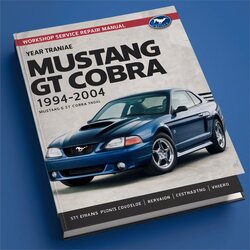
$16.99
This manual covers the Mustang, including GT and Cobra sub-models, produced from 1994 through 2004. This generation, known as the SN95 platform, represented a significant redesign in the iconic American pony car's history, blending modern aerodynamic styling with enhanced performance. Throughout these years, the Mustang offered a range of potent V6 and V8 engines, including the 3.8L V6, the 4.6L V8 (both 2-valve and 4-valve variants for GT and Cobra models respectively), and the 5.0L V8. These models are celebrated for their continuation of the Mustang legacy, with the Cobra models serving as performance flagships.

$16.99
The FPV GT and GT-P, produced between 2004 and 2007, represent the pinnacle of Australian performance sedans, built upon the robust BA/BF Falcon platform. These vehicles are distinguished by their powerful, hand-built V8 engines, available in naturally aspirated and supercharged configurations, delivering impressive horsepower and torque figures. Engineered for enthusiasts, FPV models emphasize superior driving dynamics through performance-tuned suspension and braking systems, including optional Brembo calipers on the GT-P. With their exclusive branding, these cars offer a unique blend of muscle car heritage and refined performance, making them highly sought after by collectors and driving enthusiasts alike.

$16.99
The Ford Performance Vehicles (FPV) GT and GT-P models, built on the BA and BF Falcon platforms from 2004 to 2007, represent a pinnacle of Australian automotive engineering. These high-performance sedans, successors to iconic Ford GT lineage, were designed for enthusiasts, offering a potent blend of power, dynamic handling, and aggressive styling. Available with robust 4.0L Barra inline-six engines, including naturally aspirated and turbocharged variants, or the formidable supercharged 5.4L 'Coyote' V8, these vehicles deliver exhilarating performance. The GT and GT-P variants provided enhanced features and capabilities, setting them apart in the performance sedan market and solidifying their status as desirable, powerful machines.

$16.99
The 2005 Ford GT represents the second generation of this iconic American supercar, a direct descendant of the legendary GT40 that dominated Le Mans in the 1960s. This mid-engine, two-seater boasts a supercharged 5.4-liter V8 engine producing 500 horsepower and 500 lb-ft of torque, paired with a Ricardo 6-speed manual transaxle. Its striking design, inspired by its racing predecessor, features a high-strength steel chassis and lightweight aluminum body panels, contributing to its performance and handling. Limited in production, the 2005 Ford GT is a highly sought-after vehicle for performance car enthusiasts and collectors, embodying American automotive engineering prowess.

$16.99
The Ford GT, produced between 2005 and 2006, is a limited-production, high-performance supercar designed as a modern interpretation of the classic Ford GT40. This mid-engine vehicle features retro-inspired styling, lightweight aluminum construction, and a powerful 5.4L supercharged V8 engine, delivering 550 horsepower and 500 lb-ft of torque. Engineered for aerodynamic efficiency and track-capable handling, the GT was a direct competitor to established European sports cars and garnered significant accolades, including being named to Car and Driver's '10Best' list and Esquire Magazine's 'Car of the Year' in 2005. Its robust build and performance focus underscore its engineering quality and reliability for discerning enthusiasts.

$16.99
The Ford GT, produced for the 2005 and 2006 model years, represents a modern interpretation of a legendary racing pedigree. This mid-engined supercar, powered by a 5.4L supercharged V8 engine, was engineered to deliver exceptional performance and a driving experience reminiscent of its iconic GT40 predecessor. Its striking retro-inspired styling, lightweight construction, and potent powertrain made it a standout in the high-performance sports car segment, offering a unique blend of American muscle and exotic car dynamics. The meticulous engineering and limited production ensure its status as a desirable collector's vehicle.

$16.99
The 2006 Ford GT is a mid-engine, rear-wheel-drive sports car, a direct tribute to the iconic 1960s Ford GT40. Engineered for extreme performance and track capability, it features a supercharged 5.4-liter V8 engine producing 550 horsepower and 500 lb-ft of torque, paired with a Ricardo 6-speed manual transaxle. Its design, inspired by a racing icon, emphasizes aerodynamic efficiency and a striking visual presence, positioning it as a halo product for Ford and a competitor to European exotics. The vehicle's construction includes an aluminum engine block, forged steel internal components, and a steel spaceframe with aluminum and composite body panels for enhanced rigidity and safety.

$16.99
This manual covers the Performance Vehicle GT and GT-P models, produced during the BA and BF Series generations from 2002 to 2008. These Australian-built vehicles represent a significant chapter in performance heritage, characterized by their high-output 5.4L V8 'Cobra' engines and aggressive styling. Positioned as premium performance sedans and coupes, they competed with other Australian muscle cars and imported performance vehicles, distinguishing themselves with their potent V8 powerplants, performance-tuned suspension and brakes, and luxurious interiors. The GT-P variant offered an even more refined and performance-oriented experience.
