



Ford Escort

The Ford Escort was introduced by the Ford Motor Company in Europe in 1968. It was initially available in two- and four-door sedan body styles, with a three-door hatchback version being added in 1970. The Escort was powered by a variety of four-cylinder engines, ranging in size from 1.1 to 2.0 liters. It was available with either manual or automatic transmission. The Escort was a popular car in Europe, and it was also exported to other markets, including North America.
The Escort was discontinued in Europe in 2000, but it continued to be produced in North America until 2003. The Escort...
$16.99
The 1975 Ford Escort Mk II represents a significant entry in the compact car segment, known for its affordability, practical design, and engaging driving characteristics. This generation, produced from 1975 to 1980, adopted a more angular styling and shared mechanical underpinnings with other Ford models, offering a robust and functional vehicle. Available in various body styles including hatchback, saloon, and estate, the Escort was engineered to provide reliable transportation for a wide range of consumers, competing effectively with contemporary models from other European manufacturers. Its design philosophy prioritized value and accessibility, making it a popular choice in its market.
$16.99
This manual covers the Ford Escort 1980, a vehicle designed for reliable everyday transportation. Engineered with a focus on practicality and durability, the Ford Escort 1980 offers a straightforward driving experience suitable for a variety of uses. Its design prioritizes ease of maintenance and long-term performance, making it a dependable choice for owners.
$16.99
This manual covers the Ford Escort, specifically the Mark I (International) chassis, produced in 1980. The Escort was a foundational compact car, offering practical transportation and achieving global success for Ford. It featured front-wheel drive and was available with a range of engines, including 1.3L CVH, 1.6L CVH, and a 2.0L Pinto for European markets, paired with 4-speed manual, 5-speed manual, or 3-speed automatic transmissions. Body styles included 2-door and 3-door hatchbacks, 4-door sedans, 5-door wagons, and a 3-door van. This vehicle is recognized for its role in expanding Ford's market reach and is often praised for its practicality and fuel efficiency.
$16.99
The Ford Escort, produced between 1980 and 1990 across its Mk3 and Mk4 generations, represents a significant chapter in Ford's global automotive strategy. As a compact family car available in hatchback, sedan, and estate variants, it offered a practical and economical transportation solution that resonated with families and individuals alike. Its front-wheel-drive platform, combined with a focus on fuel efficiency and a comfortable ride, contributed to its widespread popularity and status as one of Ford's best-selling models worldwide. The Escort was engineered with reliability and a spacious interior for its class, making it a competitive offering against rivals like the Volkswagen Golf and Opel Astra.
$16.99
This manual covers the models produced between 1980 and 1990, encompassing the Global Escort Mk3/Mk4/Mk5 and North American Escort Mk3/Mk4 platforms. The Escort was a highly successful compact car, recognized for its fuel efficiency, practical design, and European styling influences. It offered a range of gasoline engines and versatile body styles, making it a popular choice for everyday transportation. This resource is designed to assist in the upkeep and repair of these vehicles.
$16.99
This workshop service repair manual provides comprehensive coverage for the Ford Escort, First Generation (Mk1), produced from 1980 through 1990. The Ford Escort was a significant model for Ford of Europe, representing a modern, front-wheel-drive design that offered practicality and fuel efficiency. This manual is designed for DIY enthusiasts and professional mechanics, offering detailed information to maintain and repair this iconic vehicle.
$16.99
This manual covers the Ford Escort, a compact car produced from 1980 to 1990. Known for its fuel efficiency, affordability, and practicality, the Escort competed in a crowded segment, appealing to budget-conscious buyers. Throughout its first generation, including Mk I and Mk II variants, the Escort saw design and engineering updates, evolving with more aerodynamic styling and improved powertrains. This comprehensive guide is designed for owners and technicians seeking detailed information on maintaining and repairing these vehicles.
$16.99
This comprehensive workshop manual covers the Ford Escort, specifically the Mark III and Mark IV generations (chassis codes EE/FE/GE), produced from 1980 through 1990. Designed for the North American market, these front-wheel-drive vehicles offered a range of body styles including 3-door and 5-door hatchbacks, sedans, and station wagons. Powertrain options included 1.6L and 1.9L CVH engines, available with either carbureted or electronic fuel injection systems, paired with manual or automatic transmissions. The Escort represented Ford's strategic move into the compact car segment, providing a practical and economical option for daily transportation and family use.
$16.99
This manual covers the Ford Escort, produced across various iterations from 1980 to 1990, including the Mark III and Mark IV chassis codes. The Escort was a pivotal model for Ford, offering practical and fuel-efficient transportation globally. Known for its front-wheel-drive layout, introduced with the Mark III, and available in multiple body styles such as 3-door and 5-door hatchbacks, station wagons, sedans, and convertibles, the Escort offered a range of engine options from 1.1L to 1.8L, catering to diverse needs and performance expectations. Its engineering quality and reliability made it a popular choice, and the Mark III was notably recognized as European Car of the Year in 1981.
$16.99
The Ford Escort Mk I, produced for the 1981 model year, was a significant entry in the compact car market, designed for practicality and efficiency. This generation of the Escort offered a front-wheel-drive layout and a range of engine options, including 1.1L, 1.3L, and 1.6L inline-four engines, with horsepower typically ranging from 50 to 90 hp. Available in sedan, hatchback, and wagon body styles, it competed on value and broad appeal. The Escort's engineering emphasized a compact and efficient design, making it a popular choice for everyday transportation and a testament to Ford's heritage in producing accessible vehicles.
$16.99
This manual pertains to the Ford Escort, specifically models from the 1981 production year. The Ford Escort is engineered for reliable daily transportation, offering a balance of practicality and efficiency. Its design prioritizes user-friendly operation and straightforward maintenance, making it a dependable choice for a wide range of drivers. This vehicle represents a commitment to robust engineering and accessible automotive solutions.

$16.99
This workshop repair service manual covers the Ford Escort, specifically the first generation (BF platform) produced between 1981 and 1989. As a compact, front-wheel-drive vehicle, the Escort was designed for fuel efficiency and practicality, offered in hatchback, sedan, and wagon body styles. It competed in a segment that included vehicles like the Honda Civic and Toyota Corolla, aiming to provide an affordable and reliable transportation option. The Escort was a significant model for Ford, leveraging a global platform and contributing substantially to the company's compact car sales during its production run.
$16.99
The Ford Escort, produced from 1981 to 1997, established itself as a practical and fuel-efficient compact car, catering to a broad audience seeking reliable transportation. Available in various body styles including hatchbacks and sedans, it offered a comfortable ride and functional interior, making it a competitive choice in its segment. Performance-oriented variants like the GT and ZX2 provided sportier options, while the core models emphasized affordability and economy. Ford's extensive dealer network further supported its widespread appeal, cementing the Escort's reputation as a dependable everyday vehicle.
$16.99
This manual covers the 1982 Ford Escort, a compact car that marked a significant shift for Ford in North America as its first mass-produced front-wheel-drive vehicle. Based on a successful European platform and adapted for the North American market, the Escort was engineered as a fuel-efficient, affordable, and practical option for everyday transportation. It offered a versatile solution against competitors like the Chevrolet Cavalier and Toyota Corolla, with a focus on value-conscious consumers. The 1982 model year represents an early iteration of this successful line, available in 3-door and 5-door hatchback body styles, and typically powered by a 1.6L engine.
$16.99
This manual covers the 1982 Ford Escort, a compact vehicle known for its fuel efficiency and affordability, representing Ford's commitment to accessible transportation. Available in North America as the Second Generation and in Europe as the Mark III, this model offered various engine options, including 1.3L and 1.6L CVH and OHC inline-four engines, paired with manual or automatic transmissions. The Escort was designed for everyday use, providing a practical and economical option for individuals and families, and has since become a notable part of automotive history for its global sales success.
$16.99
This manual covers the Ford Escort, a compact car introduced to the North American market in 1982. Designed as a fuel-efficient, front-wheel-drive vehicle, the Escort was a significant model for Ford, offering various engine options including 1.1L, 1.3L, and 1.6L CVH and Kent engines, paired with either a 4-speed or 5-speed manual transmission, or an optional 3-speed automatic. Its engineering focused on providing an economical and reliable mode of transportation, with a design philosophy aimed at competing in the growing compact car segment. Key features included a MacPherson strut front suspension and a rear beam axle, front disc and rear drum brakes, and a collapsible steering column for enhanced safety.
$16.99
This manual covers the North American Ford Escort, specifically the Mk3 generation (GAF chassis), produced from 1982 through 1988. This compact front-wheel-drive vehicle was a significant offering in the economy segment, known for its improved interior space and fuel efficiency compared to its predecessors. The Escort was a high-volume seller for Ford, often recognized for its value and practical design, sharing platform elements with its European counterparts. Engine options ranged from 1.3L to 1.9L, with both carbureted and Electronic Fuel Injection (EFI) systems, and transmissions included 4-speed and 5-speed manuals, as well as a 3-speed automatic.
$16.99
This manual covers the 1983 Ford Escort, a compact car introduced as part of the first generation (Mark I) of the globally developed B-Car Platform. Known for its fuel efficiency and practicality, the Escort was designed to compete in a growing segment, offering a range of body styles including 3-door and 5-door hatchbacks, and a 5-door wagon. It was powered by efficient engines, commonly 1.6L CVH or 1.3L Kent variants, with horsepower typically ranging from 60-80 hp. The vehicle featured a focus on accessible engineering, making it a popular choice for DIY mechanics and car enthusiasts seeking a reliable and economical mode of transportation.
$16.99
The Ford Escort, first introduced in North America for the 1981 model year and represented here by the 1983 model, is a compact front-wheel-drive vehicle known for its practicality and fuel efficiency. Based on the European Ford Escort Mk II platform, this generation offered a modern design for its time, competing with popular models from other manufacturers. Available in various body styles including 3-door and 5-door hatchbacks and station wagons, the 1983 Escort typically featured a 1.6L CVH engine, paired with either a 4-speed manual or a 3-speed automatic transaxle. Its engineering prioritized affordability and everyday usability, making it a significant offering in the compact car segment of the early 1980s.
$16.99
The 1983 Ford Escort, designated as the Mark III in European markets, was a pivotal model in Ford's compact car lineup. Designed with a focus on fuel efficiency and modern, European-inspired aesthetics, it competed in a segment populated by established players. This generation of Escort featured a front-wheel-drive layout, offering a practical and agile driving experience, often available in hatchback and station wagon body styles. It was engineered to provide a balance of everyday usability and a more refined driving feel compared to many of its contemporaries, making it a popular choice for individuals and families seeking economical and competent transportation.
$16.99
This manual covers the Ford Escort, specifically the third generation introduced in North America for the 1984 model year, also known as the Mark III in Australia and Europe. This generation represented a significant redesign, influenced by European market needs, and was recognized for its fuel efficiency and maneuverability, making it a strong competitor in the compact car segment. The Escort was available with various engine options, including 1.6L CVH gasoline engines (carbureted or fuel-injected) and a 2.0L diesel engine in some markets, paired with either a 4-speed manual or a 3-speed automatic transmission. Its engineering quality and reliability contributed to its sales success, offering a practical and economical transportation solution.
$16.99
This manual covers the Ford Escort, a compact car produced for the 1984 model year. The Escort was a significant part of Ford's global strategy, known for its practicality, fuel economy, and front-wheel-drive layout, making it a popular choice in its segment against competitors like the Honda Civic and Toyota Corolla. Its design offered good interior space for its class, and it was powered by efficient CVH series engines, typically a 1.6-liter inline 4-cylinder, paired with either a 4-speed manual or an optional 3-speed automatic transmission. The vehicle's engineering emphasized affordability and everyday usability, contributing to its strong market presence.
$16.99
The Ford Escort, specifically the 1985 model year, represents a significant entry in the compact car segment, offering economical transportation with a focus on modern, aerodynamic styling and a front-wheel-drive layout. As part of the Mark III generation, this vehicle was designed to provide a competitive alternative in a market populated by key rivals such as the Chevrolet Cavalier, Honda Civic, and Toyota Corolla. Available in various body styles including hatchback, sedan, and wagon, the Escort was engineered with a choice of 1.6-liter or 1.9-liter inline-four engines, mated to either a 4-speed manual or an optional 3-speed automatic transmission. Its introduction marked a pivotal moment for Ford in the compact car market, emphasizing practicality and efficiency for a broad range of consumers.
$16.99
This manual provides comprehensive repair and service information for the 1985 Ford Escort. The Ford Escort, a popular compact car, was engineered as a practical and economical vehicle for everyday use, competing in a segment known for affordability and fuel efficiency. This generation, bridging the Mk3 and Mk4 updates, offered various body styles including hatchbacks, sedans, and station wagons, typically powered by efficient inline 4-cylinder CVH engines. Its design prioritized user-friendliness and cost-effectiveness, making it a significant model in Ford's lineup and a common sight on roadways worldwide.
$16.99
This manual covers the Ford Escort RS models produced between 1985 and 1987. As a performance-oriented variant, the Escort RS is known for its enhanced driving dynamics and sporty appeal, often featuring upgraded engines such as the 1.6L CVH or 2.0L DOHC, with power outputs typically ranging from 100 to over 130 horsepower. These vehicles, often based on the fifth generation or Mk V Escort, typically came equipped with a 5-speed manual transmission and front-wheel drive, embodying Ford's long heritage in performance vehicles and motorsport.
$16.99
The Ford Escort RS, produced for the 1985, 1986, and 1987 model years, represents a significant chapter in the brand's performance heritage. As a homologation special, it was engineered to excel in motorsport, particularly in Group A rallying, competing against notable rivals of its time. This generation, often referred to as the Mark III or Mk3.5, is distinguished by its potent RS and RS Turbo variants, which featured enhanced turbocharged engines, performance-tuned suspension, and aggressive body kits. The Escort RS is celebrated for its blend of accessible performance and rally-bred engineering, making it a sought-after vehicle for enthusiasts.

$16.99
The Ford Escort RS, specifically the Mark III / RS Turbo models produced between 1985 and 1987, represents a significant chapter in the evolution of performance hatchbacks. Engineered as a homologation special for motorsport, this variant offered a compelling blend of power and agility, directly competing with other iconic hot hatches of its era. Featuring a turbocharged 1.6L CVH engine delivering approximately 132 horsepower and a robust 5-speed manual transaxle, the Escort RS Turbo was designed for spirited driving. Its compact dimensions, coupled with a focus on performance tuning, made it a notable entry in Ford's performance lineage, known for its spirited handling and accessible performance.

$16.99
This manual covers the Ford Escort RS Mk3 RS Turbo models produced between 1985 and 1987. Engineered as a high-performance variant of the Mk3 Escort, this compact hot hatch was designed for spirited driving and built upon Ford's strong rally heritage. Its turbocharged, intercooled 1.6L CVH engine, producing approximately 133 bhp and 135 lb-ft of torque, paired with a 5-speed manual transaxle and often a limited-slip differential, positioned it as a formidable competitor in its era against vehicles like the Volkswagen Golf GTI and Peugeot 205 GTI. The Escort RS Turbo was celebrated for its performance and handling, representing a significant evolution in Ford's performance offerings.
$16.99
The Ford Escort RS, covering model years 1985, 1986, and 1987, represents a significant entry in the compact performance vehicle segment. Built upon the Mark III and early Mark IV chassis, these models are renowned for their motorsport heritage, particularly in rallying, and deliver exhilarating performance and sharp handling. Equipped with a potent 1.6L CVH turbocharged engine, these vehicles were engineered for enthusiasts and offered a compelling alternative to contemporary hot hatches. Their robust construction and performance-oriented design underscore Ford's commitment to creating engaging driving experiences.

$16.99
The Ford Escort RS, produced for the 1985, 1986, and 1987 model years, represents a performance-oriented variant of the popular Ford Escort. Building on a strong Ford motorsport heritage, this model was engineered for enthusiasts seeking sporty handling and enhanced engine performance, positioning it against competitors like the Volkswagen Golf GTI. With a focus on distinctive RS styling cues and typically featuring a 3-door hatchback body style, the Escort RS offered a compelling driving experience for its era, often powered by a naturally aspirated inline-4 engine with electronic fuel injection.
$16.99
The Ford Escort RS, specifically the third-generation Mark III (Escort RS Turbo Series 1) produced for the 1985, 1986, and 1987 model years, represents a significant chapter in performance compact hatchbacks. Developed for homologation and embodying Ford's rally heritage, this model is powered by a 1.6L CVH turbocharged engine, typically producing 132 hp and 180 Nm of torque, paired with a 5-speed manual transmission. Its robust engineering, characterized by a transverse inline-4 engine, MacPherson strut front suspension, and independent rear suspension, delivered exceptional handling and acceleration, making it a highly regarded vehicle in its segment and influential in performance car culture.

$16.99
This manual covers the Ford Escort RS, specifically the Mark III and Mark IV RS variants produced between 1985 and 1987. Renowned as a significant hot hatch of its time, the Escort RS offered a compelling blend of performance and handling, making it a popular choice for enthusiasts and rally homologation. Its engineering quality and reliability, particularly in its performance-oriented configurations, cemented its status in automotive history. The manual details its various body styles, including the 3-door and 5-door hatchbacks, and the robust CVH engine typically found in the RS Turbo models, known for its turbocharged performance and sophisticated (for the era) fuel injection and engine management systems.
$16.99
The Ford Escort RS, produced between 1985 and 1996, represents a significant chapter in the hot hatch and rally-bred compact car market. Building on Ford's extensive motorsport heritage, these performance-oriented models, including the RS Turbo and RS Cosworth variants, were distinguished by their enhanced turbocharged engines, sport-tuned suspension, and upgraded braking systems. Designed to compete with established rivals, the Escort RS offered a compelling blend of driving dynamics and motorsport pedigree, making it a sought-after vehicle for enthusiasts. This generation of Escort RS models, spanning chassis codes Mk3 through Mk6, showcased Ford's commitment to delivering exciting and capable performance vehicles.
$16.99
The 1986 Ford Escort represents a significant entry in the compact car market, known for its practicality and fuel efficiency. Designed as a global product for Ford, this model year saw updates to styling and refinement, building upon its reputation as one of Ford's best-selling vehicles. Powered primarily by a 1.6L CVH engine, the Escort offered a balance of performance and economy, competing with contemporaries like the Chevrolet Cavalier and Honda Civic. Its engineering focused on providing reliable transportation for everyday use, making it a popular choice for a wide demographic of drivers.
$16.99
The Ford Escort, produced in 1986, represents a notable entry in the compact car segment, known for its fuel efficiency and affordability. Built on Ford's global C-car platform, this model offered a practical and reliable transportation solution, often praised for its value. It was designed to meet the needs of everyday drivers, providing a comfortable and functional experience for commuting and general use. The engineering quality of the Escort contributed to its popularity, making it a significant vehicle in Ford's lineup during its production years.
$16.99
The 1986 Ford Escort, a key model within the Fourth Generation (1980-1987), was engineered as a practical and economical compact car. Built on the Mazda B Platform (BN chassis), this front-wheel-drive vehicle was offered in various body styles, including 3-door and 5-door hatchbacks and a 5-door station wagon, catering to diverse consumer needs. Available with 1.6L or 1.9L CVH engines, the Escort provided efficient transportation with horsepower ranging from approximately 70-90 hp, depending on the engine configuration. Its design emphasized fuel efficiency and affordability, reflecting Ford's global market strategy for compact vehicles during that era.
$16.99
The Ford Escort, produced for the model years 1986 through 1990, represents a significant offering in the compact car segment. Built on the S.E.C.S. platform in North America, this front-wheel-drive vehicle was designed to provide practical, fuel-efficient, and affordable transportation, available in various body styles including hatchback, sedan, and station wagon. Its engineering prioritized accessibility and utility, making it a popular choice for first-time car buyers and families. The Escort offered a range of engine options, from the 1.9L CVH to the more potent 2.0L DOHC, catering to different performance and economy needs.
$16.99
The 1987 Ford Escort, part of the Third Generation (1981-1990), represents Ford's strategic entry into the global compact car market. This model, with chassis codes GAF/GAL/GAY, was designed with a focus on affordability, fuel efficiency, and practicality, competing with vehicles like the Honda Civic and Toyota Corolla. Its redesigned, more aerodynamic body marked a significant evolution from previous generations. Offering a range of engine options including the 1.6L CVH, a 1.9L Diesel, and a 2.0L DOHC for GT models, the Escort provided a versatile platform with available manual and automatic transmissions. While not equipped with modern driver-assistance technologies, its design prioritized essential functionality for everyday use.
$16.99
This manual covers the Ford Escort, a compact car produced in 1987. Known for its role as an economical and practical choice, the Escort offered various engine options, including a 1.9L I4 and a 2.0L SOHC I4, paired with manual or automatic transmissions. Its design, part of the second generation, emphasized aerodynamic styling and provided a solid foundation for daily transportation. As a product of Ford Motor Company, a manufacturer with a long-standing reputation for producing reliable vehicles, the Escort aimed to meet the needs of economy-minded buyers and small families, competing with other popular compacts of its era.
$16.99
The 1988 Ford Escort represents a practical and reliable compact vehicle, available in hatchback and sedan body styles. This model, part of the third generation (Mk3) Escort, was designed with affordability and fuel efficiency in mind, making it a popular choice for everyday transportation. Ford's legacy of producing accessible vehicles is evident in the Escort's straightforward engineering and dependable performance, offering a solid foundation for owners. Its compact dimensions and manageable curb weight contribute to its ease of use, while features like seat belts and a padded dashboard provided a baseline of safety for its era.
$16.99
This full service repair manual covers the 1988 Ford Escort, a compact car known for its front-wheel drive and transverse engine layout. The Escort was a highly successful model for Ford, offering a range of engine options from 1.1L to 2.0L, including CVH and SPI inline-four configurations, with horsepower typically ranging from 60 to 115 hp. Available with either carbureted or fuel-injected systems, and manual or automatic transmissions, the 1988 Escort provided a practical and accessible option in its market segment, competing with vehicles like the Honda Civic and Toyota Corolla. Its engineering quality and reliability contributed to its widespread popularity.
$16.99
The Ford Escort, a prominent subcompact vehicle, was a key player in the North American automotive market, recognized for its affordability, fuel efficiency, and practical design. Introduced in the North American market with roots in European Ford platforms, the 1988 model year represents a significant iteration within its generation, known for a blend of European styling influences and American market needs. This iteration offered a refined driving experience for its class, featuring front-wheel drive, efficient 1.9L CVH engines, and available in various body styles including hatchback, sedan, and station wagon. The Escort's engineering prioritized value and reliability, making it a competitive choice against other popular compact cars of the era.
$16.99
This manual provides comprehensive service and repair information for the Ford Escort, model year 1989. Designed to assist owners and technicians alike, it covers all essential aspects of maintaining and repairing this vehicle. The Ford Escort is recognized for its engineering and reliability, and this guide ensures you can keep it in optimal condition.
$16.99
This manual covers the Ford Escort, a compact car produced for the 1989 model year. The North American version of the 1989 Escort represented the fifth generation of the model, featuring a redesigned body and chassis, and was assembled in the United States. Engine options for the North American market included a 1.9L CVH I4 and a 2.0L SPI I4, with horsepower typically ranging from 70-110 hp. The vehicle was available with either a 4-speed or 5-speed manual transaxle or a 3-speed automatic transaxle, all driving the front wheels. Notable features included front disc brakes and optional Anti-lock Braking System (ABS) on some trims.
$16.99
The 1990 Ford Escort is a compact car that offered practicality and fuel efficiency, competing in a crowded segment against rivals like the Honda Civic and Toyota Corolla. Available in hatchback, sedan, and wagon body styles, it featured front-wheel drive and was primarily powered by a 1.9L CVH 4-cylinder engine with Electronic Fuel Injection (EFI) managed by the Ford EEC-IV system. This generation, the fifth in North America, was designed with a focus on interior space for its class and a comfortable ride, making it a sensible choice for a wide range of drivers.
$16.99
The Ford Escort, a cornerstone of Ford's compact car offerings, was produced for the 1990 model year. This vehicle, known for its practicality and affordability, was available in various body styles including 3-door and 5-door hatchbacks, a 4-door sedan, and a 5-door wagon, catering to diverse consumer needs. Built on platforms designated GF in North America and Mk5/Mk6 in Europe, the Escort featured front-wheel drive and was powered by efficient inline-four engines. While specific performance figures varied by engine option, typically ranging from approximately 80 to 110 horsepower, the Escort was engineered to meet the safety standards of its time, with features like seat belts and optional Anti-lock Braking System (ABS) on select models. Its robust design and widespread availability made it a popular choice for everyday transportation.
$16.99
The 1990 Ford Escort, a significant model in the compact car segment, was known for its practicality and value. This generation, based on the Mazda BG platform, offered a redesigned exterior and interior, representing a notable evolution from its predecessors. Powered by a 1.8L Mazda-sourced SOHC inline-4 engine, the Escort provided efficient performance suitable for everyday driving. Its competitive positioning in the market, alongside its practical features and Ford's established brand heritage, made it a popular choice for a wide range of consumers seeking reliable transportation.
$16.99
This manual provides comprehensive service and repair information for the Ford Escort, covering models produced from 1990 to 1997. The fourth generation Escort, built on the GF/GFC chassis, was designed with practicality and affordability in mind, offering various body styles including hatchbacks, sedans, and convertibles. It was equipped with a range of engine options, such as the 1.8L Zetec, 2.0L SPI, and 1.9L CVH, delivering approximately 88-127 horsepower and paired with either a 5-speed manual or 4-speed automatic transmission. Known for its fuel efficiency and widespread availability, the Escort was a popular choice for daily commuting and general transportation.
$16.99
This manual covers the Escort and Orion models produced between 1990 and 1997, encompassing both North American and European markets. These vehicles, built on platforms like CE14 for North America and DE3 for Europe, offered a practical and affordable transportation solution, competing in the compact car segment. Available in various body styles including 3-door and 5-door hatchbacks, 4-door sedans, and wagons, the Escort/Orion lineup featured a range of engines, from 1.3L to 2.0L, and was primarily front-wheel drive. Known for their value proposition, these models were designed for everyday use by budget-conscious consumers and small families.
$16.99
This manual covers the Ford Escort, produced with a fifth-generation body style from 1990 to 1996, and updated with a sixth-generation facelift in 1997. Available with various engine options including 1.9L and 1.8L/2.0L Zetec inline-four engines, this compact car offered a balance of affordability and practicality, making it a popular choice for daily commuting and general transportation. Notable features included optional anti-lock brakes and airbags on later models, contributing to its appeal as a reliable and accessible vehicle during its production run.
$16.99
This manual covers the Ford Escort, specifically the Fifth Generation (1991-1996) and Sixth Generation (1997-2002) models, with detailed information for the 1990 through 1997 model years. The Ford Escort was designed as an economical and practical compact car, available in sedan, hatchback, wagon, and convertible body styles, and equipped with gasoline engines. Known for its widespread availability and affordability, the Escort offered value-conscious transportation and was a common sight on roads during its production span. This manual provides comprehensive coverage for all gasoline engine variants offered during these model years.
$16.99
This manual covers the Ford Escort models produced between 1990 and 1997, primarily for the North American market. The Ford Escort, a compact car in the economy segment, was known for its affordability, fuel efficiency, and practicality, with sporty variants like the GT and SVT offering enhanced performance. Built on a platform shared with Mazda, these Escorts were manufactured in the United States and Mexico, becoming a popular choice for many consumers. The vehicle's engineering quality, reliability, and unique selling points, including various engine options ranging from the 1.8L SPI to the performance-oriented 2.0L Zetec-R, are detailed within this guide.
$16.99
This manual covers the Ford Escort, specifically the North American models produced between 1990 and 1997. This generation of the Escort was a popular compact car, known for its affordability, fuel efficiency, and practicality, often serving as a direct competitor to other leading vehicles in its segment. It typically featured inline-four cylinder gasoline engines ranging from 1.8L to 1.9L, with horsepower generally between 88 and 125 hp. Available in various body styles including 3-door and 5-door hatchbacks, sedans, and wagons, the Escort offered versatility for a wide range of consumer needs. Its design, based on a Mazda platform, reflected Ford's global engineering approach during this period.
$16.99
The 1991 Ford Escort represents a significant offering in the compact car segment, known for its practicality and affordability. As part of Ford's global compact strategy, the Escort was designed to provide reliable transportation for a wide range of drivers. This model, part of the Mk4 generation, featured updated styling and improved interiors, building on Ford's legacy of accessible vehicles. Available in various body styles including sedan, hatchback, wagon, and potentially convertible, the Escort was equipped with a range of engine options, primarily featuring electronic fuel injection. Its engineering quality and reliability made it a popular choice for everyday use, offering a balance of functionality and value.

$16.99
The 1991 Ford Escort, part of the sixth generation (GF/GFX) platform, offers a practical and accessible mode of transportation available in various body styles including 3-door hatchback, 5-door hatchback, 4-door sedan, and 5-door wagon. Powered by efficient 1.8L, 1.9L, or 2.0L CVH and SPI engines, this model was engineered for reliability and economy, making it a popular choice for daily commuting and general use. Ford's commitment to quality is evident in the Escort's design, which balances functionality with a comfortable driving experience, supported by available features like optional Anti-lock Braking System (ABS) and a driver-side airbag.
$16.99
Comprehensive Ford Escort service manual for the complete 1991-1996 third-generation model range. Covers both the economical 1.9L SOHC and the performance 1.8L DOHC Zetec engines with factory-grade repair procedures, diagnostic flowcharts, and complete specifications. Includes manual and automatic transmission service, suspension overhaul procedures, complete wiring diagrams, and step-by-step illustrations for every maintenance task. Essential for DIY mechanics and professional technicians working on this popular compact platform.
$16.99
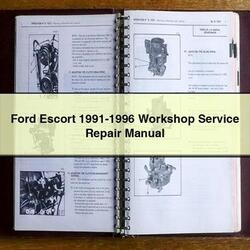
This manual covers the Ford Escort, produced between 1991 and 1996. The Escort was a popular compact economy car, known for its affordability, fuel efficiency, and practicality. Available in sedan, hatchback, and wagon body styles, it competed with other well-known vehicles of its era. This generation of the Escort, based on the Mazda BG platform, featured updated styling and mechanicals, offering a reliable powertrain for its class. Key features included front-wheel drive and a range of engine options, primarily 1.9L and 1.8L inline-four gasoline engines, with later models potentially featuring 2.0L Zetec engines.
$16.99
This comprehensive workshop service manual covers the Ford Escort models produced between 1991 and 1996. Engineered for reliability and performance, the Ford Escort has long been a popular choice for everyday transportation, offering a blend of practicality and efficient operation. This manual is designed to provide detailed information for owners and technicians alike, ensuring the continued optimal functioning of your vehicle.
$16.99
The 1992 Ford Escort, a significant model in the compact car segment, offered affordable pricing and fuel efficiency, making it a practical choice for daily transportation. Based on the Escort Mk V global platform, with North American derivatives designated CE14, this vehicle was produced in various body styles including sedan, hatchback, and wagon. It was equipped with common engine options such as the 1.8L Zetec-S/RFI and 1.9L CVH gasoline engines, paired with either a 5-speed manual or a 4-speed automatic transmission. Ford's reputation for reliable and accessible vehicles underpins the Escort's appeal, contributing to its strong market presence during the early 1990s.
$16.99
The 1992 Ford Escort Cosworth RS stands as a performance icon, developed as a homologation special for rallying and featuring aggressive, WRC-inspired styling. Its unique selling points include a potent 2.0L Cosworth YBT turbocharged engine, an advanced all-wheel-drive system with a driver-controlled viscous coupling and rear limited-slip differential, and a bespoke chassis engineered for exceptional handling. This model represents a significant chapter in Ford's motorsport heritage, offering a blend of raw power and sophisticated engineering that set it apart from its contemporaries.

$16.99
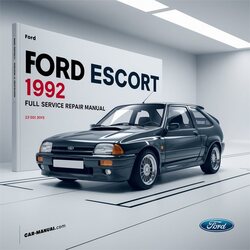
The 1992 Ford Escort, belonging to the fourth generation (GF/GC/GD) of this popular compact car, offered a compelling value proposition in a competitive market. This model competed against established names such as the Honda Civic, Toyota Corolla, Chevrolet Cavalier, and Nissan Sentra, often praised for its fuel economy and affordability. The Escort was engineered with a focus on reliability and practicality, featuring a range of inline-4 gasoline engines, primarily 1.8L and 1.9L variants, coupled with either a 5-speed manual or an automatic transmission. Its design and features made it a practical choice for everyday transportation, reflecting Ford's long-standing commitment to producing accessible and dependable vehicles.
$16.99
Welcome to the comprehensive guide for the 1992 Ford Escort, a key player in the compact car segment. This generation of the Escort, part of the Mk V (Fourth Generation) family produced from 1990 to 1995, offered a blend of affordability, fuel efficiency, and practicality, making it a popular choice for economy-focused buyers and families. Available globally with variations across North America and Europe, the Escort provided reliable transportation with a focus on value and readily available parts. It featured front-wheel drive and offered a choice between efficient 1.8-liter HCS engines and more powerful 2.0-liter Zetec engines, paired with either a 5-speed manual or a 4-speed automatic transmission, ensuring a practical driving experience for daily commutes and general use.
$16.99
This manual covers the Ford Escort RS, Fifth Generation (Mk5/Mk5b/Mk6) models produced from 1992 to 1996. The Escort RS is a compact performance hatchback and sedan known for its sporty handling and enhanced performance, often featuring a 2.0L DOHC Zetec engine producing around 150-170 horsepower. It competed with vehicles like the Volkswagen Golf GTI and was a popular choice for driving enthusiasts. The RS designation highlights Ford's commitment to motorsport-derived engineering, translating rally-bred technology into a road-going package.
$16.99
This manual covers the Ford Escort RS2000 and Escort RS Cosworth models produced between 1992 and 1996. These performance-oriented vehicles, part of the Mk5/Mk6 Escort generations, were engineered to deliver exhilarating driving experiences, competing with other hot hatch and performance sedan models of their era. The Escort RS2000 featured a potent 2.0L DOHC engine, while the Escort RS Cosworth boasted a legendary Cosworth YB turbocharged engine and a sophisticated all-wheel-drive system, both renowned for their motorsport heritage and dynamic capabilities.
$16.99
The Ford Escort RS Cosworth, a Mk4 (Fourth Generation) 3-door hatchback, represents a pinnacle of performance compact rally homologation specials from the 1992-1996 production years. Engineered with a robust Cosworth YBT 2.0L turbocharged engine and a permanent four-wheel-drive system, this vehicle leverages Ford's rich motorsport heritage. Its iconic, aggressive styling, wider track, and powerful performance made it a formidable competitor against contemporaries like the Mitsubishi Lancer Evolution and Subaru Impreza WRX STI, solidifying its status as a highly desirable modern classic with a dedicated global enthusiast following.
$16.99
This manual covers the Ford Escort RS Cosworth, a performance compact rally homologation variant produced from 1992 to 1996. Based on the Sierra Cosworth platform and utilizing a modified Escort Mk4 bodyshell, this limited-production vehicle is renowned for its iconic rally-bred performance, featuring a turbocharged 2.0-liter Cosworth YB engine and an all-wheel-drive system. Its distinctive engineering and motorsport focus have cemented its status as a legendary driver's car.
$16.99
This manual covers the Ford Escort RS Cosworth, produced between 1992 and 1996. This compact performance car, also known as a rally homologation special, is distinguished by its iconic large bi-plane rear spoiler, aggressive body kit, potent Cosworth YBT engine, and advanced all-wheel-drive system, reflecting its direct motorsport heritage. Built at the Karmann factory in Germany, this model was engineered for exceptional performance, competing with vehicles like the Mitsubishi Lancer Evolution and Subaru Impreza WRX STI.
$16.99
The Ford Escort RS Cosworth, produced between 1992 and 1996, stands as a legendary rally homologation special, blending potent performance with an iconic, aggressive design. Featuring a robust Cosworth YB 2.0L DOHC turbocharged engine and a sophisticated Ferguson viscous coupling all-wheel-drive system, this model was engineered for exceptional handling and speed, appealing to enthusiasts and rally aficionados. Its distinctive aerodynamic enhancements, including a large adjustable rear wing and front splitter, not only contribute to its striking appearance but also optimize stability at high velocities. This performance-focused vehicle, distinct from its standard Escort counterparts, was meticulously manufactured at Ford's Saarlouis facility in Germany, solidifying its status as a celebrated driver's car.
$16.99
This manual covers the Ford Escort RS Cosworth, a high-performance homologation special produced from 1992 to 1996. Built on the Sierra Cosworth platform, this model is renowned for its aggressive styling, advanced aerodynamics, and powerful 2.0-liter turbocharged engine, delivering up to 225 PS. Designed with motorsport in mind, it features a permanent all-wheel-drive system and AP Racing brakes, positioning it as a rally icon and an enthusiast-focused performance vehicle. Its engineering quality and unique blend of rally heritage and road-going performance make it a significant vehicle in automotive history.
$16.99
The Ford Escort RS Cosworth, produced between 1992 and 1996, is a performance-focused homologation special built on the Sierra RS Cosworth platform. This iconic model, with its distinctive aerodynamic enhancements including a large rear wing and aggressive front splitter, was engineered for rallying and positioned as a high-performance road car. It features a potent Cosworth YBG 2.0L 16v DOHC turbocharged inline-4 engine producing 220 bhp, paired with a 5-speed manual transmission and a permanent four-wheel-drive system with front and rear limited-slip differentials. Its robust construction, derived from the Sierra Cosworth, and focus on driving dynamics have made it a highly regarded vehicle among enthusiasts and collectors.
$16.99
This manual covers the Ford Escort RS, including the MK V RS and RS2000 variants, produced between 1992 and 1996. These performance-oriented compact cars are recognized for their engaging driving dynamics and the robust performance of their 2.0-liter DOHC Zetec engines. Built upon the Escort Mk V platform, known for its aerodynamic styling and improved chassis, the RS models offered a compelling blend of everyday practicality and sporting capability, appealing to enthusiasts seeking a spirited driving experience.

$16.99
The Ford Escort RS, Sixth Generation (Mk VI), produced between 1992 and 1996, represents a significant entry in the compact performance hatchback segment. Built on the BN146 platform, these models were engineered with a distinct focus on delivering a driver-centric experience, distinguishing themselves from standard Escort variants through enhanced performance, sporty handling, and aerodynamic body enhancements. The RS lineage, rooted in Ford's strong motorsport heritage, offered enthusiasts a potent and engaging vehicle that competed effectively against other performance hatchbacks of its era.
$16.99
This manual provides comprehensive service and repair information for the Ford Escort RS models produced between 1992 and 1996. It is designed to cover all aspects of vehicle maintenance, repair, and restoration, offering detailed diagnostic and repair procedures. The engineering quality and reliability of the Ford Escort RS are supported by the thoroughness of the information contained within, ensuring that owners and technicians have access to the knowledge required to keep this vehicle in optimal condition.

$16.99
This workshop service manual provides comprehensive guidance for the Ford Escort RS models manufactured between 1992 and 1996. Building on Ford's heritage of performance, these vehicles, often featuring potent DOHC RS engines and sporty handling, were designed for enthusiasts and demanding driving conditions. This manual covers the various body styles, including the popular 3-door and 5-door hatchbacks, and details the engineering quality and reliability that characterized these performance-oriented Escort variants.

$16.99
The Ford Escort RS, produced between 1992 and 1996, represents a significant chapter in performance compact car history. These models, often designated MK V or MK VI chassis codes, were engineered with a distinct focus on sporting dynamics and enhanced power. Available with potent engine options such as the iconic 2.0L turbocharged Cosworth YB or the spirited 1.8L Zetec, the Escort RS offered exhilarating performance for enthusiasts. Its design emphasized handling prowess, with tuned suspension systems and, in some variants, all-wheel drive, making it a formidable competitor in its segment and a celebrated nameplate in Ford's performance heritage.
$16.99
The Ford Sierra RS Cosworth, and its closely related Escort RS Cosworth variant, represent a significant chapter in performance automotive history, produced between 1992 and 1996. These vehicles, built on the Sierra Mk3 chassis and featuring the potent YBT 2.0 DOHC I4 turbocharged engine, were engineered with a clear motorsport pedigree, designed to homologate for rallying and touring car racing. Renowned for their aggressive styling, advanced aerodynamics, and exceptional performance capabilities, they competed against other elite rally homologation specials of their era. The integration of a Garrett T4 turbocharger, intercooler, and a sophisticated engine management system, coupled with an all-wheel-drive drivetrain, positioned these Fords as icons of speed and engineering prowess.

$16.99
This manual covers the Ford Sierra RS Cosworth and Escort RS Cosworth models produced between 1992 and 1996. These vehicles are renowned for their turbocharged 2.0L DOHC Cosworth engines, delivering impressive performance with approximately 220-230 PS and torque figures around 300-330 Nm. Both models feature a permanent four-wheel-drive system with a viscous coupling center differential and limited-slip rear differential, enhancing their dynamic capabilities. The Sierra RS Cosworth was primarily manufactured in Germany, while the Escort RS Cosworth was produced in Belgium by Karmann. These vehicles represent a significant part of Ford's motorsport heritage, developed to homologate rally cars for Group A racing.

$16.99
This manual covers the Ford Escort models produced between 1990 and 1997, available in North America (GF platform) and Europe (GA platform). The Escort was designed as an affordable and practical compact car, offering a balance of fuel economy and utility. Throughout its production, it featured various engine options, including the 1.9L CVH-EI4, 1.8L DOHC Zetec-R4, 1.9L SPI-EI4, and the 2.0L DOHC Zetec-R4, paired with either a 4-speed automatic or 5-speed manual transmission. Variants included Front Wheel Drive (FWD) and All Wheel Drive (AWD) configurations. The vehicle's engineering focused on providing a reliable and accessible mode of transportation, with later models seeing notable improvements in performance and handling, particularly with the introduction of the Zetec engines.
$16.99
The 1993 Ford Escort, part of the fourth generation (NA16 platform), represents a practical and cost-effective compact car designed for reliable transportation. Available in sedan, wagon, and hatchback body styles, it offered a range of engine variants and transmission options, including a 1.9L Inline-4 SOHC engine and either a 5-speed manual or 3-speed automatic transaxle. Known for its ease of maintenance and fuel efficiency, the Escort aimed to provide accessible motoring, competing with other popular compacts of its era. Its engineering focused on practicality and affordability, making it a sensible choice for daily use.
$16.99
This manual provides comprehensive service and repair information for the 1993 Ford Escort. The Ford Escort, a significant model in Ford's history, was known for its practicality and efficiency, serving as a reliable compact car for a wide range of drivers. This generation of the Escort, produced from 1991 to 1996, offered a blend of modern styling and functional design, making it a popular choice in its segment. The vehicle typically featured front-wheel drive and was available with various engine options, including 1.8L and 1.9L gasoline engines, paired with either a 5-speed manual or an automatic transmission.

$16.99
This manual covers the 1993 Ford Escort, a model known for its practicality and affordability. As part of Ford's extensive lineup, the Escort offered a reliable option for daily transportation, with various body styles including hatchback, sedan, and wagon, and multiple engine choices such as the 1.8L DOHC Zetec, 1.9L SOHC CVH, and a 1.8L Diesel. Its design, which shared platforms with Mazda, aimed to provide a balance of fuel efficiency and comfortable driving dynamics, making it a popular choice for a wide range of owners.
$16.99
This manual covers the Ford Escort, produced for the North American market in 1994. The Escort, a compact car known for its affordability, fuel efficiency, and practicality, was a popular choice for budget-conscious consumers and first-time car buyers. This generation, part of the third generation (1990-1996), features a redesigned, more rounded styling. It was available in various body styles including Sedan, Wagon, and Hatchback, and offered with all gasoline engine variants, such as the 1.8L Zetec-R and the 2.0L SPI. The vehicle's engineering prioritizes value and user-friendly design, making it a reliable option for everyday transportation.
$16.99
This manual covers the Ford Escort, a compact car produced in 1994. Known for its value-conscious design and practicality, the Escort was a popular choice in the North American market, competing with other segment leaders. Its engineering focused on providing reliable and economical transportation, featuring various body styles including 3-door and 5-door hatchbacks, a 4-door sedan, and a 5-door wagon. The vehicle typically offered 1.8L or 2.0L engines with either 8-valve SOHC or 16-valve DOHC configurations, paired with a 5-speed manual or 4-speed automatic transmission.

$16.99
This manual covers the 1994 Ford Escort, a compact car built on the GF124 platform, which also included the Tracer. As part of Ford's long legacy of producing practical and affordable vehicles, the third-generation Escort, introduced for the 1991 model year, featured a more aerodynamic design and enhanced safety compared to its predecessors. This model typically offered engine options ranging from approximately 90 to 125 horsepower, utilizing fuel injection and available with either a manual or automatic transmission. The vehicle's dimensions place it firmly in the compact segment, with a wheelbase around 98.8 inches and a curb weight generally between 2400-2700 lbs. Safety features for the 1994 model year included a standard driver-side airbag on most trims and available Anti-lock Braking System (ABS).
$16.99
The 1995 Ford Escort, a globally recognized compact vehicle, offered a range of body styles including 3-door and 5-door hatchbacks, 4-door sedans, and 5-door wagons. Available with various engine options, including 1.8L and 2.0L Zetec, a 2.0L SPI, and a 1.9L Diesel for European markets, it was equipped with either a 5-speed manual or a 4-speed automatic transmission. Ford's heritage in producing practical and affordable vehicles is evident in the Escort's design, which aimed for reliability and ease of use for everyday transportation.

$16.99
The Ford Escort, a compact car produced for the North American market, represents a significant entry in the automotive landscape of its time. Introduced in its fourth generation for the 1990-1996 production run, the 1995 model year saw notable updates including revised styling and the integration of more potent Zetec engines, specifically the 1.8L and 2.0L DOHC inline-4 cylinder options. These engines offered a range of approximately 105-130 horsepower and 110-130 lb-ft of torque, delivered through either a standard 5-speed manual or an optional 4-speed automatic transmission. Built on the CT120 platform, the Escort was positioned as an affordable and practical choice, competing with models like the Honda Civic and Toyota Corolla. Its engineering, while sometimes criticized for interior materials, was noted for its European-derived platform which contributed to capable handling, particularly with the Zetec powertrains.

$16.99
This manual covers the 1995 Ford Escort, a compact car designed for practicality and affordability, serving the North American market across all trim levels and engine variants. As part of a long-standing tradition of producing accessible vehicles, the Escort offered a comfortable ride and competitive features against rivals like the Honda Civic and Toyota Corolla. The 1995 model represented a significant redesign, featuring a more aerodynamic body and updated interior, making it a popular choice for everyday transportation.
$16.99
The Ford Escort, produced in 1996 as part of its Seventh Generation (Global Platform), is a compact car recognized for its practicality and value. Built on the Model GF chassis, this generation aimed to provide improved driving dynamics and modern styling, appealing to budget-conscious buyers seeking reliable transportation. It offered a range of engine options, including the 1.8L DOHC 16-valve I4 (Zetec-S), the 2.0L DOHC 16-valve I4 (Zetec), and a 1.9L SPI SOHC 8-valve I4 for base models, with horsepower typically ranging from approximately 105 hp to 130 hp. The Escort was a popular choice, competing with other compact vehicles of its time and emphasizing its role as a dependable daily driver.
$16.99
This manual covers the 1996 Ford Escort, the North American seventh generation of this compact car. Known for its affordability and practical interior space, the Escort competed in a segment with models like the Honda Civic and Toyota Corolla. This generation featured updated styling and improved chassis dynamics, aiming to provide a reliable and fuel-efficient option for everyday transportation. Key selling points included its accessible price point and a reputation for dependability, building on the Escort's established presence in the market.
$16.99
The 1996 Ford Escort, part of the Mk VI generation, is a compact car designed for practicality and affordability, serving primarily North American and European markets. Known for its diverse engine options, including the 1.8L Zetec and 2.0L DOHC, it offered a balance of fuel efficiency and performance, with horsepower ranging from approximately 90 to 130 hp. The Escort was a significant model for Ford's global strategy, competing with vehicles like the Honda Civic and Toyota Corolla. Its design emphasized value and utility, making it a popular choice for everyday transportation.

$16.99
This manual covers the Ford Escort, a compact vehicle produced for the 1996 model year, belonging to the Third Generation platform. Known for its practicality and affordability, the Escort offered a range of body styles including sedan, hatchback, and wagon, with engine options such as the 1.9L SPI and the more powerful 1.8L Zetec. This vehicle was a popular choice for daily commuting and general transportation, emphasizing value and accessibility for a broad market.
$16.99
This manual covers the 1997 Ford Escort, a compact vehicle known for its practicality and affordability. As part of the seventh generation of the North American Escort, this model offers a reliable and efficient option for everyday transportation. The Ford Escort has a strong heritage as a popular compact car, and the 1997 model, primarily manufactured in North America, continues this tradition with its accessible design and straightforward engineering.
$16.99
The 1997 Ford Escort represents a significant entry in Ford's history of producing reliable and accessible compact vehicles. Known for its global appeal and consistent market presence, the Escort offered practical transportation suitable for a wide range of drivers. This generation, part of the seventh Escort lineage, featured various body styles including sedans, hatchbacks, and wagons, catering to diverse needs. Under the hood, drivers could find robust engine options such as the 2.0L Zetec DOHC I4 or the 1.9L SPI SOHC I4, paired with either a 5-speed manual or a 4-speed automatic transmission. The vehicle was equipped with essential safety features like driver and passenger airbags, and often offered optional Anti-lock Braking System (ABS).

$16.99
The 1997 Ford Escort, a product of Ford's extensive automotive engineering, was designed as a practical and fuel-efficient compact car. As part of the North American Sixth Generation, this model offered a balance of affordability and functionality, competing with established vehicles in its segment. Its construction, with a VIN prefix of '1FT' indicating Ford USA origin, reflects a commitment to reliable transportation for everyday drivers. This generation of the Escort aimed to provide a dependable driving experience, suitable for commuting and general use.

$16.99
The 1998 Ford Escort, part of the third generation (GF/GG) introduced in 1997, was a popular compact car recognized for its affordability and practicality, competing with models like the Honda Civic and Toyota Corolla. This generation featured revised styling and improved chassis dynamics. The Escort typically offered a 2.0L 4-cylinder engine, with options including the SPI (SOHC) and the more powerful Zetec-R (DOHC), producing approximately 110-130 horsepower, and was available with either a 5-speed manual or a 4-speed automatic transmission. Ford, a manufacturer with a long heritage of producing accessible vehicles, engineered the Escort to be a reliable daily driver.

$16.99
This manual covers the 1999 Ford Escort, a compact vehicle offered in sedan, hatchback, and coupe body styles. Known for its practicality and affordability, the Escort was a significant model in Ford's lineup, built on the global B-car platform. This generation of the Escort, introduced in 1997, featured various engine options, including 1.8L and 2.0L variants, paired with either a 5-speed manual or a 4-speed automatic transmission, with some models also offering a Continuously Variable Transmission (CVT). The vehicle was equipped with standard safety features such as front airbags and 3-point seat belts, with optional anti-lock braking systems available on many trims.
$16.99
The 2000 Ford Escort is a compact car designed for practical and affordable transportation, offering a spacious interior for its class and decent fuel economy. This generation, the fifth in North America, was based on a global platform and available in various trim levels, including LX, SE, Zetec, and GT, with engine options ranging from the 1.9L SPI to the more powerful 2.0L Zetec-E. While known for its affordability and practicality, some variants exhibited less refined performance and interior materials compared to competitors. The Escort was produced in both the United States and Mexico, representing Ford's commitment to the compact car segment during this era.
$16.99
The 2000 Ford Escort is a compact car designed for economical and practical transportation. Building on Ford's extensive history in the compact segment, this model, part of the seventh generation, offered a balance of affordability and functionality, competing with established models like the Honda Civic and Toyota Corolla. Known for its straightforward engineering and user-friendly controls, the Escort was a popular choice for everyday driving, providing reliable service for a wide range of owners. It featured various gasoline engine options, including the 2.0L SPI and the more performance-oriented 2.0L Zetec, paired with either a 5-speed manual or a 4-speed automatic transmission.

$16.99
The Ford Escort, a significant model in Ford's compact car lineup, entered its sixth generation in the North American market with the 2000 model year. Built on the CDW27 platform, this iteration of the Escort offered a blend of practicality and modern design, continuing Ford's legacy of producing accessible and reliable vehicles. It was available with engine options including the 2.0L SPI SOHC I4 and the more powerful 2.0L Zetec DOHC I4, paired with either a 5-speed manual or a 4-speed automatic transmission. The Escort was produced in both the United States and Mexico, catering to a broad consumer base seeking an economical and dependable mode of transportation.
$16.99
The Ford Escort, produced for the 2000 model year, is a compact car built on the Global Platform (CT120). Known for its value proposition within its segment, the Escort offered a range of engine options, including the 1.9L SPI and the more powerful 2.0L Zetec-SE, both featuring Electronic Fuel Injection. This generation of the Escort, part of the third generation (1997-2002), was designed as a global vehicle with shared components across international Ford models. It provided a practical and affordable transportation solution, competing with other notable vehicles in its class.

$16.99
The 2001 Ford Escort, a compact vehicle produced under the Global Ford (GF) platform, represented the final iteration of the Fifth Generation Escort. Positioned as an affordable and practical choice, it competed with other vehicles in its class by offering a comfortable ride and good fuel economy. Available as a sedan, wagon, and hatchback, the Escort was engineered for reliability and straightforward ownership, making it a popular option for everyday transportation. Its design emphasized functionality and accessibility, reflecting Ford's heritage of providing dependable vehicles.

$16.99
The 2002 Ford Escort, representing the Sixth Generation in North America, is a compact vehicle built with Ford's established reputation for engineering and reliability. This model, based on the CD135 North American Platform, was designed for practicality and affordability, offering a range of body styles including sedan and wagon. It was equipped with efficient inline-4 gasoline engines, such as the 2.0L SPI and the 2.0L Zetec, paired with either a 5-speed manual or a 4-speed automatic transmission. Key features include available Anti-lock Braking System (ABS), driver and passenger airbags, and a focus on a comfortable driving experience for everyday use.
$16.99
This comprehensive workshop and service manual covers the Ford Escort Mark III (Mk3) and Mark IV (Mk4) generations, produced from approximately 1980 to 1990. These compact cars were designed with a focus on front-wheel drive, aerodynamic styling, and practical interior space, competing in the C-segment against rivals like the Volkswagen Golf and Opel Kadett. Available in various body styles including hatchback, saloon, and estate, with performance-oriented variants such as the XR3i and RS Turbo, the Escort offered a range of engine options from 1.1L to 2.0L, including CVH and Zetec families, and both petrol and diesel fuel types. Its engineering emphasized reliability and a repairable design, making it a popular choice for families and budget-conscious buyers.
$16.99
This manual covers the Ford Escort MK3 and MK4 generations, produced from 1980 to 1990. These compact family cars were a significant part of Ford's European lineup, known for their modern front-wheel-drive platform, aerodynamic styling, and practical interior space. The MK3 represented a radical departure from its predecessors, while the MK4 offered refinements and updates. The Escort was designed to be an affordable and popular offering, competing with other major European hatchbacks of its era. Its engineering emphasized a balance of efficiency and everyday usability, making it a widely recognized and utilized vehicle.

$16.99
This manual covers the Ford Escort, specifically the Mark III and Mark IV generations produced between 1980 and 1987 for the European market. The Ford Escort was a highly successful compact family car, known for its practicality, affordability, and modern front-wheel-drive design, which represented a significant departure from its predecessors. It offered a range of CVH and Valencia petrol engines, providing a balance of performance and economy suitable for everyday use and family transport. The vehicle's engineering focused on efficient packaging and aerodynamic styling for its time, making it a competitive option against other popular models in the segment.
$16.99
The Ford Escort, a compact car produced by Ford Motor Company, offered a practical and affordable transportation solution for economy-conscious consumers and small families. Available across multiple generations from the early 1980s through the early 2000s in North America, and globally for a longer period, the Escort came in various body styles including 3-door and 5-door hatchbacks, sedans, and wagons. It was known for its fuel efficiency and reliability, making it a competitive choice against rivals like the Honda Civic and Toyota Corolla. The Escort was recognized for its value proposition, with certain models even earning accolades such as being named to Car and Driver's 10Best list.

$16.99
This workshop service and repair manual provides comprehensive guidance for the Sierra RS Cosworth (1986-1993) and Escort RS Cosworth (1992-1996). These iconic vehicles, powered by the legendary 2.0L turbocharged Cosworth YBT/T35 engines, represent a pinnacle of performance engineering from their respective eras. The Sierra RS Cosworth, a homologation special for touring car racing, evolved through various iterations including 4x4 variants. The Escort RS Cosworth, built on a modified Sierra platform, was engineered for World Rally Championship success, distinguished by its aggressive styling and potent powertrain. Both models are celebrated for their driving dynamics and motorsport heritage.

$16.99
This manual covers Ford Sierra RS models, including the Cosworth and RS500 variants, as well as Ford Escort RS models, such as the RS Turbo and RS2000. These vehicles represent Ford's commitment to performance, with the Sierra RS Cosworth being a homologation special known for its potent turbocharged engine and aggressive aerodynamics, competing against established performance marques. The Escort RS models, particularly the Turbo and RS2000, solidified Ford's reputation in the hot hatch and entry-level performance segments, offering dynamic handling and spirited driving experiences. Their engineering emphasizes performance, reliability, and a motorsport-derived pedigree, making them icons in their respective classes.
