



Ferrari 360

## Cars Ferrari 360 360
The Ferrari 360, introduced in 1999, was a significant departure from its predecessor, the F355. It featured a newly designed chassis, engine, and body, and was the first Ferrari to be equipped with a paddle-shift transmission. The 360 was also the first Ferrari to be offered with a factory-installed hardtop convertible, known as the 360 Spider.
The 360's 3.6-liter V8 engine produced 400 horsepower, and was paired with either a six-speed manual transmission or a six-speed paddle-shift transmission. The car's suspension was fully independent, and it featured Brembo brakes. The 360 was praised for its handling, performance,...

$16.99
The Ferrari 360 Modena Spider, also known as Type F131 with internal chassis codes F131 / F131 E, represents a pinnacle of Italian automotive engineering. Produced between 1992 and 2005, this exquisite V8 sports car, powered by a naturally aspirated 3.6-liter engine producing 400 PS, is renowned for its exceptional performance, sophisticated design, and the exhilarating open-top driving experience offered by its Spider variant. Its all-aluminum chassis and advanced F1-style sequential gearbox (standard on the Spider) exemplify Ferrari's commitment to innovation and driving pleasure, making it a highly sought-after vehicle for enthusiasts and collectors alike.
$16.99
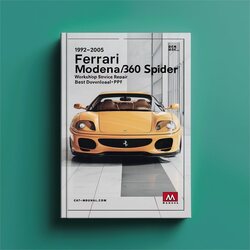
The Ferrari 360 Modena Spider, produced between 2000 and 2005, represents a significant achievement in Italian automotive design and engineering. This mid-engine, rear-wheel-drive convertible, identified by chassis code F131, features a naturally aspirated 3.6-liter V8 engine producing 400 PS, coupled with either an F1 automated manual transmission or a traditional 6-speed manual. Its lightweight aluminum spaceframe chassis, advanced F1 gearbox with paddle shifters, and exceptional handling contribute to its status as an iconic supercar. Known for its exhilarating performance, refined interior, and distinctive open-top driving experience, the 360 Modena Spider was designed to offer a blend of raw supercar capability and a more accessible driving dynamic.
$16.99
The Ferrari 360 Modena and 360 Spider, produced from 1999 to 2004, represent iconic mid-engine, two-seater sports cars. Powered by a naturally aspirated 3.6-liter V8 engine (F131) producing approximately 400 PS, these vehicles are renowned for their exhilarating performance, sophisticated engineering, and striking Italian design. Offering a near 50/50 weight distribution and available with either a traditional six-speed manual transaxle or the innovative F1 automated manual transmission, the 360 series was celebrated for its exceptional handling and driver engagement, positioning it as a direct competitor to models like the Porsche 911 and Lamborghini Gallardo of its era.
$16.99
The Ferrari 360 Challenge Stradale, produced from 2003 to 2004, represents a pinnacle of track-focused road car engineering. This homologation special, built on the 360 Modena platform, bridges the gap between road-going models and motorsport applications, offering a driving experience honed by Ferrari's extensive racing heritage. Distinguishing features include aggressive aerodynamic enhancements, lightweight construction with carbon fiber components, and a finely tuned suspension and braking system. Powered by a mid-rear mounted 3.6-liter V8 engine producing 425 PS, and equipped with the F1 electro-hydraulic manual transmission, the 360 Challenge Stradale was engineered for ultimate driver engagement and performance, competing with other elite sports cars of its era.
$16.99
This manual covers the Ferrari 360 Challenge Stradale, produced between 1999 and 2005. As an exclusive, high-performance track-focused road car, it embodies Ferrari's rich motorsport heritage, featuring enhanced aerodynamics, lightweight construction, a stiffer suspension, and racing-derived components. Notable for its naturally aspirated 3.6-liter V12 engine producing 425 PS and its standard F1 Super Select automated manual transmission with steering wheel-mounted paddle shifters, this limited-production model (approximately 1,288 units) represents a significant evolution in Ferrari's performance offerings.
$16.99
The Ferrari 360 Challenge Stradale, produced between 1999 and 2005, represents a track-focused evolution of the 360 Modena, embodying Ferrari's rich heritage in motorsport and performance engineering. This limited-production model, chassis code F131, offers an enhanced driving experience with features like paddle-shifted F1 transmission and a lighter, more aggressive stance. Its naturally aspirated 3.6-liter V8 engine produces 425 horsepower, delivering exhilarating performance. The Challenge Stradale is celebrated for its exceptional handling, precise driver feedback, and distinctive sonic character, making it a sought-after vehicle for enthusiasts and collectors.
$16.99
The Ferrari 360 Modena, produced from 1999 to 2006 under the chassis code F131, represents a significant evolution in Ferrari’s mid-engine V8 supercar lineage. This first-generation model is powered by a potent 3.6-liter F131B V8 DOHC engine, delivering approximately 400 PS and renowned for its high-revving character and thrilling performance. Notable innovations include its lightweight aluminum spaceframe chassis, a departure from previous steel constructions, and the introduction of the electro-hydraulic F1 gearbox as an option alongside a traditional 6-speed manual. Its advanced features, including ABS, ASR, and sophisticated electronic aids, combined with its striking Pininfarina styling, established the 360 Modena as a benchmark in its class, celebrated for its engineering prowess and driving dynamics.
$16.99
The Ferrari 360 Modena, produced from 1999 to 2006, represents a significant evolution in Ferrari's mid-engine V8 sports car lineage. Building upon the legacy of its predecessors, the 360 Modena introduced a revolutionary aluminum space frame chassis, enhancing rigidity and reducing weight. Powered by a naturally aspirated 3.6-liter V8 engine, delivering approximately 400 horsepower, and available with either a manual or the innovative F1 automated manual transmission, this vehicle offers exhilarating performance and a driving experience synonymous with the Ferrari brand. Its design, characterized by flowing lines and aerodynamic efficiency, reflects Ferrari's commitment to both aesthetic beauty and functional engineering, making it a highly regarded model for enthusiasts and collectors alike.
$16.99
This manual covers the Ferrari 360 Modena, a high-performance exotic sports car produced from 1999 to 2005. As a first-generation model, identified by the chassis code F131, the 360 Modena is renowned for its mid-engined, rear-wheel-drive layout, lightweight construction, and advanced aerodynamics, embodying Ferrari's legacy of motorsport and road-going excellence. With a 3.6-liter naturally aspirated V8 engine producing 400 PS, it offers exceptional performance, targeting discerning enthusiasts and collectors. The vehicle's design philosophy emphasizes driver engagement, making it a significant model in Ferrari's history, succeeding the F355 and preceding the F430.
$16.99
The Ferrari 360 Spider, produced from 1999 to 2005, represents a pinnacle of Italian automotive engineering, embodying the brand's core philosophy of performance, design, and driving passion. This mid-engine supercar, built on an aluminum spaceframe and featuring distinctive Pininfarina styling, is powered by a naturally aspirated 3.6-liter V8 engine producing 400 PS, coupled with an innovative F1-style electro-hydraulic gearbox operated by steering wheel-mounted paddle shifters. Its convertible body, complete with an electrically operated soft-top roof and a glass rear window, offers an exhilarating open-air driving experience, making it a sought-after model for enthusiasts.
$16.99
The Ferrari Challenge Stradale, produced from 2003 to 2004, represents a track-focused evolution of the 360 Modena. Chassis code F131, this model was engineered for enthusiasts seeking a visceral driving experience and enhanced track capability. Notable features include carbon ceramic brakes, a titanium exhaust, revised aerodynamics, and an F1-derived gearbox, all contributing to its performance-oriented design. The Challenge Stradale is characterized by its stiffer suspension, racing seats, and integrated roll bar, positioning it as a direct competitor to vehicles like the Porsche 911 GT3 and early Lamborghini Gallardos.
$16.99
The Ferrari 360 Challenge Stradale, produced from 2003 to 2004, represents a potent evolution of the 360 Modena and Spider platforms, meticulously engineered for enhanced track performance while remaining road-legal. This iteration offers a more visceral driving experience, incorporating a stiffer chassis, aerodynamic refinements, and a powerful 425 hp V8 engine. Key features include carbon fiber racing seats, Alcantara interior trim, and a dedicated F1 sequential gearbox, positioning it as a direct competitor to other high-performance sports cars of its era. Its design prioritizes driver engagement and aerodynamic efficiency, making it a sought-after model for enthusiasts.
$16.99
The Ferrari 360 Modena, produced in 2003, represents a significant chapter in the marque's history as a mid-engined V8 sports car. Building on the legacy of its predecessor, the F355, and preceding the F430, this model, also known by its chassis code F131, was designed with a focus on elegant Pininfarina styling, advanced aerodynamics, and exhilarating driver engagement. Powered by a naturally aspirated 3.6-liter V8 engine producing 400 PS, and often equipped with the innovative F1 (Fiorano Manuale) automated manual transmission, the 360 Modena offered a compelling blend of supercar performance and refined luxury, competing directly with marques like Porsche and Lamborghini. Its lightweight construction and sophisticated double-wishbone suspension contributed to its renowned handling characteristics.
$16.99
Introducing the 2003 Ferrari 360 Spider, a high-performance luxury exotic convertible that embodies Italian automotive heritage and a passion for driving. Built on the F131 chassis and featuring a mid-engine, rear-wheel-drive configuration, this model offers a captivating blend of extreme performance and exquisite Pininfarina styling. With its naturally aspirated V8 engine producing 400 PS and a fully automatic soft top, the 360 Spider was designed to deliver an unparalleled open-top driving experience, making it a highly sought-after vehicle for enthusiasts.
$16.99
The 2003 Ferrari 360 Spider is a distinguished luxury sports car, celebrated for its mid-engined V8 configuration and convertible design. Engineered with an aluminum spaceframe chassis and a Pininfarina-designed exterior, it embodies Ferrari's legacy of performance and exclusivity. This model, produced between 1999 and 2004, offers an exhilarating driving experience, characterized by its 425 horsepower V8 engine, advanced aerodynamics, and the iconic Ferrari sound. Its market segment places it alongside other elite sports cars, making it a highly sought-after vehicle for enthusiasts and collectors alike.
$16.99
The 2003 Ferrari 360 Spider (Model Code: F131 EV) represents a pinnacle of Italian engineering, offering a thrilling open-top driving experience powered by a naturally aspirated 3.6-liter V8 engine. This mid-engine, rear-wheel-drive convertible is celebrated for its exceptional performance, producing 400 PS, and its striking Pininfarina design. Building upon the legacy of the 360 Modena, the Spider was meticulously developed to maintain structural integrity and driving dynamics while providing the exhilaration of convertible motoring. Its sophisticated systems, including the optional F1 electro-hydraulic automated manual transmission, underscore a commitment to cutting-edge automotive technology and a pure driving connection.
$16.99
This manual pertains to the 2003 Ferrari 360 Spider, a distinguished exotic convertible supercar celebrated for its exhilarating performance and sophisticated Italian design. Engineered with a mid-engine V8 powertrain and an advanced aluminum spaceframe construction, the 360 Spider offers exceptional handling and an engaging open-top driving experience. Its key features include a powerful naturally aspirated V8 engine, a sophisticated electro-hydraulic convertible soft-top, and, commonly for the USA market, an F1-style sequential gearbox with paddle shifters. Positioned against competitors like Lamborghini and Aston Martin, the 360 Spider embodies Ferrari's rich motorsport heritage and commitment to automotive excellence.
$16.99
The Ferrari Challenge Stradale, produced in 2003 and 2004, represents a potent evolution of the 360 Modena, meticulously engineered as a track-focused road car. This first-generation model, identified by chassis code F131, bridges the gap between street-legal sports cars and dedicated racing machines. Distinguishing features include significant aerodynamic enhancements, an F1-style electro-hydraulic manual transmission, and a lighter construction utilizing carbon fiber elements. Its performance is driven by a naturally aspirated 3.6-liter V8 engine producing 430 horsepower, coupled with a stiffer suspension and improved braking system, all contributing to its reputation for exceptional handling and track capability.

$16.99
The Ferrari 360 Challenge Stradale, produced between 2003 and 2004, represents a unique fusion of road-legal performance and track-derived engineering. Positioned as a more aggressive, circuit-focused variant of the 360 Modena, this model boasts enhanced aerodynamics, a lighter construction, and race-inspired suspension and braking systems, setting it apart from its predecessors. With its naturally aspirated 3.6-liter V8 engine producing 425 horsepower and a sophisticated F1-Superfast electro-hydraulic automated manual transmission, the Challenge Stradale offers an exhilarating driving experience. Its limited production run and focus on dynamic performance have cemented its status as a desirable collector's item, embodying Ferrari's rich motorsport heritage and commitment to automotive excellence.
$16.99
The Ferrari 360 Challenge Stradale, produced between 2003 and 2004, represents a pinnacle of track-focused luxury sports car engineering. This exclusive variant of the 360 Modena boasts significant aerodynamic and chassis enhancements, a potent naturally aspirated V8 engine delivering 430 CV, and a lightweight aluminum spaceframe chassis. Designed for discerning enthusiasts seeking exceptional performance and a direct connection to the road, it offers a driving experience that rivals dedicated track machines while retaining a degree of road usability. Its limited production and specialized nature underscore its desirability and place within Ferrari's storied heritage.
$16.99
The Ferrari 360 Challenge Stradale, a high-performance coupe produced from 2003 to 2004, represents a track-focused evolution of the 360 Modena, drawing significant inspiration from Ferrari's racing heritage. This exceptional vehicle, identified by internal model code F131C, is powered by a mid-mounted, naturally aspirated 3.6-liter V90° engine producing 425 horsepower, paired with an F1-style electro-hydraulic manual transmission featuring paddle shifters. Known for its dynamic capabilities, exhilarating sound, and driver engagement, the Challenge Stradale was engineered with input from Ferrari's Corse Clienti department, positioning it as a pure driving machine comparable to other elite sports cars of its era. Its design emphasizes performance and lightweight construction, making it a coveted model for enthusiasts seeking a direct connection to the racetrack.
$16.99
The Ferrari 360 Challenge Stradale, produced between 2003 and 2004 on the second-generation 360 Modena platform, represents a track-focused evolution of its road-going sibling. This limited production model, internally designated F131, distinguished itself with carbon fiber race seats, carbon-ceramic brakes, revised suspension, lighter components, F1-style paddle shifters, and aerodynamic enhancements, all contributing to a more extreme and engaging driving experience. Its naturally aspirated 3.6-liter V8 engine produced 425 PS, coupled with a 6-speed F1-SuperFast sequential gearbox. Renowned for its exceptional driving dynamics and track capability, the 360 Challenge Stradale was positioned against competitors like the Porsche 911 GT3 and Lamborghini Gallardo, embodying Ferrari's rich heritage in motorsport and high-performance automotive engineering.
$16.99
The Ferrari 360 Challenge Stradale, produced from 2003 to 2004, represents a pinnacle of road-legal track performance, building upon the foundation of the 360 Modena. This exclusive model, inspired by Ferrari's motorsport heritage, features a potent 3.6-liter V-90 degree 8-cylinder engine producing approximately 400 horsepower, coupled with a standard 6-speed F1-style automated manual transmission. Its design emphasizes aerodynamic efficiency and lightweight construction, evident in its compact dimensions and curb weight of around 1,425 kg. The Challenge Stradale is engineered for an exhilarating driving experience, incorporating advanced systems like F1-Traction Control (TCS) and a performance-oriented stability control system.
$16.99
The Ferrari 360 Challenge Stradale, produced between 2003 and 2004, represents a road-legal GT racing car, an evolution of the 360 Modena, featuring enhanced aerodynamics, a stiffer suspension, standard carbon-ceramic brakes, and a stripped-down interior. This model, built in Maranello, Italy, is powered by a naturally aspirated 3.6-liter V8 engine producing 430 PS and is equipped with a standard F1 automated manual transmission, optimized for faster shifts. Its development drew heavily from Ferrari's racing heritage, incorporating over 130 modifications from the base 360 Modena to deliver a track-focused driving experience, distinguishing it from competitors like the Porsche 911 GT3 and Lamborghini Gallardo of the same era.
$16.99
The Ferrari 360 Challenge Stradale, produced from 2003 to 2004, represents a specialized iteration of the 360 Modena, engineered for enhanced track performance and driver engagement. This exotic supercar features a naturally aspirated 3.6-liter V8 engine producing 430 horsepower, coupled with a 6-speed F1-style sequential gearbox and rear-wheel drive. Its lightweight aluminum chassis, adaptive damping system, and standard carbon-ceramic brakes underscore its high-performance DNA. With a production run of approximately 1,288 units, the Challenge Stradale is a rare and sought-after model for automotive enthusiasts and collectors.
$16.99
The Ferrari 360 Modena, produced between 1999 and 2005, is a mid-engine V8 sports car that built upon Ferrari's rich heritage. Featuring a lightweight aluminum chassis and a Pininfarina-designed body, it was powered by the F131 V8 engine, delivering 400 PS and renowned for its exhilarating performance. Key highlights include the advanced F1 electro-hydraulic automated manual transmission with steering wheel-mounted paddle shifters, offering a blend of potent engineering and enhanced usability. This model competed in a segment defined by high-performance vehicles, establishing a new benchmark for Ferrari's V8 offerings and garnering significant industry acclaim.
$16.99
The Ferrari 360 Modena, produced from 1999 to 2004, is a mid-engined, rear-wheel-drive sports car renowned for its exceptional performance and striking Pininfarina design. Powered by a naturally aspirated 3.6-liter V8 engine producing 400 PS, it offered a thrilling driving experience, available with either a 6-speed manual or a 6-speed F1 electro-hydraulic automated manual transmission. This model represented a significant evolution for Ferrari, blending advanced engineering with a focus on driver engagement and exotic styling, positioning it as a direct competitor to vehicles like the Porsche 911 and Lamborghini Gallardo of its era.

$16.99
This workshop owner's repair manual covers the Ferrari 360 Modena, 360 Spider, and 360 Challenge Stradale models produced between 2000 and 2003. Built upon an aluminum spaceframe chassis with a mid-engined, rear-wheel-drive layout, these vehicles embody Ferrari's commitment to engineering excellence and driving dynamics. Powered by a naturally aspirated 3.6-liter V12 engine producing 400 PS, the 360 Modena series is a high-performance exotic sports car designed for ultimate driver engagement and aerodynamic efficiency. Its design philosophy focuses on balanced weight distribution, making it a celebrated marque in automotive history.
$16.99
The Ferrari 360 Modena, produced from 1999 to 2005, represents an iconic mid-engined V8 supercar that marked a significant technological advancement for the marque. Building upon the legacy of the F355, the 360 Modena features a Pininfarina-designed body and a lightweight aluminum spaceframe chassis, contributing to its balanced weight distribution and exceptional handling. Powered by a naturally aspirated 3.6-liter V8 engine producing 400 PS, it offers exhilarating performance and a high-revving character, making it a sought-after grand tourer for discerning automotive enthusiasts and collectors.
$16.99
This manual covers the Ferrari 360 Modena (chassis code F131), a mid-engined V8 sports car produced from 1999 to 2004. Renowned for its exquisite design, potent naturally aspirated 3.6-liter V8 engine producing 400 PS, and exceptional handling, the 360 Modena represents a pinnacle of Italian automotive engineering. It offers a choice between a six-speed F1 automated manual gearbox with paddle shifters or a traditional six-speed manual transmission, both built upon a sophisticated aluminum spaceframe chassis. The vehicle was engineered for performance enthusiasts, building upon Ferrari's rich motorsport heritage and positioning itself against competitors like the Porsche 911 and Lamborghini Gallardo.

$16.99
The Ferrari 360 Modena, produced from 1999 to 2004, stands as a significant evolution in Ferrari's V8-powered mid-engine sports car lineage. Building upon the heritage of its predecessors and drawing inspiration from motorsport, the 360 Modena emphasized aerodynamic efficiency and lightweight construction through its innovative aluminum spaceframe chassis. This model introduced technological advancements such as the F1-style electro-hydraulic automated manual transmission, offering enhanced driver engagement and performance. Competing with rivals like the Lamborghini Gallardo and Porsche 911 of its era, the 360 Modena was celebrated for its balanced handling, potent 400 PS 3.6-liter V8 engine, and a refined blend of supercar performance with increased usability.
$16.99
The Ferrari 360 Modena, produced from 1999 to 2005, represents a significant evolution in Ferrari's mid-engined V8 supercar lineage. Featuring a lightweight aluminum chassis and the iconic Pininfarina design, this model introduced a blend of enhanced performance, improved comfort, and greater usability compared to its predecessors. Notable for its high-revving 3.6-liter naturally aspirated V8 engine, producing 400 PS, and the availability of the groundbreaking F1-style paddle-shift gearbox, the 360 Modena competed with other performance machines of its era. Its engineering quality and focus on driving dynamics have cemented its place as a desirable modern classic.
$16.99
The Ferrari 360 Modena, produced from 1999 to 2004, represents a significant chapter in the marque's history as a mid-engined, rear-wheel-drive sports car. Designed by Pininfarina, this model, chassis code F131, features a naturally aspirated 3.6-liter V8 engine producing 400 PS, coupled with either a 6-speed manual or an F1 electro-hydraulic automated manual transmission. Its construction utilizes an aluminum spaceframe chassis and composite body panels, contributing to its performance and lightweight design. The 360 Modena is celebrated for its exhilarating driving dynamics, iconic V8 soundtrack, and elegant styling, earning accolades and establishing itself as a modern classic.
$16.99
The Ferrari 360 Modena, produced from 1999 to 2004, represents a pinnacle of mid-engine, V8-powered sports car engineering. As a successor to the F355 and predecessor to the F430, it embodies Ferrari's rich heritage with its exotic styling, advanced aluminum spaceframe chassis, and high-performance naturally aspirated 3.6-liter V8 engine. This rear-wheel-drive machine delivered exceptional driving dynamics, featuring a near 50/50 weight distribution and offering both a traditional 6-speed manual transaxle and the innovative 6-speed F1 automated manual transmission with paddle shifters. Its emphasis on advanced engineering for its era, coupled with its distinctive Ferrari allure, positioned it as a compelling competitor against marques like Porsche and Lamborghini.

$16.99
This manual covers the Ferrari 360 Modena and 360 Spider models produced between 1999 and 2005. These mid-engined, rear-wheel-drive V8 sports cars, identified by chassis codes F131 and F131B respectively, are celebrated for their lightweight aluminum spaceframe construction and F1-inspired technology, particularly the innovative electro-hydraulic automated manual transmission. With a 3.6-liter naturally aspirated V8 engine producing 400 PS, these vehicles represent a pinnacle of exotic sports car engineering, offering exceptional performance and driving dynamics.
$16.99
This workshop service repair manual provides comprehensive information for the Ferrari 360 Spider, produced between 2000 and 2004. As an iconic Italian supercar, the 360 Spider is celebrated for its engineering prowess, featuring a naturally aspirated 3.6-liter V8 engine producing 430 horsepower and available with either a manual or F1-style sequential transmission. Its aluminum spaceframe chassis and advanced systems, including ABS and ASR, underscore its performance and sophisticated design, making it a pinnacle of automotive engineering for its era.
$16.99
This comprehensive workshop service and repair manual is designed for the Ferrari 360 Spider, covering all models, engines, trim, and transmission types. It provides detailed, step-by-step instructions and illustrations for every service and repair procedure, enabling owners and technicians to perform maintenance and repairs efficiently. The engineering quality and reliability of the Ferrari 360 Spider are supported by this extensive guide, ensuring its continued performance.

$16.99
The Ferrari 360 Spider, produced from 2000 to 2005, represents a pinnacle of Italian automotive engineering, blending a naturally aspirated 3.6-liter V8 engine with a lightweight aluminum spaceframe chassis. This mid-engined supercar, known for its exceptional driving dynamics and the signature Ferrari experience, was designed to offer exhilarating performance and open-top motoring. Building on the heritage of its predecessors, the 360 Spider evolved the marque's commitment to high-performance sports cars, offering a compelling alternative to competitors like the Lamborghini Gallardo Spyder and Porsche 911 Carrera Cabriolet. Its key features include its potent F131 V8 engine, available with either a 6-speed manual or the innovative 6-speed F1 automated manual transmission, and a beautifully sculpted body that emphasizes aerodynamic efficiency and aesthetic appeal.
