The Daihatsu Rocky is a compact SUV known for its agile handling and fuel efficiency, making it ideal for urban driving and light off-road excursions. Designed with a focus on practicality and affordability, this vehicle offers a comfortable interior and versatile cargo space, suitable for daily commuting, family trips, and recreational activities. Its robust construction and modern design ensure a reliable and enjoyable driving experience across various road conditions.
Comprehensive documentation for the Daihatsu Rocky includes detailed owner's manuals, outlining operational features and basic maintenance. Service and repair manuals provide in-depth technical information for mechanics, covering diagnostic procedures, component replacement, and...
The Daihatsu Rocky is a compact SUV known for its agile handling and fuel efficiency, making it ideal for urban driving and light off-road excursions. Designed with a focus on practicality and affordability, this vehicle offers a comfortable interior and versatile cargo space, suitable for daily commuting, family trips, and recreational activities. Its robust construction and modern design ensure a reliable and enjoyable driving experience across various road conditions.
Comprehensive documentation for the Daihatsu Rocky includes detailed owner's manuals, outlining operational features and basic maintenance. Service and repair manuals provide in-depth technical information for mechanics, covering diagnostic procedures, component replacement, and system overhauls. Technical specification sheets and troubleshooting guides are also available, empowering owners and technicians with the knowledge necessary for effective upkeep and problem resolution, ensuring the vehicle's longevity and optimal performance.
This comprehensive workshop manual covers the Daihatsu Rocky F70, F75, and F77 models from 1984. Engineered for reliability and robust performance, these vehicles are designed for a variety of demanding applications. This manual provides in-depth information to ensure your Daihatsu Rocky operates at peak efficiency, reflecting the quality and durability for which the model is known.
This manual covers the Daihatsu Rocky, specifically models F70, F75, and F77 from the 1984 model year. The Rocky is a compact SUV renowned for its rugged off-road capability, body-on-frame construction, and reliable powertrain, making it a capable choice for enthusiasts and off-road adventurers. This generation, produced from 1984 to 1993, offered a balance of utility and affordability, competing with vehicles like the Jeep CJ and Suzuki Samurai. Its strengths lie in its compact size, robust engineering, and dependable performance in challenging terrain.
The Daihatsu Rocky, specifically the F70, F75, and F77 series produced between 1984 and 1992, is a compact SUV renowned for its ruggedness, reliability, and capable off-road performance. This body-on-frame vehicle was engineered for utility and adventure, offering a blend of compact dimensions with robust construction and often featuring a 4WD drivetrain with a 2-speed transfer case for enhanced trail capability. Available in various body styles including soft-top and hardtop variants, the Rocky was designed to compete with other compact off-roaders of its era, providing a durable and relatively fuel-efficient option for those seeking an accessible yet competent all-terrain vehicle.
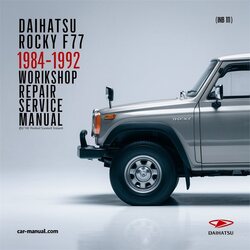
This workshop repair and service manual covers the Daihatsu Rocky models F70, F75, and F77 produced between 1984 and 1992. The Daihatsu Rocky is engineered for robust performance and reliability, designed to excel in a variety of demanding conditions. Its durable construction and versatile capabilities make it a capable companion for both everyday driving and off-road adventures. This manual aims to provide comprehensive information to ensure the continued optimal performance and longevity of your vehicle.
This manual covers the Daihatsu Rocky, produced from 1984 to 1992, across generation codes F70, F75, and F77. The Rocky is a compact SUV, available in short-wheelbase 2-door convertible/hardtop and long-wheelbase 4-door wagon variants, known for its robust off-road capabilities and reliability, inheriting Daihatsu's legacy of producing capable compact vehicles. It typically featured inline-4 gasoline engines, such as 2.0L and 2.4L options, and a part-time 4WD system with a 2-speed transfer case, making it a versatile vehicle for both daily use and adventurous terrain.
This manual covers the Daihatsu Rocky, a compact SUV renowned for its rugged construction and capable off-road performance, produced between 1984 and 1992. Chassis codes F70, F75, and F77 represent the various configurations of this versatile vehicle, which competed in the compact off-road segment against models like the Suzuki Samurai and early Toyota Land Cruiser. The Rocky's design emphasized durability and functionality, making it a popular choice for those seeking reliable transportation for both on-road use and adventurous terrain.
This workshop service manual covers the Daihatsu Rocky, specifically the F70 Series, produced between 1984 and 1992. As a compact SUV and off-road vehicle, the Rocky is recognized for its rugged capability, durability, and utilitarian design, making it a popular choice for owners and enthusiasts seeking a capable vehicle for various terrains. This manual provides comprehensive technical information for this generation of Daihatsu's respected off-road lineage, which succeeded the Taft and preceded the Feroza.
This workshop service manual covers the Daihatsu Rocky F70 models produced between 1984 and 1992. The Rocky is engineered for robust performance and reliability, offering a capable platform for a variety of demanding applications. Its design prioritizes durability and functional utility, making it a dependable choice for its intended purpose.
This workshop service manual covers the Daihatsu Rocky F75 models produced between 1984 and 1992. Engineered for robust performance and reliability, the Rocky F75 is designed for versatile use, offering dependable capability for a range of driving conditions. Its construction emphasizes durability and practicality, making it a well-regarded vehicle within its class.
This manual covers the Daihatsu Rocky, specifically the F75 chassis code from the first generation (F70/F80 Series), produced between 1984 and 1992. The Daihatsu Rocky is a compact SUV renowned for its robust body-on-frame construction, capable four-wheel-drive system, and versatile utility, making it a popular choice for off-road enthusiasts and those seeking a rugged, reliable vehicle. Its strengths lie in its compact size and genuine off-road prowess, often compared favorably to competitors of its time.
The Daihatsu Rocky, produced from 1984 to 1992, is a rugged, body-on-frame compact SUV celebrated for its off-road prowess and inherent durability. As Daihatsu's entry into the growing compact off-road vehicle market, it competed with established models like the Suzuki Samurai and Toyota 4Runner. Available in various body styles and often equipped with robust diesel or capable petrol engines, the Rocky (chassis code F77) offered reliable performance for both daily driving and challenging terrain. Its design emphasized mechanical simplicity and a sturdy construction, making it a favored choice for adventurers and those seeking a dependable, go-anywhere vehicle.
This workshop service manual covers the Daihatsu Rocky F77 models produced between 1984 and 1992. The Rocky is renowned for its robust engineering and reliability, designed for a wide range of applications from daily commuting to off-road exploration. Its durable construction and versatile performance make it a dependable choice for various driving conditions.
The Daihatsu Rocky, specifically the F80 series produced from 1984 to 1992, is a capable compact SUV renowned for its robust construction and genuine off-road ability. As a key offering in Daihatsu's lineage of small, rugged vehicles, the Rocky was designed with utility and simplicity in mind, often featuring body-on-frame construction. Available in various body styles including short and long wheelbase wagons, as well as soft-top convertible variants, it was powered by a range of inline 4-cylinder petrol and diesel engines, with many models equipped with a part-time 4WD system and a two-speed transfer case. Its compact size and reliable powertrain options made it a popular choice for enthusiasts and those seeking dependable utility.
This manual covers the Daihatsu Rocky, chassis code F85, produced between 1984 and 1992. The Rocky is a compact SUV renowned for its excellent off-road capability, durable construction, and simple mechanical design. It was engineered to provide robust performance in various terrains, making it a popular choice for enthusiasts and utility users alike. Key strengths include its compact size, selectable four-wheel-drive system, and reliable powertrain options, including the 1.6-liter petrol engine (HD-C) and the 2.8-liter diesel engine (DL51).
This manual covers the Daihatsu Rocky, specifically models F70, F75, and F77 from the 1985 model year. The Daihatsu Rocky is a compact SUV renowned for its rugged off-road capability and reliable, relatively simple mechanical design. As a competitor to vehicles like the Suzuki Samurai and early Jeep Wranglers, the Rocky offered a robust platform for adventure and utility. Its compact size, combined with a capable four-wheel-drive system, made it a popular choice for those seeking an agile off-road vehicle. This documentation is essential for owners and technicians dedicated to maintaining the performance and longevity of these classic off-roaders.
The Daihatsu Rocky, produced in 1985 and identified by chassis codes F70, F75, and F77, is a compact sport utility vehicle renowned for its rugged off-road capability and reliable engineering. As part of its first generation, this off-roader was designed to compete with other popular compact SUVs of its era, offering a go-anywhere attitude in a practical size. Its key attributes include a durable body-on-frame construction, a part-time 4-wheel drive system with a selectable low-range transfer case, and a range of efficient inline-4 cylinder gasoline engines. Available in various body styles such as 2-door soft-top and hardtop, the Rocky was praised for its utility and was a favored choice for enthusiasts and those seeking dependable performance in challenging terrains.
The 1986 Daihatsu Rocky, chassis codes F70, F75, and F77, is a compact SUV renowned for its ruggedness and off-road capability. This vehicle segment competed with other capable off-roaders, offering a blend of utility and maneuverability. The Rocky's engineering emphasizes reliability and a robust design, making it a practical choice for various driving conditions, from daily commuting to more demanding terrains. Its compact size and durable construction are key attributes that have contributed to its enduring appeal among enthusiasts and utility-focused drivers alike.
This manual covers the Daihatsu Rocky F70, F75, and F77 models produced in 1986. The Rocky is engineered for robust performance, offering a blend of utility and reliability suitable for a variety of driving conditions. Its design emphasizes durability and functional capability, making it a dependable choice for both everyday use and more demanding environments.
This manual covers the 1987 Daihatsu Rocky, a compact SUV renowned for its rugged, body-on-frame construction and impressive off-road capability, positioning it as a capable competitor against vehicles like the Suzuki Samurai and early Toyota Land Cruiser models. Engineered by Daihatsu, a manufacturer known for producing durable and efficient vehicles, the Rocky offered a robust chassis and a part-time 4WD system with a low-range transfer case, making it a popular choice for adventurous drivers and those requiring reliable performance in challenging terrains. Available with either a 2.0L petrol engine (AB20) or a 2.0L diesel engine (DL51), and typically equipped with a 5-speed manual transmission, this generation of the Rocky (F70, F75, F77 chassis codes) embodied a design philosophy focused on utility and dependability.
This manual covers the Daihatsu Rocky F70, F75, and F77 models manufactured in 1987. These vehicles are known for their robust engineering and reliability, designed for a variety of uses. The Rocky series offers a blend of utility and capability, making it a dependable choice for both everyday driving and more demanding conditions. This comprehensive guide details the specific features and systems that define these particular Rocky models.
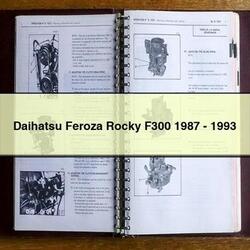
This manual covers the Daihatsu Feroza Rocky F300, produced in 1987. Designed for robust performance and reliability, this vehicle offers a capable driving experience suitable for various conditions. Its engineering prioritizes durability and functional design, making it a dependable choice for its intended purpose.
This manual covers the Daihatsu Feroza / Rocky, chassis code F300, from the 1987 model year. This compact SUV is known for its rugged, body-on-frame construction, selectable four-wheel-drive system, and respectable off-road capability for its class. Designed as an affordable and capable off-roader, it appeals to those seeking a vehicle suited for light trails and adventurous use. Daihatsu's reputation for producing reliable and fuel-efficient vehicles is reflected in the Feroza/Rocky's design, making it a practical choice for its intended purpose.
This manual covers the 1987 Daihatsu Rocky, a compact SUV renowned for its ruggedness and off-road capability. Available in 2-door convertible, 2-door hardtop, and 4-door wagon body styles, the Rocky features a robust four-wheel-drive system and was offered with a range of petrol and diesel engines. Its compact size and durable construction made it a popular choice for recreational use and light off-roading, competing with vehicles like the Suzuki Samurai and early Jeep Wranglers. The Rocky's engineering prioritizes reliability and straightforward functionality, making it a capable and adventurous vehicle for its intended purpose.
This workshop repair service manual covers the 1987 Daihatsu Rocky, a compact SUV renowned for its ruggedness and off-road capability. Produced by Daihatsu, a manufacturer with a long history of creating reliable and efficient vehicles, the Rocky offered a compelling blend of utility and affordability, competing with models like the Suzuki Samurai and Toyota 4Runner. Available in various body styles including 2-door hardtop coupes and 4-door wagons, and equipped with a range of engines from 1.0L to 2.6L, this vehicle was designed for adventure and everyday use. Its simple mechanicals and durable construction contributed to its reputation for reliability and ease of maintenance, making it a popular choice for those seeking a capable and dependable compact off-roader.
The Daihatsu Rocky, chassis code F300, represents the first generation of this capable and compact off-road-oriented vehicle, produced from 1987 to 1998. Known for its genuine off-road prowess, robust construction, and reliable performance in a small package, the Rocky was positioned to compete with other mini-SUVs and utility vehicles of its era. Its compact dimensions made it agile on trails and practical for urban environments, embodying a heritage of producing efficient and dependable vehicles. This manual covers all styles, including sedan, coupe, convertible, and SUV body types.
The Daihatsu Rocky F300 Series, produced from 1987 to 1998, represents a compact and rugged off-road utility vehicle renowned for its versatility and capability. This particular generation, often exported as the Sportrak or Feroza, offered genuine 4WD prowess and a robust ladder-frame construction, making it a popular choice for those seeking adventure and reliability in diverse terrains. Competing with vehicles like the Suzuki Samurai and Mitsubishi Pajero Mini, the Rocky stood out for its enduring build quality and practical design, appealing to both everyday drivers and off-road enthusiasts.
The Daihatsu Feroza, also known as the Rocky (F300 chassis code), was produced from 1987 to 1998. This compact SUV was engineered to offer genuine off-road capability in a small, affordable package, competing with vehicles like the Suzuki Vitara. It is recognized for its durable construction, reliable engines, and the flexibility of its selectable four-wheel-drive system, making it a capable choice for both daily driving and light off-roading. The Feroza's compact dimensions and straightforward design contributed to its appeal as a practical and accessible utility vehicle.
The Daihatsu Rocky, produced from 1987 to 1998, is a capable compact SUV and off-roader renowned for its rugged body-on-frame construction and genuine four-wheel-drive capability. This vehicle, also known internationally as the Daihatsu Feroza or Sportrak, offers robust performance with various inline 4-cylinder petrol and diesel engine options, ranging from 1.3L to 2.8L, paired with manual or automatic transmissions and a dual-range transfer case. Its compact dimensions, off-road prowess, and durable engineering make it a reliable choice for adventurous drivers.
The Daihatsu Rocky, also known as the Daihatsu Feroza or Sportrak in certain markets, is a compact SUV renowned for its rugged construction and off-road prowess. Produced from 1987 through 1998, this F70 Series vehicle was engineered with a focus on durability and capability, making it a popular choice for light-duty and recreational use. Its design philosophy emphasized simplicity and reliability, offering a capable 4WD system with selectable high and low ranges, and a choice of compact yet effective petrol or diesel engines. Available in both short-wheelbase and long-wheelbase configurations, the Rocky provided a blend of practicality and adventurous spirit, positioning itself as an affordable and competent alternative to other compact off-roaders of its era.
This manual provides comprehensive service, maintenance, and troubleshooting information for the Daihatsu Rocky, covering all models, engines, trims, and transmission types produced between 1987 and 1998. The Daihatsu Rocky is engineered for reliable performance, offering a robust platform suitable for various driving conditions. This workshop repair service manual is designed to be a complete and accurate resource, mirroring the information used by professional technicians.
This manual covers the Daihatsu Rocky, a compact SUV and off-road vehicle produced from 1987 to 1998. Known for its rugged construction, excellent off-road capability, and compact size, the Rocky was designed to tackle challenging terrain while remaining maneuverable. It evolved from earlier Daihatsu off-road models and was sold globally, often as a capable alternative to larger SUVs. The vehicle's engineering emphasizes durability and reliability, particularly in its diesel variants, making it a favored choice for enthusiasts and those requiring a robust utility vehicle.
This workshop service repair manual covers the Daihatsu Rocky, F70/F80/F90 Series, produced from 1987 through 1998. Renowned for its robust off-road capability, compact size, and reliability, the Rocky is a capable compact SUV and off-road utility vehicle. It was engineered to compete with other popular off-roaders of its era, offering dependable performance for both on-road and challenging terrain. This manual provides comprehensive information for all styles and global markets where the Rocky was sold, ensuring owners and technicians have access to detailed technical data.
This manual covers the Daihatsu Rocky, F70/F80/F90 Series, produced from 1987 through 1998. Renowned for its rugged construction, body-on-frame chassis, and capable 4WD system, the Rocky is a compact SUV celebrated for its off-road prowess and maneuverability. Its durable mechanicals contribute to a reputation for longevity and reliability when properly maintained. This generation offered various body styles, including Hardtop, Soft Top, Wagon, and Pick-up variants, catering to diverse utility needs.
This manual covers the Daihatsu Rocky F70, F75, and F77 models from 1988. Designed for robust performance, these vehicles are engineered for reliability and capability across various terrains and applications. The comprehensive nature of this guide reflects the quality and durability inherent in the Daihatsu Rocky line, providing owners and operators with the resources needed to maintain their vehicles at peak condition.
This manual covers the 1988 Daihatsu Rocky, a rugged and capable compact SUV renowned for its durability and off-road prowess. Built on a body-on-frame chassis, the Rocky offered a part-time 4WD system with selectable high and low ranges, making it a popular choice for those seeking adventure and utility. Available in various body styles including soft-top convertible, hard-top wagon, and pickup truck variants, it competed with other compact off-roaders of its era. Powered by reliable engines such as the 1.6L G16A petrol or the 1.8L 4F82 diesel, the Rocky provided dependable performance for its intended use.
This manual covers the Daihatsu Feroza Rocky F300, produced in 1988. The Feroza Rocky is engineered for robust performance and reliability, making it a capable vehicle for various applications. This comprehensive guide is designed to assist owners and technicians in understanding and maintaining this specific model.
This workshop repair service manual provides comprehensive information for the Daihatsu Rocky, specifically for the 1988 model year. It is designed to cover all variations of this vehicle, including different models, engine types, trim levels, and transmission configurations. The Daihatsu Rocky is recognized for its robust engineering and reliable performance, making it a capable choice for various driving conditions. This manual serves as an essential resource for understanding and maintaining the integrity of your vehicle.
This manual covers the 1988 Daihatsu Rocky, a compact SUV renowned for its robust off-road capability and maneuverability. Built on a body-on-frame chassis with a selectable 4WD system, the Rocky offers a rugged and reliable platform for both on-road commuting and challenging terrain. Available with either a 1.6L SOHC petrol engine or a 2.4L turbo diesel, this vehicle was designed to compete with other compact off-roaders of its era, providing a practical and durable option for adventurers and everyday drivers alike. Its compact dimensions and straightforward engineering contribute to its enduring appeal among enthusiasts.
The 1989 Daihatsu Rocky, representing the first generation of this versatile vehicle, is engineered for both everyday driving and more demanding off-road adventures. Known for its robust construction and reliable performance, the Rocky offers a compact yet capable package designed to meet a variety of owner needs. This manual provides comprehensive coverage for all models within this production year, ensuring that the unique characteristics and engineering of the Daihatsu Rocky are thoroughly addressed.
This manual covers the Daihatsu Rocky, specifically models from the F70 Series, produced in 1989. The Rocky is a compact SUV renowned for its robust construction and impressive off-road capability, making it a versatile choice for both utility and recreational driving. Competing in a segment with vehicles like the Suzuki Samurai, it offered a durable ladder-frame chassis and a selectable four-wheel-drive system, providing strong performance in challenging terrains. Available in various body styles including hardtop, soft-top, and pickup variants, the Rocky was engineered for reliability and dependable service.
This workshop repair service manual provides comprehensive English-language guidance for the 1989 Daihatsu Rocky, chassis codes F70, F75, and F77. Known for its rugged capability and off-road performance, the Daihatsu Rocky has been a reliable compact SUV. This manual is designed to be an essential resource for owners and independent repair shops, offering factory-level accuracy and detail to facilitate maintenance and repair tasks.
This workshop repair service manual covers the 1989 Daihatsu Rocky, a compact SUV renowned for its rugged off-road capability and versatility. Built on a durable body-on-frame chassis, the Rocky was offered in various configurations, including short and long wheelbases, with options for soft-top and hard-top body styles. Powering this capable vehicle were efficient 1.6L petrol engines or robust 2.8L diesel engines, all paired with a part-time 4WD system featuring selectable high and low range. The Rocky's compact size, lightweight construction, and affordable nature made it a popular choice for adventurers and those seeking a reliable utility vehicle, often competing with models like the Suzuki Samurai and Toyota 4Runner of its era.
This manual covers the Daihatsu Rocky, a compact SUV produced from 1984 to 1997, with the 1989 model year representing a key iteration. Known for its robust build, capable off-road performance, and compact size, the Rocky offered an affordable entry into the SUV market, appealing to enthusiasts and those seeking a versatile vehicle. Its design emphasized utility and durability, making it a popular choice for light off-roading and everyday use. The F300, F310, F320, and F330 series chassis codes encompass the various configurations of this capable vehicle.
This workshop service manual covers the Daihatsu Rocky, specifically the first generation (F300 chassis code), for the production years 1989 through 1993. The Rocky is a compact SUV renowned for its robust ladder-frame construction, true four-wheel drive capability with low-range gearing, and maneuverable dimensions, making it a capable off-road vehicle. Its engineering prioritizes durability and simplicity, featuring a reliable inline 4-cylinder engine, typically the 1.3L F5A, and a choice of 5-speed manual or less common 3-speed automatic transmissions. This vehicle is designed for drivers seeking a rugged and dependable compact utility vehicle.
This workshop repair service manual covers the Daihatsu Rocky, chassis code F300, for the model years 1989 through 1993. The Rocky is a compact, body-on-frame SUV recognized for its ruggedness and off-road capability, often competing with similar vehicles of its era. Typically offered in 2-door convertible and 4-door hardtop wagon body styles, it was primarily manufactured in Japan and is known for its utility and robust engineering, a hallmark of Daihatsu's heritage as a subsidiary of Toyota.
This manual covers the Daihatsu Rocky, a compact SUV produced between 1989 and 1998, known for its robust construction and off-road capability. Built on a body-on-frame chassis with selectable four-wheel drive, the Rocky offered excellent maneuverability in both urban environments and challenging terrains, making it a versatile vehicle. Its compact size and durable engineering, characteristic of Daihatsu's specialization in small, reliable vehicles, positioned it as a capable alternative to larger SUVs and a popular choice for those seeking adventure.
The Daihatsu Rocky, produced between 1989 and 1998, is a compact SUV renowned for its rugged construction, reliable four-wheel-drive system, and agile size, making it suitable for both off-road adventures and urban navigation. Built on a robust ladder frame chassis, the Rocky offered a blend of classic SUV styling with practical utility, competing in a segment alongside vehicles like the Suzuki Samurai. Daihatsu, a brand recognized for its compact and efficient vehicles, engineered the Rocky to be a durable and capable option for enthusiasts and everyday users alike, emphasizing its straightforward mechanicals and off-road prowess.
This manual covers the Daihatsu Rocky, a compact SUV produced from 1989 to 1998. Known for its robust body-on-frame construction, the Rocky offered impressive off-road capabilities for its class, competing with vehicles like the Suzuki Samurai and early Jeep Wranglers. Available in various body styles including 2-door soft-top, 2-door hardtop, and 4-door wagon configurations, it was equipped with dependable inline 4-cylinder engines, commonly the 1.6L G16A or the 2.0L G200Z, paired with a part-time 4WD system featuring a 2-speed transfer case. The Rocky's engineering emphasized durability and practicality, making it a favored choice for both everyday use and adventuring.
This manual covers the 1990 Daihatsu Rocky, a compact SUV renowned for its robust 4WD system, lightweight construction, and go-anywhere capability. Designed as a rugged off-road utility vehicle, the Rocky, particularly models equipped with the reliable HD-C diesel engine, offers exceptional performance in challenging terrain. Its compact dimensions and body-on-frame construction contribute to its agility and durability, making it a favored choice for enthusiasts and those seeking dependable off-road transportation. This guide specifically addresses the F70 and F75 series chassis codes, ensuring comprehensive coverage for all variants of the 1990 model.
This official factory service repair manual provides comprehensive guidance for the 1990 Daihatsu Rocky F300. Engineered for reliability and performance, the Rocky F300 is a capable vehicle designed for a variety of uses. This manual ensures that owners and technicians have access to the detailed procedures necessary to maintain and repair this model effectively.
The Daihatsu Rocky, F300 Series, is a compact sport utility vehicle renowned for its robust construction and impressive off-road capability for its class. Produced from 1990, this vehicle offers a blend of maneuverability and ruggedness, making it suitable for both daily driving and adventurous excursions. Its engineering prioritizes reliability and practical utility, reflecting Daihatsu's reputation for producing dependable, value-oriented vehicles. The Rocky's compact dimensions and body-on-frame construction contribute to its agile handling and resilience in various conditions, positioning it as a capable choice for enthusiasts and those seeking a durable, go-anywhere vehicle.
This manual covers the Daihatsu Rocky F300, produced for the 1990 model year. The Rocky is engineered for robust performance and reliability, offering a capable platform for various applications. This comprehensive guide provides all necessary details to ensure your vehicle operates at its peak.
This service manual covers the Daihatsu Rocky F70, F75, and F77 models produced in 1990. These vehicles are engineered for robust performance and reliability, designed to tackle a variety of terrains and demanding conditions. Their construction emphasizes durability and practical utility, making them a dependable choice for both everyday use and off-road adventures.
This workshop repair service manual covers the Daihatsu Rocky, specifically the F70, F75, and F77 chassis codes produced around 1990. The Rocky is a compact, body-on-frame SUV renowned for its off-road capabilities, a lineage Daihatsu has a long history of developing. This manual provides comprehensive coverage for all models, engines, and transmission types, offering detailed information essential for maintaining and repairing this capable vehicle.
This manual covers the Daihatsu Feroza / Rocky, chassis code F300, produced in 1990. Known globally by various designations including Sportrak, this compact SUV is celebrated for its robust body-on-frame construction, reliable 4WD system, and agile off-road capabilities. Its engineering prioritizes utility and durability, making it a capable vehicle for both daily driving and light off-road adventures. The Feroza/Rocky represents Daihatsu's legacy of producing practical and affordable vehicles, offering a straightforward mechanical design that appeals to enthusiasts and those seeking dependable transportation.
The Daihatsu Rocky, produced in 1990, is a compact SUV renowned for its robust, body-on-frame construction and impressive off-road capabilities. As Daihatsu's offering in the competitive compact utility vehicle segment, the Rocky competed with models like the Suzuki Samurai and Jeep Wrangler, distinguishing itself with a compact footprint and a vehicle philosophy centered on ruggedness and genuine off-road performance. Available with chassis codes F300, F310, and F320 depending on configuration, and typically powered by a 2.0L SOHC inline-4 engine producing around 100-110 horsepower, the Rocky was designed for enthusiasts and owners seeking a durable and capable vehicle for both daily use and adventurous excursions.
This manual provides comprehensive information for the 1990 DAIHATSU ROCKY. The DAIHATSU ROCKY is engineered for reliability and performance, offering a robust solution for various driving needs. Its design prioritizes durability and functionality, making it a dependable choice for owners seeking a capable vehicle.
The Daihatsu Rocky, produced in 1990, is a compact SUV renowned for its rugged off-road capability and durable construction. Built on a ladder frame chassis, this vehicle was designed as a capable and agile alternative to larger off-roaders, making it suitable for individuals seeking adventure and reliability. Available with chassis codes F300, F310, F320, and F330, and powered by HD-C (Naturally Aspirated Diesel) or HD-T (Turbocharged Diesel) engines, the Rocky offers a robust mechanical foundation. Its strengths lie in its compact size, excellent visibility, and straightforward engineering, ensuring dependable performance in various conditions.
The 1990 Daihatsu Rocky is a compact, body-on-frame SUV celebrated for its robust off-road capabilities and practical utility within a smaller footprint. As a descendant of Daihatsu's long-standing tradition of producing durable and efficient vehicles, the Rocky offers a blend of ruggedness and maneuverability, making it a capable choice for both everyday driving and adventurous excursions. It competed in a segment that included other notable compact off-road vehicles, appealing to enthusiasts who value reliability and go-anywhere performance.
The 1991 Daihatsu Rocky, representing the first generation of this model, is engineered for robust performance and reliable operation. Designed for a variety of driving conditions, the Rocky is known for its durable construction and practical utility. This manual provides comprehensive information specific to this vehicle, ensuring that its unique engineering qualities and intended uses are fully supported through accurate service and maintenance.
This comprehensive service manual covers the Daihatsu Rocky F70, F75, and F77 models produced in 1991. Designed for rugged utility and off-road capability, the Rocky is engineered for reliability and performance in diverse conditions. Its robust construction and dependable powertrain make it a capable companion for both daily driving and adventurous excursions. This manual provides in-depth information to ensure your vehicle operates at its peak efficiency and longevity.
This workshop repair service manual provides comprehensive coverage for the 1991 Daihatsu Rocky, models F70, F75, and F77. The Daihatsu Rocky is a capable compact SUV renowned for its off-road prowess and the engineering quality inherited from its Toyota parentage. Designed for adventurous drivers and those requiring a robust vehicle for varied terrains, the Rocky offers a blend of utility and durability, making it a reliable choice for both daily use and demanding expeditions. Its compact size, combined with a part-time 4-wheel-drive system, allows for excellent maneuverability and performance in challenging conditions.
The Daihatsu Feroza/Rocky, chassis code F300, represents a capable and reliable compact off-roader produced during the 1990s, with the 1991 model year covered by this manual. Known for its robust construction and go-anywhere attitude, this vehicle is powered by the HD-C engine, a 1.6-liter inline 4-cylinder unit featuring multi-point fuel injection. Its part-time four-wheel-drive system, coupled with a two-speed transfer case, makes it a versatile choice for both on-road commuting and off-road adventures. Daihatsu's reputation for producing durable and efficient vehicles is embodied in the Feroza/Rocky, a successor to the Taft, offering a blend of practicality and rugged capability.
This manual covers the Daihatsu Rocky, a compact SUV produced in 1991, part of the F300 Series. Known for its rugged design and off-road capability, the Rocky was positioned against competitors like the Suzuki Samurai and early Jeep Wranglers. It typically featured a 1.6-liter inline 4-cylinder engine with fuel injection, often paired with a 5-speed manual or 4-speed automatic transmission and a part-time 4WD system. Available in soft top and hardtop configurations, the Rocky was celebrated for its compact size and value in its segment, embodying Daihatsu's reputation for economical and capable vehicles.
This manual covers the 1991 Daihatsu Rocky, a compact SUV renowned for its genuine off-road capability, reliable mechanicals, and accessible price point. As a subsidiary of Toyota, Daihatsu brought a focus on engineering quality and durability to the Rocky, positioning it as a capable alternative to larger SUVs of the era. The 1991 model, part of the second generation, offers a blend of utility and ruggedness, making it suitable for both daily driving and adventurous excursions. Its compact size and robust 4WD system, often featuring a 2-speed transfer case, contribute to its agile performance in various terrains.
The 1992 Daihatsu Rocky, representing the first generation of this versatile vehicle, is engineered for a range of applications, from daily commuting to light off-road excursions. Known for its compact yet capable design, the Rocky offers a blend of maneuverability and utility, making it a practical choice for various driving needs. Its construction emphasizes reliability and efficient performance, reflecting Daihatsu's commitment to producing durable and user-friendly vehicles. This specific manual covers all models within this generation, providing comprehensive information for maintaining and repairing the vehicle.
This manual covers the Rocky, a compact SUV produced in 1992. Known for its lightweight, body-on-frame construction, the Rocky shares a platform with the Feroza and was designed for off-road enthusiasts and utility vehicle buyers. Available with a 2.7L HD-C diesel engine or a 1.6L AB-F50/AB-F55 petrol engine, it features a part-time 4-wheel drive system with selectable high and low range. The vehicle's dimensions are approximately 3,395 mm in length for the short wheelbase, 1,545 mm in width, and 1,730 mm in height, with curb weights ranging from 1,000 to 1,200 kg. It is equipped with front ventilated disc brakes and rear drum brakes, and includes a roll bar structure for enhanced safety.
The 1992 Daihatsu Rocky is a compact SUV and off-roader known for its body-on-frame construction, available four-wheel drive, and agile dimensions suitable for both challenging terrain and urban maneuverability. As a product of Daihatsu, a brand with a heritage of producing robust and economical vehicles, the Rocky offered a compelling blend of rugged styling and practical capability, often serving as an accessible alternative to larger SUVs of its era. Its engineering prioritizes mechanical reliability and off-road prowess, making it a distinctive choice for adventure-oriented drivers.
The Daihatsu Rocky, produced in 1992 and identified by chassis codes F70, F75, and F77 series, is a compact SUV renowned for its robust construction and off-road prowess. As a capable off-roader with body-on-frame construction and available four-wheel drive, the Rocky offered durable performance and a simple, reliable mechanical design, positioning it as a favored choice for rugged use and a strong competitor in its market segment.
This workshop repair service manual covers the 1992 Daihatsu Rocky, a rugged and capable compact SUV known for its off-road prowess and practical utility. Chassis codes F70, F75, and F77 are included in this second-generation model's coverage. The Rocky was designed to compete with other compact off-roaders of its era, offering a robust platform for adventure and everyday use. Daihatsu's heritage of producing reliable and economical vehicles is evident in the Rocky's construction, making it a popular choice for those seeking a dependable vehicle for challenging terrain.
The 1992 Daihatsu Rocky is a capable and rugged compact SUV renowned for its robust construction and impressive off-road prowess. Building on a legacy of producing reliable, niche vehicles, the Rocky offers a blend of utility and versatility, making it a popular choice for enthusiasts and those requiring a dependable vehicle for various terrains. Its compact dimensions, coupled with a body-on-frame design and effective 4WD system, ensure agility and performance in challenging environments, embodying a commitment to durable engineering.
The 1992 Daihatsu Rocky is a compact, off-road oriented SUV known for its robust construction and capability. As a competitor in its niche against vehicles like the Suzuki Samurai, the Rocky offered a blend of utility and off-road prowess, featuring body-on-frame construction and selectable four-wheel drive. This model, part of the F300 Series chassis code, typically came equipped with a 1.3L or 1.6L engine and a choice of manual or automatic transmissions, making it a versatile option for both daily driving and adventurous excursions.
This manual covers the Daihatsu Rocky Feroza II, a compact SUV renowned for its rugged off-road capability and reliable 2.8L diesel engine, produced between 1992 and 1998. Engineered with a robust part-time 4WD system, excellent articulation, and respectable ground clearance, the Feroza II was designed for enthusiasts and off-road adventurers. Its compact dimensions, including a short wheelbase of approximately 2220 mm, made it agile in challenging terrain, while its durable DL Series diesel engine offered dependable performance. The vehicle's design prioritizes mechanical simplicity and off-road prowess, making it a capable choice for various demanding environments.
The 1993 Daihatsu Rocky, part of the first generation, represents a robust and capable vehicle designed for a variety of uses. Known for its compact yet sturdy construction, the Rocky offers a blend of practicality and off-road prowess. Its engineering emphasizes reliability and durability, making it a dependable choice for both daily commuting and more adventurous excursions. This model is recognized for its efficient design and straightforward operation, embodying Daihatsu's commitment to producing quality vehicles.
This manual covers the 1993 Daihatsu Rocky, second generation. Designed for robust performance and reliability, the Rocky is engineered to meet a variety of demanding conditions. Its compact yet capable design makes it a versatile choice for both everyday use and more adventurous excursions, reflecting Daihatsu's commitment to quality and practical engineering.
This manual covers the Daihatsu Feroza / Rocky, model code F300, produced in 1993. As a compact SUV, this vehicle is engineered for off-road capability and rugged utility, building on Daihatsu's legacy of producing reliable and practical vehicles. Its body-on-frame construction and part-time 4WD system with low-range gearing make it a capable performer in various terrains. The Feroza/Rocky is noted for its compact dimensions and affordable utility, positioning it as a strong competitor in its segment.
This service manual covers the Daihatsu Feroza Rocky F300, specifically for the 1993 model year. Engineered for robust performance and reliability, the Feroza Rocky is designed to excel in a variety of demanding conditions, making it a capable companion for both everyday driving and off-road adventures. Its construction emphasizes durability and a user-friendly design, reflecting Daihatsu's commitment to quality and practical automotive solutions.
This manual covers the 1993 Daihatsu Feroza / Rocky, chassis code F300. As a compact SUV renowned for its rugged construction, off-road capability, and affordability, this vehicle is a capable option for both daily driving and adventurous excursions. Daihatsu's heritage in producing durable and efficient vehicles is evident in the Feroza/Rocky's design, which evolved from earlier compact 4x4s and offered a compelling alternative to competitors of its era. Its strengths lie in its compact size, robust build, and inherent suitability for varied terrains, making it a popular choice for those seeking a practical and versatile vehicle.
The Daihatsu Rocky, produced under the F300 Series platform, is a compact SUV renowned for its robust construction, capable off-road performance, and affordable utility. Introduced in 1984 and continuing through 2002, this vehicle offered a compelling blend of practicality and adventure, making it a popular choice in its segment. Available in 2-door soft-top and hard-top configurations, as well as a 4-door wagon, the Rocky featured a durable body-on-frame chassis. It was equipped with reliable petrol engines, such as the 1.6-liter G16A, and efficient turbocharged diesel options like the 2.4-liter 2L-T, paired with either manual or automatic transmissions and a part-time 4WD system.
This manual covers the Daihatsu Rocky, a versatile vehicle produced for the 1993 model year. Engineered for a blend of utility and everyday driving, the Rocky is recognized for its robust construction and reliable performance. Its design prioritizes durability and driver confidence, making it a capable option for various applications.
The 1994 Daihatsu Rocky, part of its second generation, represents a robust and capable vehicle designed for a variety of applications. Engineered with a focus on durability and reliability, this model offers a unique blend of compact maneuverability and practical utility. Its design prioritizes dependable performance, making it a suitable choice for both everyday driving and more demanding conditions.
This manual provides comprehensive technical information for the 1994 Daihatsu Rocky, a capable compact SUV known for its robust construction and off-road prowess. As a reliable and affordable alternative in its segment, the Rocky offered a blend of utility and durability, making it suitable for both everyday driving and light off-road adventures. This workshop repair service manual covers all Rocky models, engine variants, and transmission types, ensuring owners and technicians have access to the necessary details to maintain this classic vehicle.
This manual covers the 1994 Daihatsu Rocky, a compact SUV renowned for its rugged construction and off-road capability. Built on a body-on-frame chassis, the Rocky offers robust durability and maneuverability, making it suitable for both challenging terrains and everyday use. It is equipped with a 3-cylinder diesel engine, available in naturally aspirated (HD-C) or turbocharged (HD-T) variants, delivering reliable performance. The vehicle's compact dimensions and part-time 4WD system with selectable high/low range further enhance its versatility.
The 1995 Daihatsu Rocky, second generation, represents a robust and reliable vehicle designed for a variety of uses. Known for its durable construction and capable performance, this model offers a blend of practicality and utility. Its engineering emphasizes longevity and straightforward operation, making it a dependable choice for both everyday driving and more demanding conditions. The Rocky's design prioritizes functionality and ease of ownership, reflecting Daihatsu's commitment to producing quality vehicles.
The Daihatsu Feroza / Rocky, F300 Series, produced in 1995, is a capable compact SUV renowned for its off-road prowess, durability, and affordability. Building on Daihatsu's heritage of producing reliable and practical vehicles, this model offers a robust part-time four-wheel-drive system with a selectable low-range transfer case, making it well-suited for adventurous driving and challenging terrains. Available with either a 2.8L turbocharged diesel engine or a 1.6L petrol engine, the Feroza/Rocky provides a balance of performance and economy for its segment, competing with vehicles like the Suzuki Vitara and early Toyota RAV4 models. Its compact dimensions and sturdy construction underscore its engineering for both everyday utility and off-pavement exploration.
This manual covers the Daihatsu Feroza / Rocky, generation F300, produced in 1995. The Feroza/Rocky is a compact, rugged SUV celebrated for its body-on-frame construction, selectable 4WD system, and robust suspension, making it a capable and versatile vehicle for off-road adventures and everyday utility. It offered an accessible entry into the 4x4 market, competing with other compact SUVs of its era. Its design prioritizes durability and practical performance, reflecting Daihatsu's heritage of producing reliable and economical vehicles.
This manual covers the 1995 Daihatsu Rocky, a compact SUV renowned for its rugged construction, off-road capability, and reliable engines, including 1.3L, 1.6L, 2.0L gasoline, and 2.8L diesel options. Built by Daihatsu, a manufacturer known for economical and capable vehicles, the Rocky, also known as the Feroza in many markets, offered a blend of affordability and durability, making it a practical choice for adventurous drivers and those requiring a sturdy compact utility vehicle. Its compact size, combined with a robust body-on-frame design and selectable four-wheel drive, allowed it to tackle challenging terrain effectively, positioning it as a capable competitor in its segment.
This manual covers the Daihatsu Rocky, specifically for the 1995 model year. The Daihatsu Rocky is engineered for robust performance and reliability, designed to meet the demands of various driving conditions. Its construction emphasizes durability and a capable driving experience, making it a dependable choice for its intended applications.
This manual covers the 1996 Daihatsu Rocky, a compact SUV renowned for its robust construction, 4x4 capability, and off-road prowess. As part of the second generation (F300/F310 chassis), this model offered a blend of practicality and adventure, appealing to enthusiasts and those seeking a capable vehicle for varied terrain. Its compact dimensions, combined with a body-on-frame design, provided a durable platform for its intended use.
The Daihatsu Feroza / Rocky, model code F300, is a compact SUV produced in 1996, representing the first generation of this capable off-road vehicle. Known for its rugged construction, reliable mechanicals, and impressive off-road performance, the Feroza/Rocky was designed for adventure and utility. This model offered a compelling blend of compact dimensions and robust engineering, making it a popular choice for those seeking an agile yet durable vehicle for both daily driving and challenging terrains. Its legacy is built on Daihatsu's long-standing reputation for producing dependable and practical vehicles.
This manual covers the 1996 Daihatsu Rocky, a compact SUV renowned for its off-road capability, durability, and affordable entry into the 4x4 market. Available in various body styles including 2-door soft-top, 2-door hardtop, and 4-door wagon configurations, the Rocky offered robust performance with its part-time 4WD system featuring a selectable high/low range transfer case. It was powered by either the 2.0L HD-E EFI petrol engine or the 2.4L HZ Turbo Diesel engine, both designed for reliable operation in demanding conditions. The Rocky's compact dimensions and agile handling made it a versatile vehicle, suitable for both daily commuting and adventurous excursions, positioning it as a strong competitor against other small off-roaders of its era.
The 1996 Daihatsu Rocky is a compact SUV celebrated for its rugged construction, dependable performance, and impressive off-road capability. As part of the F300 series, this generation of the Rocky embodies Daihatsu's legacy of producing practical and durable vehicles, often favored for their affordability and reliability. Its compact dimensions and robust engineering make it a versatile choice for both daily commuting and adventurous excursions, offering a straightforward yet capable driving experience.
The 1997 Daihatsu Rocky, part of the F300 series, is a compact, body-on-frame SUV renowned for its robust construction and off-road capabilities. This versatile vehicle, also known internationally as the Feroza or Sportrak, was engineered with simplicity and durability in mind, making it a practical choice for utility and light off-roading. Available in both short-wheelbase and long-wheelbase wagon configurations, the Rocky typically featured a selectable part-time four-wheel-drive system with a two-speed transfer case, providing excellent traction in challenging conditions. It was powered by a range of reliable engines, including the 1.6L HD-E and, less commonly, the 2.8L HZ diesel.
This manual covers the 1997 Daihatsu Feroza, also known as the Rocky, chassis code F300. As a compact, body-on-frame SUV, the Feroza/Rocky is renowned for its affordability and off-road prowess, building upon Daihatsu's heritage of producing capable and rugged vehicles. Available in 2-door convertible and hardtop body styles, this model typically features a 1.6L or 1.8L inline 4-cylinder engine, often paired with a 5-speed manual or 4-speed automatic transmission and a part-time four-wheel-drive system. Its engineering prioritizes utility and reliability, making it a popular choice for both daily driving and adventurous excursions.
This manual covers the Daihatsu Rocky, produced from 1984 to 1997. The Rocky is a compact SUV renowned for its robust body-on-frame construction and genuine off-road capability, particularly in its four-wheel-drive variants. Its compact size ensures maneuverability, making it a capable vehicle for both daily use and light off-roading. Engineered for durability, the Rocky offered reliable powertrain options, including 1.3L and 1.6L gasoline engines, and was available with either a 5-speed manual or a 4-speed automatic transmission. This vehicle is recognized for its ruggedness and utility within its market segment.
The Daihatsu Rocky, produced in 1997, is a compact SUV recognized for its rugged, body-on-frame construction and capable 4WD system, making it a strong contender in its segment for light off-roading. This vehicle, also known as the Feroza in some markets, offers a blend of practicality and off-road prowess, often equipped with 4-cylinder gasoline or diesel engines, including the 2.7L HD-E diesel and 1.6L or 2.0L gasoline variants. Its engineering quality and reliability have made it a durable choice for owners seeking a versatile vehicle for various terrains.
The 1998 Daihatsu Rocky represents the second generation of this capable compact SUV, known for its robust body-on-frame construction and versatile RWD/4WD options. As a descendant of Daihatsu's long heritage in producing reliable and economical vehicles, the Rocky offers surprising off-road prowess for its class, making it a favored choice for enthusiasts and utility-focused drivers. Its compact dimensions and rugged design position it as a practical and durable option, comparable to early models from competitors like Suzuki and Toyota.
The Daihatsu Feroza Rocky F300, produced in 1998, represents a robust and capable vehicle designed for a variety of applications. Its engineering prioritizes reliability and durability, making it a dependable choice for owners who value performance and longevity. This model is recognized for its unique blend of utility and driving experience, reflecting Daihatsu's commitment to quality in its automotive offerings.
The 1998 Daihatsu Rocky is a compact SUV renowned for its robust construction and capable off-road performance, making it a practical choice for both light adventuring and everyday use. Benefiting from Daihatsu's heritage of producing reliable and affordable vehicles, the Rocky offers a body-on-frame design, available four-wheel drive, and good ground clearance, positioning it as a competent and maneuverable option in its segment. Its key selling points include its durable build, utility, and a design that balances compact dimensions for urban agility with the ruggedness expected of an off-roader.
This manual covers the 1998 Daihatsu Rocky, a compact SUV renowned for its off-road capability and robust construction. Known in various markets as the Taft or Feroza, this body-on-frame vehicle offered a blend of utility and ruggedness, making it a capable choice for both daily driving and more adventurous excursions. The Rocky was engineered with reliability and durability in mind, reflecting Daihatsu's heritage of producing dependable, value-oriented vehicles. Its compact size, combined with a selectable 4-wheel-drive system and a low-range transfer case, provided excellent maneuverability and traction in diverse conditions, setting it apart in its segment.
The Daihatsu Feroza / Rocky, chassis code F300, is a capable compact SUV produced from 1987 to 1993. Built with a robust ladder-frame construction and true four-wheel drive capability, it excels in both off-road environments and urban settings. Its manageable dimensions, typically around 3800-3995 mm in length and 1690-1700 mm in width, make it agile, while its 1.6-liter HC-C engine delivers approximately 94-98 horsepower. Known for its reliability and cost-effectiveness, the Feroza/Rocky was a popular choice against competitors like the Suzuki Samurai and Mitsubishi Pajero Mini, offering a refined package that retained significant off-road prowess.
This comprehensive workshop service repair manual provides all the technical information necessary for the proper maintenance and repair of DAIHATSU BERTONA ROCKY F70, F75, and F77 diesel models. Engineered for reliability and performance, these vehicles are designed for a variety of uses, and this manual ensures you have the detailed guidance required to keep them operating at their best. The manual's clear, easy-to-read format, including exploded views, diagrams, illustrations, and step-by-step instructions, simplifies identification, disassembly, re-assembly, and accurate adjustments for all repair procedures.
This manual covers the 1992 Daihatsu Rocky F300. The Daihatsu Rocky is engineered for robust performance and reliability, making it a capable vehicle for various applications. Its design prioritizes durability and practical functionality, reflecting Daihatsu's commitment to quality automotive manufacturing. This comprehensive guide is intended to assist owners and professionals in understanding and maintaining this specific model.
This manual covers the Daihatsu Rocky, specifically the F300 chassis code, produced between 1990 and 1997. As a compact SUV and off-roader, the Rocky was known for its rugged capability and affordability, competing with vehicles like the Suzuki Samurai and early Toyota RAV4 models. Daihatsu's specialization in compact, capable vehicles is evident in the Rocky's design, which offered various body styles including 2-door soft-top, 2-door hardtop, and 4-door hardtop configurations. The vehicle typically featured inline 3-cylinder or 4-cylinder naturally aspirated engines, with horsepower ranging from 50-100 HP, and was available in rear-wheel drive or four-wheel drive.
This manual covers the Daihatsu Rocky, a compact SUV produced from the late 1980s to the mid-1990s, known for its compact size, off-road capability, and durable construction. Available in short-wheelbase (SWB) and long-wheelbase (LWB) body styles, the Rocky was powered by various inline 4-cylinder engines, including diesel options like the 2.8L 2L-T, and gasoline engines such as the 2.0L F20A and 2.4L F24M. Most models featured a part-time 4WD system with a selectable low-range transfer case and were equipped with a 5-speed manual transmission, with a 4-speed automatic being a less common option. The Rocky was designed for light off-roading, utility, and general transportation, often competing with vehicles like the Suzuki Samurai.
The Daihatsu Rocky, specifically the F70, F75, and F77 chassis codes, is a robust compact SUV renowned for its off-road capability and durable construction. Produced from the mid-1980s to the mid-1990s, this vehicle is known for its reliable diesel engines, often featuring four-wheel drive with selectable high and low range. Daihatsu's specialty in compact, rugged vehicles is evident in the Rocky's design, which prioritizes go-anywhere functionality, making it a popular choice for enthusiasts and those requiring dependable performance in challenging conditions.
This manual covers the Daihatsu Rocky and Feroza, specifically the F70, F75, and F77 series, produced from the late 1980s through the 1990s. These compact SUVs are known for their rugged construction, robust four-wheel-drive capability, and reliable Daihatsu engineering, making them popular choices for off-road enthusiasts and owners seeking durable, maneuverable vehicles. Available in Hard Top, Soft Top, and Wagon body styles with STD, DX, and EL trim levels, the Rocky/Feroza offers a blend of utility and compact design.
The Daihatsu Rocky, produced from the mid-1980s to the mid-1990s under chassis codes F70, F75, and F80, is a compact, body-on-frame SUV renowned for its ruggedness and off-road capability. Built with durability and utility in mind, this vehicle is characterized by its simple, robust mechanicals, a capable four-wheel-drive system with low-range gearing, and a compact size that enhances maneuverability both on and off the road. Its design prioritizes straightforward functionality, making it a favored choice among enthusiasts seeking reliable transportation for adventurous pursuits or demanding work environments.