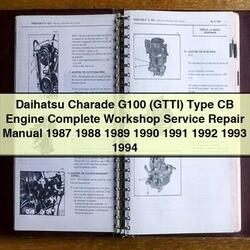
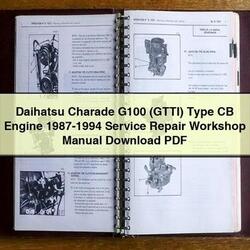
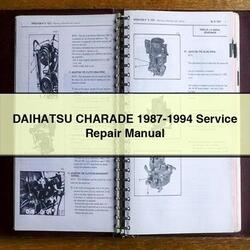
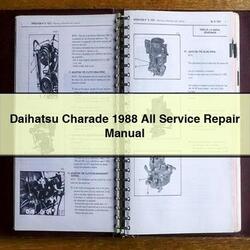
The Daihatsu Charade encompasses a range of compact and subcompact passenger vehicles known for their fuel efficiency and maneuverability. These cars were designed primarily for urban driving and personal transportation, offering a practical and economical solution for everyday commuting. Key characteristics include their small exterior dimensions, modest engine displacements, and straightforward mechanical designs, making them accessible and easy to operate for a wide demographic of drivers.
Documentation for the Daihatsu Charade typically includes comprehensive owner's manuals detailing operation, features, and basic maintenance schedules. Service and repair manuals provide in-depth technical information, diagnostic procedures, and step-by-step instructions for mechanics and technicians. These...
The Daihatsu Charade encompasses a range of compact and subcompact passenger vehicles known for their fuel efficiency and maneuverability. These cars were designed primarily for urban driving and personal transportation, offering a practical and economical solution for everyday commuting. Key characteristics include their small exterior dimensions, modest engine displacements, and straightforward mechanical designs, making them accessible and easy to operate for a wide demographic of drivers.
Documentation for the Daihatsu Charade typically includes comprehensive owner's manuals detailing operation, features, and basic maintenance schedules. Service and repair manuals provide in-depth technical information, diagnostic procedures, and step-by-step instructions for mechanics and technicians. These resources are essential for ensuring the longevity and optimal performance of the vehicle, covering everything from routine fluid changes to complex engine and transmission repairs.
The Daihatsu Charade G10, produced from 1977 to 1982, represents a significant entry in the compact hatchback segment, offering economical urban transportation and a focus on practicality and affordability. This model, powered by the reliable CB Type inline-3 cylinder engine with a displacement of 993 cc, was designed to compete with other small cars of its era by providing fuel efficiency and straightforward engineering. Daihatsu's reputation for building robust, value-oriented vehicles is embodied in the Charade, making it a popular choice for first-time car buyers and small families seeking dependable, no-frills mobility. Its compact dimensions and simple design philosophy underscore its intended use as an efficient and accessible mode of transport.
The Daihatsu Charade G10, produced between 1977 and 1982, is a subcompact hatchback renowned for its fuel efficiency, compact size ideal for urban maneuverability, and overall affordability. Engineered with simplicity and reliability in mind, this model was designed to appeal to economy-conscious buyers and first-time car owners. Its design philosophy prioritized practicality and value, making it a competitive option in its segment against contemporaries like the Honda Civic and Toyota Starlet. The Charade G10 exemplifies Daihatsu's heritage of producing dependable, no-nonsense vehicles.
The Daihatsu Charade G10, produced between 1977 and 1982, represents a compact and fuel-efficient subcompact hatchback and sedan designed for affordable transportation. Known for its practical and reliable engineering, the Charade offered a maneuverable driving experience, making it a popular choice in urban environments and developing markets. Its design philosophy prioritized efficiency and affordability, featuring small displacement engines and a front-wheel-drive configuration, setting it apart from some of its contemporaries.
The Daihatsu Charade G10, produced between 1977 and 1983, represents a significant entry in the compact economy car segment. Known for its lightweight construction, practical hatchback design, and economical engines, this rear-wheel-drive vehicle was engineered for affordability and maneuverability, making it an ideal choice for urban environments. Its straightforward mechanicals, including the inline 3-cylinder CB23 engine, contributed to its reputation for accessibility in maintenance. The Charade G10 competed effectively in its class, offering a reliable and fuel-efficient transportation solution.
The Daihatsu Charade, specifically the G10 Series models produced between 1977 and 1983, represents a practical and fuel-efficient entry into the compact hatchback segment. Built on Daihatsu's front-wheel-drive platform, this model was designed with economy-conscious buyers, small families, and urban commuters in mind. Its key strengths at launch included a compact size for easy maneuverability in city environments, excellent fuel economy, and competitive pricing, positioning it against rivals like the Honda Civic and Toyota Corolla. The Charade is recognized for its reliable engineering, a hallmark of Japanese automotive manufacturing from that era, offering a dependable and affordable transportation solution.
The Daihatsu Charade G10, produced from 1977 to 1983, is a subcompact hatchback renowned for its compact size, fuel efficiency, affordability, and reliable engineering. This model, part of Daihatsu's strategy to offer economical transportation, features nimble handling and a practical design, making it a favored choice for budget-conscious consumers and DIY mechanics. Its straightforward construction, typically powered by an inline 3-cylinder engine, emphasizes dependability and ease of maintenance, solidifying its reputation as a sensible and enduring vehicle in its market segment.
The Daihatsu Charade G10, produced from 1977 to 1983, was engineered as an economical and practical compact city car. Designed to compete in a segment prioritizing fuel efficiency and affordability, it offered a functional hatchback body style with a surprisingly spacious interior for its compact dimensions. Available with a range of efficient engines, including 1.0L and 1.3L gasoline variants and a 1.5L diesel option, the Charade G10 provided a sensible and accessible transportation solution for urban environments. Its straightforward design and focus on essential features underscored a commitment to value and reliability in the small car market.
The Daihatsu Charade G10, produced from 1977 to 1983, is a subcompact hatchback renowned for its fuel efficiency, compact size, reliability, and affordability. As an entry into the global subcompact car market, it offered practical and economical transportation, making it a popular choice for budget-conscious consumers and enthusiasts of classic Japanese vehicles. Its design emphasizes simplicity and functionality, embodying Daihatsu's legacy of producing dependable, small-scale automobiles.
The Daihatsu Charade G10, produced from 1977 to 1983, represents a significant entry in the subcompact hatchback segment. Engineered by Daihatsu, a marque known for its focus on fuel efficiency and compact vehicle design, the Charade G10 offered an economical and practical solution for urban commuters and budget-conscious consumers. Its compact dimensions, efficient inline 3-cylinder CB engine, and straightforward design made it a competitive offering against contemporaries like the Honda Civic and Toyota Starlet. This generation of the Charade prioritized affordability and functionality, establishing itself as a reliable choice within its class.
The Daihatsu Charade, a subcompact car produced from 1977 to 2000, is recognized for its fuel efficiency, compact size, and reliability, making it a sensible choice for city driving. Spanning multiple generations, including the G100/G101/G102 (1987-1993) and G200/G201/G202/G203 (1993-2000) series, the Charade has been equipped with a range of CB series engines, from 1.0L to 1.6L, offering horsepower typically between 55 and 110 hp. Its engineering quality and value have positioned it as a competitive option in the global market, often compared to other popular vehicles in its segment.
The Daihatsu Charade G10, produced in 1978, represents a significant entry in the subcompact automotive market. This model, characterized by its compact dimensions, front-wheel drive, and emphasis on fuel efficiency, was engineered to provide an economical and agile transportation solution, particularly suited for urban environments. Its design prioritized simplicity and affordability, making it an accessible choice for a broad range of consumers. The Charade G10's lightweight construction and straightforward mechanicals underscore Daihatsu's expertise in developing practical and reliable small vehicles, a hallmark of the brand's heritage.
The Daihatsu Charade G10, produced in 1979, represents a compact and practical subcompact car designed for urban commuting and budget-conscious consumers. This model is recognized for its fuel efficiency and maneuverability, embodying Daihatsu's heritage of producing reliable and affordable vehicles. Its straightforward mechanical design contributes to its general reliability, making it a sensible choice for first-time car buyers and those prioritizing economy of operation.
The Daihatsu Charade G10, produced in 1980, represents a compact and fuel-efficient subcompact hatchback designed for practical urban transport. Known for its lightweight construction, nimble handling, and affordability, it offered a sensible solution for budget-conscious consumers and first-time car buyers. Powered by a small displacement Type CB engine, typically an inline 3-cylinder, the Charade prioritized economy and maneuverability, making it a competitive offering against other popular models of its era. Its design philosophy centered on providing reliable and accessible transportation, embodying Daihatsu's heritage of producing well-engineered, economical vehicles.
The 1981 Daihatsu Charade G10 is a subcompact hatchback celebrated for its practicality, fuel efficiency, and maneuverability, making it an ideal choice for urban driving. This generation of the Charade, representing the first iteration of the model, emphasizes an economical and functional design philosophy, offering a surprisingly spacious interior for its compact dimensions. Powered by the reliable Type CB engine, an approximately 843 cc inline 3-cylinder unit, and featuring a front-wheel-drive layout, the Charade G10 provides dependable performance and good traction. Its compact size, estimated at around 3,400 mm in length and 1,500 mm in width, combined with its affordability, positioned it as a strong competitor in the subcompact market of its era.
This manual covers the 1982 Daihatsu Charade, a compact hatchback known for its fuel efficiency and practical design. As one of Daihatsu's early global successes, the G10 model established the Charade nameplate in the competitive small car market. Engineered for reliability and economy, this vehicle features a 993 cc inline-3 engine, a choice of 4-speed or 5-speed manual transmissions, and a functional, boxy aesthetic typical of its era. Its dimensions, including a length of approximately 3580 mm and a wheelbase of 2180 mm, make it an agile city car. The Charade G10 represents a significant model in Daihatsu's history, offering a straightforward and dependable driving experience.
The 1983 Daihatsu Charade, part of the G11 generation, is a subcompact hatchback renowned for its affordability, fuel efficiency, and practicality. As a key player in the global subcompact market, it competed with models like the Honda Civic and Toyota Starlet, offering a reliable and economical transportation solution. Its design philosophy focused on delivering efficient performance, typically featuring inline-3 or inline-4 cylinder engines ranging from 1.0L to 1.3L, coupled with front-wheel drive. The Charade's compact dimensions and lightweight construction contributed to its agile handling and impressive fuel economy, making it a popular choice for everyday use.
This service manual covers the Daihatsu Charade G10, specifically models equipped with the Type CB Engine, produced in 1983. Designed for both professional mechanics and dedicated DIY enthusiasts, this guide offers comprehensive information to ensure optimal performance and longevity of your vehicle. The Charade G10 is recognized for its efficient engineering and reliable operation, making it a practical choice for various driving needs.
The 1983 Daihatsu Charade G11 represents a practical and economical subcompact vehicle, known for its fuel efficiency and compact design. This generation of the Charade offered a stylish update and improved powertrain options, competing effectively within its segment against other notable vehicles of the era. Its engineering prioritizes reliability and efficient urban transport, making it a sensible choice for everyday use. The G11 generation, produced from 1983 to 1987, built upon Daihatsu's legacy of producing dependable, small cars, contributing to the brand's global expansion.
This workshop repair service manual covers the 1983 Daihatsu Charade, a subcompact hatchback renowned for its fuel efficiency, affordability, and practical interior. As a product of Daihatsu, a company with a long history of producing reliable and economical vehicles, the Charade offered a straightforward and dependable transportation solution. This particular generation, the second series (G11/G20), introduced significant styling updates and a front-wheel-drive platform, positioning it as a competitive option against other popular economy cars of its era. Its compact dimensions, combined with a surprisingly usable interior and a focus on value, made it a favored choice for cost-conscious buyers and a practical vehicle for everyday use.
This manual covers the Daihatsu Charade, model year 1983, chassis code G11. The Charade is a compact, fuel-efficient vehicle known for its nimble handling and affordability, positioning it as a practical choice in the subcompact hatchback segment. Its design philosophy focused on maximizing interior space within a small footprint, featuring a transverse engine layout. Notable for its reliability and value, the Charade competed with vehicles like the Honda Civic and Toyota Starlet, offering a sensible option for daily transportation and light utility.
The Daihatsu Charade, produced in 1983, represents a subcompact hatchback known for its affordability, fuel efficiency, and surprisingly practical design within its class. As a product of Daihatsu, a company with a heritage specializing in compact vehicles and a subsidiary of Toyota, the Charade embodies robust engineering for its segment. Its compact dimensions and focus on essential functionality made it a popular choice for budget-conscious consumers, urban commuters, and first-time car buyers, positioning it competitively against other economy cars of its era. The third generation, to which this model belongs, featured a more aerodynamic styling and improved interior comfort compared to its predecessors, further enhancing its appeal.
This manual covers the Daihatsu Charade, specifically models from the G100 Series produced around 1983 to 1987. Known for its fuel efficiency, compact size, and maneuverability, the Charade was a practical and affordable subcompact car designed for urban driving and everyday commuting. It was offered in hatchback body styles with various petrol engines, including 1.0L (CB23, CB17, CB20) and 1.3L (CB50, CB60) variants, often featuring SOHC inline 3-cylinder or 4-cylinder configurations. The Charade competed in a segment with other popular economy cars of its era, offering a functional and economical transportation solution.
This manual covers the Daihatsu Charade, generation G11, produced from 1983 to 1987. The Charade is a subcompact hatchback known for its compact size, fuel efficiency, and affordability, reflecting Daihatsu's philosophy of producing practical vehicles for economy-minded buyers and city dwellers. This generation featured a more modern, angular design and was available in 3-door and 5-door body styles, equipped with inline 3-cylinder or 4-cylinder engines ranging from approximately 847cc to 1300cc. With a focus on reliability and economical operation, the G11 Charade competed with other popular compact cars of its era.
The 1983-1987 Daihatsu Charade G11 represents a compact and economical subcompact car, known for its fuel efficiency and affordability. Positioned as a practical and reliable vehicle, it competed with other popular models of its era. The Charade G11 is characterized by its compact dimensions, lightweight construction, and a surprisingly spacious interior for its size, making it an appealing choice for urban commuting and general transportation. This generation of the Charade featured front-wheel drive and was powered by the Daihatsu CB Series engine, typically a 3-cylinder unit.
This manual covers the Daihatsu Charade, specifically generations G100, G101, and G102, produced between 1987 and 1993. The Charade is a subcompact vehicle, available as a 3-door hatchback, 5-door hatchback, or 4-door sedan, known for its affordability, fuel efficiency, and compact size, making it ideal for urban commuting and budget-conscious consumers. It offered a range of inline 3 and 4-cylinder engines with displacements from 993cc to 1598cc, paired with either a 5-speed manual or a 3-speed automatic transmission. The vehicle was generally regarded as reliable and practical, competing with other popular models of its time.
The Daihatsu Charade, specifically the Third Generation (G100/G101/G102) produced between 1983 and 1993, represents a significant entry in the subcompact and economy car segment. Known for its value proposition, compact size, and fuel-efficient engines, the Charade offered an affordable and maneuverable option for budget-conscious consumers and city dwellers. This generation adopted a more modern, rounded design, distinguishing itself from earlier models. While not a performance powerhouse, its reliable engineering and practicality made it a competitive choice against contemporaries like the Suzuki Swift and Toyota Starlet, with sportier variants like the GTti and Detomaso offering enhanced performance.
This manual covers the Daihatsu Charade, specifically the Third Generation models (G100, G101, G102, G112 chassis codes) produced between 1983 and 1993. As a subcompact car, the Charade was designed for affordability and fuel efficiency, offering nimble handling and reliability when properly maintained. Available in hatchback and sedan body styles, this generation featured a more aerodynamic design and updated engine options, including carbureted and fuel-injected variants, catering to global markets with various configurations.
The Daihatsu Charade, specifically the Third Generation models (G100, G101, G102) produced between 1983 and 1993, represents an economical and practical subcompact vehicle. Known for its compact dimensions, fuel efficiency, and reliable, straightforward mechanicals, the Charade was engineered to provide accessible personal transportation. Available in hatchback and sedan body styles, it featured a range of inline 3- and 4-cylinder petrol engines, typically ranging from 847cc to 1598cc, with power outputs varying from approximately 40 HP to over 90 HP, including performance-oriented turbocharged variants. Its robust chassis and front-wheel-drive configuration, coupled with a focus on affordability and essential functionality, made it a competitive choice in its market segment.
This manual covers the Daihatsu Charade, a compact and economical vehicle produced between 1983 and 1993, including chassis codes G100, G101, and G102. Known for its maneuverability, fuel efficiency, and affordability, the Charade was a popular choice in the hatchback and sedan segments, competing with other compact cars of its era. Daihatsu's specialty in producing reliable small vehicles is evident in the Charade's design, which prioritizes practicality and ease of operation, making it an enduring option for city driving and everyday transportation.
The Daihatsu Charade, produced across multiple generations including the G100 and G200 platforms, represents a lineage of subcompact hatchbacks renowned for their compact size, fuel efficiency, and reliable Daihatsu engineering. Available in 3-door and 5-door body styles, this model line, spanning production years from 1983 to 1993 within this manual's scope, offered practical transportation with unique selling points such as optional all-wheel drive in select markets. Its design prioritized economy and functionality, making it a competitive choice against contemporaries like the Honda Civic and Toyota Starlet.
This workshop service repair manual covers the Daihatsu Charade, Third Generation (G100/G102/G104) models produced between 1983 and 1993. Known for its compact size, excellent fuel economy, and affordability, the Charade was a popular subcompact hatchback favored by budget-conscious buyers and those seeking economical transportation. This generation offered a modern, aerodynamic design and surprising interior space for its class, making it a practical choice for daily use. The vehicle was sold globally and featured various engine options, typically 1.0L, 1.3L, or 1.5L inline engines, paired with either a 5-speed manual or a 3-speed automatic transmission.
The Daihatsu Charade, specifically the Third Generation (G100/G200 series) produced between 1983 and 1993, represents a significant entry in the subcompact and city car segment. Known for its compact dimensions, fuel efficiency, and practicality, the Charade was engineered with robust reliability and affordability in mind. This generation offered a range of body styles, including 3-door and 5-door hatchbacks and sedans, catering to diverse consumer needs. Engine options varied from economical 1.0L naturally aspirated and turbocharged units to a 1.3L variant, alongside a diesel option, ensuring a balance of performance and economy. The Charade was designed to compete with established models from other manufacturers, emphasizing value and dependable transportation for budget-conscious buyers.
This manual covers the Daihatsu Charade, specifically the G100/G200 third generation models produced between 1983 and 1993. Known for its fuel efficiency, reliability, and affordability, the Charade was a popular compact car globally. This generation featured a more aerodynamic design and offered a range of engine options, including inline 3- and 4-cylinder configurations with displacements from 847cc to 1500cc, and power outputs ranging from 40 to 110 horsepower. The vehicle was available primarily as a 3-door or 5-door hatchback, with some sedan variants. Daihatsu, a brand with a legacy of producing practical and economical vehicles, engineered the Charade to be a dependable mode of transportation.
The Daihatsu Charade, specifically the Third Generation (G100/G101/G102) models produced between 1983 and 1993, represents a practical and economical subcompact hatchback. Known for its fuel efficiency, compact dimensions ideal for urban maneuverability, and overall reliability, particularly with its naturally aspirated engine options, the Charade was designed for budget-conscious buyers and those seeking affordable small car ownership. Available in 3-door and 5-door hatchback body styles, this generation offered a range of engine choices including 1.0L gasoline (naturally aspirated and turbocharged), and 1.3L and 1.4L diesel variants, all contributing to its reputation for practicality and value.
The Daihatsu Charade, produced between 1983 and 1993, is a subcompact car renowned for its compact size, exceptional fuel economy, reliability, and affordability. Designed for urban commuters and budget-conscious buyers, this model, particularly the G100/G101/G102 generations, offered practical transportation with a focus on dependable performance. Its engineering emphasizes efficiency and ease of operation, making it a popular choice in its segment. The Charade's value proposition lies in its straightforward design and robust construction, providing a cost-effective ownership experience.
The Daihatsu Charade, produced between 1983 and 1993, represents the third generation of this subcompact vehicle. Available in various hatchback and sedan body styles, it was engineered for fuel efficiency and affordability, making it a popular choice for budget-conscious buyers and new car owners. Notable features include a range of economical 3-cylinder and 4-cylinder engines, with some performance-oriented GTi models offering turbocharged power. The Charade is recognized for its reliable mechanical design, influenced by its parent company Toyota, and its commendable fuel economy, which earned it accolades in its segment.
This manual covers the Daihatsu Charade, specifically the Third Generation (G100/G101/G102/G112) produced between 1983 and 1993. Known for its compact size, fuel efficiency, and practical design, the Charade was a popular subcompact hatchback in its segment, competing with models like the Suzuki Swift and Toyota Starlet. Daihatsu's expertise in producing reliable and economical vehicles is evident in the Charade's engineering. This generation featured a more aerodynamic and rounded styling compared to its predecessors, emphasizing practicality and urban usability with both 3-door and 5-door body styles.
This workshop service manual covers the Daihatsu Charade, specifically the Third Generation (Mk3) models produced between 1983 and 1993, including chassis codes G100, G101, G102, and G112. The Charade was a subcompact hatchback and sedan known for its economy, practicality, and reliability, making it a popular choice for urban commuting and everyday use. It competed with other well-known vehicles of its time and was appreciated for its affordable pricing, fuel efficiency, compact dimensions, and surprisingly spacious interior. Daihatsu's reputation for producing dependable, economical vehicles is a hallmark of this generation.
The 1984 Daihatsu Charade is a subcompact automobile renowned for its fuel efficiency and practical design, positioning it as a budget-friendly and reliable choice for urban commuting and everyday use. As part of the second generation (G11/G20 series), it featured updated styling and engineering, offering a more aerodynamic profile than its predecessors. Competing with other economical small cars of its era, the Charade emphasized compact dimensions and ease of operation, making it a popular option for first-time car owners and those seeking an affordable, no-frills vehicle.
The Daihatsu Charade G11, produced in 1984, represents a notable iteration of Daihatsu's compact vehicle offering. This model is recognized for its fuel efficiency, affordability, and practical design, making it a suitable choice for urban commuting and as an economical personal transport. Engineered with a focus on reliability and straightforward operation, the Charade G11, often equipped with the CB Series engine, embodies the compact car philosophy of its era, prioritizing functional design and dependable performance. Its compact dimensions and efficient powertrain contribute to its enduring appeal for those seeking a no-frills, economical vehicle.
This manual covers the Daihatsu Charade, model year 1984, chassis code G11. The Charade is a subcompact hatchback and coupe known for its compact dimensions, fuel efficiency, and affordability, making it a popular choice for budget-conscious buyers. Engineered with a focus on economical transportation, it offered surprising interior space for its class and was available with efficient 1.0-liter engines, including naturally aspirated (CB23) and turbocharged (CB70) variants. The G11 generation, introduced in 1983, represented a significant update, and this vehicle was primarily manufactured in Japan, with assembly occurring in other global locations.
The Daihatsu Charade, model year 1984 and chassis code G11, represents a compact and fuel-efficient subcompact hatchback known for its affordability and maneuverability. As a product of Daihatsu, a brand with a heritage of producing reliable and economical vehicles, the Charade was designed for urban environments and offered a practical solution for everyday transportation. This generation, introduced in 1983, marked a significant update with its transition to a front-wheel-drive platform, enhancing its appeal in a competitive market alongside models like the Honda Civic and Toyota Corolla. Its compact dimensions, coupled with a focus on dependable engineering, made it a sensible choice for drivers prioritizing value and ease of use.
This manual covers the Daihatsu Charade, specifically models from 1984, part of the G100/G101/G102 generation built on the G100 platform. Known for its compact size, fuel efficiency, and practicality, the Charade was designed as a subcompact hatchback and city car, appealing to budget-conscious consumers and urban commuters. Daihatsu, a manufacturer recognized for producing reliable and economical vehicles, engineered the Charade with a focus on maneuverability and surprising interior space for its class. This generation offered various engine options, typically inline 3-cylinder configurations, paired with either a 4-speed manual or a 3-speed automatic transmission, all driving the front wheels.
This manual covers the Daihatsu Charade, a subcompact hatchback produced for the 1984 model year. This generation, identified by the G11 chassis code and often featuring CB series engines, was designed for practical, economical transportation, emphasizing fuel efficiency and maneuverability. The Charade competed in a segment known for its affordability and compact city-car capabilities, offering a surprisingly spacious interior for its class and nimble handling. Daihatsu's engineering focused on delivering value and reliability in a straightforward package, making it a sensible choice for individuals and small families seeking efficient personal mobility.
This manual covers the Daihatsu Charade, produced in 1985. As a subcompact hatchback and sedan, the Charade was engineered for economical and practical urban transportation, competing with vehicles like the Honda Civic and Toyota Starlet. Its design philosophy emphasized compact dimensions, fuel efficiency, and reliability, making it a popular choice for individuals and small families seeking affordable mobility. Key features of this generation include its modern, aerodynamic design and efficient 1.0-liter SOHC engine.
The Daihatsu Charade G11, produced from 1983 to 1987, represents a practical and economical subcompact hatchback designed for urban commuters and small families. This generation, specifically the 1985 model year, features a compact design with a focus on fuel efficiency and reliability, hallmarks of Daihatsu's engineering philosophy. Powered by a small displacement, typically 993cc, inline-three SOHC gasoline engine from the CB Series, and featuring front-wheel drive, the Charade G11 offered agile handling and straightforward operation. Its typical body styles include 3-door and 5-door hatchback configurations, making it a versatile choice for basic transportation in its era, competing with other economy vehicles of the mid-1980s.
This manual covers the Daihatsu Charade, model G11, produced in 1985. As a subcompact hatchback, the Charade was engineered for practicality, fuel efficiency, and affordability, making it a popular choice for economy-conscious buyers and city dwellers. Known for its compact dimensions, typically offered in 3-door and 5-door configurations, and powered by small-displacement gasoline engines such as the 1.0L CB series or the 1.3L G13A series, it competed effectively in its segment. Notable variants included the sporty GTti model featuring a turbocharged engine. The third generation, introduced for the 1985 model year, presented a more modern, aerodynamic design.
The Daihatsu Charade, specifically the G11 Series from 1985, represents a notable entry in the subcompact and economy car segment. Known for its compact dimensions, fuel efficiency, and affordability, this vehicle was designed as practical urban transportation, competing with established models from Honda, Toyota, and Nissan. Its engineering prioritizes reliability and straightforward operation, offering a no-frills yet dependable driving experience. Key features include a range of small-displacement gasoline engines, typically inline-3 or inline-4 configurations, coupled with front-wheel drive and either manual or automatic transmissions, making it a sensible choice for budget-conscious buyers seeking basic, economical mobility.
The Daihatsu Charade, specifically the 1985 model year, represents a significant entry in the subcompact segment, known for its economical transportation and reliable performance. This vehicle, identified by the G11 chassis code prefix, was designed to offer affordable mobility, competing with established models from major manufacturers. Its engineering prioritizes fuel efficiency and maneuverability, making it an ideal choice for urban environments and budget-conscious drivers. The Charade's compact dimensions and straightforward design contribute to its reputation for dependability and ease of ownership, embodying Daihatsu's commitment to practical and accessible automotive solutions.
This manual covers the 1985 Daihatsu Charade, a subcompact hatchback renowned for its compact dimensions, fuel efficiency, and affordability. As a product of Daihatsu, Japan's oldest automobile manufacturer, the Charade embodies a focus on practical and economical transportation. The 1985 model, part of the third generation (G100/G101 series), offers a front-wheel-drive layout and a surprisingly spacious interior for its size, making it an ideal choice for budget-conscious buyers, small families, and urban commuters. Its engineering emphasizes reliability and ease of maintenance, hallmarks of Daihatsu's historical brand strategy.
This manual covers the Daihatsu Charade, model G100, produced in 1986. As a product of Daihatsu, a brand historically focused on compact, economical, and reliable vehicles, the Charade embodies efficient engineering. This third-generation model, introduced in 1983, features a modern design and front-wheel drive, offering a practical and affordable transportation solution. Its compact dimensions and fuel-efficient inline 3-cylinder engine make it well-suited for urban driving and economical ownership, reflecting Daihatsu's commitment to value and dependability.
The Daihatsu Charade G11, produced in 1986, is a subcompact hatchback celebrated for its fuel efficiency, compact size, affordability, and reliability. As part of Daihatsu's lineage of economical vehicles, the G11 generation, introduced in 1983, offered a modern design and efficient engineering, making it a practical choice for economy-conscious consumers and first-time car buyers. Its robust construction, featuring a cast iron engine block and aluminum alloy cylinder head, along with its SOHC 12-valve engine and front-wheel-drive platform, contributed to its reputation for dependable performance in urban environments.
Welcome to the comprehensive workshop repair service manual for the 1986 Daihatsu Charade, chassis code G100, part of the Third Generation. This subcompact hatchback is renowned for its excellent fuel efficiency, compact size ideal for urban environments, and overall affordability. Built with Daihatsu's reputation for robust engineering and dependable performance, the Charade has been a favored choice for budget-conscious consumers and first-time car buyers seeking an economical and reliable mode of transportation. This manual covers all 1986 Daihatsu Charade models, including all engine variants, trims, and transmissions, providing in-depth information for maintenance and repair.
This manual covers the Daihatsu Charade, model G11, produced in 1986. As a subcompact hatchback, the Charade was known for its compact size, fuel efficiency, affordability, and distinctive styling for its era, competing with models like the Toyota Starlet and Honda Civic. Its engineering quality and reliability, particularly when properly maintained, made it a practical choice for budget-conscious consumers and enthusiasts seeking to restore a classic compact car. The vehicle typically featured a 993 cc inline-3 engine, delivering around 48-55 PS, paired with either a 4-speed manual or a 3-speed automatic transmission.
The 1986 Daihatsu Charade is a subcompact vehicle, also known as a Kei car in certain markets, designed for efficient and affordable urban transportation. This third-generation model, part of the G100 series, features a compact size, lightweight construction, and a focus on practicality and fuel economy, making it a competitive option against contemporaries like the Suzuki Swift and Toyota Starlet. It is powered by an inline 3-cylinder, SOHC engine, primarily the 993 cc CB23, known for its reliability and economical operation, though turbocharged variants and a 1.3L option were also available. The Charade's engineering prioritizes straightforward functionality, offering a dependable driving experience for its intended market.
The 1986 Daihatsu Charade is a subcompact automobile known for its affordability, fuel efficiency, and practical design, making it a suitable choice for urban commuting and economical transportation. This third-generation model, chassis code G11, offers compact dimensions and a surprisingly spacious interior for its class, competing with other popular vehicles of its era. Powered by a reliable 993 cc inline 3-cylinder petrol engine, often featuring a single downdraft carburetor, and available with either a 4-speed manual or 3-speed automatic transmission, the Charade emphasizes straightforward engineering and ease of operation. Its simple mechanical design contributes to its reputation for reliability, a hallmark of Daihatsu's automotive philosophy.
The Daihatsu Charade, produced from 1987 onwards, established itself as an economical and fuel-efficient subcompact car, competing with notable models in its class. Known for its compact size, practical interior, and often spirited performance, especially in its turbocharged variants, the Charade offered a compelling value proposition. Across its various generations and significant updates, Daihatsu focused on delivering reliable engineering and a user-friendly driving experience, making it a popular choice for urban commuting and everyday transportation in numerous global markets.
The Daihatsu Charade, produced in 1987, is a subcompact city car renowned for its compact size, fuel efficiency, affordability, and surprising interior space. Engineered with a focus on practicality and urban maneuverability, this model, with chassis codes G102, G100, and G11, and available with engine codes CB23, CB47, CD23, CD47, and EF-EL, offered a reliable and economical transportation solution. Its design philosophy emphasized value, making it a popular choice for budget-conscious buyers and first-time car owners.
The 1987 Daihatsu Charade is a subcompact hatchback celebrated for its compact size, fuel efficiency, affordability, and reliable engineering. As part of the third generation (G100), it offers improved styling and a selection of engine options, including 1.0L and 1.3L inline three- and four-cylinder SOHC engines. This model, produced primarily in Japan, was designed to compete with other economy cars of its era, appealing to budget-conscious consumers. Its distinguishing attributes of practicality and economy have earned it praise for value and efficiency throughout its production history.
This manual covers the [Vehicle Make] [Vehicle Model], a versatile and robust vehicle designed for [Intended Usage]. Engineered for exceptional reliability and performance, the [Vehicle Model] offers a blend of advanced technology and practical functionality, making it an ideal choice for [Notable Features]. Its commitment to quality ensures a dependable driving experience across a wide range of conditions.
This manual covers the Daihatsu Charade, a subcompact hatchback produced from 1983 to 1994, with this specific edition focusing on the 1987 G100 Series. Known for its compact, fuel-efficient, and practical design, the Charade was a popular choice for budget-conscious consumers and first-time car buyers globally. It offered reliable transportation with notable features for its time, including optional 4WD on select models and advanced engine technologies like electronic fuel injection on higher trims. The vehicle was engineered with a focus on affordability, maneuverability, and dependable performance, making it a strong contender in the economy car segment against competitors like the Honda Civic and Toyota Starlet.
The Daihatsu Charade, particularly the 1987 model year, represents a practical and economical choice within the subcompact car segment. Known for its compact dimensions and fuel efficiency, this vehicle was designed to offer reliable transportation for everyday use, often appealing to budget-conscious consumers. Its engineering emphasizes straightforward functionality, with a focus on affordability and ease of operation. The third generation, to which the 1987 model likely belongs, brought more contemporary styling and enhanced interior comfort compared to earlier iterations, solidifying its position as a sensible option for city driving and general commuting.
The 1987 Daihatsu Charade is a subcompact automobile celebrated for its fuel efficiency, compact dimensions, and affordability, making it a practical choice for urban environments and budget-conscious drivers. As a product of a long-standing reputation for producing reliable and economical vehicles, the Charade offers surprising practicality for its size, competing effectively with contemporaries like the Suzuki Swift and Honda Civic. This generation of the Charade is characterized by its straightforward engineering, typically featuring inline 3-cylinder SOHC engines with displacements around 843cc to 993cc, paired with either manual or automatic transmissions and front-wheel drive. Its design prioritizes function and economy, embodying the essence of a no-nonsense, dependable small car.
This manual covers the Daihatsu Charade, specifically the G100 generation GTTI trim, produced in 1987. The Charade is known for its compact size, efficient engineering, and sporty performance, particularly in the GTTI variant which features a turbocharged CB Series engine. This generation marked a significant styling update, offering a blend of practicality and spirited driving dynamics. Daihatsu's legacy in producing reliable and innovative small vehicles is evident in the design and construction of the Charade, making it a popular choice for enthusiasts and those seeking an economical yet engaging driving experience.
The Daihatsu Charade G11, produced in 1987, is a subcompact hatchback renowned for its fuel efficiency, maneuverability, and economical operation. As a product of Daihatsu, a brand known for its compact and value-oriented vehicles, the Charade G11 offered a surprisingly practical interior within its compact dimensions and featured robust, simple engineering. This model competed in a segment with vehicles like the Honda Civic and Toyota Starlet, distinguishing itself with its compact size and affordable ownership.
This manual covers the Daihatsu Charade, a subcompact hatchback and sedan produced in 1987. Known for its economical, reliable, and practical transportation, the Charade was a competitive offering in its segment, competing with vehicles like the Suzuki Swift and Honda Civic. Daihatsu, a subsidiary of Toyota, focused on creating efficient and compact vehicles, and the 1987 Charade, likely from the G100 series, exemplifies this philosophy with its fuel-efficient, naturally aspirated gasoline engines typically ranging from 1.0L to 1.5L.
This manual covers the Daihatsu Charade, model code F300 Series, produced in 1987. The Charade, a product of Daihatsu's heritage of economical and reliable vehicles, represents a compact and efficient mode of transportation. This particular model falls within the third generation (G100 series) of the Charade lineup, known for its redesigns and engine advancements. It is available in various body styles, including sedan and potentially coupe, hatchback, and SUV variants as suggested by the "Rocky" designation. The vehicle typically features front-wheel drive and is equipped with a range of gasoline engines, likely 1.0L or 1.3L variants, known for their fuel efficiency, with horsepower typically ranging from 50-70 HP.
This manual covers the Daihatsu Charade, a subcompact car produced for the 1987 model year. Known for its compact, fuel-efficient, and practical design, the Charade was engineered to offer reliable urban transport, competing with models like the Honda Civic and Toyota Corolla. Daihatsu's heritage is rooted in producing small, economical, and dependable vehicles, and the Charade exemplifies this philosophy with its approximately 993cc, 3-cylinder gasoline engine, available with either a 5-speed manual or 3-speed automatic transmission and front-wheel drive.
The 1987 Daihatsu Charade is a subcompact hatchback celebrated for its fuel efficiency, affordability, and practical design, making it an ideal city car. As part of the G100 generation, it embodies Daihatsu's legacy of producing reliable and economical vehicles, featuring compact dimensions for excellent urban maneuverability and versatile hatchback utility. Its engineering prioritizes simplicity and dependability, often equipped with efficient three-cylinder engines, contributing to its reputation as a competent and cost-effective transportation solution against competitors like the Honda Civic and Toyota Corolla.
This manual provides comprehensive repair and maintenance information for the 1987 Daihatsu Charade. The Charade, a product of Daihatsu Motor Co., Ltd., is recognized for its fuel efficiency, compact size, and affordability, making it a practical choice for city driving and economical transportation. This particular generation, the third, offered updated styling and improved performance, with engine options typically ranging from 993cc to 1.5L, available in naturally aspirated or turbocharged configurations, paired with either manual or automatic transmissions. Its engineering quality and reliability have made it a favored vehicle among DIY enthusiasts, independent repair shops, and classic car restorers seeking specific, factory-level data.
This manual covers the Daihatsu Charade, a subcompact hatchback renowned for its practicality, fuel efficiency, and affordability, produced in 1987. Designed as an economical option for budget-conscious consumers and city drivers, the Charade embodies a compact and functional approach to personal transportation. Its engineering emphasizes reliability and straightforward operation, making it a dependable choice within the economy car segment of its era. This generation, part of the third series, features more aerodynamic styling and an increased interior volume compared to its predecessors, reflecting a focus on practical utility.
The 1987 Daihatsu Charade is a subcompact vehicle recognized for its fuel efficiency, compact dimensions, and affordability. Produced as a hatchback or sedan, it offered practical transportation and competed with other notable vehicles of its era. The Charade, a product of a company known for its value-oriented and often distinctive small cars, represented a solid choice for economical urban driving and general commuting. Its engineering focused on reliability and straightforward operation, making it a dependable option for owners.
The 1987 Daihatsu Charade, part of the G100/G101 generation, is a subcompact automobile recognized for its affordability, fuel efficiency, and practical design. This model competed in a segment prioritizing economy and reliability, offering a compact yet functional package for urban and general use. Notable for its lightweight construction and efficient inline three-cylinder engine, available in both naturally aspirated and turbocharged variants, the Charade provided spirited performance relative to its size. Its engineering quality and dependability made it a sensible choice for budget-conscious consumers seeking a dependable mode of transportation.
The 1987 Daihatsu Charade, part of the Third Generation (G100), is a subcompact hatchback renowned for its affordability, fuel efficiency, and practicality. This model offered a significant design update with a more aerodynamic and modern aesthetic, aiming to provide a spacious interior within a compact footprint. It competed with other popular vehicles of its era, such as the Honda Civic and Toyota Corolla, by focusing on economical urban transportation. The Charade's engineering quality and reliability are hallmarks of Daihatsu's legacy, making it a dependable choice for daily use.
The 1987 Daihatsu Charade, chassis code G100, is a subcompact hatchback recognized for its economical and practical design, often competing in the city car segment. Daihatsu, a brand known for its fuel-efficient and innovative small vehicles, produced the Charade with a focus on compact dimensions and lightweight construction. This generation offered a range of engine options, including naturally aspirated and turbocharged variants, with the GTti and GTxx models standing out as notable hot hatch contenders of their era due to their performance-oriented 3-cylinder turbo engines. Generally regarded as a reliable vehicle when properly maintained, the 1987 Charade is characterized by its distinctive wedge-shaped styling and aerodynamic profile.
The 1987 Daihatsu Charade is an economical and fuel-efficient subcompact car, designed for urban commuting and budget-conscious drivers. It offers a compact and maneuverable driving experience, with excellent fuel economy and reliable mechanicals. Available in hatchback and sedan body styles, the Charade typically features 1.0L or 1.3L engine options, delivering between 50-68 horsepower. Its engineering prioritizes practicality and affordability, making it a sensible choice for everyday transportation.
This manual covers the Daihatsu Charade, specifically models produced in 1987, encompassing chassis codes G100, G101, G102, and G103, and engine codes CB23, CB24, CB46, and CD21. The Charade, a compact economy car with roots in the subcompact and Kei car segments, was known for its compact dimensions, fuel efficiency, practicality, and affordability. Available in various body styles including 3-door and 5-door hatchbacks, a 4-door sedan, and a convertible, it competed with other notable vehicles in its class. This generation of the Charade, introduced in 1987, offered a range of engine options, from efficient 1.0L and 1.3L naturally aspirated units to a potent 1.3L turbocharged engine in the GTti variants, all contributing to its reputation for reliability and value.
This manual covers the Daihatsu Charade, Fourth Generation, produced for the model years 1987 through 1992. Known for its compact dimensions, impressive fuel efficiency, and surprising interior space for its class, the Charade was designed to appeal to budget-conscious consumers and first-time car buyers. Built on Daihatsu's proprietary platform, this subcompact hatchback emphasized reliable engineering and affordability, positioning itself as a practical and economical choice against competitors like the Honda Civic and Toyota Corolla. Key features include its lightweight construction, efficient inline 3- or 4-cylinder engines ranging from 1.0L to 1.3L, and a choice of 5-speed manual or 3-speed automatic transmissions.
The Daihatsu Charade, produced between 1987 and 1993 as the G200 Series, is a compact and fuel-efficient vehicle known for its nimble handling and surprisingly spacious interior for its size. Available in 3-door and 5-door hatchback and 4-door sedan body styles, this model competed in the subcompact segment, offering value-oriented transportation. With a range of inline 3-cylinder and 4-cylinder engines, it provided economical operation suitable for urban environments. The Charade's engineering prioritizes reliability and ease of use, making it a practical choice for everyday driving.
This manual covers the Daihatsu Charade, specifically the fourth generation models with chassis codes G100 and G102, produced between 1987 and 1993. The Charade is a subcompact hatchback and sedan known for its compact size, good fuel economy, and affordability, offering reliable and economical transportation. Its unique selling points include surprising interior space for its class and Daihatsu's established reputation for dependability in smaller vehicles. This generation featured a more rounded, aerodynamic design and was available in 3-door and 5-door hatchback and 4-door sedan body styles, primarily equipped with efficient 3-cylinder and 4-cylinder gasoline engines.
This manual covers the Daihatsu Charade, specifically the Third Generation models produced between 1987 and 1993, identified by chassis codes G100, G101, G102, and G112. As a subcompact hatchback, the Charade was known for its fuel efficiency, affordability, and practicality, competing with models like the Suzuki Swift and Toyota Starlet. Daihatsu, with its heritage in small, economical vehicles, engineered the Charade for reliable daily transportation, offering various gasoline engine variants typically ranging from 0.8L to 1.3L, with both manual and automatic transmissions. The Third Generation, in particular, brought more modern styling and improved aerodynamics to the lineup.
The 1987-1993 Daihatsu Charade, generation G100/G101/G102, is a subcompact hatchback renowned for its practicality, fuel efficiency, and affordability. Designed to offer reliable transportation for value-conscious buyers and city dwellers, this generation of the Charade embodies Daihatsu's philosophy of delivering dependable and economical vehicles. With its compact dimensions and efficient engine options ranging from 1.0L to 1.3L, it served as a competent and accessible option in a competitive market, often competing with established models like the Honda Civic and Toyota Corolla.
The Daihatsu Charade, produced between 1987 and 1993 under the G100 series platform, is a subcompact vehicle recognized for its fuel efficiency, practicality, and reliable engineering. Available as a hatchback or sedan, this generation offered a range of inline 3-cylinder and 4-cylinder engines, including naturally aspirated and turbocharged variants, with displacements commonly at 993cc and 1296cc. Its compact dimensions, affordable pricing, and surprisingly spacious interior made it a competitive option in its segment, often compared to models like the Honda Civic and Toyota Corolla. The Charade's design emphasized aerodynamic styling, and its robust construction contributed to its reputation for longevity.
This digital workshop repair manual covers the Daihatsu Charade, specifically the Fourth Generation produced from 1987 to 1994. This compact subcompact vehicle, available globally in various body styles including 3-door and 5-door hatchbacks, 4-door sedans, and limited-market convertibles, is recognized for its fuel efficiency, affordability, and nimble handling. Chassis codes L70, L71, L72, L73, G100, G101, G102, and G112, along with a wide range of engine codes such as CB, EB, and EF series, are detailed within this comprehensive guide. The Charade's engineering quality and reliability, hallmarks of Daihatsu's compact car production, are supported by its efficient engine designs and practical, spacious interiors for its class.
The 1987-1994 Daihatsu Charade G100 GTTI represents a spirited iteration of Daihatsu's subcompact hatchback, known for its lightweight construction and agile handling. This performance-oriented variant, powered by a turbocharged CB-series engine, offered an engaging driving experience that positioned it as a compelling choice for enthusiasts seeking sporty performance in a compact package. Its engineering emphasizes efficiency and a nimble chassis, making it a distinctive entry in its market segment.
The Daihatsu Charade G100, particularly the GTTI trim, represents a spirited entry in the subcompact hot hatch category from 1987 to 1994. Known for its lightweight chassis, nimble handling, and a potent turbocharged 993cc CB Series engine, the GTTI offered accessible performance that rivaled contemporary models from Honda, Toyota, and Suzuki. This generation of the Charade built upon Daihatsu's legacy of producing reliable and innovative small vehicles, with the GTTI variant specifically engineered to appeal to enthusiasts seeking a dynamic driving experience. Its compact dimensions and sporty aesthetics made it a distinctive choice for those who valued agility and spirited acceleration.
The Daihatsu Charade G100, particularly the performance-oriented GTTI trim with its turbocharged CB series engine, represents a blend of lightweight agility and economical operation. Produced between 1987 and 1994, this subcompact hatchback was engineered for spirited driving and efficient daily use, offering a compelling alternative to competitors like the Suzuki Swift and Honda Civic. Its appeal lies in its nimble handling, sporty design, and the reliable engineering characteristic of Daihatsu vehicles. This generation of the Charade marked a modernization in styling and technology, with the GTTI variant standing out for its enhanced performance capabilities.
This manual covers the Daihatsu Charade, produced between 1987 and 1994. The Charade is a subcompact car renowned for its fuel efficiency and affordability, making it a popular choice for budget-conscious consumers and city dwellers. Engineered for practical and economical transportation, this generation of the Charade featured a more aerodynamic design and offered a range of efficient 3-cylinder and 4-cylinder engines, typically between 843cc and 1.3L. Known for its reliability and low running costs, the Charade provided dependable performance for its intended market segment.
The Daihatsu Charade, produced between 1987 and 1994, is a subcompact hatchback renowned for its practicality, fuel efficiency, and affordability. Available with various engine options, including 1.0L, 1.3L, and a spirited 1.5L diesel, and featuring platform codes G100 and G200, this model offered a balance of maneuverability and surprising performance, especially in its GTi variants. Designed for budget-conscious buyers and those seeking an economical city car, the Charade competed effectively in its segment with a focus on reliability and low running costs, making it a popular choice globally.
The 1988 Daihatsu Charade is a subcompact hatchback renowned for its fuel efficiency, compact maneuverability, and reliable Japanese engineering. As a product of Daihatsu Motor Co., Ltd., a company specializing in small, economical vehicles, the Charade offered an affordable and practical transportation solution, competing with models like the Honda Civic and Toyota Corolla. This third-generation model, part of the L70/L80/L90 series, featured more aerodynamic styling and introduced independent rear suspension on certain variants, enhancing its driving dynamics. Its strengths lie in its affordability and the overall longevity achievable through diligent maintenance, making it a favored choice for DIY enthusiasts and owners focused on cost-effective operation.
The 1988 Daihatsu Charade GTTI, powered by the CB engine, represents a notable entry in the subcompact car segment. Known for its nimble handling and excellent fuel economy, this model was designed for urban dwellers and budget-conscious consumers seeking an economical and maneuverable vehicle. The GTTI trim typically signifies a performance-oriented variant, often featuring enhanced engine tuning or turbocharging, distinguishing it within its class. Daihatsu's heritage of specializing in small, innovative vehicles is evident in the Charade's design, which prioritizes practicality and efficiency.
This manual covers the 1988 Daihatsu Charade, a subcompact car known for its fuel efficiency, maneuverability, and affordability, making it a popular choice for urban commuters and economy-conscious buyers. As part of the G100 series, this generation of the Charade, produced globally from 1987 to 1993, featured a modern design and was available with various inline 3- and 4-cylinder engines, including turbocharged options for performance variants. Daihatsu's reputation for producing reliable and economically engineered vehicles is evident in the Charade's design, offering a practical and accessible mode of transportation.
The 1988 Daihatsu Charade is a subcompact city car known for its affordability, fuel efficiency, and practical design. Positioned as a value-oriented option in its segment, it competed with other small vehicles of its era, offering nimble handling ideal for urban environments. The Charade was engineered with straightforward mechanicals, making it a reliable choice for daily transportation. Its compact dimensions and efficient packaging contributed to its appeal as a sensible and economical vehicle.
The Daihatsu Charade, produced in 1988 with chassis codes G100, G101, and G102, represents a lineage of compact, fuel-efficient vehicles known for their affordability and maneuverability. This third-generation model, part of the 1987-1994 production run, featured a more modern, rounded design compared to its predecessors, offering improved aerodynamics and interior refinements. Typically equipped with a 1.0L, 3-cylinder engine, it provided approximately 50-60 horsepower and was available with either a 5-speed manual or a 3- or 4-speed automatic transmission. The Charade was generally recognized for its excellent fuel economy, making it a popular choice for urban environments and cost-conscious drivers.
This manual covers the 1988 Daihatsu Charade, a compact hatchback known for its fuel efficiency, maneuverability, and practical interior. As a key player in the subcompact economy car segment, the Charade competed with models like the Honda Civic and Toyota Corolla. Its G100 generation, produced from 1987 to 1993, offered a significant redesign with modern styling and reliable mechanicals, featuring engine options such as the 1.0L CB23 and the 1.3L CB43. The vehicle's unique selling points included its excellent fuel economy, compact dimensions ideal for urban environments, and a surprisingly versatile cabin for its class, making it a popular choice for budget-conscious drivers and those prioritizing practicality.
This manual covers the Daihatsu Charade, produced in 1989. The Charade is known for its compact design and efficient performance, making it a practical choice for various driving needs. Its engineering prioritizes reliability and user-friendliness, offering a straightforward ownership experience. This model represents a commitment to quality and dependable transportation, embodying the brand's dedication to producing vehicles that are both economical and robust for everyday use.
This manual covers the Daihatsu Charade, specifically the G100 generation GTTI trim, produced in 1989. Known for its compact size and efficient engineering, the Charade GTTI was a performance-oriented variant, often featuring a turbocharged 1.0-liter CB engine. Daihatsu's reputation for producing reliable and innovative small vehicles is evident in this model, which competed in the subcompact hatchback segment against contemporaries like the Suzuki Swift and Toyota Starlet. This particular model, with its sporty characteristics, appeals to enthusiasts and owners seeking a capable and engaging driving experience.
The 1989 Daihatsu Charade, chassis code G100, is a subcompact vehicle known for its economical operation and practical design. As a product of Daihatsu, a company with a long history in compact car engineering, the Charade offered a compelling value proposition, emphasizing fuel efficiency and urban maneuverability. Its compact dimensions, typically around 3630 mm in length and 1585 mm in width, housed a surprisingly versatile interior. Powered by a reliable 1.0L 3-cylinder engine, often the CB90 variant, it delivered around 51 horsepower, making it an ideal choice for budget-conscious drivers and city commuting. The G100 generation, produced from 1987 to 1994, represented a significant step forward in design for the Charade model line.
This workshop repair service manual provides comprehensive guidance for the 1989 Daihatsu Charade, generation G100. Known for its compact design and efficiency, the Charade has been a reliable choice for urban driving and everyday transportation. This generation, produced from approximately 1987 to 1994, offered various engine options, including efficient 1.0L and 1.3L variants, with potential for turbocharged performance models. The vehicle's engineering reflects Daihatsu's commitment to producing quality, accessible automobiles.
This manual covers the Daihatsu Charade, model G100, produced in 1989. As a subcompact city car, the Charade is known for its compact size, fuel efficiency, affordability, and practical interior, making it a popular choice for budget-conscious consumers and urban dwellers. Daihatsu, a subsidiary of Toyota, has a long-standing reputation for producing reliable and economical vehicles, and the Charade exemplifies this with its straightforward engineering and dependable performance. This generation of the Charade, introduced in 1987, evolved into a more stylish and modern vehicle within its segment, competing with other established compacts of its era.
The 1989 Daihatsu Charade is a subcompact economy hatchback celebrated for its fuel efficiency, compact size, affordability, and reliability. Designed for budget-conscious buyers, city dwellers, and first-time car owners, this generation of the Charade offers practical transportation with a focus on value. Its engineering emphasizes simplicity and efficiency, making it a sensible choice for economical commuting and everyday use.
This manual covers the Daihatsu Charade, produced in 1990. As a subcompact hatchback, the Charade is known for its fuel efficiency, compact size, affordable pricing, and reputation for reliability, making it a practical choice for daily transportation. This third-generation model, chassis codes G100, G101, and G102, features a choice of inline 3-cylinder or 4-cylinder engines ranging from 1.0L to 1.5L, paired with either a 5-speed manual or an optional automatic transmission. Its design emphasizes aerodynamic improvements and a more rounded styling compared to earlier generations.
This manual covers the Daihatsu Charade G100, specifically the GTTI trim, from the 1990 model year. The Charade is a subcompact hatchback renowned for its sporty handling and affordability, with the GTTI variant distinguished by its turbocharged 1.0-liter CB-series engine, delivering approximately 90-100 PS. This model was engineered with a focus on performance enthusiasts and DIY mechanics, offering a spirited driving experience within its segment, competing with contemporaries like the Honda Civic and Toyota Corolla. Daihatsu's heritage of producing reliable and innovative small vehicles is evident in the G100's design and engineering.
This manual covers the Daihatsu Charade, produced in 1990, chassis codes G100, G101, and G102. Known for its compact size, fuel efficiency, reliability, and affordability, the Charade is a subcompact hatchback designed for budget-conscious urban commuters and first-time car buyers. Daihatsu's expertise in small displacement engines and compact vehicles is evident in its design. This generation features a more aerodynamic and rounded aesthetic, with some models, like the GTti, offering a sporty performance variant. Its strengths lie in its practicality and value, making it a sensible choice for everyday transportation.
The 1990 Daihatsu Charade is a subcompact vehicle renowned for its fuel efficiency, compact dimensions, and affordability, making it a popular choice for urban commuting and economical transportation across various global markets. This generation, characterized by its front-wheel-drive layout and available 3-door or 5-door hatchback body styles, offered efficient inline 3-cylinder and 4-cylinder engines. The Charade competed with other small hatchbacks of its era, emphasizing value and practicality. Its engineering reflects Daihatsu's specialization in small, reliable vehicles, a heritage that contributed to its reputation for dependable service when properly maintained.
This manual covers the Daihatsu Charade, model G100 Series, from 1990. The Charade is a subcompact hatchback renowned for its practicality, fuel efficiency, and affordability, making it a popular choice for budget-conscious consumers and first-time car buyers. Daihatsu's focus on compact and lightweight vehicle design is evident in the Charade's nimble handling and surprising interior space for its size. This generation, part of the third iteration of the model, introduced more rounded styling and improved aerodynamics, building on the brand's heritage of producing reliable and economical transportation.
The Daihatsu Charade, produced in 1990, is a subcompact hatchback renowned for its practicality, fuel efficiency, and affordability, making it a popular choice for budget-conscious consumers and city dwellers. This model represents Daihatsu's expertise in creating compact, reliable vehicles, offering a design philosophy focused on maneuverability and economical transportation. With its compact dimensions and efficient engine options, typically a 1.0L inline-3 or a 1.3L inline-4, the Charade provides a sensible solution for everyday driving needs, embodying the brand's heritage of dependable and accessible automotive engineering.
This manual covers the Daihatsu Charade, a subcompact city car produced in 1990. Known for its fuel efficiency, compact size, and affordability, the Charade was a competitive offering in its segment, often compared to vehicles like the Honda Civic and Toyota Corolla. This generation, the L200/L210 series, featured a more aerodynamic design and improved engine options, typically a 1.0L or 1.3L inline engine. The vehicle's engineering prioritizes practicality and reliability for everyday use, making it a popular choice for owners seeking an economical and dependable mode of transportation.
The 1990 Daihatsu Charade, part of the G200 Series, was a compact and fuel-efficient subcompact car designed for practicality and affordability. Known for its distinctive styling and reliable engineering, it competed effectively in its segment, offering a value proposition to buyers seeking an economical city car or small family vehicle. This generation featured a more rounded, aerodynamic design and was available with various inline 3- and 4-cylinder engines, including 1.0L and 1.3L options, with some variants featuring turbocharged performance. Its compact dimensions, front-wheel drive, and hatchback body style made it a versatile choice for urban environments.
The 1990 Daihatsu Charade is a subcompact economy car renowned for its fuel efficiency and practical design, making it a popular choice for urban commuters and budget-conscious buyers. This model, part of the fourth generation (Type G100 series) produced from 1987 to 1994, embodies Daihatsu's legacy of producing reliable and affordable vehicles, often benefiting from Toyota's engineering expertise. It was available with a range of efficient inline 3-cylinder and 4-cylinder petrol engines, including naturally aspirated and turbocharged variants, paired with either a 5-speed manual or a 3-speed automatic transmission, all driving the front wheels. Its compact dimensions, lightweight construction, and focus on practicality positioned it as a strong competitor in its segment.
The 1991 Daihatsu Charade, part of the Fourth Generation (G100 Series), was engineered as an economical and reliable subcompact car, popular for its fuel efficiency and practicality in urban settings. This model competed with other subcompacts of its era, appealing to budget-conscious buyers seeking dependable transportation. The Charade is recognized for its compact dimensions, fuel-efficient engines ranging from 1.0L to 1.6L, nimble handling, and a surprisingly spacious interior for its class. Its robust engineering and value proposition made it a solid choice for everyday use.
The Daihatsu Charade G100 (GTTI) Type CB Engine, produced in 1991, represents a noteworthy entry in its class, engineered for reliability and performance. This model is designed to offer a blend of practicality and driving enjoyment, making it suitable for a variety of everyday uses. Its construction emphasizes robust engineering and attention to detail, aiming to provide owners with a dependable and efficient vehicle.
The 1991 Daihatsu Charade is a subcompact hatchback renowned for its reliability, fuel efficiency, and affordability, making it an ideal choice for urban environments and budget-conscious drivers. Built on the robust Daihatsu CB Series platform, this model, identified by chassis codes G100, G101, and G102, offered practical transportation with its compact dimensions and functional interior. Available with fuel-efficient 1.0L 3-cylinder or 1.3L 4-cylinder engines, the Charade provided dependable performance and a value proposition that placed it competitively against other vehicles in its class. Its durable construction and straightforward engineering have contributed to its reputation for longevity and low running costs.
The Daihatsu Charade G100 Series, produced from 1987 to 1993, is a compact subcompact hatchback renowned for its fuel efficiency and practical design. As a product of Daihatsu, a brand historically focused on economical and reliable vehicles, the Charade offered a compelling option for first-time car buyers and urban commuters. It competed in a segment alongside vehicles like the Honda Civic and Toyota Starlet, distinguishing itself with its surprisingly spacious interior for its class and its reputation as an affordable, low-maintenance daily driver.
This manual covers the 1991 Daihatsu Charade, a subcompact hatchback and sedan renowned for its fuel efficiency, affordability, and maneuverability. As Japan's oldest car manufacturer, Daihatsu engineered the Charade to be a practical and reliable vehicle, making it a popular choice for economy car buyers and DIY mechanics. This generation of the Charade emphasizes a design philosophy focused on practicality for urban environments, offering a dependable driving experience with strengths in fuel economy and overall value.
The 1991 Daihatsu Charade, part of the G200 series, is a subcompact vehicle renowned for its fuel efficiency, compact dimensions, and reliable engineering. Positioned as an economical choice for urban commuters, first-time buyers, and small families, the Charade offered a surprisingly spacious interior for its class and robust build quality. Its design philosophy focused on aerodynamic styling and practicality, making it a competitive option against other supermini vehicles of its era.
The 1992 Daihatsu Charade is a subcompact hatchback celebrated for its practicality, fuel efficiency, and affordability, making it a popular choice for budget-conscious consumers and city dwellers. This generation, part of the G100 series, embodies Daihatsu's commitment to reliable engineering and ease of use, offering surprising interior space and a nimble driving experience within its compact dimensions. Available with various engine options, including naturally aspirated and turbocharged variants, the Charade provided a solid foundation for everyday transportation, reflecting a design philosophy focused on economy and dependable performance.
This manual covers the Daihatsu Charade G100, specifically the GTTI trim, manufactured in 1992. The Charade is a subcompact hatchback known for its sporty demeanor and practicality, with the GTTI variant emphasizing performance through features like a turbocharged, intercooled 993 cc inline-3 engine. This model, powered by the CB23 engine, offers approximately 100-105 PS and is recognized for its excellent performance-to-size ratio, making it a cult classic among enthusiasts. Its lightweight chassis and agile handling contribute to its reputation for spirited driving.
This manual covers the 1992 Daihatsu Charade, a subcompact hatchback known for its economical and practical design. As part of the G200 generation, this front-wheel-drive vehicle typically features a 993 cc inline 3-cylinder gasoline engine and was designed for budget-conscious consumers seeking reliable urban transportation. Its compact dimensions, efficient powertrain, and maneuverability made it a competitive option in its segment.
This manual covers the Daihatsu Charade, G200 Series, produced in 1992. As a subcompact hatchback, the Charade was engineered for affordability, fuel efficiency, and compact maneuverability, making it a practical choice for daily commuting and urban driving. Known for its reliability and value, this generation of the Charade offered a smoother, more aerodynamic design compared to its predecessors. Its straightforward engineering and economical operation contributed to its popularity in the competitive economy car segment.
The 1992 Daihatsu Charade represents a reliable and fuel-efficient option in the subcompact market, known for its affordability and practical design. As part of the fourth generation, this model embodies Daihatsu's heritage of producing robust, economical vehicles, making it a sensible choice for urban commuting and everyday transportation. Its compact dimensions offer excellent maneuverability, while the well-engineered mechanics ensure dependable performance for its intended use.
The 1992 Daihatsu Charade is a subcompact hatchback renowned for its affordability, exceptional fuel efficiency, and agile maneuverability, making it an ideal choice for city dwellers and budget-conscious drivers. Built by Daihatsu, a manufacturer with a strong heritage in producing practical and economical vehicles, the Charade exemplifies compact design and reliable mechanicals. Its strengths lie in its compact dimensions, making parking and navigating tight urban spaces effortless, coupled with a nimble chassis that contributes to a responsive driving experience. This model represents a practical and sensible option, prioritizing efficiency and ease of use for its intended audience.
The 1993 Daihatsu Charade, part of the G200 Series, is a compact and economical hatchback engineered for urban environments. Known for its affordability, fuel efficiency, and surprisingly spacious interior for its class, it offered essential transportation with straightforward mechanics. This model was designed to appeal to budget-conscious commuters, first-time car buyers, and small families, providing a reliable and low-cost ownership experience. Its rounded, aerodynamic styling marked a departure from earlier models, emphasizing a more modern aesthetic while retaining the brand's focus on practical and accessible vehicles.
The Daihatsu Charade G100, specifically the GTTI trim from 1993, represents a sporty and economical subcompact hatchback. Known for its lightweight construction and nimble handling, the GTTI variant further distinguished itself with a turbocharged 1.0-liter Type CB engine, sport-tuned suspension, and aerodynamic enhancements, offering a spirited driving experience within its class. While Daihatsu vehicles are recognized for their practicality, this generation of the Charade, like many vehicles of its era, may present unique maintenance considerations due to its age.
The Daihatsu Charade, specifically the G200 Series model from 1993, represents a well-engineered subcompact vehicle designed for urban commuting and budget-conscious buyers. Known for its exceptional fuel efficiency, maneuverability, and compact yet surprisingly spacious interior, the Charade offers a practical and affordable transportation solution. Its design prioritizes functionality and reliability, making it a dependable choice for small families and everyday use, competing effectively within its segment against contemporaries like the Honda Civic and Toyota Corolla.
The Daihatsu Charade, specifically the G200, G202, and G213 generation produced from 1993 onwards, represents a reliable and economical subcompact hatchback designed for urban environments. Emphasizing compact dimensions, fuel efficiency, and practicality, this model offered a compelling balance of affordability and spaciousness for its class. Known for its distinctive rounded styling and solid engineering, the Charade was a popular choice in markets across Asia, Europe, and Oceania, competing effectively with other established compact vehicles of its era. Its design philosophy prioritized functional utility, making it a sensible option for daily commuting and general use.
This manual covers the Daihatsu Charade 1993, a subcompact hatchback renowned for its nimble handling, excellent fuel efficiency, and affordability. As part of the fourth generation, this model represents Daihatsu's commitment to producing reliable and innovative small vehicles, making it a popular choice for budget-conscious consumers seeking efficient urban transportation. The Charade is equipped with compact inline engines, typically featuring electronic fuel injection for optimal performance and economy, and is available with either a 5-speed manual or a 3-speed automatic transmission. Its design prioritizes practicality and ease of driving, with dimensions well-suited for navigating city streets and tight parking spaces.
This manual covers the 1993 Daihatsu Charade, a subcompact hatchback renowned for its fuel efficiency, reliability, and compact size. As part of the L500 generation, this model was designed with urban environments and affordability in mind, competing with vehicles like the Honda Civic and Toyota Corolla. Daihatsu's heritage of producing practical and economical vehicles is evident in the Charade's engineering, making it a popular choice for everyday transportation.
The Daihatsu Charade, produced in 1993, is a subcompact vehicle known for its fuel efficiency, maneuverability, and surprisingly spacious interior for its class. As part of Daihatsu's heritage of producing small, economical vehicles, this generation of the Charade, built on the G200 chassis, offered a practical and affordable transportation solution, competing with other popular models of its time. It was available in various body styles including 3-door and 5-door hatchbacks, as well as 2-door and 4-door sedans, and typically featured a transverse-mounted inline 3-cylinder or 4-cylinder gasoline engine with displacements of 1.0L or 1.3L, paired with either a 5-speed manual or an optional automatic transmission.
This comprehensive workshop repair and service manual is dedicated to the Daihatsu Charade, specifically for the 1993 model year. It encompasses all variations, including all models, engines, trims, and transmissions, providing detailed insights into the engineering and reliability that define this vehicle. The Charade is recognized for its efficient design and dependable performance, making it a practical choice for a variety of driving needs.
The Daihatsu Charade, specifically the Fourth Generation (G200 Series) models produced between 1993 and 2000, represents a compact and economical subcompact car known for its fuel efficiency and maneuverability. This generation, covering chassis codes G200, G201, G203, and G213, was a popular choice in many global markets, offering a blend of practicality and affordability. The Charade is recognized for its lightweight construction, efficient engines ranging from 1.0L to 1.5L, and a surprisingly spacious interior for its class, available in both hatchback and sedan body styles. Its engineering quality and reliability made it a dependable option for urban commuting and everyday use, often competing with other established small cars of its era.
The Daihatsu Charade G200 Series, produced from 1993 to 2000, represents a practical and efficient subcompact vehicle. Known for its affordability, fuel economy, and compact dimensions, the Charade was designed with straightforward engineering, making it a sensible choice for budget-conscious consumers. This generation offered a blend of practicality and surprising utility, fitting into a segment where reliability and low cost of ownership were paramount. Its design philosophy prioritized functionality, ensuring it met the daily transportation needs of its owners effectively.
The Daihatsu Charade GTTI, produced in 1994, is a subcompact hatchback celebrated for its sporty handling and performance, particularly in its GTTI trim. As a performance-oriented variant, it features enhancements to the engine, suspension, and braking systems compared to standard models. Built by Daihatsu, a brand known for its reliable and economical vehicles, the Charade G100 generation represents a significant update with improved styling and technology. This model was a notable competitor in its segment, offering an engaging driving experience for enthusiasts.
The Daihatsu Charade, specifically the G200 series produced around 1994, represents a subcompact hatchback known for its affordability, fuel efficiency, and maneuverability. Built with a focus on practical, economical city driving, this model embodies Daihatsu's heritage of producing reliable small vehicles. Its compact design and aerodynamic styling for the era, coupled with a 1.0-liter inline 3-cylinder engine, made it a competitive choice in its segment. The Charade offered a value proposition centered on its accessible price point and dependable performance, making it an ideal option for budget-conscious consumers and urban commuters.
This manual covers the Daihatsu Charade Centro and Mira models produced between 1994 and 1998, specifically the L500 and L501 chassis codes. Daihatsu is recognized for its history of producing small, efficient, and reliable vehicles, with the Charade lineage representing a practical and fuel-efficient compact hatchback. These models are known for their innovative engineering, particularly within the compact car segment, offering a dependable option for everyday transportation.
The Daihatsu Charade G200, produced in 1995, represents a subcompact hatchback designed for urban dwellers and budget-conscious consumers. Known for its affordability, fuel efficiency, and compact size, this generation often featured a more modern interior and exterior design compared to its predecessors. Built with Daihatsu's reputation for producing reliable and economical vehicles, the Charade G200 offers practical utility in a small package, making it a sensible choice for everyday transportation. Its engineering prioritizes dependable performance and ease of operation, embodying the brand's focus on value and accessibility.
The Daihatsu Charade, specifically the G200 generation produced in 1996, represents a subcompact hatchback renowned for its affordability, reliability, and fuel efficiency. Daihatsu's legacy of producing robust and economical small vehicles is evident in the Charade's simple yet effective engineering. This model was designed for budget-conscious commuters and first-time car buyers, offering compact maneuverability and practical utility. Its value proposition centers on dependable performance and a straightforward driving experience, making it a sensible choice for everyday transportation.
The 1997 Daihatsu Charade G200 Series represents a subcompact city car known for its affordability, fuel efficiency, and surprising interior space. This generation, produced between 1993 and 2000, embodies Daihatsu's heritage of building reliable and economical transportation. Featuring compact dimensions and robust engineering, the Charade was designed to be a practical and budget-conscious choice for urban commuting, competing with other small vehicles of its era. Its distinctive traits include a lightweight construction, efficient SOHC or DOHC inline 4-cylinder engines, and a focus on value, making it a dependable option for everyday use.
This manual covers the Daihatsu Charade, model code G200, produced in 1998. Known for its excellent fuel economy, maneuverability, and robust engineering, the Charade is a practical subcompact city car designed for budget-conscious consumers and urban commuters. It features a 993 cc, 3-cylinder SOHC engine (EJ-DE) and is available with either a 5-speed manual or a 3-speed automatic transmission. The vehicle's compact dimensions and lightweight construction contribute to its value proposition as an affordable and reliable transportation solution.
The Daihatsu Charade G200, produced between 1993 and 2000, is a subcompact car renowned for its compact size, fuel efficiency, and affordability. This model, representing the seventh generation of the Charade lineage, embodies Daihatsu's commitment to practical, reliable, and economical transportation. Designed for urban commuting and economy-conscious consumers, the G200 series offers a maneuverable driving experience with a focus on essential functionality. Its engineering prioritizes dependability, making it a sensible choice for everyday use.
The Daihatsu Charade, specifically the G200 Series from the 2000 model year, represents a practical and economical subcompact vehicle. Known for its compact dimensions, fuel efficiency, and maneuverability, the Charade was designed to offer reliable transportation for budget-conscious buyers. This generation, often featuring a 1.3-liter HD-E engine, embodies Daihatsu's legacy of producing efficient and dependable small cars, often drawing upon Toyota's engineering expertise. Its straightforward design prioritizes functionality and affordability, making it a sensible choice for urban driving and daily commuting.
This manual covers the Daihatsu Charade, a subcompact/compact hatchback known for its fuel efficiency, affordability, and practicality, particularly in urban environments. Produced from the late 1980s to the mid-1990s, the Charade models discussed here are equipped with CB23, CB61, and CB80 engines, ranging from 1.0L 3-cylinder to 1.3L 4-cylinder configurations. These engines, featuring SOHC designs and typically utilizing timing belts, were engineered with Daihatsu's reputation for reliable and economical transportation in mind. The vehicle's compact dimensions and front-wheel-drive layout further contribute to its appeal as a sensible choice for daily commuting and city driving, often competing with models like the Suzuki Swift and Toyota Starlet.
The Daihatsu Charade, specifically the L500 series produced between 1994 and 2000, represents a practical and economical subcompact hatchback designed for urban environments. Known for its fuel efficiency and compact dimensions, this generation of the Charade offered a range of engine options, including efficient 659cc and 989cc petrol units, with some models featuring turbocharged performance or available 4WD. Its engineering prioritizes reliability and value, making it a sensible choice for daily commuting and cost-conscious ownership. Diverse trim levels, from the Centro to the GTi and Turbo variants, provided a spectrum of features and performance capabilities to suit various needs.
The Daihatsu Charade is a subcompact vehicle offered in hatchback and sedan body styles, produced across multiple generations from 1977 to 2000. Known for its fuel efficiency, affordability, and compact size, the Charade was designed as a practical and reliable option for urban commuters and small families. Early models often featured carbureted engines, while later generations incorporated electronic fuel injection and offered options like automatic transmissions. Its engineering emphasizes simplicity and cost-effectiveness, making it a value-oriented choice in its market segment, often competing with models from Honda, Toyota, Nissan, and Mitsubishi.
The Daihatsu Charade is a subcompact vehicle, produced from the mid-1970s to the early 2000s, recognized for its affordability, fuel efficiency, and practical design. Throughout its multiple generations, it has offered a range of compact three- and four-cylinder petrol engines, typically paired with manual or automatic transmissions and front-wheel drive. Known for its agile handling and value for money, the Charade appealed to economy-minded buyers, particularly in urban settings. This workshop manual focuses specifically on the chassis systems of the Charade, providing in-depth technical information for owners and technicians.
This document provides the wiring diagram for the Daihatsu Charade, specifically for vehicles equipped with the HC engine (models G102 or G112) and the CB engine (model G100). The Charade is engineered for reliable daily transportation, offering a practical and efficient driving experience. Its electrical systems are designed with precision to ensure optimal performance and functionality across various components.
The Daihatsu Charade is a subcompact hatchback renowned for its economy, practicality, and maneuverability, produced from 1977 until the early 2000s. Designed with a focus on fuel efficiency and cost-effectiveness, it competed in a segment populated by vehicles like the Suzuki Swift and Toyota Starlet. Early models often featured transversely mounted, front-wheel-drive configurations with engines such as the 993cc G10 or the 1298cc G13, typically producing between 45 to 75 horsepower. Daihatsu, a specialist in small, efficient vehicles and a subsidiary of Toyota, engineered the Charade to be an accessible and reliable option for urban commuters, first-time car buyers, and small families, earning accolades for its fuel economy throughout its production life.
The Daihatsu Charade, specifically models within the G100/G102 chassis generation produced approximately between 1993 and 2000, represents a practical and economical subcompact vehicle. Known for its affordability, fuel efficiency, and compact yet surprisingly practical interior, the Charade was designed to offer reliable transportation for budget-conscious buyers. This generation featured a more rounded and aerodynamic design compared to its predecessors, embodying Daihatsu's focus on creating efficient and well-engineered small cars. Its appeal lies in its straightforward mechanicals and dependable performance, making it a sensible choice for daily commuting and general use.
The Daihatsu Charade G100/G102 series, produced from the late 1980s through the mid-to-late 1990s, is a subcompact automobile recognized for its fuel efficiency and affordability. This generation represented a notable evolution for the Charade, often featuring more aerodynamic designs and refined powertrains, embodying a commitment to compact, practical, and economical transportation. With typically 3 or 4-cylinder inline engines ranging from 1.0L to 1.3L, and available with either manual or automatic transmissions, the Charade offered a straightforward and reliable driving experience, making it a popular choice for urban commuting and everyday use.
This service repair manual covers the Daihatsu Charade, specifically models designated with chassis codes G100 and G102, produced between 1993 and 2000. As a subsidiary of Toyota, Daihatsu is recognized for its fuel-efficient and economical vehicles, and the Charade is a prime example, often favored for urban driving and as a practical compact car. This generation of the Charade is characterized by its hatchback body styles, front-wheel drive, and typically a 1.0L or 1.3L internal combustion engine, delivering around 50-70 horsepower. Known for its reliability and straightforward engineering, the Charade offers a dependable driving experience.
The Daihatsu Charade, model codes G200 and G202, represents a generation of subcompact vehicles known for their affordability, fuel efficiency, and urban maneuverability. Produced from 1993 to 2000, this model, powered by engines such as HD, HC, and CB, offered a practical and reliable transportation solution, particularly for budget-conscious consumers and city commuters. Its compact dimensions and nimble handling made it an ideal choice for navigating crowded urban environments, while its engineering, rooted in Daihatsu's heritage of producing economical and dependable cars, ensured a solid ownership experience.
The Daihatsu Charade, specifically the G200 generation produced between 1993 and 2000, represents a compact subcompact car renowned for its affordability, fuel efficiency, and reliability within its class. This model, built on Daihatsu's heritage of producing economical and practical vehicles, offered a robust and simple mechanical design, making it a strong competitor against vehicles like the Suzuki Swift and Toyota Starlet. Its compact dimensions and practicality made it ideal for urban driving, embodying the brand's focus on value and dependable transportation for a wide range of owners.
This workshop service repair manual covers the Daihatsu Charade, specifically the Third Generation (G200/G202 Series), produced approximately from 1993 to 2000. Known for its fuel efficiency, compact size, and affordability, the Charade has been a practical choice for urban environments. This subcompact hatchback, available in 3-door and 5-door body styles, competed with models like the Suzuki Swift and Toyota Starlet. It offered reliable and economical transportation, powered by 1.0L (CB) and 1.3L (HC-C, HC-E) engines, paired with either a 5-speed manual or a 3-speed automatic transmission.
This manual covers the Daihatsu Charade, a subcompact hatchback and city car known for its compact dimensions, fuel efficiency, and affordability. Produced across several generations, this guide focuses on the third (G200 series, 1990-1995) and fourth (L700 series, 1994-2000) generations, encompassing chassis codes L700S, L701S, L710S, L711S, G200S, G203S, G213S, and G214S, and engine codes EF-SE, EF-DE, EJ-DE, EJ-VE, HC-C, and HD-C. The Charade has been a popular choice for budget-conscious consumers and urban commuters, often competing with models like the Suzuki Swift and Toyota Starlet. Daihatsu is recognized for producing reliable and economical vehicles, and the Charade exemplifies this heritage with its focus on practicality and longevity.
This manual pertains to the Daihatsu Charade, a subcompact vehicle produced from 1977 to 2000, known for its practicality, fuel efficiency, and affordability. Designed primarily for urban and everyday use, the Charade offered compact dimensions suitable for city driving, with a focus on cost-effectiveness. Over its multiple generations, it evolved with updated styling and features, competing in a segment with vehicles like the Toyota Starlet and Nissan March. Daihatsu, a subsidiary of Toyota, is recognized for its reliable and efficient small cars, a reputation the Charade embodied throughout its production run, often earning accolades for its fuel economy.
The Daihatsu Charade, produced from 1977 to 2000, is a subcompact vehicle known for its affordability, fuel efficiency, and compact size, making it a practical choice for city commuters and economy-conscious buyers. Throughout its generations, the Charade has been engineered with a focus on reliability and functionality, often featuring inline-3 or inline-4 engines ranging from approximately 850cc to 1.6L, with power outputs typically between 45 to 105 horsepower. Its historical perception as an economical and maneuverable option, competing with models like the Honda Civic and Toyota Corolla, underscores its value proposition in the automotive market.
The Daihatsu Charade is a subcompact vehicle that offered an economical and practical transportation solution, known for its fuel efficiency, affordability, and compact size ideal for urban maneuverability. Produced from 1977 to 2000, this model evolved through several generations, featuring various body styles including hatchbacks and sedans, and sometimes performance-oriented variants. Its design philosophy centered on lightweight construction and efficient powertrains, making it a competitive option in its segment against other compact cars.
The Daihatsu Charade is a compact and economical vehicle, renowned for its fuel efficiency and affordability, making it a popular choice for budget-conscious consumers and first-time car buyers. This model, powered by reliable engines, including variants like the CB-23, CB-61, and CB-80, typically features a compact, lightweight inline 3-cylinder SOHC design, optimized for city driving and low running costs. Its practical hatchback design, available in both 3-door and 5-door configurations, offered a balance of utility and compact dimensions, competing with other small hatchbacks of its era. The Charade's engineering emphasizes simplicity and efficiency, reflecting a long-standing expertise in producing small, innovative vehicles.
The Daihatsu Charade is a subcompact vehicle renowned for its affordability, fuel efficiency, and practical design, making it an excellent choice for budget-conscious drivers and urban commuting. Spanning multiple generations from the 1970s to the early 2000s, the Charade has consistently offered compact dimensions, surprisingly spacious interiors for its size, and simple, reliable mechanicals. Its engineering prioritizes economy and ease of maintenance, positioning it as a strong contender against rivals like the Suzuki Swift and Toyota Starlet. The vehicle's distinguishing attributes include its high fuel economy and straightforward construction, embodying the Japanese manufacturer's specialization in economical and dependable small vehicles.
The Daihatsu Charade, produced from 1977 to 2000, is a subcompact vehicle known for its affordability, fuel efficiency, and compact size, making it ideal for urban maneuverability and budget-conscious consumers. Throughout its five generations, the Charade has been offered in various body styles including 3-door and 5-door hatchbacks, as well as 4-door sedans, powered by a range of inline 3-cylinder and 4-cylinder engines from 1.0L to 1.5L. Its engineering prioritizes reliability and practicality, making it a dependable choice for first-time car buyers and enthusiasts alike.
This document provides essential technical information for vehicles equipped with the CB series engines, including variants CB-23, CB-61, and CB-80. The vehicle, a staple in the supermini segment, is renowned for its fuel efficiency and compact design, with the CB engine family powering models primarily from the late 1970s through the early 1990s. These vehicles are recognized for their mechanical reliability when maintained, offering a practical and economical driving experience.
This service and repair manual provides comprehensive information for the Charade, specifically focusing on models equipped with the Type CB engine family, including variants CB-23, CB-61, and CB-80. The Charade, a subcompact car produced from the late 1970s through the early 2000s, was known for its fuel efficiency and compact design, often powered by these reliable inline-3 cylinder engines. This manual offers detailed technical data and procedures to ensure the optimal performance and longevity of these vehicles.
This service manual covers the Daihatsu Charade Type CB Engine, specifically models CB-23, CB-61, and CB-80. It is designed to provide comprehensive information for maintaining and repairing these engines, emphasizing detailed instructions and clear diagrams. The manual is crafted to assist both novice enthusiasts and seasoned professionals in understanding and executing necessary service procedures.
This service and repair workshop manual covers the Daihatsu Charade Type CB engine. It is designed to provide comprehensive instructions for mechanics globally. The manual details the engineering, reliability, and unique aspects of this particular engine model, intended for thorough understanding and application.
This Service and Repair Manual provides comprehensive information for the Daihatsu Charade, a subcompact city car renowned for its compact size, fuel efficiency, and practical design. Produced by Daihatsu Motor Co., Ltd., the Charade has a history spanning multiple generations, with the CB series chassis code representing key earlier models. Designed as a reliable and economical urban transport, the Charade competed with vehicles like the Suzuki Swift and Toyota Starlet, offering a balance of maneuverability and everyday usability. Its engineering emphasizes value and dependable performance, making it a popular choice for daily commuting and city driving.