The Citroen GS category encompasses a specific range of passenger vehicles produced by Citroen, known for their distinctive aerodynamic styling and innovative engineering for their era. These vehicles were designed to offer a blend of comfort, performance, and practicality, often featuring advanced suspension systems and efficient engines. Their applications spanned personal transportation, family use, and even some light commercial duties, making them a versatile choice in the European automotive market during their production lifespan. The GS models represent a significant chapter in Citroen's history of producing unique and technically advanced automobiles.
Documentation for the Citroen GS category typically includes comprehensive service...
The Citroen GS category encompasses a specific range of passenger vehicles produced by Citroen, known for their distinctive aerodynamic styling and innovative engineering for their era. These vehicles were designed to offer a blend of comfort, performance, and practicality, often featuring advanced suspension systems and efficient engines. Their applications spanned personal transportation, family use, and even some light commercial duties, making them a versatile choice in the European automotive market during their production lifespan. The GS models represent a significant chapter in Citroen's history of producing unique and technically advanced automobiles.
Documentation for the Citroen GS category typically includes comprehensive service and repair manuals detailing all aspects of maintenance, from routine checks to complex overhauls. These resources provide essential information on engine, transmission, suspension, and electrical systems. Technical specifications, wiring diagrams, and troubleshooting guides are also readily available to assist owners, independent mechanics, and authorized technicians in diagnosing and resolving issues, ensuring the continued optimal performance and longevity of these classic vehicles.
The BMW F650GS, produced from 2000 to 2007, is a versatile dual-sport motorcycle designed for adventure touring and everyday commuting. Featuring a robust Rotax-built 360cc single-cylinder engine, it offers a balanced blend of on-road comfort and off-road capability, characterized by its comfortable ergonomics and effective wind protection. This model line was instrumental in broadening BMW's market appeal, providing a capable and reliable adventure machine at a more accessible price point. Its engineering prioritizes a balance between performance and practicality, making it a popular choice for riders seeking a dependable machine for diverse riding conditions.
This manual covers the F650 GS motorcycle, produced between 2000 and 2007. Known for its versatility and reliability, the F650 GS is a dual-sport adventure motorcycle, originally powered by a single-cylinder, four-stroke engine. This model line established a presence in the mid-weight adventure touring segment, offering a capable platform for both on-road commuting and light off-road exploration. The engineering quality and durable construction reflect a long-standing reputation in motorcycle manufacturing, making it a popular choice for riders seeking adventure and everyday usability.
The BMW F650 GS, produced from 2000 to 2007, is a versatile single-cylinder motorcycle renowned for its blend of on-road comfort and off-road capability. Often referred to by enthusiasts as the 'Funduro' or 'Dakar' depending on specific sub-model variations, this model represents BMW Motorrad's commitment to engineering quality and rider-focused design. Its approachable ergonomics and robust single-cylinder engine made it a popular choice for adventure touring and daily commuting, offering a reliable and capable platform for a wide range of riding experiences.
The BMW F650 GS (Single Cylinder), model code F650GS (E169), is a dual-sport motorcycle produced between 2000 and 2007. Known for its robust single-cylinder engine, user-friendly handling, and capable performance on both varied terrain and the street, it stands as a versatile mid-size adventure touring motorcycle. This generation of the F650 GS offers a distinctive blend of touring capability and off-road prowess, complemented by an accessible seat height for its class. Its engineering emphasizes reliability and a user-centric design, making it a popular choice for riders seeking adventure.
The BMW F650 GS Single Cylinder, produced from 2000 to 2007, is a versatile adventure touring motorcycle known for its robust single-cylinder Rotax engine and user-friendly design. This model, also recognized as the F650 Funduro or the 'new' F650GS, offers a balanced blend of on-road commuting capability and off-road excursion potential, making it suitable for a wide range of riders, including novices. Its accessible seat height, manageable power delivery, and reputation for reliability contribute to its appeal as a lightweight, dual-sport machine, distinguishing it within its segment against competitors like the Honda Transalp and Kawasaki KLR650.
The BMW F650 GS Single Cylinder, produced between 2000 and 2007 with the chassis code R13, represents a versatile mid-size adventure touring motorcycle. Known for its robust single-cylinder, four-valve, DOHC, liquid-cooled engine, it delivers strong torque and operational simplicity, making it a reliable choice for riders seeking a capable machine for commuting, touring, and light off-road excursions. Its reputation for durability and ease of maintenance, coupled with a practical design, positioned it as a strong contender in its segment, offering a blend of performance and user-friendliness appreciated by a wide range of riders.
The BMW F 650 GS Dakar is an adventure touring motorcycle produced from 2000 to 2008. Building on the F 650 GS platform, the Dakar variant distinguished itself with enhanced off-road capabilities, featuring increased suspension travel, higher ground clearance, and a larger 21-inch front wheel compared to the standard model. This design, coupled with BMW's reputation for engineering quality and reliability, made it a versatile choice for both on-road touring and off-road exploration, competing with models like the Honda Transalp and Yamaha Tenere. Its single-cylinder, 652 cc engine delivered approximately 50 HP, making it suitable for a wide range of riding conditions.
This manual covers the BMW F 650 GS, a versatile adventure touring motorcycle produced from 2000 to 2008. Known for its torque-rich single-cylinder engine, comfortable riding position, and robust chassis, the F 650 GS is designed for riders seeking capability in diverse riding conditions, from daily commuting to light off-road exploration. Building on BMW Motorrad's reputation for engineering excellence and durability, this model offers excellent fuel range and a practical, go-anywhere spirit, making it a popular choice for riders who value versatility and reliability.
The BMW F 650 GS, produced from 2000 to 2008, is a versatile adventure touring and dual-sport motorcycle engineered by BMW Motorrad. This first-generation model (E169 chassis code) offers a blend of on-road capability and off-road potential, making it a practical choice for riders who engage in both commuting and light trail exploration. Known for its reliability and the robust engineering characteristic of BMW, the F 650 GS features a 652 cc single-cylinder engine, a 5-speed manual transmission, and a steel-tube frame, providing a solid foundation for its intended use. Its design philosophy emphasizes versatility and dependability, positioning it as a capable option for a wide range of riding scenarios.
The 2001 BMW R 1100 GS is an iconic adventure touring motorcycle renowned for its robust engineering, reliability, and versatile performance. Featuring a 1085 cc air-cooled, four-stroke, two-cylinder boxer engine producing 80 hp, it offers a balanced blend of power and comfort suitable for both long-distance touring and varied terrain. Key innovations such as the Telelever front suspension and Paralever rear suspension contribute to its exceptional handling and rider comfort, solidifying its reputation as a capable and dependable machine within the adventure touring segment.
The R1150GS, produced from 1999 to 2003, represents a significant chapter in adventure-touring motorcycle engineering. Building on the legacy of its predecessors, this model features a horizontally opposed twin-cylinder Boxer engine displacing 1130 cc, delivering approximately 85 HP and 98 Nm of torque, driven by a 5-speed manual transmission and shaft drive. Known for its ruggedness, touring comfort, and go-anywhere capability, the R1150GS was engineered with quality and reliability in mind. Optional features like Integral ABS further enhanced its performance and safety, making it a highly regarded machine for diverse riding conditions and long-distance journeys.
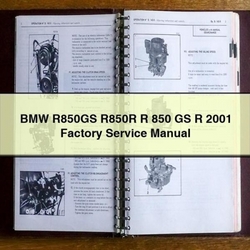
This manual provides comprehensive coverage for the 2001 BMW R 850 GS and R 850 R models. These motorcycles are renowned for their robust engineering, reliability, and the distinctive boxer-twin engine configuration, offering a blend of performance and versatility suitable for both touring and everyday riding. Built upon a rich heritage, the R 850 series represents a well-established platform known for its quality construction and rider-focused design.
The 2002 BMW R 1150 GS, a descendant of BMW Motorrad's esteemed adventure touring lineage, offers a robust platform for exploration and long-distance travel. Featuring an air/oil-cooled flat-twin boxer engine displacing 1130 cc and producing approximately 95 horsepower, it is engineered for both performance and reliability. Its distinctive Telelever front suspension and Paralever single-sided swingarm rear drive contribute to its renowned handling characteristics. This model represents a significant evolution in adventure motorcycle technology, building upon the legacy of its predecessors to provide a capable and comfortable riding experience across varied terrains.
This manual provides comprehensive service and repair information for the BMW R1150 GS models produced between 2002 and 2003. Designed for both experienced mechanics and owners with basic mechanical knowledge, it details every aspect of the vehicle. The R1150 GS is engineered for reliability and performance, offering a robust platform for various riding conditions.
The BMW R 1150 GS, produced in 2003, represents a significant entry in the adventure touring motorcycle segment. Building upon BMW Motorrad's extensive heritage in motorcycle engineering, this model, codenamed R21, features a robust 1130 cc, air/oil-cooled, four-stroke Boxer Twin engine. Known for its versatility and capability on both paved roads and light off-road terrain, the R 1150 GS is celebrated for its durability and suitability for long-distance travel. Its design emphasizes a balance of performance, with approximately 85 horsepower and 72 lb-ft of torque, and practical features, including a 6-speed manual transmission and shaft drive, making it a highly regarded machine among riders.
This manual provides comprehensive information for the 2004 R1150GS. Known for its robust engineering and reliability, the R1150GS is an iconic adventure touring motorcycle, powered by an 1130 cc flat-twin engine delivering approximately 85 hp and 71 lb-ft of torque. Its design emphasizes durability and performance for diverse riding conditions, featuring electronic fuel injection, a 6-speed manual gearbox, and the Integral ABS II braking system. The R1150GS represents a significant evolution in the renowned 'GS' lineage, offering a blend of power, comfort, and capability that has defined the adventure motorcycle segment.
This manual provides comprehensive technical information for the R1200 RT, R1200 ST, and R1200 GS models produced in the 2004 and 2005 model years. These motorcycles, built on the K2x platform, represent a commitment to engineering excellence, offering a blend of performance, reliability, and rider comfort. The R1200 RT is designed for long-distance touring, the R1200 ST for sporty agility, and the R1200 GS for adventure and versatility, all powered by a robust 1170cc boxer-twin engine. Known for their advanced technology, including shaft drive and sophisticated braking systems, these models have earned a reputation for their quality and enduring performance.
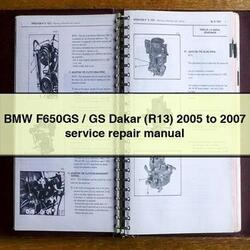
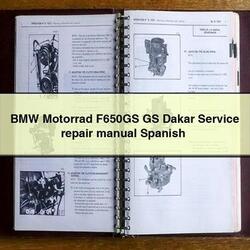
This workshop service manual provides comprehensive guidance for the F650CS, F650GS, and F650GS Dakar models produced between 2004 and 2007. These versatile motorcycles, part of a well-known lineage, are known for their robust engineering, reliability, and adaptability for both street riding and light off-road excursions. Built with a focus on accessible performance, they feature a single-cylinder, fuel-injected engine and are designed to offer a balanced riding experience, embodying a commitment to quality and rider satisfaction.
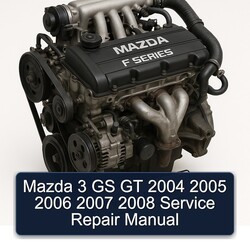
The Mazda 3, produced from 2004 to 2008, represents the first generation of Mazda's highly regarded compact car. Known for its engaging driving dynamics, often described as embodying the "Zoom-Zoom" philosophy with responsive steering and a balanced chassis, the Mazda 3 also features a stylish design. Available in GS and GT trim levels, and offered as both a 4-door sedan and a 5-door hatchback, this vehicle provides a compelling blend of performance, practicality, and aesthetic appeal, making it a popular choice for a wide range of drivers. Its commitment to engineering quality and reliability has been recognized, including multiple inclusions on Car and Driver's 10Best list.
This manual covers the Mazda3 GS GT models produced between 2004 and 2008, also known by its chassis code BK. As a first-generation model, the Mazda3 established itself as a strong contender in the compact car segment, offering a blend of sporty handling, practical design, and reliable performance. It was recognized for its engaging driving dynamics, earning accolades such as multiple Car and Driver Ten Best list inclusions. Available with either a 2.0L or a more powerful 2.3L MZR DISI Turbocharged engine, and offered with manual or automatic transmissions, the Mazda3 provided a compelling option for drivers seeking an affordable yet engaging vehicle.
The BMW R1200GS and R1200GS Adventure, produced from 2004 to 2012 (K25 generation), represent a pinnacle in adventure touring motorcycle design. These versatile machines, powered by a robust 1170cc air/oil-cooled flat-twin boxer engine, are engineered for both long-distance comfort and capable performance on varied terrain. Known for their robust construction, advanced engineering, and the inherent reliability associated with BMW Motorrad, the R1200GS series has consistently been a benchmark in its segment, appealing to riders seeking a machine ready for global exploration and everyday commuting alike.
The BMW R1200GS Adventure, produced between 2004 and 2012, is a benchmark in the adventure touring motorcycle segment. Renowned for its versatility, durability, and capability across diverse terrain, this model embodies a design philosophy focused on balancing comfort, performance, and ruggedness for long-distance touring and off-road excursions. Its engineering quality is evident in the robust frame construction, advanced Telelever front and Paralever rear suspension systems, and the powerful air/oil-cooled, 1170 cc boxer-twin engine that delivers 105 hp and 115 Nm of torque. This generation represents a significant technological advancement, building upon BMW Motorrad's rich heritage in creating capable touring motorcycles.
This manual covers the BMW R 1200 GS motorcycle, produced between 2004 and 2013. Renowned for its robust engineering and versatility, the R 1200 GS is a benchmark in the adventure touring segment, building on BMW Motorrad's legacy of producing capable and reliable motorcycles. Its air/oil-cooled, 1170 cc Boxer engine delivers approximately 100 hp, providing ample power for both on-road touring and off-road exploration. Key features include the Telelever front and Paralever rear suspension systems, a 6-speed gearbox, and an optional Integral ABS system, making it a highly capable and sought-after machine for riders worldwide.
The BMW R 1200 GS, produced from 2004 to 2013, represents a pinnacle in adventure touring motorcycle engineering. Built upon BMW Motorrad's renowned legacy, this model, identified by the K25 chassis code and M1200 engine designation, offers exceptional versatility for both on-road and off-road exploration. Its durable construction, powerful 1170 cc boxer-twin engine, and shaft drive system contribute to its reputation for reliability and long-distance comfort, making it a premier choice for touring riders and adventure enthusiasts alike. The R 1200 GS is celebrated for its robust design, capable of handling diverse terrains and extended journeys.
The BMW R 1150 GS, an Adventure Tourer motorcycle from 2005, embodies BMW's legacy of robust engineering and all-terrain capability. Built with a boxer-twin engine and a focus on durability, this model is renowned for its versatility, excelling in both long-distance touring and off-road exploration. Its design prioritizes rider comfort and dependable performance, making it a trusted companion for adventurous journeys. The R 1150 GS represents a significant step in the evolution of adventure motorcycles, offering a blend of power, handling, and the characteristic build quality associated with the brand.
This manual covers the F650GS and F650GS Dakar models from the second generation, produced between 2005 and 2007. These versatile lightweight adventure touring motorcycles are engineered for riders seeking a capable machine for on-road commuting, extended touring, and light off-road excursions. The F650GS, with its 19-inch front wheel, offers a balanced approach, while the F650GS Dakar variant enhances off-road prowess with a larger 21-inch front wheel and increased suspension travel. Both models are powered by a reliable single-cylinder, four-stroke engine with electronic fuel injection, delivering approximately 48 horsepower and 44 lb-ft of torque, making them a popular choice in their segment.
This manual covers the F650GS and F650GS Dakar models, produced between 2005 and 2007. These versatile motorcycles, built around a reliable single-cylinder, four-stroke engine with a 652 cc displacement, are renowned for their robust engineering and suitability for both on-road touring and light off-road adventures. The F650GS Dakar, in particular, offers enhanced off-road capability with longer travel suspension and a larger fuel tank, reflecting a heritage in adventure motorcycling. These models are celebrated for their approachable nature, durability, and strong aftermarket support, making them a popular choice for riders seeking a capable and dependable machine.
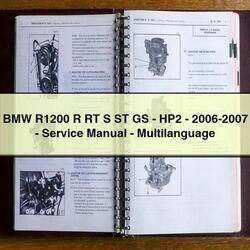
This workshop service repair manual provides comprehensive guidance for BMW's R1200 Series motorcycles, including the R1200R, R1200RT, R1200S, R1200GS, R1200ST, along with the R900RT, HP2 Enduro, and HP2 Megamoto models produced between 2005 and 2007. These versatile machines, powered by BMW's renowned air/oil-cooled boxer-twin engines, offer a blend of sport-touring, naked sportbike, and adventure-touring capabilities. Known for their engineering quality and reliability, these models represent a significant evolution in BMW's motorcycle lineup, building upon a rich heritage of performance and rider-focused design.
This manual provides comprehensive maintenance and repair information for the BMW R1200 GS Adventure models produced between 2005 and 2013. Designed for enthusiasts and professionals alike, this guide details the engineering and reliability that define the BMW brand, offering insights into the unique capabilities of the R1200 GS Adventure.
The BMW R1200 GS Adventure, produced between 2005 and 2013, is a highly capable adventure touring motorcycle renowned for its robust engineering and versatility. Built upon a legacy of innovation, this model is an evolution of the legendary GS series, specifically designed for long-distance travel and demanding off-road conditions. Featuring a powerful 1170 cc boxer engine, a large 33-liter fuel tank, and enhanced suspension, the R1200 GS Adventure offers exceptional comfort, durability, and performance across diverse terrains. Its design prioritizes rider comfort and cargo capacity, making it an ideal companion for extensive journeys and challenging expeditions.
This workshop service and repair manual covers the R1200 Series, including the R1200R, R1200RT, R1200S, R1200ST, R1200GS, R1200GS Adventure, and HP2 Enduro models produced between 2006 and 2007. These motorcycles are powered by a 1170cc boxer-twin engine, renowned for its smooth power delivery and versatility across various riding disciplines. The commitment to engineering excellence is evident in the R1200 Series, which offers a blend of performance, comfort, and advanced technology, making them suitable for everything from daily commuting to long-distance touring and off-road adventures.
The BMW F650 GS, produced in 2007, represents a versatile and capable adventure touring motorcycle. Building on BMW's extensive legacy in motorcycle manufacturing, the F650 GS is renowned for its robust engineering, reliability, and suitability for a wide range of riding conditions, from daily commuting to extended journeys. Its single-cylinder, liquid-cooled engine, typically around 652cc, delivers accessible power and torque, complemented by a 5-speed manual transmission and a multi-plate wet clutch. The model's design emphasizes practicality and rider comfort, often featuring adjustable suspension and a comfortable seating position, making it a popular choice for riders seeking adventure and dependability.
The BMW F 650 GS, introduced in its 2008 model year, is a versatile dual-sport and adventure touring motorcycle renowned for its accessibility and capability. This mid-weight machine features a flexible single-cylinder, liquid-cooled engine known for its fuel efficiency, paired with a robust chassis and suspension designed for a balanced ride on various terrains. Its design philosophy emphasizes ease of use, making it an attractive option for riders of all experience levels seeking a dependable companion for both daily commuting and longer journeys. The F 650 GS embodies a heritage of engineering excellence, offering a compelling blend of practicality and adventure.
This manual provides comprehensive information for the 2008 F 800 GS, an adventure touring motorcycle renowned for its versatility and signature engineering quality. Featuring a potent 798 cc parallel-twin engine delivering 75 hp and 55 Nm of torque, this model combines smooth power delivery with a robust steel tube frame, making it capable on varied terrain. Key technologies include optional ABS, integrated luggage system compatibility, and provision for accessories like heated grips. The F 800 GS was designed for riders seeking a balanced machine for both long-distance touring and off-road exploration, a segment where it was praised for its handling and character upon its introduction.
This manual covers the 2008 R 1200 GS Adventure, a large-displacement adventure touring motorcycle renowned for its robust engineering and versatility. Featuring a powerful 1170 cc boxer-twin engine, long-travel suspension for varied terrain, and an extensive fuel capacity for extended range, this model is designed for globetrotters and adventure seekers. Its standard equipment includes engine guards, handguards, and a larger windscreen, emphasizing rider protection and comfort during long-distance journeys and off-road excursions. The R 1200 GS Adventure builds upon a legacy of producing durable and innovative motorcycles, often serving as a benchmark in its class.
The 2008 R 1200 GS is a highly capable adventure touring motorcycle renowned for its versatility and robust engineering. Built upon a rich heritage, this model features a powerful 1170 cc boxer-twin engine with Double Overhead Camshafts, delivering 105 hp and 115 Nm of torque, coupled with a reliable shaft drive system. Its advanced chassis design, including the Telelever front and Paralever rear suspension, provides exceptional comfort and control across a wide range of terrains, from paved roads to off-road trails. The R 1200 GS is engineered for riders who demand performance and dependability for long-distance journeys and diverse riding conditions, embodying a commitment to quality and innovation in the adventure motorcycle segment.
This manual covers the F650GS, F800GS, F800S, and F800ST models produced between 2008 and 2009. These motorcycles, built on a shared parallel-twin engine platform, offer a blend of performance and versatility, with chassis codes K70 for the F650GS, K72 for the F800GS, and K71 for the F800S/ST. Known for engineering quality and rider-focused design, these bikes are celebrated for their reliability and dynamic handling, making them suitable for a range of riding experiences from daily commuting to adventure touring. The F650GS, in particular, leverages the F800 platform to provide an accessible entry into the adventure motorcycle segment.
The R 1200 GS and R 1200 GS Adventure (K25) models, produced between 2008 and 2009, represent a significant evolution in dual-sport motorcycle lineage. These versatile machines, powered by an air/oil-cooled 1170 cc Boxer engine delivering approximately 105 hp and 115 Nm of torque, are engineered for exceptional performance across diverse terrains, from paved roads to off-road trails. Known for their robust build quality, reliability, and advanced features such as optional Integral ABS and ASC, the R 1200 GS series has consistently earned accolades for its capability and touring comfort, making it a highly regarded choice for adventure riding.
This workshop service and repair manual covers the BMW R1200 Series motorcycles, including the R1200R, R1200RT, R1200S, R1200ST, R1200GS, R1200GS Adventure, HP2 Enduro, and HP2 Megamoto models produced between 2008 and 2009. These versatile machines, powered by BMW's renowned air/oil-cooled boxer-twin engines, offer a blend of performance, touring capability, and off-road prowess, reflecting BMW Motorrad's heritage of engineering excellence and reliability. With displacements of 1170 cc and power outputs typically ranging from 100-110 HP, these models are designed for a wide array of riding experiences, from daily commuting to long-distance adventures.
This manual covers the BMW F800 GS motorcycle, an Adventure Tourer produced from 2008 to 2013. Known for its versatility and capable parallel-twin, four-stroke engine with a displacement of 798 cc, the F800 GS offers a balanced blend of on-road comfort and off-road prowess. Its steel tube frame and robust construction, coupled with features like electronic fuel injection and a 6-speed gearbox, have made it a popular choice for riders seeking adventure. The model is equipped with dual disc front brakes and a single disc rear brake, with optional ABS and ASC for enhanced safety.
This manual covers the BMW F800GS (K72) motorcycle, produced between 2008 and 2013. Renowned for its robust parallel-twin engine and versatile design, the F800GS is engineered for adventure touring, offering a capable platform for both on-road comfort and off-road exploration. Its parallel-twin cylinder, four-stroke engine, displacing 798 cc, delivers approximately 85 hp and 61 lb-ft of torque, providing a strong balance of power and efficiency. The F800GS is recognized for its quality engineering and its ability to handle diverse riding conditions, making it a popular choice for riders seeking a reliable and adaptable machine.
The BMW F800GS, produced from 2008 to 2013, is a premium adventure touring motorcycle designed for versatility, blending on-road comfort with off-road capability. Known for its parallel-twin engine delivering smooth power and torque, this K70 generation model is engineered for long-distance journeys and diverse riding conditions. BMW Motorrad's heritage of engineering excellence is evident in the F800GS's robust steel trellis frame and adaptable design, making it a favored choice for motorcyclists seeking a capable and reliable machine for exploration.
The BMW F700 GS, produced for the 2012-2013 model years, is an adventure touring motorcycle designed for riders seeking versatility across various terrains. Building on BMW Motorrad's heritage of engineering excellence, this model offers a balance of performance and comfort, making it suitable for both daily commuting and light off-road exploration. Its parallel-twin, liquid-cooled engine, with an approximate displacement of 798 cc, delivers reliable power for diverse riding conditions. Key features include a robust chassis, adjustable suspension, and standard BMW Motorrad ABS, with optional ASC for enhanced stability.
The BMW F700 GS, produced in 2012 and 2013, is a versatile motorcycle designed for a wide range of riding experiences, from daily commuting to adventurous touring. Built with BMW's renowned engineering quality and reliability, this model features a robust 798 cc parallel-twin, four-stroke engine delivering approximately 75 hp and 57 lb-ft of torque, managed by a 6-speed transmission and a wet multi-disc clutch. Its liquid-cooled system, electronic fuel injection, and standard BMW Motorrad ABS contribute to its performance and safety. The F700 GS is equipped with a telescopic front fork and an aluminum single-sided swingarm with a central spring strut for responsive handling, complemented by dual disc front brakes and a single disc rear brake.
The BMW F700 GS, produced between 2012 and 2013, is a versatile adventure touring motorcycle known for its parallel-twin, liquid-cooled engine delivering approximately 75 horsepower. Designed for riders seeking capability in both on-road and light off-road conditions, it offers a comfortable riding experience suitable for touring. Its engineering reflects BMW's heritage of quality and reliability, with features like a 6-speed manual gearbox, ABS, and optional ASC contributing to its performance and safety. This model represents a significant offering in the mid-range adventure segment, competing with other dual-sport motorcycles.
The F800GS Adventure, model year 2013, is a versatile adventure touring motorcycle engineered for both on-road touring and off-road exploration. Built in Berlin, Germany, this model features a robust parallel-twin, four-stroke engine with 798 cc displacement, producing 85 hp and 61 lb-ft of torque. Its design emphasizes enhanced fuel range with a 24-liter tank and a durable chassis, making it a capable companion for extended journeys. With standard ABS and optional traction control, the F800GS Adventure offers a blend of performance, comfort, and technological features, positioning it as a strong contender in the adventure touring segment.
The BMW F 700 GS (K70) is a mid-weight adventure touring motorcycle produced for the 2013 and 2014 model years. Renowned for its versatility, this parallel-twin, liquid-cooled machine is engineered for riders seeking a capable companion for commuting, long-distance touring, and exploring varied terrain. Building on BMW Motorrad's heritage of engineering excellence and rider-focused design, the F 700 GS offers a balanced blend of accessible performance, comfort, and the durability expected from the brand. Its design emphasizes capability across different surfaces, supported by features such as standard ABS, which often includes a switchable rear setting for off-road conditions, and optional traction control systems.
The BMW F650GS and F650GS Dakar models, produced between 2000 and 2004, represent a significant offering in the adventure touring motorcycle segment. Known for their robust single-cylinder engines, versatility, and the renowned engineering quality, these bikes are designed to handle a wide range of riding conditions, from daily commutes to more adventurous explorations. The F650GS Dakar, in particular, features enhancements geared towards off-road capability, including increased suspension travel and a taller stance. Both models benefit from a legacy of producing reliable and user-friendly motorcycles, making them popular choices for riders seeking a capable and dependable machine.
This manual covers the BMW R1100 series motorcycles, including the RT, RS, GS, and R variants, along with the R850 series GS and R models, specifically for the 2000 model year. These motorcycles are powered by BMW's signature air/oil-cooled Boxer Twin engines, known for their low center of gravity and unique power delivery. The R1100 platform offered versatility, with models designed for sport touring, sport riding, adventure, and standard configurations. This series represented a significant technological advancement for BMW, incorporating fuel injection and shaft drive, and often featuring optional Integral ABS for enhanced safety.
The BMW F 650 GS Dakar, produced from 1999 to 2007, is a versatile dual-sport motorcycle renowned for its German engineering and reliability. Building upon the F 650 GS, the Dakar variant was specifically designed to enhance off-road capability and long-distance touring comfort. Key features include a larger 21-inch front wheel, extended suspension travel, a taller windscreen, and optimized ergonomics for tackling varied terrain. With a robust single-cylinder engine and a durable steel tube frame, the F 650 GS Dakar offers a capable and enjoyable riding experience for both on-road commuting and adventurous excursions.
This manual provides comprehensive guidance for the F 650 GS, a versatile motorcycle known for its engineering quality and reliability. Building on a distinguished heritage, the F 650 GS line has evolved to offer a capable platform suitable for a wide range of riding experiences, from daily commuting to longer journeys. Its design typically incorporates robust components and thoughtful features, making it a popular choice for riders seeking a dependable and enjoyable machine.
The BMW F 650 GS, identified internally by the model designation K70 and platform code F650GS (Single Cylinder), is a versatile dual-sport adventure motorcycle celebrated for its reliability and user-friendly design. Produced roughly from the late 1990s through the mid-2000s, this model offered accessible adventure touring capabilities, making it a popular choice for both on-road commuting and off-road exploration. Its robust single-cylinder engine, typically around 652 cc with electronic fuel injection, provided a balance of performance and fuel efficiency, complemented by a capable chassis and suspension designed for varied terrains. The F 650 GS is recognized for its affordable entry into the adventure segment, offering a dependable and economical riding experience that has earned it a strong reputation among owners.
This service repair manual provides comprehensive guidance for the BMW F 650 GS, a versatile adventure touring motorcycle produced roughly from the mid-1990s through the mid-2000s. Known for its robust engineering and reliability, the F 650 GS is celebrated for its approachable nature, making it suitable for both daily commuting and light off-road excursions. Its design often featured a liquid-cooled, four-stroke single-cylinder engine, typically producing around 50-52 horsepower, coupled with a five or six-speed transmission and a reliable chain drive. The F 650 GS is recognized for its comfortable riding position and fuel efficiency, making it a popular choice in the middleweight adventure segment.
This Service and Repair Workshop Manual provides comprehensive guidance for the BMW F 650 GS CS. Renowned for its robust engineering and versatility, the F 650 GS series, including the CS variant, represents BMW's commitment to producing reliable and capable motorcycles. The CS model, in particular, carved out a niche as a stylish, urban-focused single-cylinder machine, distinguishing itself with premium build quality. This manual is designed for owners, independent mechanics, and DIY enthusiasts seeking to maintain and repair their motorcycle, empowering them to perform tasks ranging from routine maintenance to complex overhauls.
The BMW F 650 GS, produced from 1993 to 2007, is a versatile single-cylinder dual-sport motorcycle known for its robust engineering and capability across various terrains. Available in standard and the more off-road-focused Dakar variants, this model offered a comfortable riding position, efficient fuel injection on later models, and BMW's signature build quality. Its 652 cc liquid-cooled engine, coupled with a 5-speed manual transmission and chain drive, provided a balanced performance suitable for both commuting and adventure touring, making it a popular choice for riders seeking a practical and reliable machine.
The BMW F 650 GS, produced primarily between 1999 and 2007, is a versatile single-cylinder, four-stroke motorcycle known for its robust engineering and suitability for both on-road and light off-road adventures. With a displacement of approximately 652 cc and a power output around 48-50 HP, this model offers a balanced performance for touring and daily commuting. Building on BMW Motorrad's legacy of quality and reliability, the F 650 GS (E169 chassis) was designed to provide a comfortable and capable riding experience, making it a popular choice for riders seeking a dependable dual-sport machine.
This manual covers the BMW F 650 GS, a versatile dual-sport motorcycle produced roughly from 1999 to the mid-2000s. Known for its balance of on-road comfort and off-road capability, the F 650 GS is powered by a torque-rich, single-cylinder, four-stroke engine, typically around 652 cc, featuring electronic fuel injection. Its robust engineering and BMW's reputation for quality make it a reliable choice for adventure touring. The motorcycle is equipped with disc brakes, a chain drive, and often offers ABS as an option, contributing to its safety and performance across various riding conditions.
This service workshop manual provides comprehensive technical information for BMW F 800 GS, F 800 S, F 800 ST, F 800 R, and F 650 GS (K7x) models. These motorcycles, powered by a parallel-twin engine typically around 798cc or 652cc for the F 650 GS, are known for their versatility, offering a blend of performance and comfort suitable for adventure touring and general riding. The F 800 platform, introduced by BMW Motorrad, represented a significant offering in the mid-weight motorcycle segment, characterized by its trellis frame, electronic fuel injection, and available advanced rider aids such as ABS and Automatic Stability Control (ASC).
The BMW F650 GS (single), also known by its chassis code F650GS (E650G), represents the foundational model in BMW Motorrad's single-cylinder dual-sport lineage, often recognized from its "F650 Funduro" era. Produced from the mid-1990s into the early 2000s, this versatile motorcycle is powered by a Rotax-built, liquid-cooled, single-cylinder, four-stroke engine displacing 652 cc. Known for its robust engineering and reliability, the F650 GS (single) was designed to excel in both on-road touring and light off-road adventures, embodying BMW's commitment to quality and practical performance.
The BMW F650GS is a versatile single-cylinder motorcycle known for its reliability and suitability for a range of riding conditions, from daily commuting to adventure touring. Building on BMW's legacy of robust engineering, this model, primarily featuring a 652 cc four-stroke engine, offers a balanced blend of performance and accessibility. Its design emphasizes practicality and ease of use, making it a favored choice for both novice riders and experienced enthusiasts seeking a dependable machine for diverse journeys. The F650GS series is recognized for its adaptability and enduring quality in the motorcycle market.
The BMW F650 GS represents a versatile motorcycle known for its blend of on-road comfort and off-road capability. Spanning various production years, this model has consistently delivered on BMW Motorrad's legacy of engineering excellence and durability. Its design caters to a wide range of riders, from daily commuters to adventure enthusiasts, offering a reliable platform for exploration. The F650 GS is characterized by its robust construction, adaptable performance, and the inherent quality associated with BMW's renowned manufacturing standards, making it a dependable choice for diverse riding conditions.
This workshop service and repair manual provides comprehensive guidance for the F650GS and GS Dakar models, produced from 1993 through approximately 2007. These versatile motorcycles, part of an esteemed lineup, are known for their robust engineering, reliability, and suitability for a wide range of riding conditions, from daily commuting to adventure touring. The F650GS Dakar variant, in particular, was designed with enhanced off-road capability and long-distance travel in mind, featuring increased suspension travel and a larger fuel tank. This manual covers the first generation of these iconic single-cylinder, four-stroke machines, celebrated for their dual-sport capabilities.
This manual covers the F650GS, a versatile motorcycle celebrated for its dual-sport and adventure touring capabilities. Produced across multiple iterations from the late 1990s through the late 2000s, the F650GS platform, built upon the robust F-series motorcycle platform, has earned acclaim for its engineering quality and reliability. These models, often featuring a single-cylinder, four-stroke engine with displacements around 650cc and electronic fuel injection, offer a balanced blend of performance and practicality for a wide range of riding conditions.
The F650GS, often referred to as the F650 GS BIKE, is a versatile dual-sport and adventure touring motorcycle renowned for its reliability and adaptability across various riding conditions. Featuring a robust single-cylinder, four-stroke, 652 cc engine with liquid cooling and a balancing shaft, it delivers user-friendly, torquey performance suitable for both daily commuting and longer journeys. Its engineering emphasizes practicality and ease of maintenance, a hallmark of the F series development. This platform is designed for riders seeking a capable and manageable motorcycle that bridges the gap between on-road touring and light to moderate off-road exploration, embodying a heritage in building durable and technologically sound motorcycles.
The F650GS, also known by its chassis code R13 and often referred to simply as the GS, is a versatile single-cylinder motorcycle designed for adventure touring and everyday use. Building on a legacy of engineering excellence, this model offers a balanced combination of comfortable ergonomics, adaptable performance for various riding conditions, and renowned build quality. It serves as an accessible entry point into the GS family, appealing to riders seeking a reliable and capable machine for commuting, touring, and light off-road excursions, distinguishing itself through its adaptable nature and relative affordability within its segment.
The BMW G650GS Sertão is a versatile lightweight adventure touring and dual-sport motorcycle, building upon the esteemed F650GS platform. Renowned for its robust single-cylinder engine, reliable performance, and capable handling both on and off-road, this model offers a comfortable riding experience suitable for extended touring. Its design emphasizes accessible maintenance and durability, making it a favored choice for riders seeking adventure without compromising on engineering quality. The G650GS Sertão is engineered to provide a rewarding experience across diverse riding conditions.
This document provides comprehensive service information for the BMW G650GS Sertao motorcycle, produced primarily between 2010 and 2014. As a capable single-cylinder dual-sport machine, the G650GS Sertao evolved from the F650GS platform, offering enhanced off-road prowess and suitability for extended touring. Its design emphasizes reliability and versatility, featuring a 652 cc DOHC engine, electronic fuel injection, and robust chassis components including telescopic front forks and a monoshock rear suspension. The motorcycle is equipped with a 5-speed transmission, multi-disc wet clutch, and hydraulic brakes, with an optional ABS system available for added safety.
The BMW G650GS, a dual-sport motorcycle model line that saw significant production from 2008 onwards, represents a commitment to accessible adventure riding. Building upon the legacy of the F650GS single-cylinder platform, this model is renowned for its versatility, combining a robust steel tube frame with a reliable 652 cc liquid-cooled single-cylinder engine. This engine, featuring DOHC and electronic fuel injection, delivers approximately 47-50 hp and 44-45 lb-ft of torque, making it suitable for both daily commuting and light off-road exploration. The G650GS is characterized by its manageable weight, comfortable ergonomics, and a fuel tank capacity of 16 liters, all contributing to its reputation as a dependable and cost-effective choice for new riders and adventure enthusiasts alike.
The BMW G650GS series represents a capable and versatile dual-sport motorcycle, building upon BMW's established legacy in producing reliable machines. Known for its single-cylinder, four-stroke engine, typically around 652cc and liquid-cooled, the G650GS is engineered for both daily commuting and adventurous excursions, including light off-road use. Its design emphasizes practicality and durability, offering a balance of performance and user-friendliness that has made it a popular choice for riders seeking a dependable all-rounder. This model line is recognized for its versatility and longevity, supported by meticulous engineering and a focus on rider experience.
The BMW F650GS Dakar is a versatile dual-sport motorcycle renowned for its reliability and capability in both on-road touring and off-road exploration. Introduced in 2000, this model is an evolution of the F650GS, specifically designed with enhanced off-road prowess inspired by the Paris-Dakar rally. Key features include a robust 652cc single-cylinder Rotax engine, longer travel suspension, a larger 21-inch front wheel for superior obstacle clearance, and a taller windscreen. These attributes make it a capable adventure touring machine, competing with other mid-weight adventure bikes of its era.
The BMW Motorrad R 1200 GS and R 1200 GS Adventure, internal chassis code K25, represent a pinnacle of adventure touring motorcycle engineering. Produced generally between 2004 and 2012, these models are celebrated for their robust construction, exceptional reliability, and versatile performance, equally adept at long-distance road touring and conquering challenging off-road terrain. Building on BMW's rich heritage of boxer-twin engines and innovative chassis design, the R 1200 GS series features advanced technologies like Telelever front suspension and Paralever rear suspension, ensuring superior handling and rider comfort. Their powerful 1170 cc boxer-twin engines, coupled with shaft drive, provide a smooth and dependable experience for riders seeking adventure and premium features.
The BMW R 1150 GS, produced from 1999 to 2005, is a highly acclaimed adventure touring motorcycle renowned for its robust engineering, exceptional reliability, and versatile performance across diverse terrains. As a second-generation R Series model, it represents a significant evolution in BMW Motorrad's celebrated GS lineage, building upon the legacy of its predecessors with enhanced engine power, refined suspension systems, and advanced technology for its era. This iconic machine is engineered for long-distance comfort and off-road capability, making it a favorite among riders who seek adventure and dependable performance.
The BMW R 1150 GS, produced from 1999 to 2003, is an adventure touring motorcycle renowned for its durability, off-road capability, and long-distance comfort. Building on the legacy of the GS series, this model features a 1130 cc air/oil-cooled flat-twin boxer engine delivering 95 hp and 98 Nm of torque, coupled with a shaft drive and an integrated 5-speed gearbox. Its engineering prowess is evident in the sophisticated Telelever front suspension and Monolever rear suspension, designed for optimal handling across varied terrain. The optional Integral ABS II system further enhances its safety and performance.
The BMW R 1150 GS, available in Standard and Adventure variants, represents a pinnacle of dual-sport and adventure touring motorcycle engineering. Produced between 1999 and 2005, this model features an air/oil-cooled, four-stroke, Boxer-Twin engine with a displacement of 1130 cc, delivering approximately 85 horsepower and 98 Nm of torque. Known for its robust build, comfortable ergonomics, and exceptional capability for long-distance travel and light off-roading, the R 1150 GS builds upon BMW Motorrad's legacy of producing durable and reliable machines. Its design emphasizes practicality and performance, making it a highly regarded choice in its market segment.
The BMW R 1150 GS, produced between 1999 and 2005, is an iconic adventure-touring motorcycle renowned for its durability, versatility, and go-anywhere capability. Featuring a robust 1130 cc boxer-twin engine, advanced Telelever front and Paralever rear suspension systems, and the option of BMW's Integral ABS, this model epitomizes premium long-distance touring. Its engineering quality and reliability have cemented its status as a benchmark in its class, offering riders exceptional comfort and performance across diverse terrains.
The BMW R 1150 GS is an iconic motorcycle renowned for its robust engineering and versatility, designed for both long-distance touring and adventurous off-road exploration. Featuring a powerful 1130 cc air/oil-cooled boxer engine with electronic fuel injection, it delivers approximately 80 HP and 72 lb-ft of torque, ensuring strong performance across varied terrains. Its advanced chassis incorporates BMW's Telelever front suspension and Paralever rear drive, contributing to exceptional handling and stability. This model embodies BMW's commitment to reliability and rider comfort, making it a capable companion for any journey.
This manual covers the R 80 GS and R 100 R models, iconic motorcycles renowned for their robust engineering and enduring performance. The R 80 GS, produced from 1980 to 1987, pioneered the adventure touring segment with its versatile Geländ/Straße design, while the R 100 R, manufactured from 1991 to 1995, offered a more powerful evolution of celebrated air-cooled boxer-twin engine. Both models embody commitment to durability and rider comfort, featuring reliable shaft drive systems and a design philosophy focused on long-distance capability. These motorcycles represent significant milestones in rich history, appealing to enthusiasts seeking dependable and capable machines.
This manual covers the R 80 GS and R 100 GS, iconic dual-sport motorcycles produced from the early 1980s through the mid-1990s. These models are renowned for their robust air-cooled, horizontally opposed twin-cylinder boxer engines, long-travel suspension, and shaft drive, making them highly capable adventure touring machines. The R 80 GS, introduced in 1980, pioneered the adventure segment, while the R 100 GS, launched in 1987, offered increased power and refinement. Both models are celebrated for their durability, reliability, and the distinctive riding experience provided by engineering prowess.
This manual covers the BMW R 80 GS and R 100 R motorcycles, iconic models produced primarily during the 1980s and 1990s. The R 80 GS, a foundational model in BMW's adventure-touring lineage, and the R 100 R, a more road-focused iteration, are both powered by air-cooled, four-stroke boxer-twin engines. These versatile machines are renowned for their robust engineering and reliability, offering riders dependable performance for both off-road excursions and long-distance touring.
This manual covers the BMW R 80 GS and R 100 R models, renowned dual-sport and adventure motorcycles produced between the early 1980s and mid-1990s. These robust machines, manufactured in Berlin, Germany, are characterized by their air-cooled boxer twin engines, shaft drive, and long-travel suspension, making them exceptionally capable for both on-road touring and off-road exploration. The R 80 GS and its successors established the adventure motorcycle segment, celebrated for their durability, reliability, and unique riding experience, a testament to BMW Motorrad's long heritage in building dependable motorcycles.
This manual covers the R 80 GS and R 100 R motorcycles, produced approximately from the early 1980s to the mid-1990s. These models represent pioneering efforts in the adventure and touring segments, building on a rich heritage of robust engineering. The R 80 GS introduced the dual-purpose 'Gelände/Straße' concept, while the R 100 R offered a refined, road-oriented experience. Both are characterized by their air-cooled, horizontally opposed twin-cylinder 'Boxer' engines, shaft drive, and legendary durability, making them enduring choices for riders seeking versatility and reliability.
This manual covers the R 80 GS and R 100 R motorcycles, iconic models that defined the adventure touring and road-biased boxer twin segments respectively. The R 80 GS, introduced in 1980, is celebrated for pioneering the 'Gelände/Straße' concept, while the R 100 R continued the legacy of the R 100 series with updated styling. These air-cooled, four-stroke boxer twin-cylinder machines, powered by engines ranging from approximately 797.5 cc to 979.5 cc, are renowned for their robust engineering, reliability, and enduring appeal within the motorcycle community.
The R 80 GS (1987-1990) and R 100 R (1991-1995) are iconic motorcycles renowned for their robust engineering, versatility, and the distinctive character of their air-cooled boxer-twin engines. The R 80 GS, a pioneer in the dual-sport category, offers exceptional capability for both on-road touring and off-road adventures, while the R 100 R presents a more road-biased interpretation, emphasizing comfort and performance for longer journeys. Both models embody a commitment to durability and rider engagement, featuring a reliable shaft drive system and a sturdy tubular steel frame, making them highly regarded by enthusiasts and capable performers in their respective classes.
The BMW R1100 Series motorcycles, encompassing the RT, RS, GS, and R models produced primarily between 1993 and 2001, represent a significant era in BMW Motorrad's history. These horizontally opposed twin-cylinder, four-stroke, air/oil-cooled machines, featuring a 1085 cc boxer engine, were engineered for reliability and performance across diverse riding applications, from sport touring and adventure touring to standard naked configurations. Known for their robust construction, innovative features like the Paralever rear suspension and optional Integral ABS II, and the enduring legacy of the boxer engine, the R1100 series offers a unique blend of comfort, capability, and enduring engineering quality.
The BMW R1100 Series, encompassing the RT, RS, GS, and R models, represents a significant chapter in the evolution of BMW's renowned boxer-twin motorcycles. Introduced in the early 1990s on the R259 platform, these bikes are characterized by their air/oil-cooled flat-twin engines, shaft drive, and robust chassis designs. They offered a blend of performance and comfort, catering to diverse riding needs from sport touring and long-distance journeys to adventure and standard riding. Key features like the distinctive boxer engine, advanced (for its time) ABS systems, and innovative suspension technologies like the Telelever system (on RS, RT, and GS models) underscored BMW's commitment to engineering excellence and rider-centric design, establishing a strong reputation for reliability and capability in their respective market segments.
This Service Repair Workshop Manual covers a range of BMW R-series motorcycles, including the R1100 S, R1100 R, R850 R, R1200 C, and R1150 GS. These models, primarily produced between the mid-1990s and mid-2000s, are characterized by their air/oil-cooled boxer-twin engines and shaft drive systems, offering a blend of touring comfort and sporty performance. Known for BMW Motorrad's legacy of engineering quality and reliability, these motorcycles have been popular for their versatility, from urban commuting to long-distance adventure touring, with models like the R1150GS earning particular acclaim for their go-anywhere capability.
This manual covers the BMW R1100 series motorcycles, including the R1100R, R1100RT, R1100RS, and R1100GS, produced approximately between 1993 and 2000. These models are powered by a 1085 cc Boxer Twin engine featuring a 4-valve per cylinder DOHC design, oil cooling with fan-assisted cylinder head cooling, and Bosch Motronic Electronic Fuel Injection. Known for BMW's legacy of engineering excellence and the Boxer engine's development, the R1100 series is recognized for its durability, comfort, and touring capabilities, particularly the RT and GS variants. The motorcycles utilize a 5-speed manual transmission with a single dry plate clutch and shaft drive, and feature advanced safety systems like the optional BMW Motorrad ABS II.
This workshop service repair manual covers a range of BMW R1100 and R850 series motorcycles, including the R1100R, R1100RT, R1100RS, R1100GS, and R850GS models. These premium motorcycles, produced from the mid-1990s to the early 2000s, are powered by air/oil-cooled, four-stroke Boxer Twin engines with displacements of 1085cc for the R1100 variants and 848cc for the R850 variants. Renowned for their sophisticated engineering, shaft drive, and robust build quality, these models offer a blend of sport-touring capability and reliable performance. Key features include advanced braking systems with optional ABS and linked braking, and on some models, the innovative Telelever front suspension system, all contributing to their reputation for comfort and dynamic handling.
This manual covers the R1100 series motorcycles, including the RT (Touring), RS (Sport Touring), and GS (Enduro/Dual-Sport) variants, for model years 2000 onwards. These models are renowned for their robust engineering, distinctive air/oil-cooled Boxer engines, innovative Telelever front suspension, and reliable shaft drive. The R1100 series marked a significant advancement for motorcycle manufacturing, offering a blend of performance, comfort, and versatility that established a strong presence in the large-displacement motorcycle market. Key features include the horizontally opposed twin-cylinder engine, the Telelever and Monolever suspension systems, and the available Integral ABS, all contributing to their reputation for stability and rider-centric design.
This manual covers the R1100 series, including the R1100RT, R1100RS, R1100GS, and R1100R models, produced from approximately 1993 to 2001. These motorcycles are renowned for their robust engineering, featuring a 1085 cc air-cooled, flat-twin boxer engine with Bosch Motronic fuel injection and shaft drive. The R1100 series is celebrated for its durability, technical innovation, and versatility, catering to touring, sport-touring, and adventure riding. Built with a trellis frame and known for their quality construction, these bikes represent a significant chapter in motorcycle history.
This manual covers the R1100 series motorcycles, including the R1100RT, R1100RS, R1100GS, and R1100R, produced primarily between 1993 and 2001. These motorcycles are renowned for their robust 1100cc boxer-twin engines, advanced engineering, and versatility across different riding styles, from long-distance touring to adventure riding. The R1100 series represents a significant advancement in motorcycle technology, incorporating features like the Telelever front suspension and the Motronic fuel injection system, which contribute to their reputation for reliability and performance.
The BMW R1100 series, encompassing the RT, RS, GS, and R models produced from the mid-1990s to the early 2000s, represents a significant chapter in BMW's motorcycle engineering. These versatile machines are characterized by their robust air/oil-cooled Boxer twin engines, shaft drive, innovative Telelever front and Paralever rear suspension systems, and the availability of advanced features like Integral ABS. Renowned for their comfort during long-distance touring, capable handling across various terrains, and reliable German engineering, the R1100 series offered a compelling blend of performance and practicality, competing effectively in the premium touring and sport-touring motorcycle market.
This manual covers the R1100 Series motorcycles, including the R1100RT, R1100RS, and R1100GS variants, produced primarily from 1993 to 2001. These models are distinguished by their air/oil-cooled, 1085 cc boxer-twin engines, Telelever front suspension, and Paralever rear suspension, offering a blend of performance, touring comfort, and robust engineering characteristic of Motorrad. The R1100 series represented a significant advancement for the brand, competing in the premium motorcycle segment with features like fuel injection and optional ABS, and are recognized for their build quality and durability.
This manual covers the R1100 Series motorcycles, including the R1100RT, R1100RS, R1100GS, and R1100R models, produced from approximately 1993 to 2001. These premium sport-touring and adventure touring motorcycles are distinguished by their unique longitudinal boxer twin engines, shaft drive for reduced maintenance, and advanced Telelever front and Paralever rear suspension systems. Known for their engineering quality, rider comfort, and long-distance capabilities, the R1100 series offers a blend of performance and versatility, often equipped with integral ABS for enhanced safety.
The BMW R1100 series, encompassing the RT, RS, GS, and R models produced primarily between 1993 and 2001, represents a significant advancement in BMW Motorrad's boxer-twin motorcycle lineage. These versatile machines, powered by a 1085cc air-cooled boxer-twin engine featuring Bosch Motronic fuel injection and typically producing around 90-95 horsepower, were engineered for reliability and performance across various riding disciplines, from sport touring to adventure. Notable features include shaft drive, a 5-speed manual transmission, and optional Integral ABS, reflecting a commitment to engineering excellence and rider safety.
This manual covers the R1100 Series motorcycles from the 2000 model year, including the R1100RT, R1100RS, R1100GS, and R1100R variants. These models represent a significant evolution in the renowned boxer-twin tradition, offering a blend of performance, comfort, and durability. Built with German engineering precision, the R1100 Series is celebrated for its reliability and capability across various riding environments, from long-distance touring to spirited sport-riding and adventurous journeys. The air/oil-cooled, 1085cc boxer twin engine, coupled with sophisticated fuel injection and shaft drive systems, provides a robust and engaging riding experience, making these motorcycles a favored choice for discerning riders.
The BMW R1150GS ABS, model code R21, is an adventure touring motorcycle produced between 1999 and 2005. Renowned for its versatility and robust engineering, this model features a 1130 cc horizontally-opposed twin-cylinder Boxer engine, a 6-speed manual gearbox, and shaft drive. Its design emphasizes both on-road comfort and off-road capability, incorporating BMW's Telelever front and Paralever rear suspension systems for enhanced stability. The R1150GS ABS variant includes BMW's Integral ABS II braking system, further contributing to rider safety. This motorcycle is part of the esteemed GS lineage, known for its durability and global adventure touring prowess.
The BMW R 1150 GS is a legendary adventure touring motorcycle, produced from 1999 to 2005. Renowned for its go-anywhere capability, robust engineering, and enduring reliability, it stands as a testament to BMW Motorrad's heritage in creating versatile, long-distance machines. Distinguishing itself with a unique air/oil-cooled opposed-twin (Boxer) engine, Telelever front suspension, and Paralever rear suspension, the R 1150 GS offers a comfortable and stable ride across varied terrains. Its durable construction and powerful performance, complemented by features like shaft drive and optional Integral ABS II, have cemented its reputation among riders seeking adventure and reliability.
The BMW R1150 GS, produced from 1999 to 2003, represents the second generation of this iconic adventure touring motorcycle. Known for its robust engineering and the distinctive boxer-twin engine, the R1150 GS offered unparalleled versatility, making it a benchmark in its class. Its design prioritized both long-distance comfort and off-road capability, a unique selling proposition that cemented its reputation among riders worldwide. This model, chassis code R28, embodies BMW Motorrad's legacy of producing durable and technologically advanced motorcycles, building upon the success of its predecessors and setting the stage for future innovations.
The BMW R1150 GS, produced from 1999 to 2005, is an iconic adventure touring motorcycle renowned for its exceptional off-road capability and long-distance comfort. Featuring a robust four-stroke, air-cooled, two-cylinder boxer engine with a displacement of 1130 cc, it delivers a smooth power output of 85 hp and 71 lb-ft of torque. Its design, characterized by a low center of gravity from the boxer configuration and a durable tubular steel frame, contributes to its renowned reliability and versatile performance, making it a benchmark in its segment.
The BMW R 1150 GS, produced between 1999 and 2005, is an iconic adventure touring motorcycle renowned for its robust engineering, reliability, and go-anywhere capability. Building upon the legacy of its predecessors, this model features a powerful 1130 cc boxer twin-cylinder engine, a distinctive Telelever front suspension, and the Paralever single-sided swingarm, all contributing to its exceptional performance on both paved roads and challenging terrain. Its design prioritizes comfort for long-distance travel and durability, making it a favored choice for riders seeking adventure and dependable performance.
The BMW R1150 GS, produced between 1999 and 2003, is an adventure touring motorcycle renowned for its torque-rich boxer engine, durable Telelever front suspension, and robust build quality. This model, part of BMW Motorrad's esteemed R-series heritage, offers exceptional touring comfort and legendary off-road capability, making it a versatile choice for long-distance travel, commuting, and light off-road exploration. Its distinctive selling points include a powerful 1130 cc engine, a 6-speed manual gearbox, and optional Integral ABS II braking system, all contributing to its reputation as a capable and reliable machine.
The R1150 GS and GS Adventure models, produced between 2000 and 2005, are highly regarded dual-sport motorcycles engineered for exceptional long-distance touring and adventurous off-road exploration. These machines are celebrated for their robust build quality, the inherent stability provided by the boxer engine's low center of gravity, and their versatile ergonomics. Key features such as the reliable shaft drive, long-travel suspension, and the optional Integral ABS II system underscore their premium positioning in the adventure motorcycle market, offering a unique blend of performance and durability.
The BMW R1150 GS, produced from 1999 to 2004, is a highly capable dual-sport motorcycle renowned for its legendary versatility, durability, and off-road prowess. This adventure touring machine features a robust 1130 cc air/oil-cooled Boxer twin engine with Bosch Motronic EFI, delivering 95 hp and 72 lb-ft of torque. Notable engineering highlights include a shaft drive for reduced maintenance, Telelever front suspension for superior handling, and an optional Integral ABS II braking system for enhanced safety. Its spacious fuel tank, comfortable ergonomics, and legendary reputation make it an ideal choice for both long-distance touring and challenging off-road expeditions.
The BMW R1150 GS, produced from 2000 to 2005, represents a significant evolution in adventure touring motorcycles. Available in Standard and Adventure variants, this model, built on the R21 platform, is renowned for its robust engineering, exemplified by its air/oil-cooled, 1130cc flat-twin boxer engine delivering approximately 95 horsepower, and its advanced suspension systems including the Telelever front and Paralever rear. The R1150 GS is celebrated for its versatility, equally capable on long-distance tours as it is on challenging off-road excursions, a testament to a legacy of producing durable and technically advanced machines. Its design emphasizes reliability and rider comfort, making it a benchmark in its segment during its production years.
The R1150GS, produced from 2000 to 2005, stands as a legendary dual-sport motorcycle, celebrated for its exceptional versatility, robust build quality, and formidable off-road capabilities. This adventure touring icon, manufactured in Berlin, Germany, is powered by a torquey 1130 cc air/oil-cooled boxer-twin engine, delivering 85 horsepower and 98 Nm of torque, paired with a 6-speed manual transmission and shaft drive. Its design emphasizes comfortable ergonomics for long-distance journeys and a durable chassis engineered to tackle challenging terrains, solidifying its premium position in the adventure market. Key features include its distinctive engine layout, shaft drive, extensive fuel range, and significant customization potential, making it a favored choice for riders seeking adventure.
The R 1150 GS, produced from 1999 to 2005, is a highly regarded adventure touring motorcycle celebrated for its robust engineering, exceptional durability, and remarkable versatility. Building on a rich heritage of producing reliable boxer-twin engines, the R 1150 GS offers a comfortable and capable platform for both long-distance journeys and challenging off-road explorations. Its design emphasizes rider ergonomics, ample luggage capacity, and a sophisticated suspension system, making it a standout choice in its segment and a testament to commitment to quality and performance.
The BMW R1150GS, produced between 1999 and 2005, is a versatile adventure touring motorcycle renowned for its robust engineering and capability across diverse terrains. Featuring a 1130 cc Boxer Twin engine with DOHC and Air/Oil cooling, this model offers a potent blend of performance and reliability, making it a favored choice for long-distance travel and off-road exploration. Its design emphasizes rider comfort and control, supported by advanced systems like the optional BMW Integral ABS and the distinctive Telelever front and Monolever rear suspension.
The BMW R 1150 GS, often affectionately known as the "Güsse," is a celebrated adventure touring motorcycle produced from 1999 to 2005. This model, part of the R21 generation, is renowned for its robust 1130 cc flat-twin boxer engine, shaft drive, and versatile capabilities, equally adept on paved roads and challenging off-road terrain. Key features include its distinctive Telelever front suspension and Monolever rear suspension, offering long-travel comfort and stability, making it a highly capable machine for both daily commuting and extended global expeditions. Its engineering quality and reliability have cemented its reputation as a benchmark in the adventure motorcycle segment.
The R 1150 GS, often nicknamed the GS (Geländestraße/Adventure), is an iconic adventure touring motorcycle produced from 2000 to 2005. Renowned for its versatility, robust build, and comfortable ergonomics, it excels in a wide range of conditions, from daily commuting to long-distance exploration and light off-road adventures. Powered by a 1130 cc air/oil-cooled Boxer-twin engine, it delivers approximately 90 hp and 98 Nm of torque, complemented by a 5-speed manual gearbox and signature Paralever shaft drive. Key features include its distinctive beak fairing, optional Integral ABS, and a substantial 25-liter fuel tank, making it a highly capable and reliable machine that has earned significant industry acclaim for its performance and durability.
This manual provides comprehensive service and repair information for the BMW R 1150 GS motorcycle. Designed for a wide range of maintenance and repair tasks, from routine tune-ups to complex engine and transmission overhauls, this guide ensures your vehicle receives the highest standard of care. Its detailed instructions and clear illustrations are crafted to empower owners and technicians alike in maintaining the R 1150 GS's renowned engineering quality and reliability.
The BMW R 1200 GS is an iconic dual-sport adventure touring motorcycle, renowned for its exceptional versatility, reliability, and long-distance capabilities. Building on a rich heritage, the R 1200 GS has consistently set the benchmark in its segment. It is engineered for both on-road touring and off-road exploration, featuring a powerful 1170 cc air/oil-cooled boxer twin engine, signature Telelever front and Paralever rear suspension systems for superior ride quality, and a robust shaft drive. Its design philosophy balances performance, comfort, and ruggedness, making it a capable companion for commuting, extensive touring, and tackling various terrains and weather conditions.
This manual provides comprehensive information for the BMW R1200GS, including models designated for the USA market and associated parts lists. Engineered for reliability and performance, the R1200GS is a versatile machine designed to meet the demands of various riding conditions. Its robust construction and advanced engineering ensure a dependable experience for riders.
This manual covers the BMW R80GS and R100R motorcycles, produced between 1980-1987 and 1991-1995 respectively. These iconic models, manufactured in Berlin, Germany, are renowned for their robust air-cooled, four-stroke boxer-twin engines, with the R80GS pioneering the adventure touring segment. Known for their durability and capable performance, these bikes feature a steel tube frame, shaft drive, and a 5-speed constant mesh gearbox, making them reliable companions for both on-road and off-road journeys.
This workshop repair manual covers the BMW R 80 GS and R 100 R motorcycles, part of the esteemed Airhead Boxer Series. These dual-sport and roadster models, produced from the early 1980s through the mid-1990s, are celebrated for their robust engineering, legendary durability, and enduring appeal. The R 80 GS pioneered the adventure touring segment with its off-road capability, while the R 100 R offered a refined roadster experience. Both models exemplify BMW Motorrad's commitment to quality and performance, making them highly sought after by enthusiasts.
This manual covers the R80 GS and R100 GS models, produced between 1987 and 1996. These iconic dual-sport motorcycles are renowned for their robust air-cooled boxer-twin engines, reliable shaft drive, and capable suspension systems designed for both on-road comfort and off-road adventure. With their legendary reliability and distinct design, the R80 GS and R100 GS have earned a distinguished place in the adventure touring market, offering riders a durable and versatile machine for long-distance journeys and challenging terrain.
This manual covers the R80GS and R100R motorcycles, models renowned for their robust engineering and versatility, blending off-road capability with on-road touring. Introduced in the late 1980s and early 1990s respectively, these air-cooled boxer-twin powered machines, with internal designations R248/2 for the R80GS and R247/1 for the R100R, offered a durable and reliable platform for adventure and sport-touring. The R80GS, part of the pioneering 'GS' series, brought its robust design to varied terrains, while the R100R offered a more powerful and refined experience. Both models feature a 5-speed gearbox and shaft drive, with the R100R often equipped with the Monolever suspension system, underscoring commitment to innovation and rider satisfaction.
The BMW R850 GS is a dual-sport adventure motorcycle renowned for its robust engineering and versatility. Produced roughly from the mid-1990s to the mid-2000s, it features BMW's signature air/oil-cooled, horizontally opposed twin-cylinder boxer engine, displacing approximately 848 cc. This model offers a manageable yet capable platform for both on-road touring and off-road exploration, distinguished by its low-maintenance shaft drive and advanced suspension systems like the Paralever rear and Telelever front. Historically, the R850 GS provided an accessible entry into the iconic GS lineage, competing with other mid-weight adventure bikes and earning a reputation for durability and comfortable ergonomics.
This manual covers the BMW R850 GS, available in Adventure and Standard variants, produced approximately between 1996 and 2007. Renowned for its robust build quality and the reliability of its air-cooled, two-cylinder boxer engine, the R850 GS is a versatile adventure touring motorcycle. Its design emphasizes a balance between on-road comfort and capability for light off-road excursions, featuring a shaft drive system for low maintenance. This model represents BMW's legacy in crafting durable and dependable motorcycles for touring and adventure enthusiasts.
This workshop manual covers the BMW R850R, R850GS, R1100R, R1100RT, R1100RS, and R1100GS models produced from the mid-1990s to the early 2000s. These motorcycles are renowned for BMW's signature boxer-twin engines, shaft drive, and robust build quality, with the R1100 series featuring advanced technologies like fuel injection and Telelever front suspension. The R850 models offer a more accessible entry into the BMW touring and adventure lineup. These bikes are designed for touring, sport touring, and adventure riding, embodying durability and engineering excellence.
This manual covers BMW GS Series motorcycles, including the R 1200 (K2x chassis codes), F 650 GS (single cylinder), and F 800 GS, S, ST, and F 650 GS (K7x chassis codes). These high-end adventure and sport touring motorcycles are renowned for their engineering quality, reliability, and capability in both on-road and off-road conditions. The GS line, with its heritage dating back to the R 80 G/S, represents a significant evolution in motorcycle design, offering robust performance and advanced technology for a wide range of riding experiences.
This manual covers models within the serial number ranges GS8413-42181 to GS8415-42382, GS8416F-42383 to GS8416F-45499, GS84F-45500, GS9013-48427 to GS9015-51063, GS9016F-51064 to GS9016F-53299, and GS90F-53300. These machines are engineered for demanding operational environments, offering robust performance and reliability. Key components include advanced hydraulic systems, powerful Ford MSG-425 EFI, Deutz D2011 L03i, and Deutz D 2.9 L4 engines, and sophisticated platform control circuitry designed for efficiency and ease of use.
The Citroën GS and GSA, produced from 1970 to 1986, represent a significant chapter in automotive design and engineering. These vehicles are characterized by their distinctive styling, innovative features such as Citroën's renowned hydropneumatic suspension, and a range of air-cooled flat-four engines. The GS, introduced in 1970, aimed to provide a blend of comfort and advanced technology, while the facelifted GSA, launched in 1980, brought updated styling and a refined interior. Their unique approach to automotive design, coupled with a focus on ride quality and aerodynamic efficiency, set them apart in their market segment and earned them recognition, including a nomination for European Car of the Year in 1971.