



Sebring

The Chrysler Sebring Sebring, introduced in the early 2000s, distinguished itself as a refined and versatile vehicle in the midsize car segment. Its sleek design, characterized by smooth lines and elegant curves, exuded sophistication and timeless appeal. The Sebring Sebring offered a spacious and comfortable cabin, providing ample legroom and headroom for all occupants. Premium materials and thoughtful amenities contributed to an upscale driving experience.
Under the hood, the Chrysler Sebring Sebring boasted a range of powerful and fuel-efficient engines, delivering a smooth and responsive ride. Advanced suspension systems ensured exceptional handling and stability, making the Sebring Sebring a pleasure to...
$16.99
This manual covers the Chrysler Sebring, specifically the 1995 model year, built on the Sebring-J platform. The Sebring was designed as a stylish and comfortable mid-size vehicle, available in coupe and convertible body styles, aiming to offer a sporty flair to consumers. It featured a choice of two engines: a 2.0L DOHC Inline-4 (420A) producing 132 hp and a 2.5L SOHC V6 (6G73) producing 150 hp. The vehicle was manufactured in Sterling Heights, Michigan, and represented Chrysler's efforts in the competitive mid-size segment, sharing its platform with the Dodge Stratus and Plymouth Breeze.
$16.99
The Chrysler Sebring Coupe, produced between 1995 and 2000, offered a distinct European-inspired styling within the personal luxury and sporty coupe market. Built on the J-Body (Chrysler DB2) platform, it featured a front-wheel-drive architecture and was available with a 2.0L four-cylinder or a more prevalent 2.5L V6 engine. Its design emphasized rounded lines and a sleek profile, differentiating it from more aggressive American muscle cars of the era. The Sebring Coupe aimed to blend style and comfort, making it a notable option for those seeking a refined yet sporty personal vehicle.
$16.99
The Chrysler Sebring, produced from 1995 to 2000, offered a distinctive blend of style and comfort across its Coupe, Convertible, and Sedan body styles. Built on the Chrysler JA/J platform, with the Coupe and Convertible sharing a unique design, these vehicles aimed to provide a compelling option in the mid-size segment. Notable for their styling, particularly the sporty coupe and convertible variants, the Sebring models were engineered to deliver a balanced driving experience, competing with established models from other manufacturers.
$16.99
The 1996 Chrysler Sebring Convertible JX represents a stylish American convertible, designed for individuals seeking an affordable and visually appealing vehicle. This first-generation model, built on Chrysler's unique platform, offers a comfortable interior for four occupants and features a distinctive convertible body style. Its engineering emphasizes a balance of form and function, aiming to provide a pleasant driving experience with adequate performance from its available V6 engine. The power-operated convertible top is a key feature, enhancing its appeal as a leisure-oriented vehicle.
$16.99
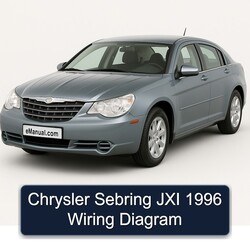
The Chrysler Sebring Convertible, produced in 1996, offers a stylish and engaging driving experience. Built on the robust JA platform, this model is known for its distinctive design and the convenience of a power-operated convertible top, featuring an insulated headliner and a defrosted rear window. Available with either a 134-horsepower 2.0L DOHC inline 4-cylinder engine or a more powerful 164-horsepower 2.5L SOHC V6, both paired with a 4-speed automatic transaxle, the Sebring Convertible provided a compelling option in the compact/mid-size convertible segment, competing with other popular models of its era.
$16.99
This manual covers the 1996 Chrysler Sebring JXi Convertible, a mid-size personal luxury vehicle known for its sleek styling and American upscale positioning. Built on the JA platform and manufactured in Michigan, this convertible model offers a comfortable driving experience, featuring a 2.5L V6 engine, automatic transaxle, and standard ABS and front airbags. Its design, attributed to Thomas C. Gale, emphasizes aerodynamic lines. The Sebring was part of Chrysler's first generation of this model, aiming to provide a near-luxury experience with features like available premium audio systems and cruise control.
$16.99
The 1996 Chrysler Sebring represents a stylish and comfortable option in the mid-size automotive segment, offering a blend of distinctive exterior design and a well-appointed interior. Available in coupe and convertible body styles, the Sebring was engineered for a broad appeal, featuring a front-wheel-drive platform and a choice of capable powertrains, including a potent 2.5L SOHC V6 engine. This generation of the Sebring was designed to provide a compelling value proposition, competing with established models through its combination of aesthetic appeal and practical functionality.
$16.99
The 1996 Chrysler Sebring, chassis code JX, represents a stylish and comfortable personal luxury coupe and convertible. This model was designed to appeal to buyers seeking distinctive American styling and a refined driving experience, competing in a segment that valued both aesthetics and comfort. Powered by a 2.5L SOHC V6 engine producing 155 horsepower, it offered a smooth ride and was available with a 4-speed automatic or a less common 5-speed manual transaxle. Its design, featuring sleek lines and available in both coupe and convertible body styles, made it a notable entry in the personal luxury market of its time, embodying Chrysler's commitment to distinctive vehicle design.
$16.99
The Chrysler Sebring Convertible, produced for the 1996 and 1997 model years, represents the second generation (JX platform) of this mid-size convertible. Building on Chrysler's heritage of stylish American vehicles, the Sebring Convertible offered a distinctive design and a power-operated soft top, aiming to provide an affordable yet appealing option in its market segment. It was equipped with either a 2.5L V6 engine or a 2.0L I4 engine, paired with automatic transmissions, and featured a suspension system designed for comfortable cruising.
$16.99
This manual covers the Chrysler Sebring Convertible, model code JC, produced for the 1996 and 1997 model years. Designed as a mid-size convertible and personal luxury car, the Sebring Convertible offered stylish design, a comfortable interior, and available V6 power, targeting consumers seeking a refined open-air driving experience. Its engineering prioritizes a balance of comfort and performance, making it a notable entry in its market segment.
$16.99
The Chrysler Sebring Convertible, produced for the 1996 and 1997 model years on the JX Platform, offered a distinctive American convertible experience. Known for its stylish design and comfortable ride, this mid-size convertible competed in a segment with other popular models, featuring a power-operated convertible top and a choice between a 2.0L 4-cylinder or a more potent 2.5L V6 engine. While praised for its aesthetic appeal, owners might have encountered specific areas requiring attention, such as the convertible top mechanism and certain electrical components, underscoring the importance of proper maintenance.
$16.99
The Chrysler Sebring Convertible, second generation (JR41), produced from 1996 to 2000, offered a stylish and accessible mid-size convertible experience. It was engineered with a focus on providing a comfortable ride and the enjoyment of open-air driving, featuring a power-operated soft top as a key attraction. Available with either a 2.5L or a more powerful 2.7L V6 engine, and offering both automatic and manual transmission options, the Sebring Convertible aimed to balance performance with value, positioning itself against competitors like the Ford Mustang Convertible and Toyota Camry Solara Convertible. Its design emphasized a blend of classic convertible aesthetics with practical interior space.
$16.99
This comprehensive workshop service and repair manual covers the Chrysler Sebring Convertible and Stratus Convertible models produced from 1996 through 2000. Built on the JA platform, these mid-size convertibles offered an affordable open-air driving experience, featuring stylish designs for their era and available V6 power. This manual provides detailed information on the various engine options, including the 2.0L DOHC I4, 2.4L DOHC I4, and 2.5L DOHC V6, as well as the 4-speed automatic and 5-speed manual transaxles. It delves into the mechanical and electrical systems, covering everything from basic maintenance to complex repairs, enabling owners and technicians to maintain the reliability and performance of these vehicles.
$16.99
This manual covers the Chrysler Sebring Convertible and Stratus Convertible models produced between 1996 and 2000. As Chrysler's primary convertible offering during this era, these vehicles were designed to provide a stylish American drop-top experience, competing with other popular convertibles of the time. The Sebring Convertible, built on the JA platform, was manufactured in Sterling Heights, Michigan, and offered a range of V6 engine options, including the 2.7L, 2.5L, and potentially a 3.0L variant. These vehicles featured a 4-speed automatic transmission and were equipped with standard safety features such as front airbags and three-point seat belts, with options like ABS and traction control available on certain trims.
$16.99
This comprehensive service repair workshop manual covers the Chrysler Sebring and Stratus Convertible models produced between 1996 and 2000. These vehicles are recognized for their blend of style and open-air driving pleasure, offering a reliable option for everyday transportation and leisure. Engineered with a focus on durability and driver comfort, the Sebring and Stratus Convertible models represent a significant offering within their segment, designed to provide an enjoyable and dependable ownership experience.
$16.99
The 1997 Chrysler Sebring JX Convertible is a mid-size personal luxury vehicle designed for those seeking a stylish and enjoyable driving experience. Built on the JA platform, it shares its foundation with other popular Chrysler and Dodge models of the era. This convertible is characterized by its comfortable interior and a front-wheel-drive layout, which contributes to its stability. Its design emphasizes a blend of sporty aesthetics and practicality, positioning it as a competitive option in the convertible market.
$16.99
This Service Repair Workshop Manual provides comprehensive information for the 1997 Chrysler Sebring Convertible, part of the first generation (1995-2000). This model is equipped with a 2.5L V6 engine, delivering 152 horsepower and 167 lb-ft of torque, paired with a 4-speed automatic transmission. Its robust engineering is evident in its independent MacPherson strut front suspension and independent multi-link rear suspension, designed for a comfortable and reliable driving experience. The Sebring Convertible embodies a blend of performance and style, making it a notable vehicle in its class.
$16.99
The 1997 Chrysler Sebring Convertible is a mid-size American convertible known for its distinctive styling and accessible price point, offering a compelling option in the convertible market of its era. Built on the JA platform, this model shared underpinnings with other Chrysler Corporation vehicles, contributing to its market presence. It was designed to provide the open-air driving experience with a choice of V6 engines, ranging from 150 to 200 horsepower, paired with either a 4-speed automatic or a less common 5-speed manual transmission. The Sebring Convertible aimed to deliver a comfortable ride and a stylish appearance, positioning itself against competitors like the Ford Mustang Convertible and Chevrolet Camaro Convertible.
$16.99
The 1997 Chrysler Sebring Convertible represents a notable entry in the first generation of this model, offering a blend of style and open-air driving pleasure. This vehicle, designed for a dynamic driving experience, is equipped with a choice of a 2.0L I4 engine producing 130 hp or a more potent 2.5L V6 engine delivering 164 hp, both paired with either a 4-speed automatic or a 5-speed manual transmission. Its engineering prioritizes a comfortable ride, supported by independent MacPherson struts in the front and a multi-link independent rear suspension, ensuring responsive handling.
$16.99
The 1997 Chrysler Sebring Convertible JXi represents a stylish mid-size convertible known for its comfortable ride and the availability of a potent 2.5L V6 engine. Built on Chrysler's JA platform, this model offered a compelling alternative in the convertible segment, blending American design with open-air driving pleasure. Its engineering prioritizes reliability and a pleasant driving experience, making it a popular choice for those seeking a distinctive vehicle. The Sebring Convertible was manufactured in Sterling Heights, Michigan, and aimed to compete with other popular convertibles of its era.
$16.99
The 1997 Chrysler Sebring JXi Convertible, built on the JA platform, represents a mid-size convertible offering that combines stylish design with a focus on comfortable cruising. This model features a power-operated soft top, a 2.5L SOHC V6 engine producing approximately 164 horsepower, and is equipped with standard anti-lock brakes and front airbags. Its dimensions, including a length of 191.7 inches and a wheelbase of 106.0 inches, position it within its competitive segment, which included vehicles like the Ford Mustang Convertible and Chevrolet Camaro Convertible. The Sebring's heritage is rooted in Chrysler's history of producing appealing vehicles, with this generation evolving from earlier coupe designs.
$16.99
The 1997 Chrysler Sebring JXi Convertible represents a blend of stylish design and open-air driving pleasure, built on the JX chassis. This model, known for its comfortable interior and the availability of a robust 2.5L V6 engine, offered an accessible luxury experience in the mid-size convertible market. Key features, particularly for the JXi trim, often included premium amenities like leather seating and an upgraded audio system, enhancing its appeal. The power-operated convertible top mechanism is a defining characteristic, contributing significantly to the vehicle's overall charm and driving experience.
$16.99
The 1997 Chrysler Sebring JXi Convertible, built on the J Platform, represents a distinctive entry in the sports coupe/sedan segment. This model is characterized by its power-operated fabric convertible top and a styling influenced by Chrysler's 'cab-forward' design. It offers a blend of performance and open-air driving pleasure, competing with other popular convertibles of its era. The Sebring JXi Convertible is equipped with a 2.5-liter V6 engine, producing approximately 156 horsepower and 168 lb-ft of torque, paired typically with a 4-speed automatic transmission. Its engineering prioritizes a comfortable ride and a stylish appearance, making it a notable option for those seeking a spirited driving experience.
$16.99
This manual covers the 1997 Chrysler Sebring JXi, a mid-size coupe and convertible model built on the Chrysler JA platform. Known for its cab-forward design and aerodynamic styling, the Sebring offered a blend of comfort and sporty aesthetics, competing with models like the Ford Mustang and Honda Accord Coupe. Powered by a 3.0L SOHC V6 engine producing 155 horsepower, this vehicle was designed for everyday driving with a focus on a comfortable ride and distinctive appearance. The JXi trim specifically featured a pop-up roll bar system for enhanced safety in convertible models.
$16.99
The 1997 Sebring, built on the JC platform and sharing components with the Dodge Stratus, represents a mid-size coupe and convertible offering. It was designed as a sportier alternative to traditional sedans, featuring distinctive styling for its era and the popular option of a convertible body style. Available with a choice of 2.0L, 2.4L, or 2.5L V6 engines, the Sebring provided a range of performance options, all utilizing electronic fuel injection. This generation of the Sebring was manufactured in the United States and aimed to deliver a blend of style and value within its market segment.
$16.99
The 1997 Chrysler Sebring is a stylish American personal luxury vehicle offered in both coupe and convertible body styles. Built on the JA platform, it aimed to provide an accessible and distinctive open-air driving experience, competing with other American coupes and convertibles of its era. This generation of the Sebring, known for its unique styling and comfortable ride, was designed for everyday use and offered a blend of practicality and personal flair.
$16.99
The 1997 Chrysler Sebring, identified by chassis code JX, represents a mid-size car available in coupe and convertible body styles. This model offered a blend of sporty styling and comfort, differentiating itself with an available convertible option and Chrysler's reputation for features. It was powered by a 2.5L V6 engine producing 158 horsepower or a less common 2.0L inline-4 engine. The Sebring was built on the Chrysler JA platform and competed in a segment with vehicles like the Ford Mustang and Toyota Camry.
$16.99
The 1997 Chrysler Sebring represents a significant entry into the compact and mid-size sports coupe and convertible market, offering affordable sporty styling and a comfortable interior. Built on the Chrysler JA platform, this model was designed with European sports car aesthetics in mind, aiming to provide a compelling alternative to established competitors. Available as both a coupe and a convertible, the Sebring offered a choice of a 2.0L SOHC I4 engine producing 114 hp or a 2.5L SOHC V6 engine generating 150 hp, both utilizing Multi-Point Fuel Injection. The V6 engine was recognized on Ward's 10 Best Engines list for 1997, highlighting its engineering quality. This vehicle was assembled in Sterling Heights, Michigan, USA.
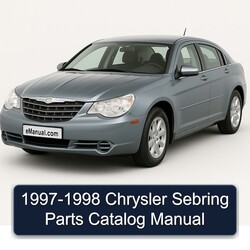
$16.99
This manual covers the Chrysler Sebring, produced for the 1997 and 1998 model years. The Sebring, built on the JX chassis, was offered as a 2-door convertible and represented an American interpretation of a European-styled personal luxury coupe and convertible. It was manufactured in Sterling Heights, Michigan, and shared its platform with the Chrysler Stratus. The Sebring was available with three distinct engine options: a 2.0L 4-cylinder, a 2.4L 4-cylinder, and a 2.5L V6, all featuring multi-point fuel injection. These vehicles typically utilized 4-speed automatic transmissions.
$16.99
This manual covers Chrysler Sebring, Dodge Avenger, and Dodge Talon models produced between 1997 and 1999. These vehicles, built on the JA and D3 platforms, offered a range of body styles including 2-door sedans, coupes, and 3-door hatchbacks. Engine options included the 2.0L naturally aspirated (ECF) and the 2.0L turbocharged (EBG) variants. Known for their distinctive styling and sporty performance, particularly in the Talon TSi all-wheel-drive configuration, these models represented a significant collaboration between Chrysler and Mitsubishi. This catalog provides detailed illustrations and part numbers essential for identifying and sourcing components for these vehicles.
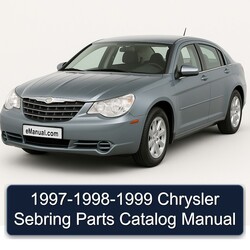
$16.99
This manual covers the Chrysler Sebring, a 2-door convertible produced from 1997 to 1999. The Sebring was built on the Chrysler JA platform, sharing components with the Dodge Stratus and Plymouth Breeze. It offered a choice of three engines: a 2.0-liter four-cylinder (ECB), a 2.4-liter four-cylinder (EDZ), and a 2.5-liter V6 (EEB), all featuring Electronic Fuel Injection. This vehicle represents a segment of Chrysler's automotive heritage, known for its American manufacturing and presence in the coupe and convertible markets.
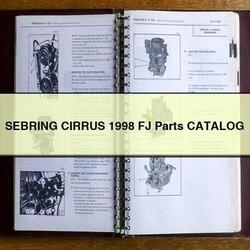
$16.99
This Parts Catalog covers the Chrysler Cirrus, produced by Chrysler Corporation during the 1998 model year. As part of the First Generation (JA) Cirrus lineup, this vehicle was engineered for reliable transportation and offers seating for five occupants. Available with either a 2.0L Inline-4 or a 2.5L V6 engine, both designed to run on unleaded gasoline, the Cirrus features a Front-Wheel Drive (FWD) system paired with an Automatic Transmission. Its chassis is equipped with a MacPherson Strut front suspension and a Multi-link rear suspension, complemented by ventilated disc brakes at the front and disc brakes at the rear. Wheel size options include 15-inch and 16-inch variants, contributing to its balanced performance and handling.
$16.99
The 1998 Chrysler Sebring Convertible JX is a mid-size convertible designed with European styling influences, offering a stylish and comfortable open-air driving experience. Built on the JA platform, this model features clean lines and a well-integrated convertible top, available in manual or power configurations. It is powered by a 2.5L SOHC V6 engine, delivering 158 horsepower and 167 lb-ft of torque, paired with a 4-speed automatic transmission. The Sebring Convertible was positioned as a personal luxury vehicle, competing with other domestic and imported convertibles of its time, and was manufactured in Sterling Heights, Michigan.
$16.99
The 1998 Sebring Convertible, built on the JA platform, offers a stylish and accessible entry into the convertible market. It shares its foundation with the Dodge Avenger coupe and Stratus sedan, providing a solid structure for its open-top design. Available with either a 2.5L SOHC V6 engine producing 164 horsepower or a 2.0L DOHC I4 engine generating 140 horsepower, both paired with a 4-speed automatic transmission, the Sebring Convertible was designed for comfortable cruising. Its dimensions, including a length of 192.7 inches and a wheelbase of 106.0 inches, contribute to a spacious interior and a smooth ride. The Sebring was manufactured in Sterling Heights, Michigan, USA, and historically, vehicles have been positioned as mainstream to premium domestic models known for their styling and comfortable interiors.
$16.99
This manual covers the Chrysler Sebring, model year 1998, built on the JA platform with a unibody chassis. The Sebring was designed as a stylish, front-wheel-drive vehicle intended for the mid-size segment, offering both coupe and convertible body styles. It was engineered with a focus on V6 engine performance and refinement, featuring a distinctive cab-forward design. This generation of the Sebring was manufactured in Sterling Heights, Michigan, and aimed to provide a compelling alternative to competitors in its class.
$16.99
The Chrysler Sebring, produced in 1998, represents a stylish and affordable personal transportation option, available as a coupe or convertible. Built on the Chrysler JA platform and manufactured in Sterling Heights, Michigan, this model offered a choice between a fuel-efficient 2.0L 4-cylinder engine or a smoother 2.5L V6, paired with manual or automatic transmissions. Its distinctive cab-forward design and optional convertible top made it a notable competitor in its segment. The Sebring was engineered to provide reliable performance and a comfortable driving experience, aiming to balance aesthetic appeal with practical functionality for consumers.
$16.99
This manual covers the Chrysler Sebring models produced for the 1998 and 1999 model years. Built on the Chrysler JA platform, these vehicles were offered in coupe, convertible, and sedan body styles, featuring distinctive aerodynamic styling. Available powertrains included a 2.0L SOHC I4, a 2.4L DOHC I4, and a 2.5L SOHC V6, all paired with a 4-speed automatic transmission. The Sebring was positioned as a competitive mid-size vehicle, aiming to provide comfort and value to its owners.
$16.99
The Chrysler Sebring Convertible, produced for the 1998, 1999, and 2000 model years, represents the second generation of this mid-size convertible sedan. Built on the Chrysler JA/JXi platform and manufactured in Sterling Heights, Michigan, it was designed to offer a stylish, open-air driving experience with comfortable interiors and available powerful V6 engines, including a 2.5L V6 and a 2.7L V6. Its distinguishing features focused on accessible luxury and a refined convertible design, positioning it against competitors like the Ford Mustang Convertible and Chevrolet Camaro Convertible.
$16.99
The Chrysler Sebring Convertible, produced for the model years 1998, 1999, and 2000, represents a stylish and engaging option in the compact to mid-size convertible segment. Built on the JX platform, this vehicle was engineered to offer a balance of comfort, performance, and an enjoyable open-air driving experience, appealing to a broad range of drivers. It was available with a choice of DOHC V6 engines, including a 2.5L and a more powerful 2.7L variant, both paired with a 4-speed automatic transmission. The Sebring Convertible is characterized by its power-operated fabric soft top and a design philosophy focused on expressive styling and affordability, positioning it as a compelling choice against its competitors.
$16.99
The Chrysler Sebring, produced for the 1998, 1999, and 2000 model years, represents the second generation (JR41) of this mid-size vehicle, offered in Coupe, Convertible, and Sedan body styles. Known for its expressive, European-influenced styling and a comfortable ride, the Sebring provided an affordable and stylish option within its competitive segment, with the unique convertible body style serving as a key selling point. This generation shared its platform with other Chrysler and Mitsubishi models, reflecting a collaborative approach to vehicle development.
$16.99
The Chrysler Sebring, produced for the 1998, 1999, and 2000 model years, offered a range of body styles including Coupe (JA), Convertible (JX), and Sedan (JR) variants. This mid-size vehicle was designed to provide a comfortable and stylish option within its competitive segment, featuring a choice of reliable engines such as the 2.0L DOHC, 2.4L DOHC, and a 2.5L SOHC V6, paired with either a 4-speed automatic or a 5-speed manual transmission. The Sebring was positioned as a value-oriented choice, blending practical features with aesthetic appeal, and was manufactured in Sterling Heights, Michigan.
$16.99
This manual covers the Chrysler Sebring, Second Generation (JR41), produced for the North American market from 1998 to 2000. Available as a coupe or convertible, the Sebring was known for its distinctive styling, offering an accessible entry into stylish personal transportation. Engineered with a front-wheel-drive layout and available with either a 2.0L inline 4-cylinder or a 2.5L V6 engine, it provided a balance of form and function for its segment. This generation represented Chrysler's effort to deliver an attractive and practical vehicle, with a focus on design appeal, particularly in its convertible variant.
$16.99
The Chrysler Sebring, produced between 1998 and 2000 under the JR41 chassis code, represents a segment of mid-size coupes and convertibles known for their sporty styling. Available with either a 2.0L inline-4 or a 2.7L V6 engine, and typically equipped with a 4-speed automatic transmission, the Sebring offered a blend of performance and comfort for its era. Its design aimed to compete with established models like the Ford Mustang and Toyota Camry Solara, providing an American-made option in the personal luxury and sporty car market. The vehicle featured standard driver and front passenger airbags, three-point seat belts, and optional Anti-lock Braking System (ABS).
$16.99
This manual covers the Chrysler Sebring models produced between 1998 and 2000, encompassing both the JA platform (Coupe) and JX platform (Convertible). These vehicles were designed as stylish mid-size personal transportation, offering a comfortable ride and a range of powertrain options, including 2.4L 4-cylinder and 2.5L or 2.7L V6 engines. Known for their distinct styling and the popular convertible option, the Sebring aimed to compete in a segment with models like the Ford Mustang and Toyota Camry Solara. While praised for its aesthetics and comfort, addressing potential reliability concerns, as noted by some consumer reports, is essential for maintaining these vehicles.
$16.99
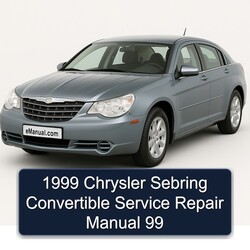
The Chrysler Sebring, covering model years 1998 through 2000, represents the second generation (JR) of this American-designed vehicle. Available in coupe, sedan, and convertible body styles, the Sebring offered consumers a blend of style and practicality, with a particular emphasis on its sporty convertible variant. It was engineered to provide reliable transportation, featuring a range of engine options from efficient four-cylinders to more powerful V6 configurations, paired with either manual or automatic transmissions. This generation aimed to deliver value within its market segment, competing with other established domestic and import models.
$16.99
The 1999 Chrysler Sebring Convertible, part of the Second Generation (JR41), represents a stylish American offering in the mid-size convertible market. Built in Sterling Heights, Michigan, this model is based on the JA platform, sharing its underpinnings with other Chrysler and Dodge vehicles of the era. It features a 2.5L V6 SOHC engine producing 156 horsepower, paired with a 4-speed automatic transmission. Designed for the North American market, the Sebring Convertible aimed to provide accessible style and comfort, with notable features including standard Anti-lock Braking System (ABS), driver and passenger airbags, and a reinforced chassis for convertible safety.
$16.99
The 1999 Chrysler Sebring Convertible JX represents a stylish and accessible option within the mid-size convertible segment. Built on the Concorde platform, this model offers a blend of comfort and sporty appeal, featuring expressive styling and a functional convertible soft-top. It competed with other domestic convertibles of its era, aiming to provide an enjoyable driving experience with its front-wheel-drive configuration and comfortable interior.
$16.99
Welcome to the comprehensive guide for your 1999 Chrysler Sebring Convertible. This vehicle, known for its distinctive styling and open-air driving experience, offers a blend of American design cues and practical convertible functionality. Engineered for a comfortable and engaging ride, the Sebring Convertible was positioned as a stylish and value-oriented option in the mid-size convertible segment. It was available with efficient four-cylinder or more powerful V6 engine options, paired with either an automatic or a less common manual transmission, providing a versatile choice for consumers seeking an enjoyable driving experience.
$16.99
The 1999 Chrysler Sebring Convertible, chassis code JX, represents an accessible and stylish American convertible from its production era. Designed for comfortable cruising and open-air enjoyment, it offered a balance of practicality and aesthetic appeal within the mid-size segment. Available with a choice of efficient four-cylinder and capable V6 engines, including the 2.5L V6 (156 hp, 170 lb-ft) and the 2.7L V6 (175 hp, 185 lb-ft), it provided a smooth driving experience. Notable features included an available power convertible top, a comfortable interior, and a straightforward mechanical layout, making it a popular choice for those seeking a convertible experience.
$16.99
The 1999 Chrysler Sebring is a mid-size vehicle offered in Coupe, Convertible, and Sedan body styles, built on the Chrysler JA platform. Known for its distinctive cab-forward design, the Sebring provided a spacious interior and, in its convertible form, offered a popular open-air driving experience. It competed in a segment with established models, aiming to provide a blend of style, comfort, and value. The Sebring was manufactured in Sterling Heights, Michigan, and represented a significant offering in Chrysler's diverse product lineup of the era.
$16.99
The 1999 Chrysler Sebring, chassis code JA, represents a mid-size sedan, coupe, and convertible offering that competed in a segment with established rivals. It was distinguished by its stylish design, comfortable ride, and the availability of a 2.5L SOHC V6 engine, which provided 160 horsepower and 165 lb-ft of torque. This generation, produced from 1995 to 2000, was manufactured in Sterling Heights, Michigan, and aimed to blend American comfort with European-inspired styling. The vehicle was equipped with standard features such as driver and front passenger airbags, 3-point front seatbelts with pretensioners, and available Anti-lock Braking System (ABS).
$16.99
This Parts Catalog provides comprehensive identification information for the Sebring Cirrus 2000 FJ. Designed for clarity and precision, it serves as an essential resource for understanding the components of this vehicle. The catalog is meticulously organized to ensure accurate part selection and ordering, reflecting the engineering quality associated with the Sebring brand. Its intended use is to facilitate the identification of vehicle parts, ensuring that owners and service professionals can efficiently locate the correct components for maintenance and repair.
$16.99
This document pertains to the Cirrus Sebring, a car model produced in the year 2000. The Cirrus Sebring is engineered for reliable vehicle repair and maintenance, with a focus on accurate part identification. This parts catalog is designed to support owners and technicians in ensuring the continued optimal performance of their vehicles.
$16.99
This manual covers the 2000 Chrysler Sebring Convertible JX, a mid-size convertible personal luxury car. Built on the Chrysler JA platform and produced in Sterling Heights, Michigan, this model features a power-operated soft top and is equipped with a 2.7L DOHC V6 engine producing approximately 200 horsepower, paired with a 4-speed automatic transaxle. The Sebring Convertible offers seating for four passengers and emphasizes comfort and style, competing in a segment that included models like the Ford Mustang Convertible and Toyota Camry Solara Convertible. Its design and engineering reflect Chrysler's heritage of producing comfortable, stylish vehicles.
$16.99
The 2000 Chrysler Sebring Convertible is a stylish and accessible option in the compact to mid-size convertible market, offering a distinctive design and the freedom of open-air driving. Powered by a 2.7-liter V6 engine producing approximately 156 horsepower, it provides a comfortable cruising experience, complemented by a hydraulically actuated power convertible top, a signature feature of this model. This vehicle was engineered with an emphasis on providing an enjoyable and refined ride, positioning itself against competitors like the Ford Mustang Convertible and Toyota Camry Solara Convertible. Its design, refined from the first-generation Sebring, aimed to blend American styling cues with the practicalities of a daily driver, making it a popular choice for those seeking a blend of sportiness and everyday usability.
$16.99
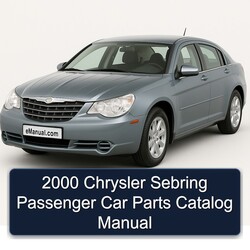
This manual covers the Chrysler Sebring, Dodge Avenger, and Chrysler Cirrus models manufactured in 2000. These vehicles, built on the MS platform and produced in Sterling Heights, Michigan, are characterized by their 2-door pillared hardtop coupe styling and a 2.5L V6 SOHC 24V SMPI engine, offering approximately 160-180 horsepower. They competed in the mid-size segment against popular models like the Ford Taurus and Honda Accord. The vehicles were equipped with features such as front airbags, ABS, and various trim levels including High Line, Premium, and Sport.
$16.99
The 2000 Chrysler Sebring 2 Door Convertible, available in High Line and Premium trim levels, offers a blend of American styling and open-air driving enjoyment. This model is equipped with either a 2.5L V-6 (EEB) engine or a 2.0L 4-cylinder (ECB) engine, providing distinct performance characteristics. Built in Sterling Heights, Michigan, the Sebring represents Chrysler's legacy of producing comfortable and stylish vehicles. Its design, part of the first generation Sebring line, aimed to provide a compelling option in the convertible market, emphasizing value and aesthetic appeal for owners.
$16.99
This manual covers the 2000 Chrysler Sebring, a mid-size coupe and convertible known for its stylish design and comfortable interior, offering available V6 power. Built on the Chrysler JA platform, the Sebring aimed to provide a distinct and upscale option within its segment, competing with models like the Ford Mustang and Toyota Camry Solara. The vehicle's engineering prioritizes a balance of aesthetics and practicality, making it a notable entry in its class.
$16.99
The 2000 Chrysler Sebring, built on the JA platform, offered a blend of distinctive styling and comfort across its coupe, convertible, and sedan variants. Positioned as a mid-size competitor, it aimed to provide a more engaging driving experience than some rivals, particularly with its available V6 engine. Key features included its stylish exterior, comfortable interior, and the popular convertible option with a power-operated top. This generation of the Sebring, produced in Sterling Heights, Michigan, represented Chrysler's efforts to deliver value and an appealing aesthetic in the competitive automotive market of its time.
$16.99
The Chrysler Sebring, produced in 2000, is a mid-size coupe and convertible built on the Chrysler JA platform. Known for its distinctive styling and offering stylish, affordable personal transportation, the Sebring was a popular choice in its market segment. It was manufactured in Sterling Heights, Michigan, USA, and offered consumers a choice between coupe and convertible body styles, featuring a 2.7-liter V6 engine as its primary powertrain.
$16.99
This workshop service repair manual covers the 2001 Chrysler Sebring and Dodge Stratus Sedan, along with the Sebring Cabriolet, identified by model codes JR27 and JR41. These vehicles were designed for the mid-size segment, offering a stylish and feature-rich alternative in the automotive market, with available 2.4L I4 and 2.7L V6 engines paired with a 4-speed automatic transmission. The Sebring Cabriolet provided a popular convertible option. This manual provides comprehensive information to assist owners and technicians in maintaining and repairing these vehicles.
$16.99
This manual covers the 2001 Chrysler Sebring and Dodge Stratus coupe models, specifically the Chrysler Sebring LX, Chrysler Sebring LXI, and Dodge Stratus RT variants. These vehicles, built on the JS platform for the coupe and JA platform for the sedan, represent a significant iteration of Chrysler's offerings in the sporty coupe segment. The 2001 model year vehicles are equipped with either a 2.4 L Inline-4 engine producing approximately 150 hp and 160 lb-ft of torque, or a 3.0 L V6 engine generating around 200 hp and 205 lb-ft of torque, both featuring SOHC valvetrain configurations and multi-port fuel injection. The coupe body style, a 2 Door Pillar Hard Top, offers a wheelbase of approximately 103.7 inches and a length of 191.5 inches, contributing to its balanced performance and handling.
$16.99
The 2001 Sebring represents the second generation of this mid-size vehicle, available as a coupe or convertible, and known for its distinctive styling and comfortable ride. This model competed in a segment with popular offerings like the Toyota Camry Solara and Honda Accord, aiming to provide a balance of style, comfort, and value. Key features included optional V6 engines, a refined interior for its class, and a focus on providing an appealing aesthetic, particularly in its convertible form. The Sebring was engineered to offer a solid driving experience suitable for daily commuting and leisurely travel.
$16.99
This document pertains to the Chrysler Sebring, specifically the second generation (JR platform) produced from 2001 to 2006. The Sebring was offered as a mid-size sedan and coupe, recognized for its spacious interior and comfortable ride, often positioned as a value-oriented option within the domestic market. Key selling points included its competitive pricing and the availability of various trim levels such as LX, LXi, and Limited. Engineered on a platform shared with other Chrysler vehicles, the Sebring provided a reliable and practical choice for everyday transportation, with its design emphasizing both functionality and passenger comfort.

$16.99
The Chrysler Sebring, produced in 2001, offered a range of body styles including Coupe, Convertible, and Sedan, all built on the JR chassis code. This model was positioned as a stylish and accessible alternative in the compact to mid-size car segment, competing with established models from other manufacturers. It featured a distinctive design, particularly the convertible variant, and was available with various powertrain options, including four-cylinder and V6 engines paired with automatic or manual transmissions. The Sebring aimed to provide a balance of aesthetic appeal and practical functionality for a diverse customer base.
$16.99
The 2001 Chrysler Sebring is a mid-size vehicle offered in Coupe, Convertible, and Sedan body styles, representing a blend of distinctive styling, comfort, and practicality. This generation, identified by the JR41 code and JR chassis code, was positioned to appeal to buyers seeking a more stylish alternative within its segment, competing with other popular models of its era. Notable features include its attractive design, comfortable interior appointments, and the availability of a V6 engine, specifically the 2.7L V6 DOHC (EER) which produced 200 horsepower and 192 lb-ft of torque. The Sebring was engineered for reliability and everyday usability, making it a versatile choice for various driving needs.
$16.99
The 2001 Chrysler Sebring, built on the JLX chassis, offered a blend of sporty styling and practicality, available as a coupe, convertible, or sedan. This generation, produced from 2001 to 2006, replaced earlier Sebring and Cirrus models, positioning itself as a stylish American-made option in the mid-size segment. It was engineered with a focus on balancing comfort and performance, featuring options like a 2.7L V6 engine producing 200 horsepower or a 2.4L four-cylinder engine. The Sebring aimed to appeal to individuals and families seeking a visually distinct vehicle within its class, competing with established models from other manufacturers.
$16.99
The 2001 Chrysler Sebring, available as a sedan, coupe, or convertible, was a notable entry in the mid-size automotive market. Built on the J and JA platforms, this vehicle offered a blend of distinctive styling and comfortable interiors, competing with other popular models of its era. It was equipped with either a 2.4L I4 engine or a more powerful 2.7L V6, paired with a 4-speed automatic transmission. The Sebring was manufactured in Sterling Heights, Michigan, and represented Chrysler's commitment to providing stylish and well-equipped vehicles for North American consumers.
$16.99
The Chrysler Sebring Convertible, produced between 2001 and 2003, represents a notable entry in the automotive market. This model, identified by the JR41 generation code, was engineered with a focus on providing a comfortable and stylish driving experience, suitable for leisure and everyday use. It offers a range of powertrain options, including an efficient 2.4L inline 4-cylinder engine and more powerful V6 variants (2.7L and 3.0L), all paired with a smooth 4-speed automatic transmission. The vehicle's design incorporates robust suspension systems, featuring independent MacPherson struts at the front and a multi-link setup at the rear, ensuring stable handling. Its dimensions, with a length of 4900mm and a wheelbase of 2740mm, contribute to its substantial road presence.
$16.99
This manual covers the Chrysler Sebring Convertible models produced for the 2001, 2002, and 2003 model years. Designed as a mid-size convertible, the Sebring offered distinctive American styling and open-air driving enjoyment, competing in a segment that included models like the Ford Mustang Convertible and Toyota Camry Solara Convertible. It was available with a choice of V6 engines, including a 2.7-liter and a more powerful 3.5-liter option, paired with either an automatic or a less common manual transmission. Notable features include a power-operated soft top, with an optional power hardtop on some trims, and a focus on providing a comfortable personal luxury experience. The vehicle's engineering prioritizes a balance of performance and comfort, making it a popular choice for those seeking a stylish convertible.
$16.99
The Chrysler Sebring Sedan, produced from 2001 to 2003, represents the Second Generation (JR41) of this mid-size sedan. Known for its comfortable ride, distinctive styling, and spacious interior, the Sebring Sedan was designed to compete within a segment featuring vehicles like the Toyota Camry and Honda Accord. Offering a choice of three engines, including a 2.4L four-cylinder and 2.7L or 3.0L V6 options, it provided a range of performance to suit various driver needs. The vehicle was manufactured in Sterling Heights, Michigan, USA, and featured a cab-forward design philosophy characteristic of Chrysler's offerings during that era.
$16.99
The Chrysler Sebring Sedan, produced between 2001 and 2003, is a mid-size sedan built on the Chrysler JS platform. It is recognized for its distinctive styling, comfortable interior, and the availability of V6 engines that offer a balance of performance and efficiency. Designed to compete in a segment with established rivals, the Sebring Sedan aimed to provide consumers with a practical and stylish option. This generation of the Sebring Sedan represents a significant evolution, embodying Chrysler's heritage of producing well-appointed American vehicles.
$16.99
This manual covers the Chrysler Sebring Sedan models produced for the 2001, 2002, and 2003 model years. These vehicles are designed to offer a blend of comfort and practicality, suitable for everyday commuting and general transportation needs. The engineering behind the Sebring Sedan emphasizes reliability and a user-friendly driving experience, making it a dependable choice for owners.
$16.99
This Factory Service Repair Manual covers the Chrysler Sebring Sedan models produced between 2001 and 2003, part of the vehicle's Second Generation. Engineered for reliability and performance, the Sebring Sedan offers a choice of powertrains, including a 2.4L Inline-4 engine producing 150 hp and 160 lb-ft of torque, or a more powerful 2.7L V6 engine delivering 200 hp and 190 lb-ft of torque. Transmission options include a 4-speed automatic or a 5-speed manual. The vehicle's dimensions, with a length of 193.7 inches, width of 70.3 inches, and height of 55.8 inches, provide a comfortable and stable ride, supported by an independent MacPherson strut front suspension and an independent multi-link rear suspension.
$16.99
The Chrysler Sebring, offered for the 2001, 2002, and 2003 model years, represents a versatile offering in the mid-size segment, available as a sedan (JR41), coupe (JR42), and convertible (JR47). This generation of Sebring, built in Sterling Heights, Michigan, featured a more rounded and aerodynamic styling. Buyers could choose between an efficient 2.4L 4-cylinder (EDZ) engine or a more powerful 2.7L V6 (EER) engine, both paired with a 4-speed automatic transmission. Its key selling point was the availability of a convertible body style, a feature that set it apart in its competitive set, which included popular models like the Toyota Camry and Honda Accord.
$16.99
The Chrysler Sebring, produced for the 2001, 2002, and 2003 model years, is a mid-size vehicle available in coupe and convertible body styles. Built on the Chrysler JS platform, this generation of Sebring featured a distinctive cab-forward design. Buyers could choose between a 2.4L four-cylinder engine or a more powerful 2.7L V6 engine, both paired with a 4-speed automatic transaxle and front-wheel drive. Standard safety features included an anti-lock braking system (ABS) and front airbags, with optional side airbags and traction control. While offering a comfortable ride and stylish appearance, some common issues have been noted, particularly concerning the 2.7L V6 engine's timing chain, intake manifold gaskets, and potential oil sludge buildup if maintenance is neglected.
$16.99
This comprehensive workshop service and repair manual covers the Chrysler Sebring models produced for the years 2001, 2002, and 2003. Available in Coupe (JR41 chassis code) and Convertible/Sedan (JX chassis code) body styles, the Sebring offered a stylish design and a comfortable ride, positioning it as a competitive option in the mid-size car segment. This manual details the various engine options, including the 2.7L V6, 2.4L 4-cylinder, and a more powerful 3.0L V6, along with their respective transmission pairings, ranging from manual to electronically controlled automatic transmissions.
$16.99
The Chrysler Sebring, produced for the 2001, 2002, and 2003 model years, offers a blend of distinctive styling and practical performance. Available in both Coupe and Convertible body styles, the Sebring was designed to appeal to a wide range of drivers, from those seeking a stylish personal vehicle to small families. It was engineered with a focus on providing a comfortable ride and a visually appealing aesthetic, setting it apart in the mid-size car segment. Buyers could choose between a fuel-efficient 2.4L 4-cylinder engine or a more potent 2.7L V6, both paired with a 4-speed automatic transmission, ensuring a balance between performance and everyday usability.
$16.99
This manual covers the Chrysler Sebring models produced between 2001 and 2003. These vehicles are designed for general transportation, offering a balance of comfort and performance. The Sebring is recognized for its robust engineering and dependable operation, making it a reliable choice for daily use and longer journeys. Its design incorporates thoughtful features aimed at enhancing the driving experience and overall practicality for owners.
$16.99
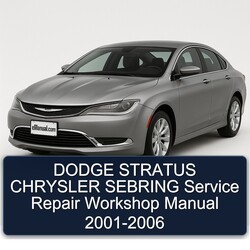
The Chrysler Sebring, produced from 2001 to 2006 under the JR generation, offered a compelling blend of style and practicality in the mid-size sedan and convertible market. Known for its distinctive design, particularly the convertible variant, and a comfortable ride, the Sebring was engineered to compete with established players. It provided a range of powertrain options, including efficient four-cylinder engines and more powerful V6 configurations, coupled with either a four-speed automatic or a less common five-speed manual transmission. Key selling points included its versatile coupe and convertible body styles and a generally reasonable price point, making it an attractive option for a broad spectrum of consumers seeking a stylish and functional vehicle.
$16.99
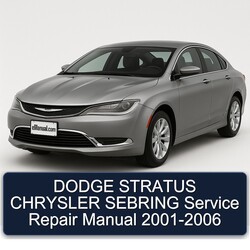
This comprehensive service repair workshop manual covers Dodge Stratus and Chrysler Sebring models manufactured between 2001 and 2006, built on the JA/JR platform. These vehicles offered a range of body styles including coupe, sedan, and convertible, and were equipped with various engine options, from efficient four-cylinders to capable V6 powertrains. Known for their comfortable ride and accessible design, these models provided reliable transportation for a variety of needs, from daily commuting to family use, embodying a blend of practicality and style characteristic of their era.
$16.99
This manual covers the Dodge Stratus and Chrysler Sebring models produced between 2001 and 2006. These vehicles, built on Chrysler's JA/JX and JR platforms, offered a range of body styles including sedans, coupes, and convertibles, with various engine options from efficient 4-cylinders to powerful V6 powertrains. Known for their distinctive styling and comfortable interiors, these models were designed to compete in the mid-size segment, appealing to buyers seeking a blend of practicality and visual appeal. The engineering quality and reliability of these vehicles are supported by detailed technical information, aiming to ensure optimal performance and longevity for owners.
$16.99
The Chrysler Sebring, produced from 2001 to 2006, represents the second generation (JR41) of this mid-size vehicle. Available in coupe, convertible, and sedan body styles, it offered consumers a practical and stylish American-made option. This generation featured Chrysler's distinctive design language of the early 2000s, characterized by oval headlamps and a prominent grille. Engine options included the 2.4L DOHC I4, a 2.7L DOHC V6, and a 3.0L SOHC V6 sourced from Mitsubishi, paired with either automatic or, on some 2.4L models, a 5-speed manual transmission. The Sebring was designed to compete in a segment with notable rivals, aiming to provide comfort and value.
$16.99
The Chrysler Sebring, produced for the US and Canadian markets between 2001 and 2006, represents the second generation of this model line, built on the Chrysler JS platform. Available as a coupe, sedan, or convertible, the Sebring offered a distinctive American styling, comfortable ride, and a range of available V6 engines, including the 2.7L and 3.0L variants, alongside a 2.4L four-cylinder option. It competed in the mid-size segment, often differentiating itself with its coupe and convertible body styles and optional retractable hardtop, appealing to buyers seeking expressive alternatives. Notable features included available premium audio systems and a generally well-equipped interior for its class.

$16.99
The Chrysler Sebring, produced between 2001 and 2006, offered a stylish American interpretation of the mid-size segment, available in coupe, convertible, and sedan body styles. Built on the versatile JS platform, it aimed to blend sporty aesthetics with comfort, competing against established models like the Toyota Camry and Honda Accord. Engine options ranged from efficient four-cylinder units to more powerful V6 configurations, providing a spectrum of performance to suit various driver preferences. This generation of the Sebring featured more upscale styling and updated powertrains compared to its predecessor, reflecting Chrysler's design philosophy of the era.
$16.99
The Chrysler Sebring, produced for the model years 2001 through 2006, offered a range of body styles including coupe, convertible, and sedan. These vehicles were designed to provide a balance of comfort, style, and affordability within the mid-size segment. Available with various engine options, including inline 4-cylinder and V6 configurations, and transmission choices such as automatic and manual, the Sebring aimed to cater to a diverse customer base. Notable features included optional premium sound systems and available navigation, alongside practical considerations like ample trunk space in coupe and sedan models. The Sebring was engineered to be a reliable daily driver, with a focus on accessible design and a comfortable ride.
$16.99
The Chrysler Sebring, produced from 2001 to 2006, offered a mid-size vehicle in coupe, convertible, and sedan body styles. Built on the Chrysler JS platform, it aimed to provide a balance of comfort and style, competing in a segment with vehicles like the Ford Mustang and Honda Accord. The Sebring was available with a range of engine options, including a 2.4L inline-4, a 2.7L V6, and a more powerful 3.5L V6, paired with either a 4-speed automatic or an optional 5-speed manual transmission. Its design featured a notable emphasis on safety, with standard dual front airbags and ABS, and achieved 5-star ratings in NHTSA frontal crash tests.
$16.99
The Chrysler Sebring, produced from 2001 to 2006, offered a range of body styles including sedan, coupe, and convertible, built on the versatile JS/JX/JR platform. Available with a 2.4L DOHC I4 engine or a choice of 2.7L or 3.0L DOHC V6 engines, the Sebring provided a balance of performance and practicality for its segment. Designed with a focus on American market appeal, it featured a front-wheel-drive configuration and a comfortable interior, aiming to provide reliable transportation for daily use and longer journeys. Its engineering shared components with other DaimlerChrysler and Mitsubishi models, reflecting a collaborative approach to vehicle development during its era.
$16.99
The Chrysler Sebring, produced from 2001 to 2006 as part of its Second Generation (JR41), offered a distinctive presence in the mid-size segment. Available as a coupe, convertible, or sedan, it appealed to consumers seeking stylish and affordable personal transportation, with the convertible variant being a notable draw for its open-air experience. The Sebring was engineered with a focus on reliability and offered a range of powertrain options, including efficient 4-cylinder and more powerful V6 engines, paired with either automatic or manual transmissions. Its design, particularly the convertible's, aimed for a sense of European flair, making it a competitive choice against other vehicles in its class.
$16.99
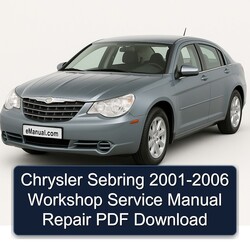
This manual covers the Chrysler Sebring models produced between 2001 and 2006, encompassing coupe, convertible, and sedan body styles. The Sebring was designed to offer a blend of distinctive styling, comfort, and affordability, positioning it as a stylish and practical daily driver within the mid-size segment. Notable for its rounded, aerodynamic design, it provided a comfortable ride and a value proposition that appealed to individuals and families. The engineering quality and reliability of these vehicles are supported by their robust platform sharing and a legacy of Chrysler's American sedan and coupe production.
$16.99
The Chrysler Sebring, produced for the 2001 through 2006 model years, represents a versatile mid-size vehicle offered in coupe, convertible, and sedan body styles. This generation of the Sebring, built on a platform shared with Mitsubishi, aimed to provide stylish and comfortable personal transportation with a focus on affordability and practicality. Available with a range of engines, including 2.4L four-cylinder and 2.7L or 3.0L V6 options, and transmission choices such as a 4-speed automatic or a 5-speed manual, the Sebring appealed to buyers seeking a distinctive American-made vehicle, particularly with its popular convertible variant. Its design philosophy emphasized a balance of aesthetics and everyday usability, contributing to its appeal within its competitive market segment.
$16.99
This manual covers the Chrysler Sebring, specifically the JR41 generation produced from 2001 to 2006. Available as a versatile Coupe, Convertible, and Sedan, the Sebring offered attractive styling and a more budget-friendly price point, distinguishing itself in a competitive mid-size segment. This generation was manufactured in Sterling Heights, Michigan, USA, and was primarily targeted at the North American market. The Sebring was engineered to provide a comfortable driving experience, with options including efficient inline-4 and V6 engines, mated to either a 4-speed automatic or a 5-speed manual transmission on select models.
$16.99
The Chrysler Sebring, produced from 2001 to 2006, offered a versatile mid-size car experience with coupe, convertible, and sedan body styles available. This generation of Sebring was designed to provide an affordable option within its segment, often competing with models like the Ford Mustang, Toyota Camry, and Honda Accord. The model line featured a range of engine options, including 2.4L and 3.0L four-cylinder and V6 engines, paired with either a 4-speed automatic or 5-speed manual transmission. Key features included the distinctive body style choices and a focus on value, making it an accessible choice for consumers seeking a stylish and practical vehicle.
$16.99
The Chrysler Sebring, manufactured for the model years 2001 through 2006, represents the third generation of this distinctive American automobile. Available in both coupe and convertible body styles, the Sebring offered a range of powertrain options, including the 2.4L I4 (EDZ) and the 2.7L V6 (EER) engines, known for their balanced performance and multi-point fuel injection systems. This generation of the Sebring was produced in Sterling Heights, Michigan, and was designed to provide comfortable and stylish transportation, competing in the mid-size segment with features like standard ABS and dual front airbags.
$16.99
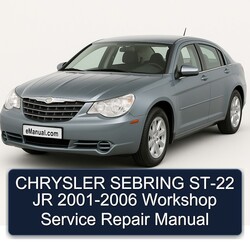
This workshop service repair manual covers the Chrysler Sebring, generation JR, produced between the model years 2001 and 2006. The Sebring, a product of Chrysler, a historically significant American automotive manufacturer, was designed to offer a comfortable and reliable passenger vehicle experience. This particular generation, built on the JS platform, represented an evolution of the model with updated styling and powertrains. The manual addresses various configurations, including those with the ST-22 designation, and encompasses a range of engine options, from the 2.0L 4-cylinder to the 2.7L V6, along with both manual and automatic transmission systems.
$16.99
The Chrysler Sebring, produced from 2001 to 2006, represents a versatile mid-size vehicle offered in coupe, convertible, and sedan body styles. This generation, identified by the JR chassis code, provided a range of engine options, including a 2.4L DOHC inline-4 and two V6 variants (2.7L DOHC and 3.0L SOHC Mitsubishi), paired with either a 4-speed automatic or a 5-speed manual transmission. Notable features include an available power-operated convertible top, front-wheel drive, and a suspension system comprising MacPherson struts in the front and a multi-link independent setup in the rear. While the Sebring aimed to compete in a crowded market, its design offered a blend of practicality and style, with a focus on comfort and value characteristic of Chrysler's heritage.
$16.99
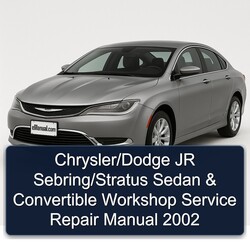
The Chrysler Sebring, produced for the 2002 model year on the JR platform, offers a mid-size vehicle option available as a coupe, convertible, or sedan. This generation of the Sebring builds upon Chrysler's legacy of producing comfortable and stylish American vehicles, aiming to provide value and reliable transportation. It was designed to compete in a crowded segment against popular models from manufacturers like Ford, Chevrolet, Toyota, Honda, Nissan, and Hyundai, offering a blend of practicality and available V6 power.
$16.99
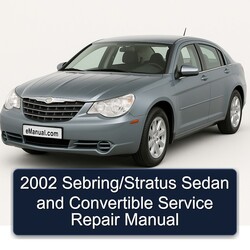
This manual covers the 2002 Chrysler Sebring and Dodge Stratus models, built on the JR platform. Available in Sedan and Convertible body styles, these vehicles offer a range of engine options detailed within this guide. The manual provides comprehensive information designed to assist owners and technicians in maintaining and repairing these vehicles, ensuring their optimal performance and longevity.
$16.99
This manual covers the 2002 Chrysler Sebring and Dodge Stratus models, available as sedans and convertibles. These vehicles were designed to offer a blend of comfort, style, and performance, competing in the mid-size segment with models like the Ford Taurus and Toyota Camry. The Sebring and Stratus offered a range of engine options, including 2.0L, 2.4L, and 2.7L V6 gasoline engines, providing varying levels of power and efficiency. The engineering quality and reliability of these vehicles are supported by their shared platform with other Chrysler and Mitsubishi models, contributing to their overall value and market presence.
$16.99
The Chrysler Sebring, produced from 2001 to 2006, represents a versatile American vehicle offered in coupe, sedan, and convertible body styles. This second-generation model, built on the Chrysler JS platform, was designed to appeal to consumers seeking stylish and affordable transportation. Available with a choice of three engines—a 2.4L DOHC inline-4, a 2.7L DOHC V6, and a 3.0L SOHC V6—the Sebring provided varied performance options. Notable features included distinctive American styling and, for the convertible, an optional retractable hardtop. The Sebring aimed to compete in the mid-size segment against established rivals like the Ford Mustang and Toyota Camry, offering a blend of practicality and design.
$16.99
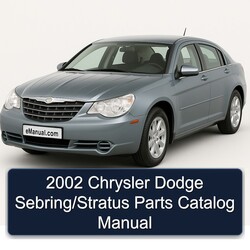
This manual covers the 2002 Chrysler Sebring, Cirrus, and Dodge Stratus models, which were built on Chrysler's JS platform. These vehicles offered a range of powertrains, including 2.0L and 2.4L 4-cylinder engines, as well as a 2.7L V6 engine. Known for their mid-size sedan and coupe/convertible offerings, these Chrysler vehicles competed in a segment with established models from other manufacturers. This documentation provides essential technical information for understanding and maintaining these vehicles, which were produced in Sterling Heights, Michigan.
$16.99
This manual covers the 2002 Chrysler Sebring and Dodge Stratus Coupe models, which share a platform and many components. These vehicles were designed as mid-size coupes, offering a blend of style and practicality. They were available with either a 2.4L V4 engine or a more powerful 3.0L V6 Mitsubishi engine, paired with a 4-speed automatic transaxle or, less commonly, a 5-speed manual. The Sebring and Stratus coupes of this generation, built on the JA platform, represented an era of global component sourcing and shared engineering, providing a sporty aesthetic and comfortable ride for their intended use.
$16.99
This manual covers the Dodge Stratus and Chrysler Sebring models from the 2002 model year, built on the J platform. These mid-size sedans were engineered for reliability and value, sharing components to enhance cost efficiency and market coverage. The Dodge Stratus was positioned as a mainstream sedan, while the Chrysler Sebring offered a more refined experience, with both vehicles providing a comfortable ride and practical performance for daily use.
$16.99
This service repair manual provides comprehensive information for the 2002 Dodge Stratus and Chrysler Sebring. These vehicles, built on the Chrysler JA platform, were designed with practicality and value in mind, offering reliable transportation for everyday use. They were manufactured in Sterling Heights, Michigan, and typically featured front-wheel drive. Engine options included a 2.0L 4-cylinder and a 2.7L V6, paired with either manual or automatic transmissions. Safety features like anti-lock brakes and airbags were standard or optional depending on the trim level.
$16.99
This manual covers the Chrysler Sebring and Stratus models from the 2002 model year, built on the JR platform. These mid-size vehicles were offered in both Sedan and Convertible body styles, aiming to provide a balance of comfort, styling, and affordability. Available with a 2.4L DOHC I4 engine producing approximately 147 hp or a 2.7L DOHC V6 generating around 200 hp, these cars competed in a segment focused on value. Key features include standard front airbags, with optional ABS and traction control, and a standard automatic transmission, typically a 4-speed unit. The design philosophy emphasized practicality and a comfortable ride, making them suitable for everyday transportation.
$16.99
This workshop service repair manual provides comprehensive guidance for the 2002 Chrysler JR Sebring Sedan and Convertible models. It is designed to assist owners and technicians in understanding and maintaining these vehicles, highlighting their engineering and reliability. This manual serves as an essential resource for anyone seeking to perform service and repairs on their Chrysler Sebring or Stratus.
$16.99
This manual covers the Chrysler Sebring and Stratus models from the 2002, 2003, and 2004 model years, specifically the second generation (JR). These vehicles were offered in both Sedan and Convertible body styles, representing Chrysler's mid-size segment offerings. They were equipped with either a 2.7L V6 engine producing 200 hp or a 2.4L I4 engine producing 150 hp, both paired with a 4-speed automatic transmission. The Sebring and Stratus were designed to provide a balance of comfort and style, competing in a segment with established rivals.
$16.99
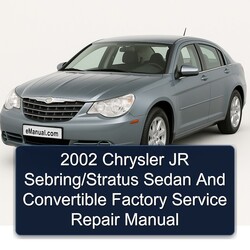
This factory service repair manual provides comprehensive information for the 2002 Chrysler Sebring and Stratus models, built on the JR chassis. These vehicles were offered in both sedan and convertible body styles, catering to a mid-size market segment. Known for their attractive styling, especially the convertible variant, and available with efficient four-cylinder or more powerful V6 engines, these models offered a compelling value proposition. Chrysler's legacy includes producing comfortable and stylish vehicles, and the Sebring and Stratus line continued this tradition, competing effectively with other domestic and international rivals.

$16.99
The 2002 Chrysler Sebring, built on the JR platform, offers a compelling blend of style and practicality as a mid-size coupe and convertible. Designed for individuals seeking a sporty yet functional vehicle, the Sebring provides a choice between an efficient 2.4L four-cylinder engine or a more potent 2.7L V6, both paired with a smooth 4-speed automatic transmission. Its cab-forward design contributes to a spacious interior and a comfortable ride, making it a competitive option in its segment. Chrysler's legacy of producing reliable and comfortable American vehicles underpins the Sebring's engineering, aiming to deliver a satisfying ownership experience.
$16.99
This workshop service repair manual covers the 2002 Chrysler Sebring and Stratus models, available in Sedan and Convertible body styles, built on the JR platform. These mid-size vehicles were designed to offer stylish aesthetics and a comfortable ride, competing with established models like the Toyota Camry and Honda Accord. The Sebring and Stratus offered a choice of powertrains, including a 2.4L DOHC I4 engine, a 2.7L DOHC V6, and a 3.0L SOHC V6, paired with either a 4-speed automatic or an optional 5-speed manual transmission. Notable features included available premium audio systems and power accessories, aiming to provide a pleasant ownership experience.

$16.99
The 2002 Chrysler Sebring is a mid-size vehicle offered in coupe and convertible body styles, designed to appeal to buyers seeking stylish and affordable transportation. Built on the Chrysler JA platform, it shares components with other vehicles in the Chrysler-Dodge-Plymouth family. The Sebring was known for its distinctive styling and the availability of both a fuel-efficient 2.4-liter four-cylinder engine and a more powerful 2.7-liter V6 option, providing a balance of performance and value within its market segment.
$16.99
The 2002 Chrysler Sebring represents a versatile mid-size vehicle offered in Sedan, Coupe, and Convertible body styles. Built on a platform shared with Mitsubishi, it combines American styling with a focus on comfortable cruising and accessible V6 power. The Sebring was designed to appeal to families and individuals seeking stylish and practical transportation, aiming to compete with established models like the Ford Taurus and Toyota Camry. Its engineering prioritizes reliability and a comfortable driving experience, making it a notable option in its segment.
$16.99
The Sebring, model code JS, represents a significant entry in the mid-size coupe, sedan, and convertible market for the 2002 model year. Built on a robust JS platform, this vehicle offered a range of powertrain options, including efficient 4-cylinder engines and more powerful V6 configurations, catering to diverse driver needs. Known for its comfortable ride and stylish design, the Sebring aimed to blend American practicality with a touch of sporty flair, competing with established models from major manufacturers. Its production in Sterling Heights, Michigan, underscores its American manufacturing heritage, while its availability in multiple body styles provided versatility for consumers.
$16.99
The Chrysler Sebring, produced from 2001 to 2006, is a mid-size personal luxury car offered in coupe, convertible, and sedan body styles. Known for its distinctive cab-forward styling, the Sebring provided buyers with a choice between a fuel-efficient 2.4L inline-4 engine or a more potent 2.7L V6. The convertible variants offered a power-operated soft top or an optional retractable hardtop, enhancing its appeal as a stylish personal vehicle. This generation of the Sebring was manufactured in Sterling Heights, Michigan, USA, and represented a significant redesign from its predecessors.

$16.99
The Chrysler Sebring, produced for the 2002 model year, is a versatile mid-size vehicle offered in sedan and convertible body styles. Designed to provide a balance of style, comfort, and affordability, the Sebring appealed to a broad range of drivers seeking a practical yet attractive automobile. Available with a choice of a 2.0L 4-cylinder or a more powerful 2.7L V6 engine, and paired with either a 4-speed automatic or a less common 5-speed manual transmission, it offered a capable and engaging driving experience for its class.
$16.99
This manual covers the Chrysler Sebring, a mid-size vehicle produced for the 2002 model year, representing the second generation of this model line. Available as a sedan, coupe, or convertible, the Sebring was designed with stylish, comfortable, and practical American aesthetics, aiming to compete in a segment populated by well-established models. It offered a choice between a 2.7L V6 engine producing 200 horsepower or a 2.4L 4-cylinder engine delivering 150 horsepower, both paired with a 4-speed automatic transmission. The vehicle featured a wheelbase of 106.0 inches and was equipped with standard safety features such as anti-lock brakes and airbags, with optional traction control and side airbags.
$16.99
The Chrysler Sebring, produced from 2002 as part of the Second Generation (JR), offered a blend of attractive styling and practicality, available in sedan, coupe, and convertible body styles. This mid-size vehicle competed with established models like the Ford Taurus, Toyota Camry, and Honda Accord. It was designed to appeal to consumers seeking a stylish and comfortable ride, with a focus on offering a pleasant driving experience across its various trim levels, including LX, LXi, and GTC. The Sebring was manufactured in Sterling Heights, Michigan, USA, and was built on Chrysler's JA/JC platform, sharing components with other Chrysler Corporation vehicles of the era.
$16.99
The 2002 Chrysler Sebring is a versatile mid-size vehicle offered in sedan, convertible, and coupe body styles, built on the Chrysler JS platform. Known for its distinctive styling, particularly the convertible variant, the Sebring provided a range of engine options including a 2.0L I4 and 2.7L or 3.0L V6, delivering performance from approximately 134 hp to 187 hp. With a seating capacity for five passengers and a focus on broad appeal, the Sebring aimed to balance style with practicality. Its engineering reflects Chrysler's legacy of producing accessible and visually appealing vehicles for the North American market.
$16.99
This manual covers the Chrysler Sebring models produced for the 2002 and 2003 model years, encompassing Coupe, Sedan, and Convertible body styles. Built on the Chrysler JS platform, the Sebring offered a range of engine options, including a 2.4L four-cylinder and two V6 variants (2.7L and 3.0L), paired with automatic transmissions. Known for its distinctive styling and the availability of a convertible option, the Sebring aimed to provide a stylish and functional vehicle for budget-conscious buyers. This generation of the Sebring was manufactured in Sterling Heights, Michigan, and represented a significant redesign from its predecessors, competing in the compact to mid-size segments.
$16.99
The Chrysler Sebring, produced from 2001 to 2006, is a mid-size car offered in Coupe, Convertible, and Sedan body styles. Known for its stylish design, particularly in the coupe and convertible variants, and a comfortable ride, the Sebring provided a compelling value proposition in its segment. It was available with a choice of engines, including a 2.4L DOHC I4, a 2.7L DOHC V6, and a 3.0L SOHC V6, paired with either a 4-speed automatic or an available 5-speed manual transmission. The Sebring was manufactured at the Sterling Heights Assembly Plant in Michigan, USA.
$16.99
The 2003 Chrysler Sebring, Cirrus, and Stratus models represent a significant offering in the mid-size automotive market, available in versatile sedan, coupe, and convertible body styles. These vehicles, built on Chrysler's JA/JLX platform, were designed to provide a balanced blend of comfort, style, and value, competing with established models from other manufacturers. They were equipped with a range of engines, including the 2.7L SOHC V6, a 2.4L DOHC Inline-4, and an optional 3.0L DOHC V6, paired with either a 4-speed automatic or, less commonly, a 5-speed manual transmission. The Sebring lineup was known for its smooth ride quality and functional interior, aiming to meet the needs of everyday drivers and those seeking a more stylish personal vehicle.
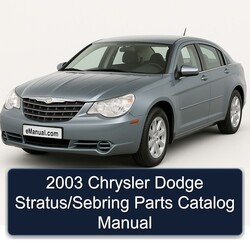
$16.99
This manual covers the 2003 Chrysler Dodge Stratus and Sebring models, specifically the second-generation coupes built on the Chrysler JS platform, shared with Mitsubishi Eclipse and Galant. These vehicles, designed by Chip Foose, offered a stylish entry to mid-size coupe segment, competing with models like the Ford Mustang and Toyota Solara. Available with a 2.4L inline-4 or a 3.0L V6 engine, these front-wheel-drive coupes provided a blend of performance and design.
$16.99
The Chrysler Sebring, produced in 2003, represents a mid-size offering available in Coupe, Sedan, and Convertible body styles, built on the Chrysler JS platform. This model was designed to provide a stylish appearance, a comfortable ride, and a strong value proposition within its competitive segment. It offered a choice between a 2.4L four-cylinder engine and a more powerful 2.7L V6 engine, paired with either a manual or automatic transaxle, catering to diverse driver preferences. The Sebring was equipped with standard safety features such as driver and front passenger airbags and Anti-lock Braking System (ABS) on most trims, aiming for a balance of performance and passenger protection.

$16.99
The 2003 Chrysler Sebring, built on the JR41 platform, represents a versatile option in the mid-size segment, available in coupe, sedan, and convertible body styles. This generation, introduced in 2001, features a distinctive cab-forward design and was manufactured in the United States. It offered a choice of two robust engines: a 2.7L V6 DOHC (EER) producing 200 horsepower and a 2.4L DOHC I4 (ED3) with 150 horsepower, both paired with a 4-speed automatic transmission. Known for its comfortable ride and a range of available features, the Sebring was designed to compete with established models like the Toyota Camry and Honda Accord, while its convertible variant also vied with the Ford Mustang.
$16.99
The Chrysler Sebring, produced in 2003, represents the second generation of this mid-size coupe and convertible model, built on the Chrysler JS platform. Known for its stylish design, influenced by European aesthetics during the DaimlerChrysler era, the Sebring offered a comfortable ride and a choice of powertrains, including a 2.4L 4-cylinder, a 2.7L V6, and a 3.0L V6 engine. This vehicle was assembled in Sterling Heights, Michigan, and competed in a segment with notable rivals such as the Ford Mustang and Toyota Camry Solara, aiming to provide a blend of practicality and visual appeal.
$16.99
The Chrysler Sebring, produced in 2003 as part of its second generation, offers a blend of style and practicality across its coupe, convertible, and sedan body styles. Built on the JS platform, this vehicle was designed to provide a comfortable and reliable driving experience, incorporating a range of engine options including the 2.7L V6 (EDZ) and the 2.4L 4-cylinder (EHD). With a focus on accessible automotive engineering, the Sebring aimed to meet the needs of a diverse customer base, from daily commuters to those seeking a more versatile personal vehicle.
$16.99
The 2004 Chrysler Sebring, built on the JR platform, is a mid-size car offered in coupe and convertible body styles. It features distinctive styling influenced by classic Chrysler designs, aiming to provide an affordable option within its segment. The Sebring was available with a choice of three engines: a 2.4L DOHC I4, a 2.7L DOHC V6, or a 3.0L SOHC V6, paired with either a 4-speed automatic or a 5-speed manual transmission. Its engineering prioritizes reliability and a comfortable driving experience, making it suitable for daily commuting and leisure.
$16.99
This manual covers the Chrysler/Dodge Sebring and Stratus Sedan and Convertible models from the 2004 model year, built on the Chrysler JS Platform. These mid-size vehicles, produced at the Sterling Heights Assembly Plant, offered a blend of styling, comfort, and affordability, with a distinct lifestyle appeal in their convertible variants. The Sebring/Stratus competed effectively in a segment with strong offerings from other manufacturers, known for their comfortable ride and reasonably spacious interiors. This comprehensive guide details the various engine options, including the 2.4L 4-cylinder and 2.7L V6 gasoline engines, and their associated performance characteristics.
$16.99
The 2004 Sebring is a versatile mid-size car, available in Coupe, Convertible, and Sedan body styles, built on the JS Platform. Designed to offer accessible American luxury and distinctive styling, it competes in a segment that includes vehicles like the Ford Mustang and Toyota Camry. The Sebring offers a choice of powertrains, including a 2.4L DOHC Inline-4 engine producing 150 hp, a 2.7L SOHC V6 with 189 hp, and a more potent 3.0L SOHC V6 for the GT model delivering 200 hp. These are paired with a 4-speed automatic transmission. Notable features include standard ABS, available traction control, and a range of safety equipment.
$16.99
This manual covers the Chrysler Sebring and Cirrus models from the 2004 model year, built on the JR platform, which was also shared with the Dodge Stratus. These mid-size family vehicles were available as coupes, convertibles, and sedans, offering a range of powertrains including a 2.7L DOHC V6 and a 3.0L SOHC V6. Known for their distinctive styling and comfortable interiors, these vehicles were designed to compete in a crowded segment, offering a blend of practicality and style for everyday use.
$16.99
The 2004 Chrysler Sebring Convertible (JR41) represents a mid-size American convertible designed to offer style and an open-air driving experience at an accessible price point. Built on the Chrysler JR platform, this generation of the Sebring was engineered to appeal to consumers seeking a blend of everyday practicality and leisure driving enjoyment. It features a distinctive convertible body style and was typically equipped with a 2.4L Inline 4-cylinder engine producing 150 horsepower, paired with a 4-speed automatic transmission. The Sebring Convertible aimed to provide a balance of comfort, safety, and a focus on its open-air appeal within its competitive segment.
$16.99
The 2004 Chrysler Sebring Coupe is a stylish and functional vehicle designed to offer a blend of sporty aesthetics and practical performance. Built on a platform shared with Mitsubishi, this coupe emphasizes a sleek, aerodynamic design, making it a distinctive presence on the road. It was commonly equipped with either an inline 4-cylinder or a V6 engine, providing a range of power options to suit different driving preferences, and was typically offered with either a manual or automatic transmission. The Sebring Coupe was positioned as an affordable yet appealing option within its market segment, competing with other compact to mid-size coupes of its era by offering a balance of features and value.
$16.99
This manual covers the Chrysler Sebring and Dodge Stratus models from the 2004 model year, built on the JR41 platform. These vehicles were manufactured in Sterling Heights, Michigan, USA, and offered a range of engine options, including the 2.4L GEMA I4, the 2.7L EER V6, and the 3.0L 6G72 V6, paired with either automatic or manual transmissions, and in some cases, a Continuously Variable Transmission (CVT). The vehicles were designed for general passenger use and featured a wheelbase of approximately 106 inches, with lengths around 194 inches. Safety features included standard ABS on most models, front airbags, and optional side airbags, with some models achieving favorable crash test ratings for their time.
$16.99
This manual covers the JR Sebring and Stratus models produced in 2004, available as both Sedan and Convertible body styles. These vehicles are recognized for their attractive styling, comfortable ride, and a range of engine options, including the 2.4L 4-cylinder (naturally aspirated and turbocharged) and the 2.7L V6 (gasoline and Flex Fuel variants). Engineered with a focus on providing a stylish and accessible personal car experience, the JR platform offered a blend of American design with practicality for everyday use, competing in the mid-size segment with models from Ford, Chevrolet, Toyota, Honda, and Nissan.
$16.99
This manual covers the Chrysler Sebring and Stratus models, specifically the JR platform, for the 2004 model year. Available in Sedan and Convertible body styles, these vehicles were designed to offer a blend of comfort and practicality within the competitive mid-size automotive segment. The engineering quality and reliability of the Sebring and Stratus are supported by comprehensive technical documentation, ensuring owners and technicians have the resources needed to maintain these vehicles effectively. This manual provides an inexpensive way to keep your vehicle working properly, saving money on maintenance and repairs.
$16.99
This manual provides comprehensive service and repair information for the 2004 Chrysler Sebring and Stratus, available in Sedan and Convertible body styles, built on the JR platform. Chrysler's heritage in mid-size vehicles is reflected in the engineering of these models, which represent a refinement of the JR platform introduced in 2001. This factory service manual offers factory-level detail, ensuring accuracy and thoroughness for all aspects of vehicle maintenance and repair.
$16.99
This factory service repair manual provides comprehensive information for the 2004 Chrysler Sebring and Stratus, built on the JR platform. These mid-size vehicles were offered in sedan and convertible body styles, known for their stylish design and value-oriented proposition in a competitive market. The manual covers a wide range of systems, including engine diagnostics and repair, automatic transmission service, brake systems, suspension, steering, fuel systems, cooling systems, exhaust systems, and all electrical components, complete with wiring diagrams.
$16.99
This workshop service repair manual provides comprehensive technical information for the 2004 Chrysler Sebring and Stratus models with the JR chassis code, covering both Sedan and Convertible body styles. Engineered for reliability and performance, these vehicles offered a range of engine options, including the 2.4L DOHC I4 and the 2.7L DOHC V6, delivering power outputs typically between 150 and 200 horsepower. The Sebring and Stratus platforms were developed to offer refined driving experiences and practical utility, making them popular choices for daily commuting and family transport.
$16.99
This manual covers the Chrysler JR Sebring, model year 2004. Engineered for reliability and performance, the JR Sebring offers a blend of comfort and capability, making it suitable for various driving needs. This comprehensive guide details the intricacies of the vehicle, ensuring owners and technicians have the resources necessary to maintain its optimal working condition.
$16.99
The 2004 Chrysler Sebring Convertible, chassis code JR27, offers a stylish and accessible mid-size convertible experience. Built on the Chrysler JA platform, this model is part of the second generation of the Sebring convertible, produced from 2001 to 2006. It features a distinctive power-operated soft top, designed with a focus on sporty aesthetics. Under the hood, a 2.7-liter V6 SOHC engine, producing approximately 189 horsepower and 190 lb-ft of torque, is paired with either a 4-speed automatic or a less common 5-speed manual transaxle. Standard safety features include Anti-lock Braking System (ABS) and front airbags, with optional traction control available.
$16.99
The 2004 Chrysler Sebring, internally coded JR41, represents a mid-size vehicle offered in both coupe and convertible body styles, known for its stylish design and affordable market positioning. This generation of the Sebring was manufactured in Michigan, USA, and was a popular choice in its segment, competing with models like the Ford Mustang and Toyota Camry Solara. It was available with a 2.7L V6 engine producing 189 horsepower or a 2.4L 4-cylinder engine delivering 150 horsepower, paired with either a 4-speed automatic or a less common 5-speed manual transmission. The Sebring was engineered with a focus on providing value, featuring standard ABS on most trims and a generally favorable safety rating for its time.
$16.99
This manual provides comprehensive information for operating and maintaining your vehicle. It details essential systems and features designed for optimal performance and driver convenience. The engineering and reliability of this vehicle are paramount, ensuring a dependable driving experience for various needs. Understanding its unique characteristics will enhance your ownership and enjoyment.
$16.99
The 2004 Chrysler Sebring represents a compelling option within the mid-size personal luxury segment, offering a distinctive style and a comfortable ride. Available in Sedan, Coupe, and Convertible body styles, this model year saw minor cosmetic updates and the introduction of a sportier 'Tuning' package. The Sebring was engineered with a focus on providing a stylish and accessible vehicle, notable for its available V6 power and the unique appeal of its convertible top. It competed in a crowded market, aiming to stand out with its design and value.
$16.99
The 2004 Chrysler Sebring, part of the Second Generation (JR41), offers a blend of style and comfort, available in sedan, coupe, and convertible body styles. Designed to compete in the mid-size segment, it provided a balance of affordability and features, appealing to buyers seeking practical yet aesthetically pleasing personal transportation. Its engineering emphasizes a comfortable ride, particularly for highway cruising, and it offered a choice of reliable powertrains, including a 2.4L I4 and several V6 options, all driving the front wheels. The Sebring's design, with its distinctive American styling, set it apart from some import competitors, making it a notable option in its class.

$16.99
The 2004 Chrysler Sebring, available as a coupe or convertible (JR41 chassis code), represents a mid-size American vehicle designed for individuals seeking style and comfort. It offered a range of powertrain options, including a 2.4L DOHC inline-4, a 2.7L DOHC V6, and a 3.0L SOHC V6 from Mitsubishi, all paired with a 4-speed automatic transaxle. Notable features include front disc brakes with available ABS, MacPherson strut front suspension, and power rack and pinion steering. While generally ranked in the average to below-average range for initial quality during its production, the Sebring aimed to provide an accessible option in a competitive market segment alongside vehicles like the Ford Mustang and Toyota Camry Solara.
$16.99
The 2004 Chrysler Sebring, part of the Second Generation (JR41) platform, represents a mid-size vehicle offered in Coupe, Convertible, and Sedan body styles. This model aimed to balance comfort, performance, and affordability with a design influenced by European styling. It was powered by a 2.7L V6 SOHC engine or an optional 2.4L DOHC I4 engine, both featuring sequential multi-port fuel injection. The vehicle came equipped with standard safety features such as Anti-lock Braking System (ABS) and front airbags, with optional traction control and side airbags. The 2.7L V6 engine was recognized for its smooth operation and power delivery, having been named to Ward's '10 Best Engines' list in 2000.
$16.99
The 2004 Chrysler Sebring represents a notable entry in the automotive market, offering a blend of comfort and practicality across its coupe, convertible, and sedan body styles. Built on the JR platform, this generation of the Sebring is designed to provide a reliable and enjoyable driving experience, whether for daily commutes or longer journeys. With engine options typically including a 2.4L I4 and a 2.7L V6, the Sebring aims to balance performance with efficiency, catering to a range of driver preferences. Its engineering emphasizes durability and ease of ownership, making it a sensible choice for those seeking a dependable vehicle.
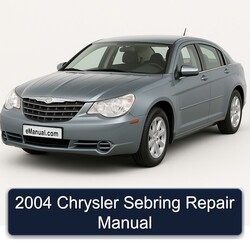
$16.99
The 2004 Chrysler Sebring, part of the second generation (JR41), offered a diverse range of body styles including coupe, sedan, and convertible, catering to a broad spectrum of consumer needs. Known for its attractive styling and value proposition, the Sebring provided a choice of efficient inline-4 or more powerful V6 engines, coupled with either a manual or automatic transmission. While it competed effectively in the mid-size segment, its strengths lay in its versatility and the popular convertible option, aiming to deliver a comfortable and stylish driving experience.
$16.99
This manual covers the Chrysler Sebring, model year 2004, identified by chassis code JR41. The Sebring was offered in sedan, coupe, and convertible body styles, built on the Chrysler JS platform. It was available with a 2.4L DOHC I4 engine producing 150 hp and 163 lb-ft of torque, a 2.7L DOHC V6 engine generating 200 hp and 190 lb-ft of torque, or a 3.0L SOHC V6 engine with 156 hp and 187 lb-ft of torque. Standard safety features included driver and passenger frontal airbags and 3-point seatbelts, with optional front side airbags and traction control. The vehicle was equipped with a 4-speed automatic transmission, with an AutoStick manual shifting capability available on certain models.
$16.99
The Chrysler Sebring, produced for the 2004 model year, represents a versatile offering in the mid-size segment, available as a sedan, coupe, or convertible. This generation, built on the JS platform, featured distinctive styling and was powered by a range of engine options, including a 2.4L I4 and two V6 variants (2.7L and 3.0L). Known for its expressive design, particularly the convertible model, the Sebring aimed to provide a compelling alternative to competitors like the Toyota Camry and Honda Accord. Its engineering prioritized a balance of comfort and practicality, with available features such as ABS, power accessories, and optional premium audio systems enhancing the ownership experience.
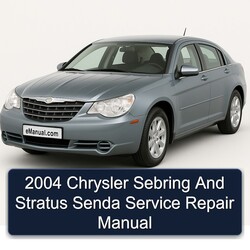
$16.99
This manual provides comprehensive service and repair information for the 2004 Chrysler Sebring and Stratus Senda models, encompassing the Second Generation Sebring (2001-2006) and Third Generation Stratus (2001-2006). These vehicles were offered in Coupe, Convertible, and Sedan body styles, featuring front-wheel drive and a choice of engine options including the 2.4L EDZ I4, 2.7L EER V6, and 3.0L EVE/EVG V6. Chrysler has a long history in the automotive market, and these mid-size offerings were known for their diverse configurations. The manual is designed to be an invaluable resource for owners and independent repair shops, offering detailed guidance to maintain and repair these vehicles with confidence.
$16.99
This manual provides comprehensive service and repair information for the 2004 Chrysler Sebring and Stratus sedan models, built on the Chrysler JS Platform. These mid-size sedans were known for their stylish design and comfortable interiors, offering a range of powertrain options including 2.4L, 2.7L, and 3.0L V6 engines. The Sebring and Stratus competed in a segment with vehicles like the Ford Taurus and Toyota Camry, with the Sebring also being available as a popular convertible. This documentation is designed to assist owners and technicians in maintaining and repairing these vehicles, ensuring their continued performance and reliability.
$16.99
This workshop service repair manual provides comprehensive information for the 2004 Chrysler Stratus and Sebring models, built on the Chrysler JA/JR platform. These vehicles, available in sedan, coupe, and convertible body styles, were designed to offer a blend of comfort and style in the mid-size segment. Known for their distinct styling and value proposition, the Stratus and Sebring represented Chrysler's commitment to providing well-appointed vehicles for everyday use. This manual is an essential resource for understanding and maintaining these vehicles.
$16.99
The Chrysler Sebring, produced in 2004 as part of its Second Generation (JR41), offered a versatile mid-size option in the automotive market, available in sedan, coupe, and convertible body styles. This generation of the Sebring was designed to compete effectively, providing a blend of styling and value. It was engineered with a focus on reliability and durability, incorporating features that aimed to meet the diverse needs of its intended buyers. The vehicle's design and platform shared elements with other Chrysler Group vehicles, reflecting a strategic approach to engineering and production.
$16.99
The Chrysler Sebring Convertible, produced from 2004 to 2006, represents a stylish mid-size convertible coupe built on the Chrysler JS platform. Known for its distinctive styling and a power-operated convertible top, this model offered a range of engine options, including 2.4L, 2.7L, and 3.0L V6 configurations, providing a blend of performance and driving pleasure. The Sebring Convertible aimed to provide a comfortable and engaging open-air driving experience, competing in a segment that included other notable American convertibles. Its design emphasized a classic profile, making it a recognizable vehicle of its era.
$16.99
The Chrysler Sebring Convertible, produced for the 2004, 2005, and 2006 model years, represents a significant offering in the mid-size convertible market. This vehicle, built on the JR41 chassis, was designed to provide a stylish and enjoyable open-air driving experience, often competing with other popular American convertibles. It features a distinctive design with a focus on aerodynamics and a sporty profile, complemented by a power-operated soft convertible top, a signature element of the model. Available with either a 2.7L V6 engine producing approximately 189 horsepower or a more powerful 3.0L V6 option with around 200 horsepower, the Sebring Convertible aimed to balance performance with the allure of a personal luxury car. Its engineering prioritizes comfort and a refined ride, making it a compelling choice for individuals seeking a blend of practicality and open-top freedom.
$16.99
The Chrysler Sebring Convertible, produced between 2004 and 2006, represents a stylish and engaging option within the mid-size convertible market. Built on the Chrysler JS platform, this two-door vehicle was designed with a focus on sporty aesthetics and an enjoyable open-air driving experience, featuring a power-operated soft top. Available with either a 2.7L V6 engine producing 190 horsepower or a 2.4L four-cylinder engine offering 150 horsepower, the Sebring Convertible provided responsive performance for everyday driving. Its engineering prioritizes a balance of comfort and dynamic appeal, making it a notable choice for consumers seeking a blend of style and value in a convertible.
$16.99
The Chrysler Sebring Convertible, produced between 2004 and 2006, represents the third generation (JS) of this model. Designed for open-air driving enjoyment, it offers a blend of style and practicality. This convertible is equipped with either a 2.7-liter V6 engine producing 189 horsepower or a 3.0-liter V6 engine delivering 200 horsepower, both paired with a 4-speed automatic transmission. Its dimensions, including a length of 193.7 inches and a wheelbase of 109.7 inches, contribute to a comfortable ride and stable handling, making it a capable and appealing vehicle for various driving needs.
$16.99
The Sebring Convertible, produced for the 2004, 2005, and 2006 model years, represents a stylish and engaging option in the mid-size convertible segment. This generation of the Sebring Convertible distinguished itself with a rounded, aerodynamic design and a focus on providing a comfortable driving experience. Available with powerful V6 engines, including a 2.7L and a 3.5L, it offered a pleasant blend of performance and refinement, complemented by a power-operated soft top and an optional hardtop. Its engineering quality aimed to deliver reliable open-air motoring, making it a popular choice for those seeking a stylish and accessible convertible.
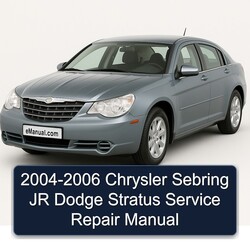
$16.99
This manual covers the Chrysler Sebring (JR) and Dodge Stratus models produced between 2004 and 2006. Built on the Chrysler JS platform, which was shared with several Mitsubishi models, these vehicles offered a range of engine options including naturally aspirated and turbocharged 2.4L inline-4 engines, as well as a 2.7L V6. The Sebring was available in both sedan and convertible body styles, while the Stratus was offered primarily as a sedan. These vehicles were designed for the North American market and represented Chrysler's efforts in the competitive mid-size segment during that era.
$16.99
The Chrysler Sebring Sedan, produced for the 2004, 2005, and 2006 model years, represents a mid-size sedan designed to offer a blend of distinctive styling, interior comfort, and practical space within its segment. Built on the Chrysler JS platform, this vehicle was engineered with a focus on providing a comfortable and stylish ride, aiming to balance features and affordability. Available with either a 2.4L DOHC inline-4 engine or a more powerful 2.7L V6, the Sebring Sedan was positioned to compete with other prominent models in the mid-size market, offering a value proposition that appealed to individuals and families seeking a dependable and well-appointed vehicle.
$16.99
The Chrysler Sebring Sedan, produced for the 2004, 2005, and 2006 model years, is a mid-size sedan designed for families, commuters, and general consumers seeking practical and comfortable transportation. Built on the Chrysler JS platform, this generation of the Sebring Sedan offers a comfortable ride and a spacious interior, with a passenger volume of approximately 97.1 cubic feet and a trunk capacity of around 15.9 cubic feet. Available in LX, LXi, and Touring trim levels, it was engineered with a focus on reliability and safety, achieving notable ratings in crash tests, including 4 stars for front impact and 5 stars for side impact from NHTSA. The Sebring Sedan was equipped with various engine options, including a 2.4L I4, a 2.7L V6, and a 3.5L V6, all paired with automatic transmissions, providing a balance of performance and efficiency for its intended use.
$16.99
This manual covers the Sebring Sedan models produced for the 2004, 2005, and 2006 model years. The Sebring Sedan, built on the JS platform, was designed as a comfort-oriented, family-friendly mid-size sedan, offering a balance of value and American styling. It was engineered to compete with other popular sedans of its era, featuring available 2.4L I4 and 2.7L V6 engine options, coupled with automatic transmissions. Known for its spacious interior and distinctive exterior design, the Sebring Sedan provided a reliable and practical option for daily commuting and family transportation.
$16.99
This manual covers the Chrysler Sebring Sedan, model years 2004, 2005, and 2006. The Sebring Sedan was a mid-size vehicle designed for practicality, offering comfortable seating and reasonable fuel economy for families and commuters. It was manufactured in the USA and positioned as a competitive option within its segment, often praised for its comfort and value. This generation, built on the JS platform, represented a refinement of Chrysler's offerings in the sedan market, providing a reliable and functional transportation solution.
$16.99
The Chrysler Sebring, manufactured for the 2004, 2005, and 2006 model years, offered a versatile range of body styles to suit diverse needs. This generation of Sebring was designed to provide reliable transportation with a focus on passenger comfort and a solid driving experience, featuring available 2.7L and 3.5L V6 engines that delivered capable performance. Notable for its safety, with certain models achieving high ratings in crash tests, the Sebring represented Chrysler's commitment to family-oriented vehicles with a blend of practicality and style.
$16.99
This workshop service repair manual covers the Chrysler Sebring models produced between 2004 and 2006. Built on the Chrysler JS Platform, these vehicles were offered in sedan, coupe, and convertible body styles, catering to a broad market segment. The Sebring was engineered with a focus on American styling and comfort, providing a reliable and versatile option within the mid-size vehicle class. Available with a range of engine options, including the 2.4L I4 and various V6 configurations, and transmission choices such as a 4-speed automatic or CVT, the Sebring was designed to meet diverse driver needs.
$16.99
The Chrysler Sebring, produced for the 2004, 2005, and 2006 model years, represents a mid-size sedan and convertible option built on the Chrysler JS platform. Known for its sporty styling, particularly in convertible variants, the Sebring offered a range of powertrain options, including a 2.7L V6, a 2.4L 4-cylinder, and a more powerful 3.0L V6 for the GT trim. These vehicles were designed for general consumers seeking practical yet stylish transportation, competing with established models in the segment. The engineering focused on delivering a comfortable ride and a visually appealing design, aiming to provide a compelling choice within the competitive automotive market.
$16.99
This manual covers the Chrysler Sebring models produced between 2004 and 2006, available in Sedan, Coupe, and Convertible body styles. The Sebring is recognized for its distinctive styling, particularly in its convertible form, and offers V6 engine options that provide capable performance within the mid-size segment. These vehicles were designed to compete with established models like the Toyota Camry, Honda Accord, Ford Fusion, and Chevrolet Malibu, aiming to offer a blend of comfort, value, and American engineering.
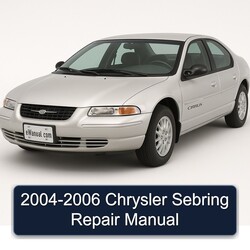
$16.99
This manual covers the Chrysler Sebring models produced between 2004 and 2006, including related models such as the Dodge Stratus and Dodge Cirrus. Engineered for reliability and performance, the Sebring offers a range of engine options, including 2.4L four-cylinder (standard and turbocharged), 2.0L four-cylinder, and 2.7L V6 variants, catering to diverse driving needs across its sedan, coupe, and convertible body styles. This comprehensive guide is designed to be the definitive resource for maintaining and repairing these vehicles, reflecting Chrysler's commitment to quality engineering.
$16.99
This comprehensive service repair workshop manual covers the Chrysler Sebring Stratus Sedan models manufactured between 2004 and 2006. Designed for reliability and efficient operation, these vehicles offer a blend of comfort and performance suitable for everyday driving and longer journeys. The engineering behind the Sebring Stratus Sedan emphasizes durability and user experience, making it a dependable choice for owners.
$16.99
This comprehensive workshop service repair manual covers the Chrysler Sebring and Stratus Sedan models produced between 2004 and 2006. These vehicles are engineered for reliable daily transportation, offering a balance of comfort and performance. Their design emphasizes robust construction and user-friendly operation, making them a practical choice for a wide range of drivers.
$16.99
The Chrysler Sebring, produced in 2005, represents a mid-size vehicle offered in Coupe, Convertible, and Sedan body styles. Known for its distinctive styling, particularly the power-operated convertible top, the Sebring provided a comfortable and stylish option for consumers. Available with 2.7L V6 (189 hp) and optional 3.0L V6 (200 hp) engines, it offered capable performance, especially in its more sporting variants. The Sebring was manufactured in Sterling Heights, Michigan, and aimed to compete in a segment with strong offerings from both domestic and international manufacturers.

$16.99
This manual covers the Chrysler Sebring, Dodge Stratus Coupe, and Chrysler Cirrus Coupe models from the 2005 model year. These vehicles, produced in Normal, Illinois, offered stylish designs and comfortable interiors, with available V6 engines providing capable performance for their segment. The Sebring and Cirrus coupes, along with the Dodge Stratus Coupe, shared a platform and were designed for mainstream buyers seeking a blend of sportiness and practicality. Notable features included available premium audio systems and automatic climate control, contributing to a pleasant driving experience.
$16.99
This manual covers the 2005 Chrysler Sebring Sedan, Sebring Coupe, Sebring Convertible, Dodge Stratus Sedan, and Dodge Cirrus. These vehicles, built on the Chrysler JS and JA platforms, offered a blend of stylish design, particularly in the convertible variants, and a comfortable ride, positioning them competitively within the mid-size segment. The range of available engines, including 2.0L and 2.4L four-cylinder and 2.7L and 3.5L V6 options, provided varied performance characteristics, with horsepower ranging from approximately 130 to 225 hp. The vehicles were manufactured in Michigan, USA, and Toluca, Mexico, and represent a significant offering from Chrysler Corporation during their production years of 2001-2006.
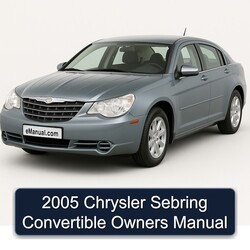
$16.99
This manual provides comprehensive information for your vehicle, covering a wide range of topics essential for operation and care. It details various systems including the instrument cluster, entertainment and climate control systems, lighting, driver controls, locks, security features, seating, and safety restraints. Guidance is also provided on driving practices, customer assistance, and cleaning procedures, ensuring you have the knowledge to utilize your vehicle effectively and safely.
$16.99
This manual provides comprehensive service and repair information for the 2005 Chrysler Sebring Sedan, Sebring Convertible, and Dodge Stratus Sedan, all built on the JR platform. These vehicles were designed to offer a blend of comfort and practicality, suitable for daily commuting and family use. They were available with various engine options, including the 2.4L GEMA I4 and the 2.7L EER V6, paired with front-wheel-drive and typically automatic transmissions. Engineering quality and reliability are key aspects, with this manual detailing the procedures to maintain these attributes.
$16.99
The 2005 Chrysler Dodge Stratus and Sebring represent mid-size passenger cars built on the Chrysler JA/Jv/JXa platform, manufactured in Sterling Heights, Michigan. These vehicles, available in sedan and coupe body styles, offered a balance of styling, comfort, and value, competing with models like the Toyota Camry and Honda Accord. The Stratus and Sebring were equipped with either a 2.4L V4 SOHC 16V engine producing approximately 150 horsepower or a 3.0L V6 SOHC 24V engine delivering around 200 horsepower, both typically paired with an automatic transaxle. Safety features included standard frontal airbags and a strong NHTSA front crash test rating of 4 out of 5 stars, contributing to their appeal as reliable daily drivers.
$16.99
This manual covers the 2005 Chrysler Sebring Convertible, a mid-size vehicle designed for consumers seeking an affordable and stylish convertible experience. Built on the JR platform, this model offers distinctive American styling and a value proposition that made it competitive within its segment. Powered by a 2.7-liter V6 SOHC engine producing 189 horsepower, and paired with a 4-speed automatic transmission, the Sebring Convertible was engineered for leisurely driving. Its design prioritizes a sporty profile and the enjoyment of open-air motoring, making it a popular choice for those who appreciate both form and function in their personal transportation.
$16.99
The 2005 Chrysler Sebring, identified by internal code JR41, offers a blend of comfort and practicality, available in both sedan and convertible body styles. This mid-size vehicle was designed for the North American market, competing with other popular models of its era. It features a comfortable ride, a spacious interior, and powertrain options including a 2.7L V6 engine producing 189 horsepower and 190 lb-ft of torque. Notable features include Anti-lock Braking System (ABS) and optional traction control, alongside standard front and front side-impact airbags, contributing to its safety profile.
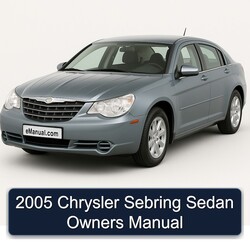
$16.99
The 2005 Chrysler Sebring Sedan, a mid-size vehicle from the second generation (JR41), offers a blend of comfort and practicality. Engineered for families and commuters, this sedan was designed to provide a value-oriented option within its segment, featuring a comfortable ride and a spacious interior. Available with a 2.4L DOHC I4 engine producing 150 horsepower or a more powerful 2.7L SOHC V6 engine delivering 189 horsepower, the Sebring Sedan was equipped with a 4-speed automatic transaxle. Its design emphasized occupant protection, with standard advanced frontal airbags and available front side-impact airbags, alongside 3-point seat belts with pretensioners.
$16.99
The 2005 Chrysler Sebring is a versatile mid-size vehicle offered in sedan, coupe, and convertible body styles, built on the Chrysler JS platform. Known for its distinctive styling and value proposition, the Sebring provides a comfortable and practical option for various needs. It was engineered with reliability and driver comfort in mind, featuring a range of engine options including a 2.4L four-cylinder and multiple V6 configurations, paired with either a 4-speed automatic or a 5-speed manual transmission. This model represents Chrysler's commitment to offering well-equipped vehicles with a focus on accessible features and a flexible design.
$16.99
The Chrysler Sebring, produced from 2001 to 2006, is an American mid-size vehicle offered in sedan, coupe, and convertible body styles. Built on the Chrysler JS platform and manufactured in Sterling Heights, Michigan, this generation of Sebring was designed to appeal to consumers seeking a stylish and practical vehicle with versatile options. It was available with a choice of a 2.4L 4-cylinder engine or a 2.7L or 3.5L V6 engine, paired with either a 4-speed automatic, a 5-speed manual, or a Continuously Variable Transmission (CVT) on select models. The Sebring featured standard amenities such as power windows and locks, cruise control, and Anti-lock Braking System (ABS), with available options like side-impact airbags and a premium audio system.
$16.99
The 2005 Sebring is a mid-size coupe and convertible designed as an affordable and stylish option within its segment. It features distinctive styling, offering both coupe and convertible body styles, with some convertible models equipped with a retractable hardtop. The Sebring was available with a range of engines, including a 2.4L I4, a 2.7L V6, and a 3.0L V6, providing varied performance levels. This generation of the Sebring, part of the second generation produced from 2001-2006, was manufactured in Sterling Heights, Michigan, USA, and was positioned against competitors like the Ford Mustang and Toyota Camry Solara.
$16.99
The 2005 Chrysler Sebring is a mid-size vehicle offered in sedan, coupe, and convertible body styles, built on the Chrysler JS platform. It was designed to compete with established models like the Toyota Camry and Honda Accord, offering a stylish appearance and a range of powertrain options, including a 2.4L I4, a 2.7L V6, and a 3.0L V6. The Sebring was known for its attractive styling and the versatility of its body configurations, appealing to a broad market segment. While independent reviews indicated varied reliability, the vehicle was engineered with a focus on providing a comfortable and functional driving experience for everyday use.
$16.99
The 2005 Chrysler Sebring ST22 Coupe represents a stylish and value-oriented option in the mid-size coupe segment. Built on the Chrysler JS platform, this vehicle offers distinctive styling with a focus on a sporty profile, aiming to provide a blend of comfort and reasonable performance. Its engineering prioritizes reliability for everyday use, making it a practical choice for individuals seeking an affordable personal car. The Sebring Coupe was designed to compete with other popular models of its era, emphasizing its appeal through a combination of aesthetic design and accessible features.
$16.99
The Sebring, produced for the 2006 model year, represents a stylish and practical vehicle offered in sedan, coupe, and convertible body styles. Built on the JS platform, this mid-size vehicle was designed with a focus on affordability and comfort, competing with models such as the Ford Fusion and Toyota Camry. The Sebring was available with a range of powertrain options, including a 2.4L four-cylinder engine producing 146 horsepower, a 2.7L V6 with 189 horsepower, and a more potent 3.5L V6 delivering 230 horsepower. Standard safety features included Anti-lock Braking System (ABS) and front airbags, with optional traction control and side curtain airbags, contributing to its generally good safety ratings for the era.
$16.99
This manual covers the 2006 Chrysler Sebring and Cirrus models, which share related platforms and offer various body styles including Coupe, Convertible, and Sedan. These vehicles are equipped with a range of gasoline powertrains, featuring 2.7L V6, 3.5L V6, and 2.4L I4 engines, paired with 4-speed and 5-speed automatic transmissions. Known for their distinctive styling and comfortable ride, these models were positioned in the mid-size segment, competing with other popular vehicles of their era. The engineering quality and reliability are supported by strong safety ratings, including 5-star frontal and side impact ratings from NHTSA, and Good ratings from IIHS for certain configurations.
$16.99
The 2006 Chrysler Sebring Convertible is a mid-size, front-wheel-drive vehicle designed to offer a blend of style, comfort, and affordability. Built on the Chrysler JS platform, this convertible represents the final year of its generation, known for its balanced ride and spacious interior for four passengers. Key features include an available power-operated soft top, optional premium audio systems, and a choice between a 2.7L V6 engine producing 189 hp or a more powerful 3.5L V6 engine delivering 225 hp. This model competed in a segment that valued both open-air driving and practical seating, aiming to provide a compelling option for those seeking a stylish American convertible.
$16.99
This comprehensive guide provides essential information for operating and maintaining your vehicle. It covers a wide range of topics designed to enhance your ownership experience, from understanding the instrument cluster and climate controls to detailed instructions on driver controls, locks, and safety restraints. The manual also includes guidance on driving, customer assistance, and cleaning your vehicle, ensuring you have the knowledge to utilize your vehicle's features effectively and safely.
$16.99
This manual covers the 2006 Chrysler Dodge Stratus, Sebring, and Cirrus passenger cars. These mid-size vehicles were offered in 2-door convertible and 4-door sedan body styles, with a range of engine options including 2.0L, 2.4L, and 2.7L configurations. The lineup featured Inline 4-Cylinder and V6 engines, with variations such as Pzev and Flex Fuel capabilities, and DOHC valve trains. The Stratus, Sebring, and Cirrus models shared a common platform and design evolution, representing Chrysler and Dodge's mid-size offerings during this production era.
$16.99
The 2006 Chrysler Sebring Convertible (model code JR) represents a stylish American convertible designed for comfortable cruising and everyday use. Built in the USA, this model offers a range of engine options, including a 2.7L V6, a 2.4L I4, and an optional 3.5L V6, paired with a 4-speed automatic transmission. Its design reflects Chrysler's styling of the early to mid-2000s, featuring a power-operated soft top as a key convenience. With a focus on entry-level to mid-size convertible appeal, the Sebring aimed to provide a blend of open-air driving enjoyment and practical utility, competing in a segment with vehicles like the Ford Mustang Convertible and Toyota Solara Convertible.
$16.99
The 2006 Chrysler Sebring, identified by the internal code JR41, is a mid-size sedan and coupe designed to offer a comfortable ride and distinctive styling. Available with a 2.7L V6 engine producing 189 horsepower and 191 lb-ft of torque, it competed in a segment that prioritized affordability and practicality. The Sebring offered available features such as optional convertible body styles and premium audio systems, aiming to provide a compelling package for its intended audience. Its engineering focused on delivering a smooth driving experience suitable for daily commutes and longer journeys.
$16.99
This document serves as a comprehensive guide for your vehicle, offering detailed information to enhance your ownership experience. It covers a wide array of systems and functions, from the instrument cluster and climate controls to driver assistance features and security systems. The manual is designed to provide clarity on the vehicle's operation, maintenance, and care, ensuring you can fully utilize and enjoy its capabilities.
$16.99
The 2006 Chrysler Sebring is a mid-size sedan and coupe, also available as a convertible, designed to offer practical and stylish transportation. This generation, part of the JS chassis code, features American design cues and was assembled in Sterling Heights, Michigan. It was offered with a choice of engines, including a 2.4L 4-cylinder and a 2.7L V6, paired with a 4-speed automatic transaxle or an optional 5-speed manual transmission. Notable features include available premium audio systems, optional navigation, and a range of safety features such as standard ABS and front airbags, with optional side airbags and traction control. The Sebring competed in a segment with established models like the Toyota Camry and Honda Accord, aiming to provide a distinct appearance and comfortable ride.

$16.99
The 2006 Chrysler Sebring is a versatile mid-size vehicle offered in sedan, coupe, and convertible body styles. Known for its distinctive styling and practical design, the Sebring was engineered to provide a comfortable and reliable driving experience. It was equipped with dependable powertrain options, including a 2.7L V6 and a 2.4L I4 engine, both utilizing Sequential Multi-Port Fuel Injection. Built in Sterling Heights, Michigan, this generation of the Sebring aimed to compete in a crowded segment with a blend of features and functionality.
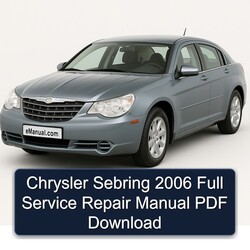
$16.99
The 2006 Sebring represents a practical and stylish mid-size vehicle, available in coupe and convertible body styles. Designed with American aesthetics, it offers a comfortable and affordable driving experience, competing with established models like the Toyota Camry and Honda Accord. The Sebring is equipped with standard safety features including frontal airbags and an Anti-lock Braking System (ABS), with optional traction control. It offers a choice between a 2.4-liter four-cylinder engine producing approximately 150 horsepower and a more potent 2.7-liter V6 engine delivering around 189 horsepower, both paired with a 4-speed automatic transmission featuring AutoStick capability.
$16.99
The 2006 Chrysler Sebring is a mid-size vehicle offered in coupe, sedan, and convertible body styles, known for its comfortable ride, spacious interior, and value proposition. It competes in a segment with established models like the Ford Fusion and Toyota Camry. The Sebring is equipped with a choice of engines, including a 2.4L DOHC inline-4, a 2.7L DOHC V6, and a 3.0L SOHC V6, paired with either a 4-speed or 5-speed automatic transmission. Its engineering emphasizes practicality and reliability, making it a suitable choice for daily commuting and family use.

$16.99
Welcome to the comprehensive Illustrated Parts Catalog for the 2007 Dodge Sebring 4-Door Sedan, built on the JS platform. This catalog provides detailed part information and numbers for all components, essential for identifying and sourcing correct replacement parts. The Sebring, known for its distinct American styling and available powertrain options including 2.0L Diesel, 2.0L Gasoline, 2.4L Gasoline, and 2.7L V6 Gasoline engines, competed in a crowded mid-size segment. This resource is invaluable for maintaining the integrity and functionality of your Sebring, covering everything from engine and drivetrain components to braking, suspension, electrical systems, and interior and exterior parts.
