The Chevrolet Sprint category encompasses a line of subcompact automobiles designed for efficient urban commuting and economical travel. These vehicles are characterized by their small size, lightweight construction, and fuel-efficient engines, making them a practical choice for individuals and small families prioritizing affordability and maneuverability. Their common applications include daily commuting, city driving, and as a reliable secondary vehicle for short trips. The Sprint models represent a segment of the automotive market focused on delivering basic transportation needs with a strong emphasis on cost-effectiveness.
Documentation for Chevrolet Sprint models typically includes comprehensive owner's manuals detailing operation, features, and basic maintenance schedules....
The Chevrolet Sprint category encompasses a line of subcompact automobiles designed for efficient urban commuting and economical travel. These vehicles are characterized by their small size, lightweight construction, and fuel-efficient engines, making them a practical choice for individuals and small families prioritizing affordability and maneuverability. Their common applications include daily commuting, city driving, and as a reliable secondary vehicle for short trips. The Sprint models represent a segment of the automotive market focused on delivering basic transportation needs with a strong emphasis on cost-effectiveness.
Documentation for Chevrolet Sprint models typically includes comprehensive owner's manuals detailing operation, features, and basic maintenance schedules. Repair manuals provide in-depth instructions for common maintenance tasks, diagnostics, and component replacement, essential for both DIY enthusiasts and professional mechanics. Technical specification guides offer detailed information on engine performance, dimensions, electrical systems, and other critical data. Troubleshooting resources are also commonly available to assist in identifying and resolving operational issues, ensuring the continued reliable performance of these vehicles.
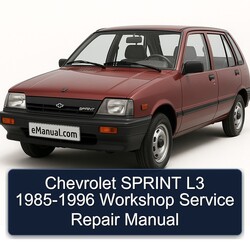
The Sprint L3, produced between 1985 and 1996, represents a segment of compact, fuel-efficient transportation. This subcompact hatchback, often powered by an inline 3-cylinder turbocharged engine (G10T, LS3) with a displacement of 1.0 L, was engineered with a focus on practicality and economy. A brand with a long-standing heritage in providing accessible vehicles, offered the Sprint as part of its strategy to meet the demand for economical motoring. Its design and engineering, often shared with Suzuki platforms, underscored a global approach to vehicle development during its production run.
The Triumph Sprint ST RS, produced in 1998, is a distinguished sport-touring motorcycle celebrated for its robust construction and versatile performance. Featuring an aluminum twin-spar frame for enhanced rigidity and a powerful inline three-cylinder engine known for its smooth torque delivery, this model offers a compelling blend of sporty agility and long-distance comfort. Its well-designed fairing provides excellent rider protection and stability at higher speeds, complemented by sophisticated suspension and braking systems that contribute to its overall riding prowess. The Sprint ST RS represents a commitment to engineering excellence and rider satisfaction.
This manual covers the Triumph Sprint ST and Sprint RS motorcycles produced between 1998 and 2001. These models, built in Hinckley, UK, represent Triumph's commitment to performance and distinctive styling within the sport-touring segment. The Sprint ST offers a full fairing for enhanced touring comfort, while the Sprint RS features a sportier half-fairing. Both are powered by a liquid-cooled, inline 3-cylinder, 4-stroke engine with a displacement of 885 cc, delivering robust performance with approximately 95-110 horsepower. Known for their British engineering, these motorcycles are equipped with 6-speed transmissions, chain drive, and reliable braking systems, with some Sprint ST variants offering optional ABS for added safety.