



Audi Turbo

The turbocharger, often referred to simply as a turbo, is a critical component in modern internal combustion engines designed to enhance performance and efficiency. This device utilizes exhaust gases to spin a turbine, which in turn drives a compressor. The compressor forces more air into the engine's cylinders, allowing for more fuel to be burned and thus generating greater power output. Turbochargers are commonly found in a wide range of passenger vehicles, performance cars, and even some heavy-duty equipment, significantly improving acceleration and torque across various operating conditions.
Comprehensive documentation for turbochargers is essential for proper installation, maintenance, and repair. Manuals...
$16.99
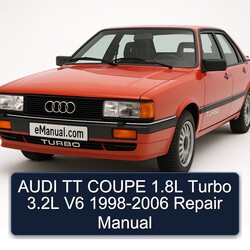
The Audi TT Coupe, first generation (Typ 8N), produced from 1998 to 2006, represents a significant entry in the premium compact sports coupe and convertible segment. Renowned for its iconic Bauhaus-inspired design and the availability of Audi's legendary quattro all-wheel-drive system, the TT offered a compelling blend of performance and distinctive style. This model was engineered with a focus on driving dynamics and featured engine variants including a 1.8L Turbo (4-cylinder, 5-valve) producing between 150-225 hp, and a more potent 3.2L V6 (4-valve) delivering approximately 250 hp. Its engineering quality and unique aesthetic made it a standout competitor against marques such as BMW, Porsche, and Mercedes-Benz.
$16.99
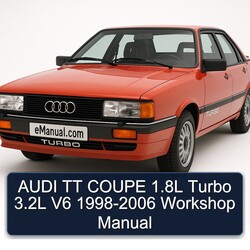
The Audi TT Coupe, first generation (Typ 8N), produced from 1998 to 2006, is a compact sports car renowned for its iconic, rounded styling and engaging driving dynamics. Available with a range of potent engines, including the 1.8L 4-cylinder 5-valve turbo in 180 PS and 225 PS variants, and the powerful 3.2L V6, the TT Coupe offered both front-wheel drive and Audi's celebrated quattro all-wheel-drive system. Its design, inspired by Bauhaus principles, and its focus on agile handling cemented its status as a distinctive and desirable performance vehicle, competing in a segment that valued both aesthetics and driving pleasure.
$16.99
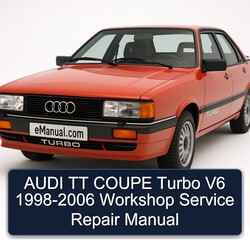
This manual covers the Audi TT Coupe, produced from 1998 to 2006, specifically the First Generation (8N). This model is known for its distinctive design and engaging driving dynamics, offering a choice between a turbocharged 1.8-liter inline 4-cylinder engine, producing approximately 178-225 horsepower, and a more powerful 3.2-liter V6 engine delivering 250 horsepower. Both engines utilize multi-point fuel injection and are paired with either a 5-speed or 6-speed manual transmission, with an optional 6-speed Tiptronic automatic transmission available. Drivetrain options include front-wheel drive and Audi's renowned Quattro all-wheel drive system, enhancing performance and stability across various conditions.

$16.99
The Audi Turbo Quattro Coupe represents a significant chapter in automotive history, blending sophisticated engineering with exhilarating performance. Produced from the mid-1980s to the early 1990s, this model is distinguished by its iconic Quattro all-wheel-drive system, providing exceptional traction and handling, and its potent turbocharged inline-five-cylinder engine. Its sleek coupe styling and German engineering quality positioned it as a premium choice for driving enthusiasts, competing with other performance vehicles of its era through its unique combination of power, all-weather capability, and sporty design.

$16.99
This manual provides comprehensive information for the Audi Turbo Quattro Coupe, a performance-oriented vehicle renowned for its turbocharged engine and advanced Quattro all-wheel-drive system. This coupe represents a significant era in automotive engineering, blending sporty design with the enhanced traction and handling capabilities that have become synonymous with Audi's Quattro technology. The vehicle's heritage is rooted in a history of motorsport success, influencing its robust construction and driver-focused engineering, making it a compelling choice for enthusiasts and those seeking reliable performance.
