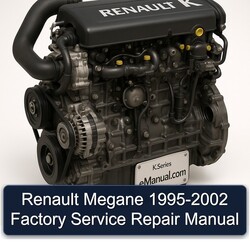
The Megane category encompasses a range of compact and family-oriented passenger vehicles manufactured by Renault. These vehicles are designed for everyday use, offering a balance of practicality, comfort, and efficiency for commuting, family transport, and general road travel. Key characteristics often include versatile hatchback or estate body styles, fuel-efficient engine options, and a focus on driver and passenger safety, making them a popular choice in the European automotive market.
Documentation for Megane models typically includes comprehensive owner's manuals detailing vehicle operation, features, and basic maintenance. Detailed service and repair manuals are also available, providing step-by-step instructions for mechanics and technicians to...
The Megane category encompasses a range of compact and family-oriented passenger vehicles manufactured by Renault. These vehicles are designed for everyday use, offering a balance of practicality, comfort, and efficiency for commuting, family transport, and general road travel. Key characteristics often include versatile hatchback or estate body styles, fuel-efficient engine options, and a focus on driver and passenger safety, making them a popular choice in the European automotive market.
Documentation for Megane models typically includes comprehensive owner's manuals detailing vehicle operation, features, and basic maintenance. Detailed service and repair manuals are also available, providing step-by-step instructions for mechanics and technicians to perform diagnostics, routine servicing, and complex repairs. These resources often include technical specifications, wiring diagrams, and troubleshooting guides to ensure optimal performance and longevity of the vehicle.
This manual provides comprehensive service and repair information for the Renault Megane, model year 1995. Engineered for reliability and performance, the Renault Megane is a versatile vehicle designed to meet a variety of driving needs. This guide is tailored for owners and technicians seeking to maintain the integrity and functionality of their vehicle through detailed instructions and technical data, ensuring optimal operation and longevity.
The Renault Megane Scenic, produced in 1995, is a pioneering compact Multi-Purpose Vehicle (MPV) designed for families seeking practicality and versatility. Built on the Renault Type 1 platform, shared with the first-generation Megane, this model distinguished itself by offering a car-like driving experience combined with minivan functionality. Its innovative design and modular interior, featuring flexible seating arrangements and a spacious cabin, set a new standard in its segment. The Megane Scenic was engineered with a focus on reliability and offered a range of gasoline and diesel engines, including 1.6L and 2.0L gasoline options, as well as 1.9L naturally aspirated and turbocharged diesel variants.
This manual provides comprehensive information for the [Vehicle Make] [Vehicle Model], produced between [Start Year] and [End Year]. Designed for [Intended Usage, e.g., daily commuting, off-road adventures, performance driving], this vehicle is recognized for its [Notable Feature 1, e.g., fuel efficiency, advanced safety systems, robust construction] and [Notable Feature 2, e.g., spacious interior, powerful engine, innovative technology]. Its engineering emphasizes reliability and durability, ensuring a dependable driving experience across various conditions.
The Renault Megane I, chassis code X64, was introduced in 1995 as a compact family car, representing a significant advancement for Renault's C-segment offerings. This first-generation model, produced until 2002, was available in various body styles including 3-door and 5-door hatchbacks, a sedan, an estate, and a cabriolet. It featured a range of inline 4-cylinder engines from 1.4L to 2.0L, paired with either a 5-speed manual or a 4-speed automatic transmission. Known for its emphasis on comfort, practicality, and safety, the Megane I incorporated innovative design elements like a 'Safety Cell' and offered features such as optional ABS and airbags. Its distinctive curved styling set it apart from competitors like the Volkswagen Golf III and Ford Escort Mk VI.
The Renault Megane, introduced in 1995, represents a significant entry in the compact family car segment. Designed as a practical and stylish hatchback, estate, and saloon, it offered a comfortable and modern alternative to its contemporaries. With a focus on interior space and innovative safety features for its era, the Megane aimed to provide reliable transportation for European buyers. It was powered by a range of efficient gasoline and diesel engines, including popular 1.4L, 1.6L, and 2.0L gasoline variants, as well as robust 1.9L diesel options, paired with either a 5-speed manual or a 4-speed automatic transmission.
The Megane, first generation (X64), was introduced in 1995 as a compact family car, designed to offer a modern and comfortable successor to the 19. Available in various body styles including 3-door and 5-door hatchbacks, a 4-door sedan, and a 5-door wagon, it catered to diverse needs. Notable for its spacious interior and distinctive dashboard design, the Megane I was built on a contemporary platform emphasizing safety for its time, featuring energy-absorbing crumple zones and optional passenger airbags. It competed with established models like the Volkswagen Golf and Ford Escort, aiming to provide a blend of practicality, comfort, and value.
This manual covers the Renault Megane, first generation (X64), produced in 1995. Designed as a compact family car, the Megane emphasized comfort, safety, and modern European styling, competing with vehicles like the Ford Escort and Volkswagen Golf. Available primarily as a 5-door hatchback, with 3-door and estate variants, it offered a range of inline-four petrol engines from 1.4L to 1.8L, along with potential 1.9L diesel options, delivering approximately 70-110 horsepower. The vehicle featured multi-point fuel injection and was equipped with a 5-speed manual or optional 4-speed automatic transmission. Safety features included available ABS and airbags, reflecting the era's focus on occupant protection.
This comprehensive service and repair manual covers the Renault Megane (chassis code X64) and Scenic (chassis code JA/FA) models produced between 1995 and 1999. These vehicles, known for their practicality and innovative design, offered a range of petrol and diesel engines, including 1.4L, 1.6L, 1.8L, 2.0L petrol, and 1.9L diesel variants. The Megane, available as a hatchback, saloon, and estate, and the Scenic, a pioneering compact MPV, were designed for comfort and versatility. This manual provides detailed technical information, ensuring owners and technicians can effectively maintain and repair these vehicles.
This service and repair manual provides comprehensive information for the Renault Megane and Scenic models produced between 1995 and 1999. Renault has a rich history of producing practical and innovative vehicles, with the Megane establishing its presence in the C-segment and the Scenic pioneering the compact MPV market, even winning European Car of the Year in 1997. This manual covers all engines for these models, offering detailed procedures for engine overhaul, rebuilding, performance tuning, and troubleshooting, including vacuum diagrams and firing orders. It also details servicing for the transmission, brake, suspension, steering, electrical, cooling, drive axle, and body systems, including specific procedures for sunroof servicing and timing belt replacement.
This manual covers the Renault Megane and Renault Scenic models from the years 1995 through 1999. These vehicles, including various Megane body styles such as hatchback, saloon, and estate, as well as the Scenic compact MPV, represent Renault's commitment to practical and innovative automotive design. The Scenic, in particular, was recognized with the 'European Car of the Year' award in 1997 for its pioneering approach to family vehicle utility. Both model lines offered a range of petrol and diesel engines, from efficient 1.4L units to more powerful 2.0L petrol and 1.9L diesel variants, paired with manual or automatic transmissions.
The Renault Megane Scenic, produced from 1995 to 1999 under the JA chassis code, was a groundbreaking compact MPV that redefined family transportation. Building on the Megane hatchback platform, this vehicle offered a unique blend of minivan practicality with car-like driving characteristics. Its innovative modular interior, featuring sliding and removable rear seats, provided exceptional versatility for passenger and cargo configurations, a key selling point that set it apart from competitors. The Scenic's design prioritized passenger comfort and a commanding driving position, making it an appealing choice for families seeking a functional yet stylish vehicle. Its distinctive monospace styling and spacious interior further cemented its reputation as a leader in the burgeoning compact MPV segment, earning it the prestigious 'European Car of the Year' award in 1997.
This manual covers the first generation models produced between 1995 and 1999. These vehicles, originating from a manufacturer with a rich history of innovation, offered practical and stylish options in the automotive market. The Megane, which replaced the 19, was known for its distinctive styling and safety features, while the Scenic pioneered the compact multi-purpose vehicle (MPV) segment, earning accolades such as European Car of the Year in 1997. These vehicles were manufactured in locations including Douai, France, and Palencia, Spain, and were available in various body styles such as hatchback, saloon, coupe, and MPV, equipped with a range of gasoline and diesel engines.
This manual covers the Megane and Scenic models produced between 1995 and 1999. The Megane, designated by the X06 platform code, was a significant model for Renault, available in various body styles including hatchback, saloon, coupe, and convertible. It was positioned as a compact family car, competing with established models like the Volkswagen Golf and Ford Focus. The Scenic, derived from the Megane platform (JA0/1), pioneered the compact Multi-Purpose Vehicle (MPV) segment in Europe and was lauded for its innovative design and practicality, earning the 'European Car of the Year' award in 1997. Both models offered a range of petrol and diesel engines, manual and automatic transmissions, and various comfort and safety features, reflecting Renault's engineering capabilities in the mid-to-late 1990s.
This manual covers the Renault Megane (Phase 1) and Renault Scenic (JA) models produced between 1995 and 1999. These vehicles represent Renault's commitment to innovative design and practical engineering, with the Scenic pioneering the compact MPV segment and the Megane offering distinctive styling and safety features for its era. The range of engines available, from efficient petrol units like the 1.4L and 1.6L to robust 1.9L diesels, provided versatile options for various driving needs. This guide is tailored to assist owners and technicians in understanding and maintaining these vehicles, which were manufactured in locations such as France and Palencia.
This manual provides comprehensive service and repair information for Renault Scenic (JA) and Renault Megane (BA/DA/EA/FA/KA/LA/SA/TA/ZA) models produced between 1995 and 1999. Renault, known for its innovative and practical vehicle designs, introduced the Megane I in 1995, which later served as the platform for the highly acclaimed Scenic compact MPV, winning European Car of the Year in 1997. This guide covers various petrol and diesel engine variants, including K-Type, F-Type, and D-Type engines, along with manual and automatic transmission systems. It is designed for DIY enthusiasts, independent repair shops, and owners seeking in-depth knowledge for maintenance and repair.
This factory service repair workshop manual provides comprehensive information for the Renault Megane and Scenic models produced between 1995 and 1999. These vehicles, known for their practical design and family-oriented features, particularly the pioneering Scenic MPV, offer a range of gasoline and diesel engine options, manual and automatic transmissions, and various body styles including hatchback, saloon, and estate. The manual is designed to assist owners and technicians in understanding and maintaining these vehicles, covering their engineering and reliability for everyday use and longer journeys.
This manual covers the Renault Megane, First Generation (X64), produced between 1995 and 1999. The Megane was designed as a practical and stylish compact family car, competing in the C-segment with a focus on comfort and drivability. Notable features include its distinctive 'new edge' design language, a comfortable and spacious interior for its class, and early adoption of safety features. Offered in various body styles including hatchback, estate, saloon, and coupe, it was powered by a range of petrol and diesel engines, from 1.4L to 2.0L petrol and 1.9L diesel options, paired with either manual or automatic transmissions.
The Renault Megane, first generation (Type DA0, BA0, EA0, HA0, LA0, SA0), was produced from 1995 to 1999. This compact family car entered a competitive European market, distinguished by its unique styling featuring "cat's eye" headlights and an aerodynamic body. The Megane aimed to provide a comfortable and practical experience for its occupants, incorporating notable features for its era such as optional keyless entry and ignition. It was offered in various body styles including 3-door and 5-door hatchbacks, a saloon, an estate (wagon), and a coupe, with engine options ranging from 1.4L to 2.0L petrol engines and 1.9L diesel variants, including a turbocharged dTi model.
This comprehensive service repair workshop manual provides in-depth coverage for all aspects of vehicle maintenance, servicing, and troubleshooting. It is designed to be an authoritative resource, offering detailed instructions and visual aids to ensure correct repair procedures. The manual is suitable for a wide range of users, from professional mechanics and technicians to vehicle owners seeking to understand and maintain their vehicles.
This comprehensive workshop manual provides detailed information for all models produced between 1995 and 1999. It is designed to cover every aspect of maintenance and repair, offering vehicle and model-specific guidance rather than generic advice. Technicians at dealerships utilize manuals of this type to ensure the proper upkeep and servicing of these vehicles.
This comprehensive service manual provides detailed information for your vehicle. It covers a wide range of topics designed to assist you with all aspects of vehicle ownership, from routine maintenance to complex repairs. The engineering and reliability of this vehicle are paramount, and this manual serves as your ultimate guide to understanding and preserving its performance.
The Renault Megane, first generation (X64), was introduced in 1995 as a compact family car, competing in the C-segment against models like the Volkswagen Golf Mk3 and Ford Focus Mk1. Available in various body styles including hatchback, saloon, estate, and coupe, it offered a range of petrol engines from 1.4L to 2.0L, and 1.9L diesel options. Designed with a focus on comfort, safety for its era, and distinctive styling, the Megane was shortlisted for European Car of the Year in 1997. It aimed to provide a practical and stylish option for families and individuals seeking a reliable mode of transport.
Welcome to the comprehensive workshop service repair manual for the Megane, covering models from 1995 through 1999. This manual provides in-depth technical information designed to assist with all aspects of vehicle maintenance and repair for all body styles, including Hatchback, Sedan, Coupe, Convertible, and Estate/Wagon variants, across all engine options of the 1st Generation (X64). The Megane, recognized as the European Car of the Year in 1997, was engineered to offer a blend of modern design, comfort, and safety. This manual reflects that engineering, detailing the intricate systems that define this popular vehicle.
This manual covers the [Vehicle Make] [Vehicle Model], produced between [Year Range]. Designed for [Intended Usage], this vehicle exemplifies robust engineering and dependable performance. Its innovative features and commitment to quality ensure a superior driving experience, making it a standout choice in its class.
This manual covers the Renault Megane First Generation (X64), produced from 1995 to 1999. The Megane, a replacement for the Renault 19, represented a significant design evolution for Renault in the competitive C-segment. It was offered in various body styles including hatchback, sedan, estate, and convertible, and featured a range of petrol and diesel engines. Known for its comfort and practicality, the Megane aimed to provide a reliable and accessible European driving experience, with engineering quality reflecting Renault's heritage in mass-market vehicle design.
This manual covers the Renault Megane, specifically the X64 chassis code (Phase 1 & 2) 4 Door Sedan and Coupe models produced between 1995 and 2002. The Megane, a compact family car, was designed to compete with models like the Ford Focus and Volkswagen Golf, offering a blend of comfort, practicality, and engaging driving dynamics. It was available with a range of petrol engines, including 1.4L, 1.6L, and 2.0L variants, as well as an efficient 1.9L dCi turbodiesel. Notable features included optional cruise control and a 4-star Euro NCAP safety rating for its time, reflecting Renault's commitment to occupant protection.
The Renault Megane, first introduced in 1995 and produced through 2003, represents a significant entry in the compact family car segment. Available in a variety of body styles including hatchback, sedan, estate, coupe, and convertible, the Megane offered a range of petrol and dCi diesel engines, from efficient 1.4L units to more powerful 2.0L turbocharged variants. Recognized as the European Car of the Year in 1996, the Megane was engineered to compete with established models like the Volkswagen Golf and Ford Focus, offering a blend of practicality and modern design for its era. Its development focused on meeting European automotive standards, providing a reliable option for daily commuting and family use.
The Renault Megane, first generation (X64), produced from 1995 to 2002, represents a significant entry in the compact family car segment, known for its distinctive aerodynamic styling and practical design. Available in various body styles including hatchback, saloon, estate (Grandtour), and convertible (Coupe-Cabriolet), it offered versatility to suit diverse needs. The Megane was recognized for its commitment to safety, featuring advanced airbag systems and achieving a commendable 4-star Euro NCAP rating for occupant protection during its era. With a range of petrol and diesel engines, from efficient 1.4L petrol units to robust 1.9L diesels, and options for manual or automatic transmissions, the Megane provided a balanced blend of performance and economy, making it a popular choice against competitors like the Volkswagen Golf and Ford Focus.
The Megane, first generation (X64), produced between 1995 and 2002, is a compact family car renowned for its distinctive French design aesthetic and emphasis on comfort and practicality. Available in various body styles including hatchback, saloon, estate, coupe, and convertible, this model offered a range of petrol and diesel engines, from 1.4L to 2.0L petrol and 1.9L diesel, with power outputs generally between 65 and 115 horsepower. The Megane was designed to compete in a crowded segment and was noted for its innovative styling, particularly the unique rear end design of its hatchback variants. Safety was a consideration, with models achieving a 4-star Euro NCAP rating for adult occupant protection, and features like ABS and airbags were available.
This workshop repair manual covers the Renault Megane, encompassing both the First Generation (X64) and Second Generation (LM0/LM1) models produced between 1995 and 2002. The Megane, a versatile vehicle from French manufacturer Renault, was available in various body styles including hatchback, sedan, coupe, and estate, catering to a wide range of driver needs. Known for its commitment to automotive innovation and mass production, Renault engineered the Megane with a focus on reliability and safety, as evidenced by its Euro NCAP rating. This manual details the comprehensive A-Z service and repair procedures for all variants, providing in-depth information on engine mechanicals, transmission systems, chassis components, and electrical systems.
This service repair manual provides comprehensive instructions for the maintenance and repair of your vehicle. It is designed to cover all aspects of vehicle care, from routine servicing to complex component overhauls. The manual emphasizes detailed procedures and step-by-step diagrams to ensure accuracy and clarity for all repair tasks.
The Renault Megane, produced from 1995 to 2002, represents a significant entry in the compact family car segment. This first-generation model, identified by chassis codes BA, DA, EA, KA, LA, SA, and JA, was designed with a focus on comfort, practicality, and distinctive styling, competing directly with established European rivals. It offered a diverse range of body styles, including hatchback, saloon, and estate, and was equipped with a variety of petrol and diesel engines, from the 1.4L E7J to the 1.9L dCi diesel. Notable features for its era included advanced safety systems and Renault's innovative Keycard entry system. The Megane earned recognition, including the 'European Car of the Year' award in 1996, underscoring its impact and engineering quality.
This comprehensive service repair workshop manual provides detailed instructions for all repairs, servicing, and troubleshooting procedures. It is designed to be an invaluable resource for maintaining and repairing your vehicle. The manual is exceptionally detailed, featuring hundreds of pages filled with clear photographs and diagrams to guide you through every task.
This comprehensive service and repair manual covers all models from 1995 to 2002. It provides detailed information designed for professionals, ensuring that all repair topics are covered from A to Z. This manual is an essential resource for understanding and maintaining your vehicle throughout its lifespan.
This comprehensive service and repair manual covers the Renault Megane models produced between 1995 and 2002. The Renault Megane, a significant model in the European compact car segment, is known for its blend of comfort, safety, and practical design. This manual provides detailed information to assist owners and technicians in understanding and maintaining these vehicles, which were manufactured in France and other European facilities.
The Renault Megane Scenic, produced from 1995 to 2002, was a pioneering compact MPV that redefined family transportation. As a derivative of the Megane hatchback, it offered a practical, versatile, and spacious interior with innovative modular seating, setting a new standard for its segment. Its design emphasized comfort, excellent visibility, and clever storage solutions, making it a popular choice for families across Europe and beyond. The first-generation Megane Scenic, identified by chassis codes JA and EA, was lauded for its distinctive styling and received numerous accolades, including "MPV of the Year" awards, solidifying its position as a segment leader.
This manual covers the Renault Megane Scenic, first generation (JA), produced from 1995 to 2002. The Megane Scenic is a compact Multi-Purpose Vehicle designed with family practicality and innovative interior packaging in mind, featuring a modular seating system for versatile configurations. It was powered by a range of petrol engines, including 1.6L and 2.0L variants, and turbo diesel engines such as the 1.9L dTi and dCi. Known for its spacious interior and comfortable ride, the Megane Scenic competed in a segment that emphasized family utility and flexible use.
The Renault Megane Scenic, first generation (JA), produced from 1995 to 2003, is a pioneering compact Multi-Purpose Vehicle (MPV) celebrated for its practical and versatile family-oriented design. This model offered the functionality of a larger MPV within a more manageable, car-like package, setting a benchmark in its segment. It was engineered to provide a comfortable ride and modular interior, featuring adaptable seating configurations to maximize cargo and passenger space. Available with a range of inline 4-cylinder gasoline and diesel engines, from 1.6L to 2.0L, and paired with manual or automatic transmissions, the Megane Scenic catered to diverse driving needs.
The Megane Scenic, first generation (JA platform), produced from 1995 to 2002, revolutionized the automotive landscape by popularizing the compact Multi-Purpose Vehicle (MPV) segment. This innovative vehicle, based on the first-generation Megane, offered exceptional versatility and practicality, making it a favored choice for families. It featured a range of gasoline and diesel engines, including 1.8L and 2.0L gasoline variants, and a 1.9L dCi diesel, with power outputs typically between 90 and 115 horsepower. Its modular interior, with sliding and removable rear seats, provided flexible cargo and passenger configurations, with luggage capacity often ranging from 450 to over 550 liters. The Megane Scenic was recognized for its pioneering design, earning numerous accolades and setting a benchmark for family-oriented vehicles.
The Renault Megane Scenic, produced from 1995 to 2003, pioneered the compact MPV segment, offering exceptional practicality and family-oriented design. This versatile vehicle, based on the Megane hatchback platform, is celebrated for its spacious and flexible interior, featuring sliding, folding, and removable rear seats, and an optional third row, making it ideal for diverse family needs. Available with a range of petrol and diesel engines, including the 1.6L 16v (F4P) and 2.0L 16v (F4R) petrol engines, and the 1.9L dCi and DTi diesel engines, the Megane Scenic provided a balance of performance and efficiency. Its innovative design and modularity set a benchmark for its class, earning widespread praise for its family-friendly features and establishing Renault's reputation in the MPV market.
This manual covers the Renault Megane Scenic, First Generation (JA), produced from 1995 to 2002. The Megane Scenic, a pioneering compact MPV, was celebrated for its innovative design and practicality, earning the European Car of the Year award in 1997. It offered the versatility of a larger vehicle in a compact package, making it a popular choice for families. This model is known for its flexible interior, capable of seating five passengers and offering substantial cargo space through adaptable seating configurations. Engine options typically included 1.6L and 2.0L petrol engines, alongside 1.9L dTi and dCi diesel variants, providing a range of performance and efficiency.
The Renault Megane Scenic, first generation (JA chassis code), produced from 1995 to 2002, revolutionized the compact MPV segment. It pioneered practical interior space with a modular seating system, offering exceptional versatility for passengers and cargo. Known for its comfort-oriented ride and refined cabin, the Megane Scenic was a groundbreaking vehicle, earning the 'European Car of the Year' award in 1997. It offered a range of petrol and diesel engines, delivering a balance of performance and efficiency, making it a popular choice for families seeking functionality and innovative design.
This manual covers the comprehensive service and repair information for vehicles of the Top Quality Professional brand. Designed for a wide range of models and production years, these vehicles are recognized for their robust engineering, exceptional reliability, and innovative features that cater to diverse driving needs. Whether for daily commuting, demanding work applications, or adventurous journeys, Top Quality Professional vehicles are built to perform and endure, offering a superior ownership experience.
The Renault Megane, first generation (Type M), produced from 1995 to 2002, is a compact family car known for its comfortable ride, distinctive styling, and practicality. Available in 3-door and 5-door hatchback, 5-door estate, and 4-door saloon body styles, it offered a range of petrol and diesel engines, including 1.4L, 1.6L, 2.0L petrol, and 1.9L naturally aspirated and dCi diesel variants. Key selling points included good cabin space and passenger comfort, with early hatchback models featuring a unique 'whale tail' rear design. The Megane was a contender for European Car of the Year in 1996, highlighting its significant market presence during its production run.
The Renault Megane, first introduced with the X64 chassis code, represents a significant chapter in Renault's history of producing popular and practical compact vehicles. Produced from 1995 to 2002, this generation of the Megane offered a balance of comfort, spaciousness for its class, and a range of body styles including hatchback, sedan, coupe, and convertible. It competed with established models like the Ford Focus and Volkswagen Golf, aiming to provide a comfortable ride and a well-appointed interior. Notable features included front-wheel drive, a variety of engine options ranging from 1.4L to 2.0L petrol and 1.9L diesel, and a comfortable suspension setup. The Megane was also recognized as a contender for European Car of the Year, highlighting its impact and appeal in the automotive market.
This manual covers the Renault Megane, First Generation (X64), produced from 1995 through 2002. The Megane is a significant model in Renault's history, known for its innovation in the compact car segment. This vehicle was offered in various body styles, including hatchback, saloon, and estate, and came equipped with a range of gasoline and diesel engines. Throughout its production, the Megane has been recognized for its engineering quality and reliability, making it a popular choice for everyday transportation.
This manual covers the Renault Megane I (model code X64), produced from 1995 to 2002. The Megane I was designed as a compact family car, succeeding the Renault 19, and was available in various body styles including Hatchback, Saloon, Estate, and Coupe. It was recognized for its emphasis on safety, comfort, and modern styling, featuring advancements like multiple airbags and ABS. The vehicle offered a range of petrol engines from 1.4L to 2.0L and diesel engines including 1.9L dTi and dCi variants, paired with manual or automatic transmissions.
The Renault Megane I, produced from 1995 to 2002, represents the first generation of Renault's significant entry into the compact family car segment. Known for its distinctive 'liquid' styling and a platform emphasizing comfort and safety, the Megane I was designed to compete with established models like the Ford Focus and Volkswagen Golf. Available in various body styles including hatchback, sedan, estate, coupe, and convertible, it offered a range of gasoline and diesel engines, from an economical 1.4L to a performance-oriented 2.0L in the RS variants, with horsepower ranging from 60 to 170 HP. Its engineering quality and focus on safety, including available ABS and airbags, made it a notable vehicle in its class, selling over two million units globally.
The Renault Megane, first introduced in 1995 and produced until 2002, represents a significant entry in the compact family car segment. Available in various body styles including 3-door and 5-door hatchbacks, estate (Tourer), and a less common saloon, the Megane was designed with a strong emphasis on safety, comfort, and practicality, competing with established models like the Ford Focus and Volkswagen Golf. It offered a range of efficient petrol engines, from the 1.4L E7J to the 2.0L F4R, and reliable diesel options like the 1.9L F9Q, all contributing to its appeal in the primarily European market. Notable for its early adoption of safety innovations, the Megane provided a solid foundation for owners seeking dependable transportation.
The Renault Megane, first generation (Phase I & II), produced from 1995 to 2002, is a compact family car known for its comfortable ride, spacious interior, and innovative safety features for its time. Available in hatchback (DA), sedan (BA), coupe (EA), and estate (LA) body styles, it offered a range of petrol and diesel engines, including 1.4L, 1.6L, 1.8L, and 2.0L petrol options, as well as 1.9L naturally aspirated and turbocharged diesel variants. The Megane was a contender for European Car of the Year in 1996 and represented a significant step forward for Renault in design and safety, competing with models like the Volkswagen Golf and Ford Focus.
This manual covers the Renault Megane, First Generation (Type DA/EA), produced from 1995 through 2002, including chassis codes DA0, EA0, BA0, EA1, and FA0. The Megane is a compact car known for its comfortable ride, distinctive French styling, and good safety features for its time, positioning it as a practical and stylish European driving experience. It competed with other popular models in its segment and offered various four-cylinder petrol and diesel engines, manual and automatic transmissions, and multiple body styles including hatchback, sedan, estate, and coupe-cabriolet.
The Renault Megane, first generation (X64), produced from 1995 to 2002, is a compact family car known for its distinctive flowing lines and rounded styling. It offered a versatile range of body styles, including 3-door and 5-door hatchbacks, a 4-door saloon (Classic), and a 5-door estate. The Megane was designed with a focus on practicality and safety, featuring innovative elements for its time such as a deformable dashboard and proactive seatbelts. Available with a variety of inline-4 engines, ranging from 1.4L to 2.0L petrol and 1.9L diesel options, it provided a power output typically between 75 hp and 150 hp. This model competed in a segment with vehicles like the Volkswagen Golf and Ford Focus, aiming to provide a comfortable and stylish European alternative.
This manual covers the Megane, First Generation (Type 1), produced from 1995 to 2003. It is available for various body styles including 3-door and 5-door Hatchbacks, 4-door Sedans, Estate/Wagons, and Coupes. The Megane, a C-segment vehicle, was a finalist for European Car of the Year in 1996, reflecting its significant market presence and innovative design for its era. This generation offered a range of petrol engines from 1.4L to 2.0L, and a 1.9L turbodiesel, with power outputs generally ranging from approximately 60 HP to 115 HP. The vehicle features include front ventilated disc brakes, rear drum brakes, and optional ABS and traction control on higher trims, with driver and front passenger airbags as standard on later models.
The Renault Megane, first generation (X64), produced from 1995 to 2002, was a key player in the compact family car market, known for its modern European design and emphasis on comfort and safety. This versatile vehicle was offered in various body styles, including hatchbacks, sedans, and estates, and was equipped with a range of gasoline and diesel engines. The Megane aimed to provide a practical and reliable transportation solution, competing effectively with other prominent models of its era.
The Renault Megane I (X64), produced from 1995 to 2002, is a compact family car offered in various body styles including hatchback, saloon, estate, and coupe. Known for its comfort-oriented design, spacious interior, and distinctive rounded styling, the Megane I aimed to provide practical and reliable transportation. It featured a wide range of efficient petrol and diesel engines, from 1.4L to 2.0L petrol and 1.9L diesel variants, and was recognized for its early adoption of safety features, achieving a 4-star Euro NCAP rating for its time. The model was a global success, competing with other popular vehicles in its segment.
The Renault Megane, first generation (X64 chassis), was introduced in 1995 as a compact family car, succeeding the Renault 19. Available in 3-door, 5-door hatchback, estate, and saloon body styles, it offered a range of petrol and diesel engines from 1.4L to 2.0L, with power outputs typically ranging from 75 to 170 horsepower. Notable for its bold design, comfortable ride, and pioneering safety features for its class, including advanced airbag systems, the Megane was a finalist for European Car of the Year in 1997. It competed in the C-segment against popular models like the Volkswagen Golf and Ford Focus, aiming to provide practical, comfortable, and stylish transportation for families and individuals.
This manual covers the Megane, First Generation (Type 1), produced from 1995 to 2002, identified by the chassis code X64. This compact family car, available in hatchback, saloon, estate, coupe, and cabriolet body styles, was designed to offer a comfortable ride, spacious interior, and distinctive styling, notably its rear design elements. It competed in the C-segment against popular models like the Ford Focus and Volkswagen Golf. The Megane offered a range of petrol and diesel engines, from 1.4L to 2.0L, with various power outputs, and was equipped with either a manual or automatic transmission. Safety was a key consideration, with early models receiving a 3-star Euro NCAP rating, which improved in later iterations.
The Renault Megane, first generation (Phase 1 & 2), produced from 1995 to 2002, represents a significant chapter in Renault's automotive history. Built on the X05 platform, this model offered a range of body styles including hatchback, sedan, and wagon variants, catering to diverse needs. The Megane was known for its distinctive styling and a variety of engine options, from 1.4L to 2.0L petrol and 1.9L diesel engines, providing a balance of performance and efficiency. Its engineering quality and reliability were hallmarks of Renault's commitment to producing practical and well-equipped vehicles for European markets.
This manual covers the Renault Megane, First Generation (X64), produced from 1995 to 2002. As a compact family car, the Megane was designed to offer a comfortable ride and a spacious interior, entering the mid-1990s European automotive landscape as a competitor to models like the Volkswagen Golf and Ford Escort. Available in various body styles including hatchback, saloon, estate, and coupe, it featured distinctive styling for its time and offered a range of gasoline and diesel engines from 1.4L to 2.0L.
This manual covers the Renault Megane First Generation (X64/Z04/Z05/Z06/Z07/Z08) produced between 1995 and 2002. This compact family car was offered in various body styles including hatchback, saloon, estate, MPV (Scenic), and coupe-cabriolet, and was known for its comfortable ride, practical interior, stylish design for its era, and a range of engine options from 1.4L to 2.0L petrol and 1.9L diesel. The Megane I was a significant model for Renault, competing in a crowded segment and aiming to provide a blend of comfort, safety, and value.
The Renault Megane, specifically the First Generation (X64) produced from 1995 to 2002, is a compact car offered in various body styles including hatchback, sedan, coupe, and convertible. Known for its practical design and a range of petrol and diesel engines, the Megane was a competitive offering in its segment, aiming to provide a modern, safe, and comfortable driving experience. Its engineering quality and reliability were key selling points, with features like optional Anti-lock Braking System (ABS) and standard driver and passenger airbags contributing to its safety profile.
The Renault Megane, First Generation (X64), produced from 1995 to 2002, represents a significant entry in the compact family car segment. Known for its emphasis on comfort, practicality, and distinctive French styling, this model offered a range of body styles including hatchback, saloon, estate, coupé, and convertible variants. It was engineered with a focus on reliability and introduced innovative safety features for its time, such as advanced crumple zones and optional side airbags. The Megane competed with established rivals like the Volkswagen Golf and Ford Focus, aiming to attract budget-conscious consumers and families with its blend of value and design.
The Renault Megane, produced between 1995 and 2002, represents a significant entry in the compact family car segment. Known for its distinctive European styling and emphasis on comfort, this model offered a range of body styles including hatchbacks, an estate, and a saloon. Throughout its production, particularly with the Phase I and Phase II iterations, the Megane aimed to balance innovative features with practicality, making it a competitive choice against rivals of its time. Its engineering quality and reliability, when properly maintained, contribute to its enduring presence on the road.
The Renault Megane Scenic Cabriolet Coupe Classic RX 4x4, covering the first generation (Type I/II Megane platform) produced from 1995 to 2003, represents a diverse range of vehicles known for their versatility, practicality, and innovative design. This series encompassed the groundbreaking Scenic compact MPV, the stylish Cabriolet and Coupe variants, the Classic sedan/hatchback, and the capable RX 4x4 all-wheel-drive model. These vehicles offered a blend of comfort, driving pleasure, and go-anywhere capability, catering to families, individuals seeking open-air driving, and those requiring enhanced traction. Their engineering prioritized practical transport with unique features like the Scenic's modular interior and the RX 4x4's enhanced off-road performance.
This manual provides comprehensive information for the Renault Megane Scenic Cabriolet Coupe Classic RX, covering production years from 1995 to 2003. Designed for a range of applications, this vehicle is recognized for its robust engineering and reliable performance. Its unique combination of features offers versatility and a distinctive driving experience, making it a notable choice within its segment.
The Renault Megane Scenic represents a significant milestone in automotive design, pioneering the compact multi-purpose vehicle (MPV) segment and earning the prestigious European Car of the Year award in 1997. Produced from 1995 to 2003, this versatile vehicle was available in various body styles including the Megane hatchback, Megane Break estate, Scenic MPV, and coupe and convertible variants, with chassis codes JA for Megane and EA for Scenic. It offered a range of efficient petrol engines, from 1.4L to 2.0L, and robust 1.9L diesel options, both naturally aspirated and turbocharged, catering to diverse driving needs. The Megane Scenic is recognized for its practical interior, innovative features, and the engineering quality synonymous with Renault's heritage in producing family-oriented vehicles.
The Renault Megane, first generation (Type 1), produced from 1995 to 2005, is a C-segment compact family car known for its distinctive French design, comfortable ride, and practical interior. Available in a variety of body styles including hatchback, saloon, estate, coupe, convertible, and the highly successful monospace MPV (Scenic), the Megane offered versatility to suit diverse needs. It was powered by a range of petrol engines from 1.4L to 2.0L, and efficient 1.9L diesel engines, including naturally aspirated and dCi variants. The vehicle featured a focus on safety, with standard front airbags and optional side airbags, as well as Anti-lock Braking System (ABS) on many models.
This manual provides comprehensive service and repair information for the Renault Megane, specifically for the 1996 model year. Designed for owners and technicians alike, it details all aspects of vehicle maintenance and repair, ensuring the continued performance and reliability of your vehicle. The Renault Megane is engineered for dependable operation, and this guide empowers you to understand and maintain its intricate systems.
The Renault Megane Scenic, produced from 1996, is a pioneering compact MPV renowned for its innovative modular interior, offering flexible seating arrangements and exceptional practicality for families. Based on the Renault Mégane hatchback, this first-generation model, identified by chassis code JA0/1_, distinguished itself with a comfortable ride quality, a hallmark of Renault engineering. It competed in a segment it helped define, offering a versatile and family-oriented alternative to traditional hatchbacks and saloons.
The Renault Megane I, chassis code X64, was introduced in 1995 as a replacement for the Renault 19, offering a compact family car experience with distinctive styling and a focus on practicality and passenger safety. Produced until 2002, this model was available in various body styles including 3-door and 5-door hatchbacks, saloon, estate, and convertible variants. It competed in a segment with vehicles like the Ford Escort and Volkswagen Golf. The Megane I was engineered with a strong emphasis on safety for its era, featuring an advanced safety cell structure and offering features such as anti-lock braking systems and airbags.
This manual covers the 1996 Megane, a compact family car known for its distinctive styling and practical interior. Introduced as part of the X64 platform, this generation of the Megane offered a range of inline-four engines, including 1.4L, 1.6L, and 2.0L petrol variants, as well as a 1.9L diesel option. Available in multiple body styles such as 3-door and 5-door hatchbacks, a sedan, and a station wagon, the 1996 Megane emphasized safety with features like side impact protection and optional airbags, and was a finalist for European Car of the Year in 1997.
This manual covers the Renault Megane, model X64, produced in 1996. The Megane is a compact family car, known for its comfortable ride, spacious interior for its class, and practical hatchback design. It competed with vehicles like the Volkswagen Golf III and Ford Escort. Renault has a long history of producing accessible and innovative European vehicles, and the first-generation Megane, launched as a replacement for the Renault 19, offered a distinctive styling and a practical approach to everyday motoring.
This manual covers the models produced between 1996 and 1999. The Megane, available as a hatchback, sedan, and estate (X64), and the Scenic, a compact MPV (JA/FA), represent a commitment to practical and innovative automotive design. These vehicles offered a range of petrol and diesel engines, from the efficient 1.4L to the more powerful 2.0L petrol, and the economical 1.9L diesel. The Scenic, in particular, was a pioneering vehicle in its segment, winning European Car of the Year in 1997 for its versatility and family-friendly features. This comprehensive guide is designed for owners and technicians alike, providing the necessary information to maintain and repair these vehicles.
The Renault Megane Scenic, produced from 1996 to 1999 under the JA0/1_ generation code, is a pioneering compact MPV celebrated for its versatility and practicality. Designed with families and individuals in mind, it offers a high seating position, ample interior space, and excellent visibility, setting a new standard in its segment. The Megane Scenic was the first vehicle to win the prestigious European Car of the Year award from an MPV category, underscoring its innovative design and market impact. Its modular seating system further enhances its appeal, providing exceptional cargo flexibility to meet diverse needs.
The Renault Megane Scenic, first generation (JA0/1), produced between 1996 and 2003, redefined the compact MPV segment with its pioneering design and exceptional practicality. Based on the Renault Megane platform, this versatile vehicle offered a car-like driving experience, setting it apart from larger MPVs of its era. Its key innovation was the modular seating system, allowing for extensive customization of passenger and cargo space, making it an ideal choice for families. The Megane Scenic was recognized for its interior flexibility and driving dynamics, earning it the European Car of the Year award in 1997 for its segment-defining features.
This manual covers the Renault Megane, model code X64, from the 1996 to 1999 model years, representing the first generation of this compact family car. Known for its modern styling and emphasis on comfort, the Megane was designed as a stylish alternative in a competitive segment, facing rivals like the Volkswagen Golf and Ford Focus. It was built on the Renault M platform and offered in various body styles including hatchback, saloon, estate, coupe, and convertible. The vehicle was equipped with a range of petrol and diesel engines, from 1.4L to 2.0L petrol and a 1.9L turbodiesel, paired with either manual or automatic transmissions. Safety features included driver and front passenger airbags, with ABS available on some models.
The Renault Megane Scenic, first generation (JA0/1_, 1K0_), produced from 1996 to 2002, is a versatile compact MPV known for its practical and spacious interior, comfortable ride, and fuel-efficient engine options. This model offered a highly adaptable cabin with sliding and removable rear seats, making it ideal for families and those requiring flexible cargo space. Its compact exterior dimensions also contributed to excellent maneuverability, particularly in urban environments. Engineered with Renault's heritage of innovative family vehicles, the Megane Scenic provided a compelling blend of utility and everyday drivability.
The Renault Megane Scenic / Scenic I, produced from 1996 to 2003, represents the first generation of a pioneering compact MPV that redefined family vehicle practicality. Building on the foundation of the Renault Megane hatchback, this model introduced innovative interior flexibility with its modular seating system, numerous storage compartments, and fold-flat tables, all wrapped in a distinctive 'people carrier' styling. Its high driving position and large glass area offered excellent visibility, making it a popular choice for European markets. The Scenic's unique selling proposition lay in its ability to blend family-oriented functionality with Renault's characteristic design flair, establishing a benchmark in its segment.
The Renault Megane Scenic, produced as part of the Scenic I (JA) generation from 1996 to 2003, is a versatile Multi-Purpose Vehicle (MPV) designed with families in mind. Emphasizing practicality, spaciousness, and modularity, it offers adaptable seating and cargo configurations. Available with a range of petrol and diesel engines, including 1.4L, 1.6L, 1.8L, and 2.0L displacements, the Megane Scenic provides a balance of performance and efficiency, with horsepower typically ranging from approximately 75 hp to 115 hp. Its robust engineering and thoughtful design made it a popular choice in its segment, competing with other compact MPVs through its focus on family-oriented functionality and comfort.
The Renault Scenic, also known as the Megane Scenic, is a pioneering compact MPV that offered significant practicality and versatility for families during its production from 1996 to 2003. Built on the foundation of the Megane, it redefined the segment with its innovative modular interior, elevated seating position, and family-focused design. This generation, identified by chassis codes JA0/1_ and FA0/1_, featured a range of engine options including the 1.9L F8Q Diesel/Turbo, alongside various petrol engines such as the 1.4L E7J, 1.6L K4M DOHC, and 2.0L F3R. Its design emphasized a comfortable ride and adaptable cargo space, making it a popular choice for everyday use and travel.
This manual covers the Renault Scenic, also known as the Megane Scenic, produced between 1996 and 2003. As a pioneering compact MPV, the Scenic offered a versatile and practical design, based on the first-generation Megane platform. This generation of the Scenic was available with a range of engine options including the 1.4L E7J, 1.6L K7M, 2.0L F3R, and the 1.9L F8Q Diesel/Turbo Diesel. Its engineering quality and reliability were recognized, notably winning 'European Car of the Year' in 1997, highlighting its significant impact on the automotive market.
The Megane Scenic, produced from 1996 to 2003 under chassis codes JA/EZ, is a pioneering compact Multi-Purpose Vehicle (MPV) that redefined family transport with its innovative design and flexible interior. Based on the Megane hatchback, it offered the practicality of larger MPVs in a more manageable size, typically seating five passengers with an emphasis on interior space and modularity. Available with a range of petrol engines including 1.4L E7J, 1.6L K7M, and 2.0L F3R, as well as a 1.9L F8Q diesel option, the Megane Scenic was engineered to provide reliable and versatile transportation for families. Its design prioritized passenger comfort and cargo flexibility, featuring adjustable seating configurations to adapt to various needs.
This manual covers the Renault Scenic and Megane models produced between 1996 and 2003, based on the Renault Megane (X64) platform. The Scenic, a pioneering compact MPV, and the versatile Megane hatchback, saloon, and estate variants, offered family-oriented transportation with innovative features. These vehicles were powered by a range of engines, including 1.4L, 1.6L, and 2.0L petrol options, as well as 1.9L diesel and turbo-diesel variants, delivering performance from 70 HP up to 115 HP. Known for its practicality and award-winning design, the Scenic helped define its segment, while the Megane provided a solid foundation for this innovation.
This manual covers the Renault Megane, produced for the 1997 model year. The Renault Megane is engineered for reliable everyday transportation, offering a balance of practicality and driving comfort. Its design prioritizes user-friendly operation and straightforward maintenance, making it a suitable choice for a wide range of drivers. This vehicle's robust construction and accessible components are intended to provide dependable service throughout its lifespan.
This manual covers the Renault Megane Scenic, a pioneering compact MPV produced from 1996 to 2003. As a derivative of the first-generation Megane, the Scenic revolutionized the automotive market by creating the compact MPV segment. It is recognized for its spacious and versatile interior, flexible seating arrangements, and a practical, family-oriented design. The vehicle's engineering emphasizes comfort and utility, making it a popular choice for those seeking a blend of car-like driving dynamics and minivan practicality. This specific edition details the JA0/1_ chassis code variants, offering comprehensive information for owners and technicians alike.
The 1997 Renault Megane Scenic represents a pioneering effort in the compact MPV segment, offering families a practical and versatile transportation solution. Building on Renault's legacy of comfortable and innovative vehicles, this model, manufactured in DOUAI, France, was designed with a spacious and flexible interior, a comfortable ride, and a practical layout. It was a groundbreaking vehicle, essentially defining the compact MPV market upon its launch, and was recognized for its innovative features for the era.
This manual covers the Renault Megane, a compact family car produced in 1997. As part of the first generation (X64), this model succeeded the Renault 19 and was designed with a focus on modern aesthetics, safety, and practicality, featuring a distinctive styling. It was offered in various body styles, including a 5-door hatchback, sedan, and estate, and equipped with a range of petrol and diesel engines. The Megane was engineered to compete with other popular vehicles in its segment, emphasizing comfort and driving dynamics.
The Renault Megane I, produced from 1995 to 2003, represents a significant entry in the compact family car segment. Known for its modern, aerodynamic styling and spacious interior, the Megane I offered a blend of comfort, practicality, and safety, positioning itself as a strong competitor against rivals like the Volkswagen Golf Mk3 and Ford Escort Mk7. Available in various body styles including 3-door and 5-door hatchbacks, as well as an estate, it was engineered on the Renault Type 1" platform and offered a range of inline 4-cylinder engines from 1.4L to 2.0L, paired with either a 5-speed manual or a 4-speed automatic transmission. Its design philosophy emphasized a contemporary aesthetic and user-friendly features, contributing to its popularity and market presence.
The Renault Megane, introduced in 1995 as a successor to the Renault 19, represents a significant entry into the compact family car segment. This 1997 model, designated internally as X64, embodies Renault's design philosophy of prioritizing European styling, passenger comfort, and practicality, featuring an innovative interior and a commendable ride quality. Available with either a 1.6-liter gasoline engine producing 90 PS or a 1.9-liter turbocharged diesel engine offering 95 PS, the Megane was engineered to compete with established rivals such as the Volkswagen Golf and Ford Escort. Its robust construction, including a reinforced safety cell, and features like standard driver airbags and optional ABS, underscore its commitment to occupant protection.
This comprehensive service and repair manual is designed for the Renault Megane, specifically covering models from the 1998 production year. It aims to provide owners and technicians with the detailed information necessary for maintaining and repairing this vehicle. The manual focuses on delivering accurate instructions and technical data, reflecting the engineering and reliability expected from the Renault Megane.
This manual covers the Renault Megane Scenic, a pioneering compact MPV produced from 1996 to 2003. Known for its versatile interior, comfortable ride, and family-oriented practicality, the Megane Scenic (chassis code JA) offered a flexible alternative to traditional vehicles in its segment. This particular model, representing the Phase 1 generation, features a 1.6-liter inline-4 naturally aspirated engine with Multi-Point Fuel Injection, producing approximately 90-110 horsepower. It was available with either a 5-speed manual transmission or a 4-speed automatic transmission. Key features include configurable seating, ample storage, and a commanding driving position, making it a popular choice for families.
The Renault Megane Scenic, model year 1998, is a pioneering compact Multi-Purpose Vehicle (MPV) celebrated for its versatility, comfort, and family-oriented design. As a segment innovator, it offers a highly modular interior with adaptable seating configurations, ample storage, and a spacious cabin, making it ideal for families and individuals prioritizing practicality. Available with a range of petrol and diesel engines, including the 2.0L F3R and 1.9L F9Q variants, and paired with either manual or automatic transmissions, the Megane Scenic provided a comfortable and functional driving experience. Its thoughtful engineering and emphasis on passenger well-being contributed to its influential position in the automotive market.
This manual covers the Renault Megane, a compact family car produced in 1998. Known for its distinctive French design flair, the Megane offered comfort and practicality within the competitive C-segment, rivaling models like the Volkswagen Golf and Ford Focus. Available in various body styles including 3-door and 5-door hatchbacks, and a station wagon, it was equipped with efficient inline-4 cylinder petrol engines, typically the 1.6L or 2.0L variants, paired with either a 5-speed manual or an optional 4-speed automatic transmission. While early models had a mixed reliability perception, particularly concerning electrical systems, consistent maintenance can ensure its longevity.
This manual provides comprehensive repair and maintenance information for the 1998 Renault Megane. As a significant model in Renault's compact car lineup, the Megane of this generation, introduced as a successor to the Renault 19, offered a distinctive design and a focus on safety and comfort. Available in various body styles including hatchback, sedan, and estate, the 1998 Megane was equipped with a range of petrol and diesel engines, manual and automatic transmissions, and featured technologies like ABS and airbags, reflecting Renault's commitment to practical and innovative European motoring.
This manual covers the Renault Megane I, a compact family car produced from 1995 to 2003. Known for its emphasis on safety and innovative design, the Megane I was offered in various body styles including 3-door and 5-door hatchbacks, an estate, a saloon, and a convertible. It featured a range of petrol engines from 1.4L to 2.0L and 1.9L diesel options, paired with either 5-speed manual or 4-speed automatic transmissions. Notable features include a durable plastic dashboard resistant to cracking, and available options like ABS, airbags, and electric accessories.
This manual provides comprehensive service and repair information for the Renault Megane, model year 1999. Designed for owners and technicians alike, it delves into the intricacies of this vehicle, built with a focus on engineering quality and reliability. The Renault Megane 1999 is a versatile automobile intended for a wide range of driving needs, and this guide ensures you can maintain its performance and longevity.
The Renault Megane Scenic, produced in 1999, is a first-generation compact MPV renowned for its pioneering role in the segment. Designed with families and practicality in mind, it offers flexible seating configurations and ample storage solutions, all within a distinctive French styling. This model leverages the Megane platform to provide a comfortable ride and a versatile interior, making it a practical choice for everyday use and travel. Its engineering emphasizes interior space and modularity, setting a benchmark for its contemporaries and earning it the European Car of the Year award in 1997.
This manual provides comprehensive information for the Renault Megane, covering models produced in 1999. The Megane is engineered for reliable everyday transportation, offering a balance of comfort and practicality. Its design emphasizes user-friendliness and efficient operation, making it a capable choice for a variety of driving needs.
This manual provides comprehensive guidance for the Renault Megane, model code X64 (Phase II), produced in 1999. Renowned for its innovative design and practical features, the Megane has been a popular choice for daily commuting and family use. This vehicle exemplifies Renault's commitment to engineering quality and reliability, offering a comfortable and efficient driving experience. Its well-engineered systems and thoughtful features contribute to its enduring appeal among owners.
This manual covers the 1999 Renault Megane I, a compact family car produced by Renault S.A. Known for its comfortable ride and practical interior, the Megane I was a significant model for Renault, competing in the European and global compact car market. Available in various body styles including hatchback, saloon, and estate, it offered a range of petrol and diesel engines, such as the 1.4L, 1.6L, 1.8L, and 2.0L petrol engines, and the 1.9L dCi/dTi diesel engines. The 1999 model year falls within the first generation of the Megane I, which saw a significant facelift in 1999, introducing updated styling and mechanical improvements.
The Renault Megane Scenic, chassis codes JA0/1_ / FA0/1_, represents a significant entry into the compact MPV segment, with production for this manual coverage spanning from 1999 to 2003. Building upon the foundation of the first-generation Megane, the Scenic pioneered innovative interior features and exceptional practicality, including sliding and removable rear seats, along with extensive storage solutions, making it a highly popular choice for families and individuals prioritizing versatility. This French-manufactured vehicle, known for its distinctive MPV styling, offered a range of gasoline engines, from the 1.4L K4J to the 2.0L F4R, and efficient 1.9L dCi and dTi diesel options, paired with either a 5-speed manual or an optional 4-speed automatic transmission.
This manual covers the models produced between 1999 and 2003. These vehicles, representing a commitment to practical design and passenger comfort, include a range of body styles such as sedan, coupe, convertible, hatchback, and the pioneering compact MPV. Known for their innovative features and strong safety ratings, these models have been a significant part of automotive history, with one model notably recognized as European Car of the Year in 1997.
This comprehensive workshop service repair manual covers the Renault Megane and Scenic models produced between 1999 and 2003. The Megane, a popular compact family car, and the Scenic, a pioneering compact MPV, were celebrated for their distinctive styling, comfortable rides, and practical interiors, especially the Scenic's versatile seating and storage. These vehicles, primarily aimed at the European market, offered a range of petrol and diesel engines, manual and automatic transmissions, and a focus on safety, earning strong Euro NCAP ratings. This manual provides detailed information for owners and technicians working on these models, which were key players in their respective market segments.
The Renault Megane 2000 represents a significant offering in its segment, known for its robust engineering and reliable performance. Designed for a wide range of driving needs, this model combines practical utility with an engaging driving experience. Its construction prioritizes durability and efficiency, making it a dependable choice for daily commuting and longer journeys alike. The Megane 2000 stands out for its commitment to quality and driver satisfaction, embodying the brand's dedication to automotive excellence.
The Renault Megane Scenic, a pioneering compact MPV, was first introduced in 1996 and received a significant update for the 2000 model year. This vehicle is recognized for its highly adaptable and modular interior, offering exceptional practicality and comfort for families. Available with a range of engines including 1.4L (K7J), 1.6L (K7M), 1.9L dCi (F9Q), and 2.0L (F3R) petrol and diesel options, and paired with manual or automatic transmissions, the Megane Scenic provided versatile performance. Its design emphasized ease of access and a comfortable ride, making it a popular choice in its segment.
The Renault Megane Scenic, a compact MPV produced in 2000, offered innovative interior packaging and flexible seating arrangements, making it a practical choice for families. Based on the Renault Megane platform, this first-generation model, which earned the European Car of the Year award in 1997, featured a modular seating system and ample storage solutions. It was available with a range of gasoline and diesel engines, typically producing between 75 and 140 horsepower, and could be equipped with either a 5-speed manual or a 4-speed automatic transmission.
This manual covers the Renault Megane, a compact family car produced around the year 2000. Representing the later phase of the first generation and transitioning into early second-generation considerations, this model is known for its comfortable ride, innovative safety features for its time, and distinctive styling. It was designed with an emphasis on comfort, safety, and passenger well-being, offering a range of engine options and body styles including hatchback, sedan, and wagon. The Megane has a strong lineage, with the nameplate earning European Car of the Year awards for both its first and second generations, underscoring its critical acclaim and market presence.
The Renault Megane I, produced from 1995 to 2002, is a compact family car available in hatchback, saloon, and estate body styles. Known for its emphasis on safety, comfort, and practicality, it offered a range of petrol engines from 1.4L to 2.0L and a 1.9L Turbo Diesel. The Megane I was praised for its good value and distinctive French design, contributing to Renault's reputation as a safety leader with a 4-star Euro NCAP occupant protection rating. This model, chassis code X64, represented a significant step in Renault's compact car offerings, competing with popular models like the Ford Focus and Volkswagen Golf.
The Renault Megane, a compact family car renowned for its distinctive styling, comfortable ride, and spacious interior, has been a significant presence in the European and global automotive markets. Produced around the 2000 model year, this vehicle represents a transition period, potentially encompassing the latter part of the Mk1 generation or the early introduction of the Mk2. Known for its generally good safety ratings and a range of efficient petrol and diesel engines, the Megane offered a practical and stylish alternative to competitors like the Volkswagen Golf and Ford Focus. Its engineering quality and reliability have made it a popular choice for families and individuals seeking a dependable mode of transport.
This manual covers the Renault Megane, model year 2001. Designed for reliability and performance, the Renault Megane has been engineered to provide a comfortable and efficient driving experience. Its robust construction and thoughtful design make it a capable vehicle for a variety of uses, from daily commuting to longer journeys. This comprehensive guide is intended to assist owners and technicians in understanding and maintaining this specific model.
The Renault Megane Scenic, produced in 2001, is a compact MPV renowned for its spacious and flexible interior, comfortable ride, and distinctive French styling. As a pioneer in the compact MPV segment, the Megane Scenic offered families practical and versatile transportation, bolstered by advanced safety features for its era and fuel-efficient engine options. This model, representing a facelift of the first generation, was designed to provide a comfortable and enjoyable driving experience, making it a popular choice for families seeking a blend of utility and European design.
The Renault Megane Scenic, first generation (JA), produced in 2001, was a pioneering compact Multi-Purpose Vehicle (MPV) that redefined family transport with its innovative design and practical interior. Building on the Megane platform, this model offered a flexible, spacious cabin and a comfortable ride, setting a benchmark in its segment. It was lauded for its family-friendly features and distinctive styling, making it a popular choice for those seeking versatility in a more manageable size. This manual covers all models and repairs A-Z, providing comprehensive technical data to maintain its engineering quality and reliability.
The Renault Megane, specifically the Phase II (BD chassis) models produced in 2001, represents a significant iteration of Renault's popular compact car. Known for its blend of comfort, practicality, and distinctive styling, the Megane offered a range of engine options, including gasoline and diesel variants, paired with either manual or automatic transmissions. This generation featured a robust chassis and a focus on safety, evidenced by its strong Euro NCAP ratings. The vehicle was available in various body styles, such as hatchback, sedan, estate, and coupe, catering to diverse consumer needs. Renault's heritage in automotive innovation is reflected in the Megane's design and engineering, aiming to provide a reliable and enjoyable driving experience.
This manual provides comprehensive information for the 2001 Renault Megane I, a compact family car known for its distinctive styling and practicality. As a key player in the European C-segment, the Megane I competed with established models, offering a range of body styles including hatchback, saloon, and estate. For the 2001 model year, this vehicle, built on the X64 platform, represented a refined iteration of its generation, featuring updated engines such as the 1.6L 16V gasoline (K4M) and the 1.9 dCi diesel (F9Q), alongside available manual and automatic transmissions.
The Renault Megane, produced in 2001 and part of the Mk2 (Type XF) generation, is a compact family car that succeeded the Renault Megane I. Known for its distinctive styling, spacious interior, and focus on comfort and practicality, it offered various body styles including hatchback, saloon, and estate. Competing against vehicles like the Volkswagen Golf Mk4 and Ford Focus Mk1, the Megane was a significant volume seller in Europe. It was equipped with a range of engines, including the 1.6L 16V (K4M) producing 107 PS, and offered both manual and automatic transmission options. Safety was a key consideration, with the hatchback version achieving a 4-star Euro NCAP rating, featuring standard ABS with EBD and optional ESP, along with front and side airbags.
The Renault Megane II, produced from 2001 to 2005, is a compact family car renowned for its distinctive and radical design, alongside a strong emphasis on safety and comfort. This generation of the Megane introduced notable innovations such as keyless entry and start, advanced safety structures, and a unique semi-independent rear suspension. Offering a range of engine options, including 1.5L Diesel, 1.6L Petrol, and 2.0L dCi Diesel variants, with horsepower ranging from 80 hp to 165 hp, the Megane II competed in the C-segment against models like the Volkswagen Golf V and Ford Focus Mk2. Its robust engineering and a 5-star Euro NCAP safety rating underscore its commitment to quality and occupant protection.
This manual provides comprehensive service and repair information for the Renault Megane, covering models from the 2002 production year. Designed for owners and technicians alike, it details the engineering and reliability that define the Megane. This guide is an essential resource for understanding and maintaining your vehicle, ensuring its optimal performance and longevity through expert-level instruction.
This comprehensive service repair workshop manual provides detailed instructions for all repairs, servicing, and troubleshooting procedures. It is designed to be an invaluable resource for maintaining and repairing your vehicle, offering hundreds of pages filled with detailed photos and diagrams. This manual is the same professional-grade documentation utilized by mechanics and technicians, ensuring you have the step-by-step guidance and highly detailed exploded diagrams necessary to complete every job accurately.
This manual covers the Renault Megane II, produced from 2002 onwards. The Megane II is recognized for its distinctive styling, achieving a 5-star Euro NCAP safety rating, and offering a range of body styles including hatchback, sedan, station wagon, and coupe-cabriolet. It was designed to provide a balance of modern features, comfort, and practicality, making it a popular choice for families and individuals alike. The vehicle's engineering reflects Renault's long-standing reputation for innovation in the automotive industry.
The Renault Megane II, produced from 2002 onward, represents the second generation of this popular vehicle line. Engineered for reliability and performance, the Megane II offers a range of petrol and diesel engine options, including 1.4L, 1.6L, and 2.0L petrol engines, as well as 1.5L and 1.9L dCi diesel engines. These engines are paired with either a 5 or 6-speed manual transmission or an optional 4-speed automatic transmission. The vehicle's robust construction, featuring MacPherson strut front suspension and a torsion beam or multi-link rear suspension, ensures a comfortable and stable driving experience suitable for daily commuting and longer journeys.
The Renault Megane II, produced globally between 2002 and 2009, represents the second generation of Renault's popular C-segment family car. Known for its distinctive avant-garde styling and a strong emphasis on safety, achieving a 5-star Euro NCAP rating, the Megane II offered a practical and stylish European hatchback, saloon, estate (Sport Tourer), and coupe-cabriolet. It was available with a range of gasoline and diesel engines, from the efficient 1.4L K4J to the powerful 2.0L Turbo F4Rt, paired with manual or automatic transmissions, making it a versatile choice for families and commuters.
The Renault Megane II, produced from 2002 onwards on the Renault-Nissan C Platform, is a compact family car known for its distinctive styling and a strong emphasis on safety, earning a 5-star Euro NCAP rating. Available in various body styles including hatchback, saloon, estate, and coupe-cabriolet, it offered a range of efficient petrol and dCi diesel engines, such as the 1.6L K4M and the 1.5L K9K, alongside innovative features like keyless entry and start. The Megane II competed in a segment dominated by vehicles like the Volkswagen Golf and Ford Focus, distinguishing itself with its unique design elements and a focus on passenger comfort and safety.
This manual covers the Renault Megane II, produced from 2002 onwards. The Megane II is a compact family car, recognized for its modern styling, innovative features like keyless entry and start, and a strong emphasis on safety, earning a 5-star Euro NCAP rating for adult occupant protection. It was available in various body styles including Hatchback, Saloon, Estate (Sport Tourer), and Coupe/Cabriolet, and offered a range of petrol and diesel engines, such as the 1.6L 16v (K4M), 2.0L 16v (F4R), 1.5L dCi (K9K), and 1.9L dCi (G9T). Its design philosophy prioritized safety and comfort, positioning it as a competitive option against rivals like the Volkswagen Golf and Ford Focus.
This manual covers the comprehensive service and repair information for vehicles, providing the same level of detail and instruction found in official dealer workshops. It is designed to assist owners and professionals alike in understanding and maintaining the vehicle's intricate systems. The engineering quality, reliability, and unique selling points of these vehicles are supported by the detailed procedures and diagrams contained within this resource, ensuring optimal performance and longevity.
The Renault Megane Scenic, produced in 2002, is a compact MPV renowned for its spacious and versatile interior, modular seating, and family-oriented design. This model, belonging to the first generation (JA) of the Scenic, which pioneered the compact MPV segment, offers a comfortable ride and practical transportation solutions. It was primarily manufactured at Renault's Douai factory in France and was recognized with the European Car of the Year award in 1997, underscoring its innovative appeal and market impact.
The Renault Megane Scenic, first generation (JA chassis), represents a significant entry into the compact MPV segment, produced from 1996 with a facelift in 1999 and ending production in 2003. This versatile vehicle is recognized for its spacious interior, flexible seating arrangements, and family-oriented practicality, offering a comfortable ride. Key selling points include its modular seating system, with higher trims featuring navigation integration, optional panoramic sunroofs, and amenities, distinguishing it from competitors like the Ford Focus C-Max and Volkswagen Golf SV. The Megane Scenic was also honored as European Car of the Year in 1997, underscoring its innovative design and market impact.
The Renault Megane Scenic X64, a pioneering compact MPV, was introduced to the market with its first generation starting in 1996, with the 2002 model year representing a significant facelift. Known for its innovative design that helped define the segment, the Megane Scenic offered practicality and versatility for families. This generation featured various engine options, including 1.4L, 1.6L, and 2.0L petrol engines, as well as efficient 1.9L dCi turbodiesel engines, paired with either manual or automatic transmissions. Its dimensions, approximately 4,304 mm in length, 1,760 mm in width, and 1,640 mm in height, provided ample interior space and a luggage capacity of around 416 liters. The vehicle was equipped with safety features such as ABS and airbags, and offered advanced technologies like keyless entry and optional parking sensors.
The Renault Megane, specifically the second generation (Phase 1) produced from 2002 to 2008, represents a significant evolution in compact family car design. Known for its emphasis on comfort, safety, and modern styling, this French-manufactured vehicle achieved a 5-star Euro NCAP rating, highlighting its robust occupant protection. Available in various body styles including hatchback, saloon, and estate, the Megane offered a range of powertrain options, from the 1.6L 16v K4M petrol engine to efficient dCi turbodiesels. Its distinctive design language and features like keyless entry and ignition set it apart in a competitive segment.
The Renault Megane, introduced in 2002, represents the second generation of this popular compact vehicle, often referred to by its platform code X84. Praised for its distinctive styling and strong safety performance, achieving a 5-star Euro NCAP rating, the Megane II offered a compelling blend of innovation and practicality. It was designed to compete effectively in the European market, featuring a spacious interior, comfortable ride, and a range of efficient petrol and diesel engines, including variants like the 1.6L 16v and 1.9 dCi. Key features included advanced safety systems, and on many models, Renault's signature keyless entry and start system.
This manual covers the [Vehicle Make] [Vehicle Model], produced between [Start Year] and [End Year]. This vehicle is recognized for its [Notable Feature 1] and [Notable Feature 2], making it an excellent choice for [Intended Usage]. Built with a commitment to engineering excellence, the [Vehicle Model] offers exceptional reliability and a driving experience that sets it apart. Its innovative design and robust construction ensure performance and durability for years to come.
The Renault Megane I, produced in 2002, represents a significant entry in the compact family car segment, known for its distinctive curved styling and a balance of ride comfort and handling. Available in various body styles including Hatchback, Sedan, Estate, and the unique Coupe-Cabriolet with its retractable hardtop, it offered affordable European motoring with a range of engine options such as the 1.4L (K7J), 1.6L (K7M, K4M), 2.0L (F3R, F4R), and 1.9L diesel (F9Q, F8Q). This model, a facelift of the first generation Mégane, aimed to provide practicality and modern features, competing with established models like the Volkswagen Golf IV and Ford Focus.
This manual covers the Renault Megane II (X84) for the production years 2002, 2003, and 2004. The Megane II is recognized for its distinctive styling and advanced safety features, having achieved a 5-star Euro NCAP rating, a significant accomplishment for its class at the time. It was available in various body styles, including hatchback, saloon, estate, and coupe, and offered a range of petrol and diesel engines, from the 1.4L K4J to the 1.9L F9Q diesel, paired with manual or automatic transmissions. Notable technological features included keyless entry and start, and optional cruise control.
This manual covers the Renault Megane II Sport, produced between 2002 and 2008. As a compact family hatchback, the Megane II distinguished itself with a unique French design and a focus on driving dynamics, offering sporty variants with enhanced performance. Known for its 5-star Euro NCAP safety rating and innovative features like keyless entry, the Megane II was a significant model in its segment, competing with vehicles such as the Volkswagen Golf and Ford Focus. This comprehensive workshop manual details various body styles, including hatchback, sedan, estate, and coupe-cabriolet, and addresses a range of engine options, from the 1.6L K4M petrol to the powerful 2.0L F4R Turbo found in RS models, as well as efficient dCi diesel engines.
This manual covers the Renault Megane, Second Generation (X84), produced from 2002 to 2008. The Megane is recognized as a popular compact family car, particularly in Europe, noted for its comfortable ride, spacious interior relative to its class, and innovative design. It was engineered with a focus on safety, achieving a 5-star Euro NCAP rating, and offered advanced features for its time, including various engine options from efficient diesel engines to more powerful petrol variants. Its distinctive styling and solid engineering made it a competitive choice against rivals like the Volkswagen Golf and Ford Focus.
The Renault Megane II, produced from 2002 to 2008, represents the second generation of this popular compact family car. Available in a variety of body styles including Hatchback, Saloon, Estate, and Coupe-Cabriolet, the Megane II was recognized for its bold and distinctive design, earning a 5-star Euro NCAP safety rating at launch. It offered a spacious and comfortable interior, along with technological features such as keyless entry and start. The vehicle was equipped with a range of petrol and diesel engines, from the efficient 1.5L dCi to the powerful 2.0L Turbocharged engine found in the Megane RS variants, and was offered with both manual and automatic transmissions.
This manual covers the Renault Megane II, produced between 2002 and 2008. The Megane II is known for its distinctive avant-garde styling and a strong emphasis on safety, earning a 5-star Euro NCAP rating. It was available in various body styles including Hatchback, Saloon, Estate, and Coupe-Cabriolet, and featured innovative technologies such as a key card entry and start system. The vehicle was offered with a range of petrol and diesel engines, coupled with either manual or automatic transaxle systems, reflecting Renault's commitment to providing versatile and secure family transportation.
This manual covers the Renault Megane II, produced for the model years 2002 through 2008. The Megane II, available as a 3-door or 5-door hatchback, Sport Tourer, Sedan, or Coupe-Cabriolet, is recognized for its distinctive styling, high safety ratings, and comfortable ride, offering advanced features for its segment. It was designed as a compact family car, competing with models like the Volkswagen Golf V and Ford Focus Mk2. The vehicle is known for its innovative 'Keycard' system for keyless entry and ignition, and achieved a 5-star Euro NCAP safety rating, underscoring its commitment to occupant protection.
The Renault Megane II, produced from 2002 to 2008, is a compact family car recognized for its distinctive design and a strong emphasis on safety, evidenced by its 5-star Euro NCAP rating. Available in various body styles including hatchback, sedan, sport tourer, and coupe cabriolet, it offered a range of petrol and diesel engines, such as the 1.6L K4M petrol and the 1.5L dCi diesel. Key features included the innovative Renault Card keyless entry and start system. The Megane II competed in a crowded segment, aiming to provide comfort, practicality, and a unique European aesthetic to buyers.
The Renault Megane II (Generation 2), produced from 2002 to 2008, is a C-segment compact family car offered in Hatchback, Sedan, Estate, and Coupe-Cabriolet body styles. Known for its distinctive styling and a strong emphasis on safety, achieving a 5-star Euro NCAP rating for adult occupant protection, the Megane II featured a range of petrol and diesel engines, from 1.4L to 2.0L petrol and 1.5L to 1.9L diesel variants. Notable technological features included keyless entry and start, cruise control, and climate control, contributing to its appeal in a competitive market alongside models like the Volkswagen Golf V and Ford Focus Mk2.
The Renault Megane II, produced from 2002 to 2008, represents the second generation of Renault's popular compact family car. Known for its distinctive, bold styling and a strong emphasis on safety, the Megane II achieved a 5-star Euro NCAP rating, a testament to its advanced safety cell structure and comprehensive passive and active safety features. Available in various body styles including Hatchback, Sedan, Sport Tourer, and Coupe-Cabriolet, it competed effectively in its segment by offering a comfortable ride, practical interior, and a range of efficient petrol and diesel engines, from the 1.4 16V to the powerful 2.0 16V turbo found in the RS model.
The Renault Megane II, produced from 2002 to 2008, represents the second generation of this popular European model. Available in various body styles including hatchback, saloon, and estate, it offered a range of petrol engines from 1.4L to 2.0L and diesel engines from 1.5L dCi to 2.2L dCi. Known for its distinctive styling and a 5-star Euro NCAP safety rating, the Megane II also featured available technologies such as keyless entry and ignition, and cruise control. This generation was primarily manufactured in Spain and France, building on Renault's heritage of producing comfortable and practical vehicles.
The Renault Megane II, produced between 2002 and 2008, represents the second generation of this popular compact car. Available globally in hatchback, estate (Tourer), and sedan body styles, it featured a distinctive design and a strong emphasis on safety, achieving a 5-star Euro NCAP rating. The Megane II offered a range of petrol and diesel engines, paired with manual or automatic transmissions, and boasted features such as keyless entry and start, and optional electronic stability control. Its engineering focused on providing a comfortable and secure driving experience for owners.
The Renault Megane II, produced from 2002 to 2008, represents a significant chapter in Renault's compact car lineup. Available in all body styles including hatchback, sedan, sport tourer, and coupe-cabriolet, this generation is noted for its distinctive design and advanced features for its era, such as the keyless entry and start system. The Megane II achieved a 5-star Euro NCAP safety rating, underscoring its commitment to occupant protection with features like multiple airbags and advanced braking systems. Its engineering quality and reliability have made it a popular choice for families and individuals seeking a practical and stylish vehicle.
This manual provides comprehensive guidance for the RENAULT MEGANE II 2, covering models produced between 2002 and 2008. Engineered for reliability and performance, the RENAULT MEGANE II 2 offers a robust driving experience suitable for everyday use and longer journeys. Its design prioritizes both driver comfort and efficient operation, making it a dependable choice for a wide range of automotive needs.
This workshop repair and service manual covers the Renault Megane II, Second Generation, produced for the model years 2002 through 2008. The Megane II is known for its distinctive styling, robust safety features, including a 5-star Euro NCAP rating, and a range of engine options, including 1.4L, 1.6L, and 2.0L petrol variants, as well as 1.5L dCi and 1.9L dCi diesel engines. It was available in various body styles, such as 3-door and 5-door Hatchback, Saloon, Estate (Tourer), and Coupe-Cabriolet. Notable technological features include the Renault Card System for keyless entry and ignition, and available automatic climate control.
The Renault Megane II, produced from 2002 to 2008, represents the second generation of Renault's popular compact family car. Known for its distinctive design, particularly its 'chopped-off' rear styling, and a strong emphasis on safety, achieving a 5-star Euro NCAP rating, the Megane II was engineered to compete in the highly contested C-segment. It offered a range of body styles, including 3-door and 5-door Hatchbacks, a Saloon, an Estate (Sport Tourer), and a Coupe-Cabriolet, catering to diverse consumer needs. Notable technical innovations included optional keyless entry and start systems and an electronic parking brake, underscoring Renault's commitment to driver convenience and modern technology during this period.
The Renault Megane II, produced from 2002 to 2008 under the chassis code X84, represents the second generation of Renault's popular C-segment compact family car. Known for its bold and distinctive styling, the Megane II offered a range of body styles including Hatchback, Sedan, Estate (Sport Tourer), and Coupe-Cabriolet, catering to diverse consumer needs. Key innovations included a keyless entry and start system, progressive steering, and a sophisticated chassis design, all contributing to its strong safety focus, evidenced by a 5-star Euro NCAP rating. Available with a variety of petrol and diesel engines, the Megane II was engineered for reliability and comfort, positioning itself as a competitive option against rivals like the Volkswagen Golf and Ford Focus.
This comprehensive service repair workshop manual provides in-depth coverage for a wide range of vehicles. It is designed to be a definitive resource for all repair, servicing, and troubleshooting procedures. The manual is meticulously detailed, featuring hundreds of pages accompanied by detailed photographs and diagrams to guide users through every aspect of vehicle maintenance and repair.
This manual covers the Renault Megane, a compact family car produced from 2002 onwards, known for its comfortable ride, distinctive styling, and spacious interior. The second generation, platform code X74, was a significant evolution, offering a range of petrol and diesel engines, including 1.4L, 1.6L, 2.0L petrol, and 1.5L and 1.9L dCi diesel variants. The Megane II achieved a 5-star Euro NCAP rating for adult occupant protection and was a finalist for European Car of the Year in 2003, underscoring its engineering quality and safety. Available in various body styles such as hatchback, saloon, estate, and coupe-cabriolet, it competed in the C-segment against models like the Volkswagen Golf and Ford Focus.
This manual covers the Renault Megane II, produced between 2002 and 2008, encompassing platform codes X64 (Phase 1) and X84 (Phase 2/3). Known for its distinctive French design flair, the Megane II was a popular choice in the C-segment, competing with vehicles like the Volkswagen Golf and Ford Focus. It was available in various body styles including hatchback, saloon, estate, and coupe cabriolet, and offered a range of petrol and diesel engines, from the efficient 1.4L K4J to powerful 2.0L turbo variants for RS models. The vehicle emphasized safety, achieving a 5-star Euro NCAP rating on later phases, and featured technologies such as optional satellite navigation and cruise control.
This comprehensive workshop repair and service manual covers the Renault Megane II models manufactured between 2002 and 2008. It provides detailed information for vehicles equipped with the 1.4L K4J, 1.6L K4M, 2.0L F4R, 1.5L K9K, 1.9L F9Q, and 2.0L M9R engines. Designed for both professional mechanics and DIY enthusiasts, this manual offers the same level of detail and accuracy found in official dealership service resources, ensuring your vehicle is maintained to the highest standards.
This manual covers the Renault Megane, Second Generation (II), produced for the model years 2002 through 2008. This compact family car was available in hatchback, Sport Tourer, Saloon, and Coupe-Cabriolet body styles, offering a range of petrol and diesel engines. Known for its distinctive styling, comfortable ride, and innovative interior features like keyless entry, the Megane II emphasized safety, achieving 5-star Euro NCAP ratings in many configurations with features such as ABS, ESP, and multiple airbags.
This service manual covers the Renault Megane II, produced between 2002 and 2008. It is designed for vehicles equipped with the 1.4L K4J, 1.6L K4M, 2.0L F4R, 1.5L K9K, 1.9L F9Q, and 2.0L M9R engines. The Megane II is recognized for its robust engineering and reliability, offering a blend of practicality and advanced features suitable for everyday use and longer journeys.
This comprehensive workshop manual covers all models produced between 2002 and 2008. It is specifically designed for these vehicles, offering detailed information that goes beyond generic repair advice. This manual provides the same in-depth knowledge utilized by dealership technicians, ensuring that all maintenance and service procedures are performed to the highest standards.
This comprehensive workshop service repair manual covers the RENAULT MEGANE II, produced between the years 2002 and 2008. Designed for a wide range of users, this manual provides in-depth information to understand, maintain, and repair your vehicle. The RENAULT MEGANE II is recognized for its blend of practicality and sophisticated design, making it a reliable choice for everyday driving and longer journeys.
The Renault Megane II (X84), produced from 2002 to 2008, represents the second generation of Renault's popular compact family car. Available in various body styles including Hatchback, Saloon, Estate, and Coupe-Cabriolet, it competed in the C-segment with notable rivals. The Megane II was recognized for its distinctive styling, a strong emphasis on comfort and safety, and innovative features for its era, such as keyless entry and start. It achieved a commendable 5-star Euro NCAP safety rating in 2004, highlighting its commitment to occupant protection.
This manual covers the Renault Megane II (Type B, Phase 1 & 2) models produced between 2002 and 2008, including chassis codes BZ, EZ, and KZ. As a compact family car, the Megane II was designed with Renault's 'Fluidity' design language, emphasizing safety, comfort, and practicality. It was available in various body styles, including hatchback, saloon, estate, coupe, and convertible, and offered notable innovations such as keyless entry and start. The vehicle segment competed directly with models like the Volkswagen Golf and Ford Focus, with the Megane II often praised for its high safety ratings, achieving 5 stars in Euro NCAP assessments.
This manual covers the Renault Megane, Second Generation (X84), produced from 2002 to 2008. The Megane is a compact family car, known for its focus on safety, comfort, and distinctive styling, often featuring a robust safety cell design. Available in various body styles including Hatchback (3-door & 5-door), Saloon, Estate, and Coupe-Cabriolet, it was a significant competitor in its segment across Europe and Asia. The vehicle offered a range of petrol engines, from the 1.4L K4J to the 2.0L F4R turbo, and efficient diesel engines like the 1.5L and 1.9L dCi. Its five-star Euro NCAP safety rating highlights its commitment to occupant protection.
This manual provides comprehensive information for the Renault Megane, covering model years 2002 through 2008. Designed to support the maintenance and repair of this vehicle, the manual is an invaluable resource for understanding its engineering and ensuring its continued reliability. It offers detailed guidance for a wide range of procedures, making it suitable for both professional technicians and dedicated owners.
The Renault Megane II, produced from 2002 to 2008, is a compact family car known for its distinctive design and emphasis on safety, achieving a 5-star Euro NCAP rating. This generation of the Megane series represented a significant evolution, featuring innovations such as keyless entry and start, and offering a range of petrol and diesel engines including the 1.6L 16V (K4M) and the 1.5L dCi diesel. Available in various body styles including hatchback, sedan, and estate, the Megane II was designed to compete in the C-segment against prominent models like the Volkswagen Golf and Ford Focus, appealing to families and commuters seeking a practical and stylish European vehicle.
The Renault Megane, specifically the second generation (Mk2) produced from 2002 to 2008, is a compact family car known for its distinctive French styling, emphasis on comfort, and strong safety credentials, earning a 5-star Euro NCAP rating for adult occupant protection. Available in various body styles including hatchback, saloon, estate, and coupe-cabriolet, it offered a range of petrol engines (1.4L K4J, 1.6L K4M) and efficient diesel engines (1.5L dCi K9K, 1.9L dCi F9Q). The Megane's design philosophy focused on providing a comfortable and secure driving experience, positioning it as a competitive option against rivals like the Volkswagen Golf and Ford Focus.
This manual covers the Renault Megane II, produced between 2002 and 2008, with chassis codes LM0/1_. The Megane II is recognized for its significant design evolution and strong emphasis on safety, achieving a 5-star Euro NCAP rating. It was offered in various body styles including Hatchback, Sedan, and Sport Tourer, and equipped with a range of gasoline and diesel engines such as the K4J, K4M, F4R, K9K, and F9Q. The vehicle also featured advanced technologies like keyless entry and electronic stability control, reflecting Renault's commitment to innovation in the compact car segment.
The Renault Megane, Second Generation (X84/X85/X86), produced between 2002 and 2008, represents a significant chapter in compact family car design. Known for its stylish and distinctive exterior, the Megane II offered a comfortable ride and a strong emphasis on safety, often achieving high ratings in independent crash tests. Available in various body styles including hatchback, saloon, estate, and coupe, it featured a range of efficient petrol and diesel engines, such as the 1.4L K4J, 1.6L K4M, 2.0L F4R, and the popular 1.5L dCi diesel. Its interior often boasted a premium feel for its segment, with features like keycard entry and start systems adding to its appeal.
The Renault Megane, specifically the Second Generation (MK2) built on the X64 platform, represents a significant evolution in the compact family car segment. Produced between 2002 and 2008, this model was engineered with an emphasis on distinctive styling, comfort, and innovative features, aiming to compete with established rivals. Available in multiple body styles including 3-door and 5-door hatchbacks, saloon, estate, and coupe-cabriolet, the Megane offered a versatile choice for consumers. Its range of petrol and dCi diesel engines provided a balance of performance and efficiency, further enhanced by available manual, automatic, and automated manual transmissions. The Megane's commitment to safety was underscored by its 5-star Euro NCAP rating, reflecting its robust construction and comprehensive safety systems.
The Renault Megane II, produced from 2002 to 2009, represents the second generation of Renault's popular compact family car. Available globally, with a primary focus on the European market, this model offered a range of body styles including 3-door and 5-door hatchbacks, a 4-door sedan, an estate (Sport Tourer), and a coupe-cabriolet. The Megane II was engineered with a strong emphasis on safety, achieving a 5-star Euro NCAP rating, and featured distinctive design elements such as its unique front end and frameless doors. It competed in the highly contested C-segment against vehicles like the Volkswagen Golf and Ford Focus, targeting families and commuting motorists with its blend of comfort and innovative features.
The Renault Megane II, produced in 2003, represents a significant iteration in the model's history, known for its distinctive styling and a range of available body styles including hatchback, sedan, and estate. This generation of the Megane II generally achieved a 5-star Euro NCAP safety rating, underscoring its commitment to occupant protection with features like multiple airbags, ABS, and EBD. Under the hood, it offered a variety of gasoline and diesel engines, typically featuring multi-point fuel injection and managed by electronic control units, paired with either manual or automatic transmissions. The vehicle was designed with a focus on comfort and advanced features for its time, including optional HID headlights and a keyless entry system.
This manual covers the Renault Megane Scenic, Phase II (J84), produced in 2003. This compact MPV is recognized for its emphasis on practicality, modularity, and passenger comfort, building upon the Megane hatchback platform. Key features include sliding and removable rear seats, flexible seating configurations, and abundant storage compartments, making it an ideal choice for families and individuals seeking a versatile and practical vehicle. The 2003 Megane Scenic was engineered with a focus on ride comfort, featuring soft suspension tuning for a pleasant driving experience, particularly on longer journeys.
The Renault Megane 2003 represents a significant model in Renault's history, known for its distinctive styling and comfortable ride, making it a strong contender in the compact family car segment. This generation introduced a radical new design language and advanced safety features, achieving a 5-star Euro NCAP rating. Available in various body styles including hatchback, sedan, and estate, it offered a range of engines, from the 1.6L 16v K4M petrol to the 1.5L dCi diesel, paired with either manual or automatic transmissions. The vehicle's engineering quality and reliability are supported by sophisticated powertrain and integrated electronic systems, requiring detailed understanding for optimal maintenance.
This manual covers the Renault Megane II, produced from 2002 to 2008. This second generation of the compact family car, known for its distinctive aerodynamic design and comfortable interior, was a significant evolution from its predecessor. The Megane II was offered in various body styles, including 3-door and 5-door hatchbacks, a sedan, an estate (Sport Tourer), and a convertible (Coupe-Cabriolet), catering to a wide range of consumer needs. It featured a diverse range of petrol and diesel engines, from the 1.4L 16V to the powerful 2.0L 16V turbo found in RS models, and efficient dCi common rail diesels. Safety was a strong point, with many models achieving a 5-star Euro NCAP rating, complemented by features like ABS, EBD, and optional ESP.
This manual covers the Renault Megane Scenic II, specifically for the 2003 and 2004 model years. The Megane Scenic II, a Multi-Purpose Vehicle, is recognized for its practical design and innovative features, reflecting Renault's commitment to passenger comfort and versatility. This generation of the Scenic line represents a significant advancement in automotive technology, incorporating increasingly sophisticated electronic systems to enhance the driving experience and vehicle functionality.
The Renault Megane II, produced between 2002 and 2009, represents the second generation of Renault's mainstream compact family car. Available in hatchback, saloon, estate (Sport Tourer), and coupe-cabriolet body styles, this model was recognized for its distinctive styling and a strong emphasis on safety, achieving a 5-star Euro NCAP rating. It offered a comfortable ride and good interior space, often featuring innovative technologies for its class, including a keyless entry and start system. Engine options for the 2003-2005 coverage period included various petrol engines such as the 1.4L (K4J), 1.6L (K4M), and 2.0L (F4R), alongside diesel engines like the 1.5L (K9K) and 1.9L (F9Q).
The Renault Megane Scenic II, produced from 2003 to 2009, is a second-generation compact MPV that established Renault as a leader in the family vehicle segment. It is recognized for its distinctive 'cab forward' design, highly practical and modular interior with sliding and removable seats, and a spacious cabin offering excellent visibility. Key features include keyless entry and start, climate control, and optional panoramic sunroofs, contributing to its appeal as a versatile family transporter. Safety was a priority, with the Scenic II family achieving a 5-star Euro NCAP rating, supported by multiple airbags, ABS with EBD, and optional ESP.
This manual covers the Renault Megane Scenic and Scenic II, compact multi-purpose vehicles produced from 1996 to 2009. The first generation, known as the Megane Scenic (JA), launched in 1996, followed by the significantly redesigned second generation, the Scenic II (JZ), in 2003. These vehicles were lauded for their spacious and flexible interiors, comfortable ride, and innovative features, establishing Renault as a leader in the compact MPV segment. The Megane Scenic was notably recognized as European Car of the Year in 1997.
This manual covers the second and third generations of the Renault Scenic, also known as the Renault Megane Scenic, a compact MPV renowned for its versatility and family-oriented design. These vehicles, produced globally with a focus on European markets, offer modular interiors with adaptable seating configurations and ample storage, making them ideal for families and individuals seeking practicality and comfort. Notable features include distinctive styling, a spacious cabin, and the availability of options like a panoramic glass roof. The Scenic has been recognized with numerous awards in its segment, often praised for its innovative features and practicality.
This manual covers the Renault Scénic, also known as the Mégane Scénic, produced between 2003 and 2013, encompassing the Generation II (2003–2009) and Generation III (2009–2016) models. The Scénic is a versatile compact MPV celebrated for its interior flexibility, modular seating, and spacious cabin, making it an ideal choice for families. It offers a range of efficient petrol and diesel engines and has consistently been recognized for its comfort and distinctive design, competing with other popular MPVs in the European market.
This comprehensive workshop service repair manual covers the Renault Scenic and Megane Scenic, specifically the II (J84) generation, produced between 2003 and 2013. As a compact MPV, the Scenic II was designed with families in mind, offering a practical, spacious, and flexible interior, a comfortable ride, and excellent visibility. It competed in a segment with vehicles like the Ford C-Max and Volkswagen Touran, often lauded for its family-oriented features and achieving a 5-star Euro NCAP rating for adult occupant protection. The vehicle’s engineering focused on delivering a versatile and safe driving experience, making it a popular choice for everyday use and longer journeys.
This comprehensive service repair workshop manual covers the Renault Scenic and Megane Scenic models, available with both petrol and diesel engines, for the production years 2003 through 2013. Engineered for reliability and performance, these vehicles offer a blend of practicality and advanced features designed to meet the diverse needs of modern drivers, whether for daily commuting or family travel. The robust construction and thoughtful design underscore Renault's commitment to quality and driver satisfaction.
This manual covers the Renault Scenic and Megane Scenic models produced between 2003 and 2013. The Scenic, a pioneer in the compact MPV segment, is recognized for its innovative interior design and practicality. This comprehensive workshop manual provides detailed information essential for maintaining and repairing these vehicles, reflecting Renault's engineering quality and the model's established reputation. It delves into various engine types, including petrol and diesel variants, and covers both manual and automatic transmission systems, offering a complete resource for owners and technicians alike.
This comprehensive workshop manual covers the second generation Renault Megane Scenic and Scenic (JM chassis code), produced from 2003 through 2013. Known for its practicality and innovative design, this compact MPV offered a modular seating system, optional 7-seat configurations in the Grand Scenic variant, and a focus on passenger comfort. It competed in a segment with vehicles like the Volkswagen Touran and Ford C-Max, often praised for its safety features, achieving a 5-star Euro NCAP rating. The vehicle was available with a range of gasoline engines, including 1.4, 1.6, and 2.0-liter options, and efficient diesel engines such as the 1.5 dCi and 1.9 dCi.
The 2004 Renault Megane II is a compact family car renowned for its distinctive, avant-garde styling and a strong emphasis on safety, having achieved a 5-star Euro NCAP rating. This generation of the Megane, produced from 2002 to 2008, offered a range of body styles including hatchback, saloon, estate, and coupe, and introduced innovative features like keyless entry and start. It was equipped with a variety of petrol and diesel engines, including the 1.4L K4J, 1.6L K4M, 2.0L F4R, and the popular 1.5L K9K dCi and 1.9L F9Q dCi diesel engines, all contributing to its reputation as a capable and stylish vehicle in its segment.
The Renault Megane Scenic, part of the Second Generation (JZ) family, represents a practical and versatile compact MPV. Produced in 2004, this model built upon Renault's pioneering legacy in the MPV segment, offering a distinctive French design aesthetic focused on comfort and ample interior space for family use. It competed with other notable vehicles in its class, providing a range of engine options including 1.6L and 2.0L petrol engines and the efficient 1.9L dCi diesel, paired with either a 5-speed manual or a 4-speed automatic transmission. Key features included a flexible seating arrangement and a substantial cargo volume, making it a popular choice for families seeking a functional and stylish vehicle.
The Renault Megane II, produced in 2004, is a compact family car known for its comfortable ride, stylish design, and efficient engines. As part of the second generation of the Megane series, it represented a notable evolution in Renault's engineering and styling. Available in various body styles including hatchback, saloon, estate, and coupe cabriolet, the Megane II offered a range of petrol and diesel engines, such as the 1.6L 16V K4M and the 1.9L dCi F9Q, catering to diverse driver needs. Its commitment to safety was underscored by a 5-star Euro NCAP rating, reflecting excellent structural integrity and comprehensive passive and active safety systems.
This manual covers the Renault Megane II, produced from 2002 to 2008, with chassis codes LM0/1_, EM0/1_, and KM0/1_. The Megane II, a compact family car, was known for its bold, modern styling and a strong emphasis on safety, earning a 5-star Euro NCAP rating. Available in various body styles including hatchback, saloon, estate, and coupe-cabriolet, it offered a range of efficient petrol and diesel engines, such as the 1.6L 16V (K4M) and 1.5L dCi (K9K), and featured distinctive technologies like the hands-free key card system. Its design philosophy prioritized safety and comfort, positioning it as a competitive option against vehicles like the Volkswagen Golf and Ford Focus.
The Renault Megane II, produced from 2002 to 2008, is a compact family car known for its distinctive Kammback rear design, high safety standards, and innovative features for its class. Available in various body styles including Hatchback, Saloon, Estate/Sport Tourer, and Coupe-Cabriolet, the Megane II offered a range of petrol and diesel engines, from the efficient 1.4L to the powerful 2.0L turbo. Notable innovations included keyless entry and start via the Renault Card and widely available Electronic Stability Program (ESP). Its engineering quality and emphasis on safety, recognized with a 5-star Euro NCAP rating, positioned it as a strong contender against rivals like the Ford Focus and Volkswagen Golf.
The Renault Megane, produced in 2005, represents the second generation of this popular compact family car, available in hatchback, sedan, and wagon body styles. Known for its distinctive French styling, the Megane emphasizes comfort, safety, and practicality, earning a 5-star Euro NCAP rating for adult occupant protection. It was offered with a range of efficient petrol engines, including 1.4L, 1.6L, and 2.0L variants, as well as fuel-efficient 1.5L and 1.9L dCi diesel engines. Key features included optional ESP with ASR, multiple airbags, and advanced driver assistance systems for its time, positioning it as a strong competitor in its segment against models like the Volkswagen Golf and Ford Focus.
This manual covers the Renault Megane, Second Generation (X84), produced from 2002 to 2008, with a notable facelift in 2006. Built on the Nissan C platform, this compact family car was designed with Renault's 'Fluidic Sculpture' philosophy, emphasizing safety and comfort. Available in various body styles including Hatchback, Saloon, and Estate (Sport Tourer), it offered a range of Petrol engines (1.4L, 1.6L, 2.0L) and Diesel engines (1.5L dCi, 1.9L dCi). Key features included a five-star Euro NCAP safety rating, keyless entry and start, and advanced chassis design, positioning it as a competitive option in its segment.
The Renault Megane, specifically the Second Generation (Phase 2) models produced from 2005, represents a significant entry in the compact family car segment. Known for its distinctive 'Wave' design language and a focus on safety, achieving a 5-star Euro NCAP rating, the Megane offered a practical and stylish European hatchback experience. It was available in various body styles including hatchback, saloon, estate, and coupe-cabriolet, and offered a diverse range of efficient petrol and torquey diesel engines, such as the 1.6L K4M petrol and the 1.5L K9K dCi diesel. Its engineering quality and reliability were supported by a comfortable ride and a well-appointed interior, making it a competitive choice against rivals like the Volkswagen Golf and Ford Focus.
The Renault Megane II, produced from 2002 to 2008, is a C-segment compact family car offered in various body styles including 3-door and 5-door Hatchback, Sport Tourer (Wagon), and Sedan. Built on the Renault-Nissan C Platform, this model is recognized for its bold styling, spacious interior, and a strong emphasis on safety, achieving a 5-star Euro NCAP rating. Notable features include keyless entry and start via the Renault Card and an optional panoramic glass roof, contributing to its distinctive appeal among competitors like the Ford Focus and Volkswagen Golf. The Megane II was available with a range of petrol engines (1.4L, 1.6L, 2.0L) and diesel engines (1.5L dCi, 1.9L dCi, 2.2L dCi), paired with manual or automatic transmissions.
The Renault Megane, model code X84 (Phase II), is a compact family car renowned for its comfort, practicality, and stylish design. Introduced as part of Renault's legacy of producing innovative vehicles, the 2006 Megane offers a good ride quality and a strong emphasis on safety, evidenced by its 5-star Euro NCAP rating. This generation of the Megane was designed to compete effectively in the C-segment hatchback market, offering a compelling blend of features and engineering that made it a popular choice among consumers seeking a reliable and well-appointed vehicle.
The Renault Megane II, produced from 2002 to 2008, is a compact family car known for its distinctive French styling, comfort, and safety, achieving a 5-star Euro NCAP rating. This model, particularly the 2006 iteration (chassis code X84), was designed to compete with segment leaders like the Volkswagen Golf and Ford Focus, offering a range of petrol and diesel engines including the 1.6L 16V (K4M) and 1.5L dCi diesel. It was available in various body styles, including hatchback, estate, and saloon, and featured a focus on driver and passenger comfort, with optional amenities like keyless entry and start systems.
The 2006 Renault Megane Sport Wagon, identified by chassis code ME3/M, represents a practical and stylish compact estate car. Positioned as a family-oriented vehicle, it offered a blend of everyday usability and engaging driving dynamics, characteristic of Renault's sporty heritage. Its design emphasized flowing lines and a sense of dynamism, providing a distinctive European flair. Competitively, it vied with established segment players, often distinguishing itself with a comprehensive standard equipment list and a strong emphasis on safety, as evidenced by its Euro NCAP 5-star rating. Key features included a spacious and versatile cargo area, comfortable interior, refined ride quality, and a range of efficient engine options, including 1.6L and 2.0L petrol and various dCi turbodiesel variants.
The Renault Megane Sport Wagon, a 2006 model belonging to the Renault Megane II Phase 2 generation (chassis code X84), represents a compact family estate car designed for practicality and a sporty aesthetic. Building on Renault's heritage of innovation, this model was positioned to compete with established players in the segment, offering a blend of comfort, safety, and distinctive styling. It was primarily aimed at families and individuals seeking versatile cargo space coupled with engaging driving dynamics, available in various engine options including petrol and diesel variants, and offered with manual or automatic transmissions.
The Renault Megane II, produced in 2007, is a C-segment compact car known for its distinctive styling and strong emphasis on safety, having earned a 5-star Euro NCAP rating. This model offered a comfortable ride and a spacious interior for its class, featuring innovative elements like a keyless entry and ignition system. It was available with a range of petrol engines, including 1.4L, 1.6L, and 2.0L variants, as well as efficient 1.5L and 1.9L dCi diesel engines. The Megane II's design was a departure from its predecessor, incorporating advanced safety features and a unique aesthetic that contributed to its market presence.
The Renault Megane II, specifically the Megane II (X84) Facelift generation, represents a significant entry in the compact family car segment, produced from 2002 to 2008, with the 2007 model year featuring the facelift updates. This vehicle is recognized for its distinctive styling, spacious and comfortable interior, and a strong emphasis on safety, achieving a 5-star Euro NCAP rating for adult occupant protection. It was offered in various body styles, including 3-door and 5-door Hatchbacks, Saloons, and Estate (Sport Tourer) variants, catering to a broad range of consumer needs. The Megane II was equipped with a diverse array of efficient petrol and dCi diesel engines, ranging from 1.4L to 2.0L for petrol and 1.5L to 1.9L for diesel, paired with either manual or automatic transmissions, making it a practical and versatile choice for families and professionals alike.
The Renault Megane, specifically the X84 chassis code representing the third generation, was produced in 2007. This compact family car was engineered with a focus on distinctive styling, a spacious and comfortable interior, and a strong emphasis on safety, often achieving high ratings in independent crash tests. It competed in a segment with popular models like the Volkswagen Golf and Ford Focus, offering a stylish and well-equipped alternative. The Megane was available in various body styles, including hatchback and sport tourer, and offered a range of petrol and diesel engines, from the efficient 1.5L dCi to the more powerful 2.0L variants, paired with either manual or automatic transmissions.
This manual covers the Renault Megane II (X84) generation, produced from 2002 to 2008. The Megane II is a compact family car known for its distinctive design, comfort, and safety, earning a 5-star Euro NCAP rating. It was offered in various body styles including Hatchback, Saloon, Estate (Sport Tourer), and Coupe-Cabriolet, and featured a range of petrol and diesel engines, from the 1.4L K4J to the 2.0L dCi M9R, paired with manual or automatic transmissions. Notable innovations included the Keyless Entry and Start system.
This manual covers the Renault Megane, a compact family car produced starting in 2008. Known for its comfortable ride, stylish design, and strong safety credentials, the Megane was a competitive offering in its segment, often compared to vehicles like the Volkswagen Golf and Ford Focus. It was available in various body styles, including hatchback and estate, and offered a range of petrol and diesel engines, such as the 1.6L K4M, 2.0L F4R, and the efficient 1.5L K9K dCi diesel. The engineering focused on a balance of practicality and sophisticated styling, making it a popular choice for families and commuters.
The 2008 Renault Megane, representing the X84 (Phase 3) generation, is a compact family car known for its comfortable ride, spacious interior for its class, and stylish design. It offers a range of petrol engines, including 1.4L, 1.6L, and 2.0L options, alongside efficient 1.5L and 1.9L dCi diesel engines. Available in multiple body styles such as hatchback, saloon, and Sport Tourer, the Megane was engineered with a focus on advanced safety features, earning a 5-star Euro NCAP rating. Its key selling points include flowing lines, a distinctive front end, and a practical yet elegant interior, positioning it competitively within the C-segment market.
This manual covers the Megane III (Type X95), produced from 2008 through 2013. The Megane III is a versatile vehicle offered in various body styles including hatchback, Sport Tourer, coupe, and sedan, and was equipped with a range of petrol and diesel engines, such as the 1.6L K4M, 2.0L M4R, 1.5L dCi K9K, and 2.0L dCi M9R. Known for its 5-star Euro NCAP safety rating, the Megane III features advanced safety systems like ABS, EBD, Brake Assist, and ESP, alongside multiple airbags. It also offered modern technology, including infotainment systems with Bluetooth connectivity and driver assistance features like cruise control and parking sensors.
The Renault Megane III, produced from 2008 to 2016 and facelifted in 2012, is a C-segment compact family car known for its stylish design, comfortable ride, and advanced features. Available in various body styles including hatchback, Sport Tourer, and coupe-crossover, it offered a range of petrol and diesel engines, typically producing between 80 and over 200 horsepower. The Megane III was engineered with a focus on safety, achieving a 5-star Euro NCAP rating, and incorporated innovative technologies such as keyless entry and start, and optional multimedia systems. Its competitive positioning against rivals like the Volkswagen Golf and Ford Focus underscored its blend of practicality and modern amenities.