The 230 model designation encompasses a range of Mercedes-Benz passenger vehicles known for their blend of performance, luxury, and engineering. These cars, produced across various decades, often feature robust inline-four or inline-six engines, rear-wheel drive platforms, and a focus on driver engagement. Their applications span from daily commuting and family transport to spirited driving and classic car collections, reflecting their enduring appeal and historical significance within the automotive landscape.
Documentation for the 230 series typically includes comprehensive owner's manuals detailing operation and basic maintenance, workshop manuals providing in-depth repair procedures and diagnostic information, and technical data sheets outlining specifications. These resources...
The 230 model designation encompasses a range of Mercedes-Benz passenger vehicles known for their blend of performance, luxury, and engineering. These cars, produced across various decades, often feature robust inline-four or inline-six engines, rear-wheel drive platforms, and a focus on driver engagement. Their applications span from daily commuting and family transport to spirited driving and classic car collections, reflecting their enduring appeal and historical significance within the automotive landscape.
Documentation for the 230 series typically includes comprehensive owner's manuals detailing operation and basic maintenance, workshop manuals providing in-depth repair procedures and diagnostic information, and technical data sheets outlining specifications. These resources are crucial for owners seeking to maintain their vehicles, for independent mechanics performing repairs, and for enthusiasts aiming to understand the intricate engineering of these classic Mercedes-Benz models. Access to accurate documentation ensures proper upkeep and preserves the longevity of these vehicles.
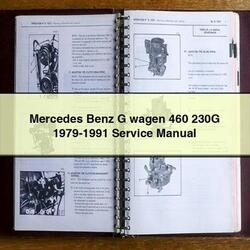
The Mercedes-Benz G-Wagen, specifically the W460 chassis variant 230G, represents a pinnacle of rugged, go-anywhere engineering. Produced from 1979 through 1991, this iconic vehicle was developed with a strong emphasis on off-road capability, featuring a robust ladder frame chassis, selectable four-wheel drive, and optional locking differentials. Its durable body-on-frame construction, coupled with a focus on mechanical reliability and a commanding presence, positioned it as a unique offering that blended utilitarian strength with a touch of Mercedes-Benz refinement, making it a respected choice for both demanding terrains and everyday use.
This comprehensive service and repair workshop manual is designed for the Mercedes-Benz SLK 230, covering production years from 1996 to 2004. It provides in-depth information essential for maintaining and repairing this vehicle, reflecting the engineering quality and reliability expected from Mercedes-Benz. This manual is an invaluable resource for owners and professionals alike, offering detailed guidance on all aspects of the vehicle's operation and upkeep.
The SLK 230 Kompressor, produced from 1996 to 2004 under the R170 model code, is a compact premium roadster renowned for its innovative Vario-roof retractable hardtop and agile platform. Powered by a 2.3-liter inline 4-cylinder supercharged engine, it delivers approximately 192 horsepower, offering an engaging driving experience. This model represented a significant step in roadster design, competing with vehicles like the BMW Z3 and Porsche Boxster, and featured a unique blend of performance and open-air motoring. Its engineering quality and reliability are hallmarks of the brand, making it a sought-after vehicle for enthusiasts.
The Mercedes-Benz SLK 230 Kompressor (R170), produced from 1996 to 2004, is a compact, sporty two-seater roadster renowned for its premium German engineering and the innovative Vario-roof retractable hardtop. This model offered a compelling blend of performance, luxury, and open-air driving pleasure, featuring a supercharged 2.3-liter inline-four engine that produced approximately 193 horsepower and 200 lb-ft of torque. Its rear-wheel-drive platform and sophisticated design placed it in competition with other luxury roadsters of its era, emphasizing Mercedes-Benz's commitment to quality and driver engagement.
Welcome to the SLK 230 R170, a compact luxury sports roadster produced from 1996 to 2004. This vehicle is engineered for an engaging driving experience, featuring a distinctive Vario-roof retractable hardtop, a driver-focused design, and a supercharged 2.3-liter inline-four cylinder engine. Known for its agile handling and commitment to quality and safety, the SLK 230 offers a blend of performance and open-air motoring, making it a notable entry in its class, competing with vehicles like the BMW Z3 and early Porsche Boxster.
This manual covers the SLK 230 (R170) model, produced from 1996 to 2004. As a compact luxury roadster, the SLK 230 is distinguished by its innovative Vario-Roof electrically operated retractable hardtop and its distinctive, Formula One-inspired styling. Engineered with a renowned commitment to quality and reliability, this vehicle offers a compelling blend of performance and open-air driving pleasure. Its compact dimensions and sophisticated design made it a notable entry in its segment, competing with other premium roadsters of its era.
The SLK 230, produced for the 1998 model year, is a compact luxury roadster from the R170 generation, celebrated for its innovative Vario-roof retractable hardtop system and engaging sporty handling. Powered by a 2.3-liter inline 4-cylinder supercharged engine (M111.973) producing approximately 192 horsepower and 201 lb-ft of torque, this vehicle offers a dynamic driving experience. Its engineering reflects a commitment to quality and reliability, making it a desirable choice for enthusiasts seeking both performance and open-air enjoyment.
This workshop service repair manual is for the SLK 230, covering the 1998 and 1999 model years. It is designed to provide comprehensive guidance for all service and repair procedures. This manual aims to empower owners and technicians by offering easy-to-follow, step-by-step instructions and visual aids for every aspect of vehicle maintenance and repair, allowing for significant cost savings on professional servicing.
The Mercedes-Benz SLK 230 (R170) represents a compact, premium roadster produced between 1998 and 1999. This model is distinguished by its innovative Vario-roof, an electro-hydraulic retractable hardtop, offering the versatility of both a coupe and a convertible. Engineered with Mercedes-Benz's renowned quality and reliability, the SLK 230 Kompressor, featuring a supercharged 2.3-liter inline-4 engine, delivers a blend of sporty performance and luxury, making it a unique offering in its class. Its compact dimensions and comfortable interior for a roadster further define its appeal.
The Mercedes-Benz ML 230 (W163), produced from 1998 to 2000, represents Mercedes-Benz's initial entry into the luxury compact SUV market. This vehicle, manufactured in Tuscaloosa, Alabama, offered a blend of comfort, technology, and utility, competing with established luxury SUVs. Powered by a 2.3L supercharged inline-4 engine producing approximately 150 PS, it was equipped with a 5-speed automatic transmission and featured advanced safety systems such as ABS, ESP, and ASR. The ML 230 was designed to provide a premium driving experience for families and individuals seeking capability and refinement.
This manual covers the 2000 SLK models, specifically the SLK 230 Kompressor and SLK 320, chassis code R170. The SLK series represented an entry into the compact luxury roadster segment, targeting a more youthful and performance-oriented demographic. Key features include a supercharged engine option for the SLK 230 Kompressor, a powerful V6 engine for the SLK 320, and the innovative 'Variosteel' retractable hardtop, which set it apart from many soft-top rivals. Known for its blend of sporty handling and everyday usability, the SLK offered build quality and safety systems in a compact, stylish package.
This manual covers the Mercedes-Benz SLK R170 models, specifically the SLK 230 and SLK 320, produced in 2001. As a premium compact roadster, the SLK offered a distinctive blend of performance, luxury, and open-air driving, competing in a segment that valued sophisticated engineering and unique features. Notable among these was the innovative retractable hardtop, known as the Vario-roof, which provided coupe-like comfort and convertible freedom. The SLK 230 was powered by a 2.3-liter supercharged inline-four engine, while the SLK 320 featured a more potent 3.2-liter naturally aspirated V6. These models are recognized for their rear-wheel-drive dynamics, luxurious interiors, and advanced safety systems for their era, reflecting Mercedes-Benz's heritage of engineering excellence.
The Mercedes-Benz G-Class, specifically the First Generation (W460) models such as the 230G, represents a pinnacle of rugged, off-road engineering. Originally developed for military applications and later adapted for civilian markets, this iconic vehicle is renowned for its exceptional durability and uncompromising off-road capability. Key features include its robust ladder frame chassis, significant ground clearance, and a sophisticated drivetrain with three independently lockable differentials, ensuring superior traction in the most challenging terrains. The G-Class's timeless design and legendary build quality have cemented its status as a premium utility vehicle with enduring appeal and a strong reputation for reliability.
The Mercedes-Benz G-Wagen, specifically the W460 series produced from 1979 to 1993, represents a pinnacle of off-road engineering and rugged durability. Originally conceived for military and utility purposes, this iconic vehicle, including variants like the 230 GE with its M102.980 engine, is renowned for its robust ladder frame chassis, solid axles, and exceptional off-road capabilities, including available differential locks. Its timeless, utilitarian design and legendary build quality have cemented its status as a luxury icon, capable of withstanding extreme conditions while offering a unique driving experience.
The Mercedes-Benz G-Wagen, specifically the W460 chassis, represents a pinnacle of rugged, utilitarian design combined with renowned Mercedes-Benz engineering quality. Introduced in 1979, this iconic vehicle was initially developed in cooperation with the German military, emphasizing go-anywhere capability and exceptional durability. The 230GE variant, powered by the M102 2.3-liter gasoline engine, exemplifies this philosophy, offering robust performance for both on-road luxury and demanding off-road conditions. Its legendary status is built on a foundation of a strong body-on-frame construction, available locking differentials, and a commitment to enduring performance, making it a highly valued vehicle for enthusiasts and adventurers alike.
The Mercedes-Benz G-Wagen, specifically the W460 chassis with the 230G variant, represents a pinnacle of robust engineering and off-road prowess. Produced from 1979 to 1993, this iconic vehicle is renowned for its exceptional durability, longevity, and utilitarian design. Its ladder frame chassis, solid axles with long-travel suspension, and selectable four-wheel-drive system with differential locks provide unparalleled capability in challenging terrains. Originally developed for military and utility applications, the G-Wagen also appealed to a civilian market seeking a dependable and rugged luxury off-road vehicle, earning acclaim for its over-engineered construction and timeless aesthetic.
This manual covers the Mercedes-Benz G-Class (W460) 230 GE, produced between 1979 and 1993. Known for its robust, go-anywhere capability and Mercedes-Benz engineering, this premium off-road vehicle was developed from a military requirement and adapted for civilian use. The G-Class, manufactured in Graz, Austria, is celebrated for its utilitarian luxury, unparalleled off-road prowess, and exceptional durability, making it a highly sought-after model by enthusiasts and collectors. Its body-on-frame construction and focus on mechanical integrity underscore its reputation as a benchmark for rugged SUVs.
The Mercedes-Benz G-Wagen, chassis code 460, specifically the 230GE variant, represents a pinnacle of rugged engineering and off-road prowess. Produced between 1979 and 1991, this iconic vehicle was originally developed for military applications, emphasizing exceptional durability and go-anywhere capability. Its robust construction, featuring solid axles and lockable differentials, along with its distinctive utilitarian design, has cemented its status as a legendary luxury off-road and utility vehicle. The G-Wagen's versatility, coupled with Mercedes-Benz's renowned build quality, makes it a highly capable machine for demanding terrains and diverse applications, from civilian use to military service.