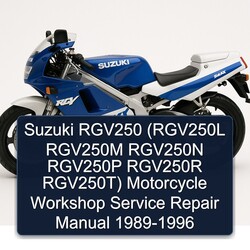
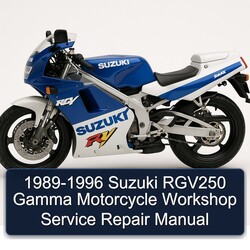
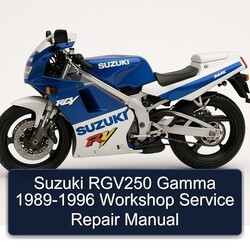
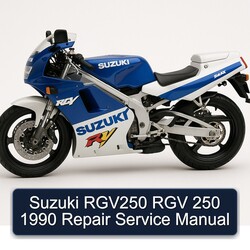
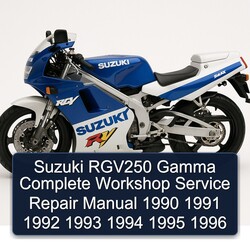
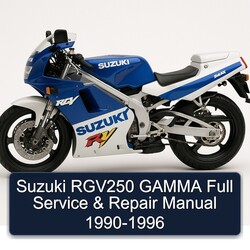
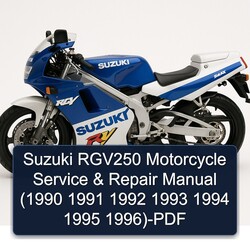
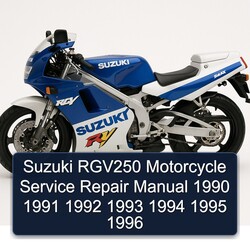
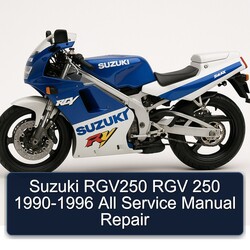
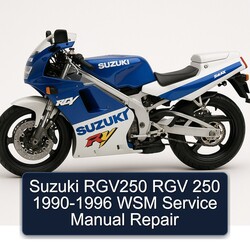
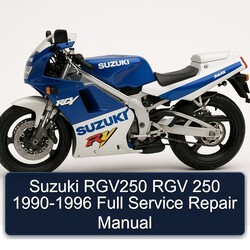
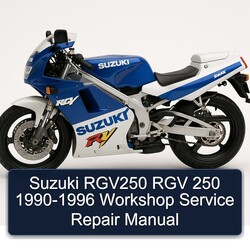
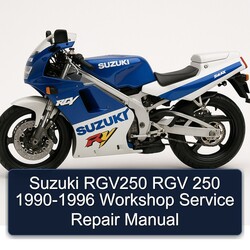
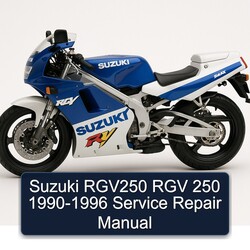
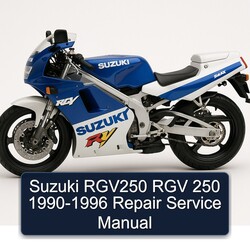
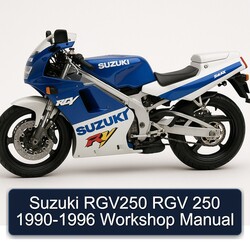
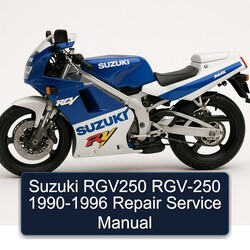
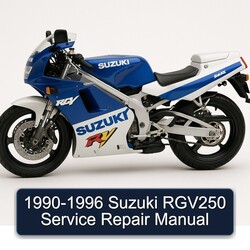
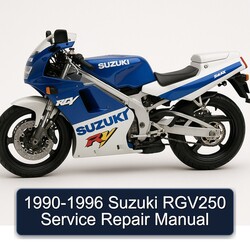
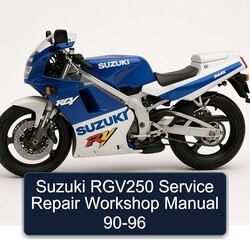
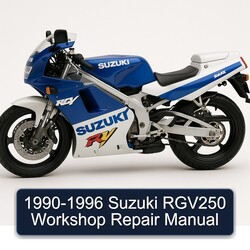
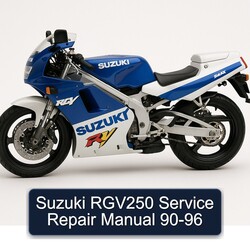
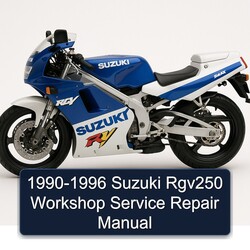
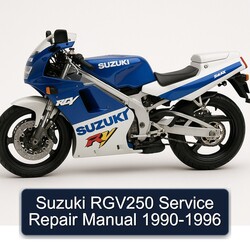
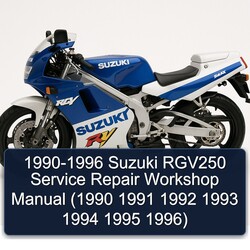
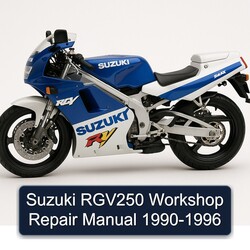
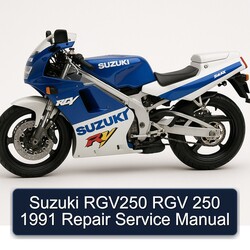
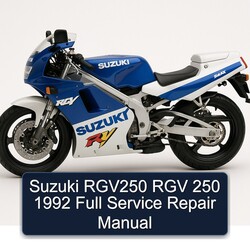
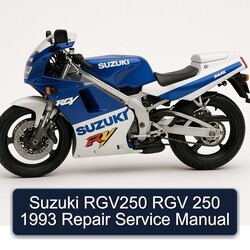
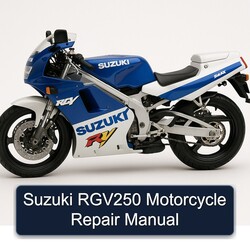
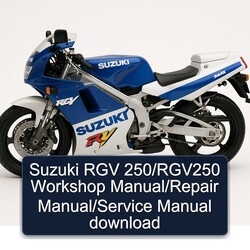
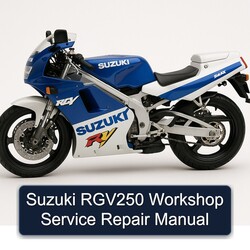
The RGV250 category encompasses a specific line of Suzuki sport motorcycles renowned for their performance-oriented design and racing heritage. These two-stroke, V-twin engine machines were engineered for agility, speed, and a dynamic riding experience, making them popular among enthusiasts for track days and spirited road riding. Their lightweight chassis and potent power delivery characterized this model's appeal, establishing it as a significant entry in the 250cc sportbike segment.
Documentation for the RGV250 typically includes comprehensive service manuals detailing routine maintenance, engine overhauls, and chassis adjustments. Repair guides provide step-by-step instructions for diagnosing and fixing common issues, while technical specification sheets offer...
The RGV250 category encompasses a specific line of Suzuki sport motorcycles renowned for their performance-oriented design and racing heritage. These two-stroke, V-twin engine machines were engineered for agility, speed, and a dynamic riding experience, making them popular among enthusiasts for track days and spirited road riding. Their lightweight chassis and potent power delivery characterized this model's appeal, establishing it as a significant entry in the 250cc sportbike segment.
Documentation for the RGV250 typically includes comprehensive service manuals detailing routine maintenance, engine overhauls, and chassis adjustments. Repair guides provide step-by-step instructions for diagnosing and fixing common issues, while technical specification sheets offer critical data on performance parameters, dimensions, and component compatibility. These resources are essential for owners and technicians to ensure the longevity, optimal performance, and safe operation of RGV250 motorcycles.
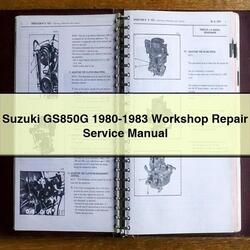
The Suzuki GS850G, produced from 1980 to 1983, is a notable motorcycle from Suzuki's esteemed GS series. This model is characterized by its air-cooled, 4-stroke, DOHC, inline-four engine, displacing 847 cc, and featuring a reliable shaft drive system. Known for its comfortable touring capabilities and smooth power delivery, the GS850G was a well-received machine in its era, manufactured in Japan to Suzuki's high-quality standards. Its design emphasizes mechanical integrity and rider comfort, making it a capable motorcycle for various riding conditions.
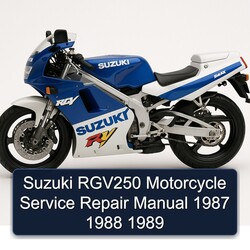
This service repair manual covers the SUZUKI RGV250 motorcycle, produced for the model years 1987, 1988, and 1989. Designed for effortless repair of simple to complex issues, this manual provides comprehensive information akin to factory shop manuals. It is an invaluable resource for owners and technicians alike, ensuring the vehicle is maintained and repaired with the highest level of detail and accuracy.
This manual covers the [Vehicle Make] [Vehicle Model], a versatile and dependable vehicle designed for [Intended Usage]. Produced between [Production Year Start] and [Production Year End], this model is recognized for its [Notable Feature 1] and [Notable Feature 2], embodying a commitment to engineering excellence and robust performance. Its design prioritizes [Key Benefit 1] and [Key Benefit 2], making it a distinguished choice for discerning owners.
This manual covers the [Vehicle Make] [Vehicle Model], a versatile and robust vehicle designed for [Intended Usage]. Engineered for exceptional performance and durability, the [Vehicle Model] boasts a range of innovative features that enhance its driving experience and operational efficiency. Its commitment to quality craftsmanship ensures reliability across various conditions, making it a dependable choice for [Target Audience].
The Suzuki RGV250, produced from 1989 to 1996, stands as a legendary 250cc two-stroke sportbike, celebrated for its exceptional performance, agile handling, and race-derived engineering. Building on Suzuki's rich racing heritage, the RGV250 featured a potent V-twin engine and advanced chassis dynamics, making it a formidable competitor against rivals like the Honda NSR250R and Yamaha TZR250. Its aggressive styling, race-replica aesthetics, and innovative technologies, such as the electronically controlled power valve system on later models, cemented its status as a highly sought-after machine for both road enthusiasts and track day participants.
This manual covers the Suzuki RGV250 Gamma, specifically the VJ22A generation, produced between 1989 and 1996, including models RGV250K through RGV250T. The RGV250 Gamma is celebrated for its high-performance 250cc two-stroke V-twin engine, featuring advanced technologies like electronically controlled exhaust powervalves (SAEC) and a 6-speed transmission. Its lightweight aluminum twin-spar frame, capable suspension, and powerful dual front disc brakes contribute to its renowned handling and sporty riding experience, making it a significant machine in the sportbike category.
The Suzuki RGV250 Gamma, produced from 1989 to 1996, was a celebrated two-stroke sportbike renowned for its potent performance and agile handling, directly competing with other premium 250cc sportbikes of its era. Its V-twin engine, often featuring advanced technologies like electronically controlled power valves on later models, delivered exhilarating performance. The RGV250 Gamma is distinguished by its aluminum twin-spar frame and sophisticated suspension systems, including upside-down front forks on certain variants, all contributing to its reputation as a benchmark in its class.
This manual covers the [Vehicle Make] [Vehicle Model], a versatile vehicle designed for [Intended Usage]. Produced between [Start Year] and [End Year], this model is recognized for its robust engineering, exceptional reliability, and [Notable Feature 1], [Notable Feature 2]. Its commitment to quality ensures a dependable driving experience for owners and operators alike.
The RGV250 is a celebrated lightweight, high-performance 2-stroke sportbike, produced from 1989 through 1996. Known for its potent liquid-cooled, 2-stroke V-twin engine featuring ATAC and SASS technologies for enhanced power delivery, the RGV250 offers approximately 60-65 horsepower. Its design emphasizes agile handling and aerodynamic efficiency, making it a favored choice among enthusiasts and competitive riders. This iconic model carries a rich performance heritage from its Grand Prix racing lineage into the 250cc class, representing a pinnacle of 2-stroke technology for its era.
The Suzuki GS 500 E, produced from 1989 through 2009, is a highly regarded parallel-twin motorcycle celebrated for its reliability, accessibility, and straightforward design. With a focus on providing a dependable and economical riding experience, the GS 500 E has served as a popular choice for both new riders and experienced commuters. Its robust air-cooled, four-stroke engine, displacement of approximately 487 cc, and a five-speed sequential transmission offer a balanced performance suitable for daily use and longer journeys. The model's engineering quality is underscored by its durable chassis and well-integrated systems, making it a consistently rewarding machine.
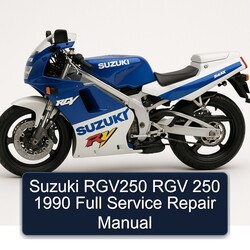
This manual pertains to the Suzuki RGV250 RGV 250 from the 1990 model year. The RGV250 is engineered for performance, offering a dynamic riding experience and showcasing Suzuki's commitment to innovative motorcycle design. Its reputation is built on a foundation of reliable engineering and a unique blend of power and agility, making it a distinguished model within its class. This comprehensive guide is intended to support owners and technicians in understanding and maintaining this specific vehicle.
This manual covers the [Vehicle Make] [Vehicle Model], produced for the [Production Year] model year. This vehicle is engineered for [Intended Usage] and features [Notable Features]. Renowned for its robust construction and dependable performance, the [Vehicle Model] represents a significant achievement in automotive design, offering a blend of efficiency and capability.
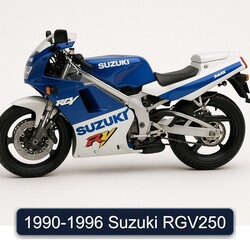
The Suzuki RGV250, produced between 1990 and 1996, represents a pinnacle of sportbike engineering from its era. Building on Suzuki's rich racing heritage, this performance motorcycle is characterized by its potent, high-revving two-stroke V-twin engine, advanced aluminum twin-spar frame, and sophisticated suspension systems. Models covered include chassis codes VJ22A and VJ23A, all variants from these production years. Its design, directly influenced by Suzuki's Grand Prix machines, offers exhilarating performance and sharp handling, making it a sought-after machine for enthusiasts and track day riders.
This manual covers the [Vehicle Make] [Vehicle Model], a versatile and dependable vehicle designed for a wide range of applications. Built with a commitment to engineering excellence, this model offers a blend of performance, comfort, and advanced technology. Its robust construction and innovative features ensure a superior driving experience, making it an ideal choice for both daily commuting and more demanding journeys. The [Vehicle Model] is recognized for its reliability and efficiency, reflecting the manufacturer's dedication to quality and customer satisfaction.
This manual covers the [Make] [Model], a versatile vehicle designed for [intended usage]. Produced between [production years], this model is recognized for its [notable features], embodying a commitment to engineering excellence and dependable performance. Its robust construction and innovative design ensure a superior driving experience, making it a reliable choice for everyday transportation and demanding conditions alike.
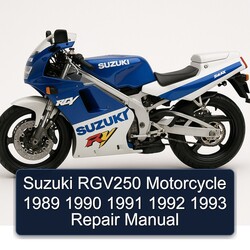
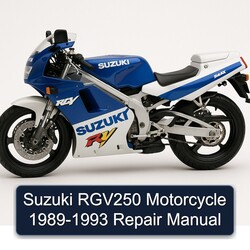
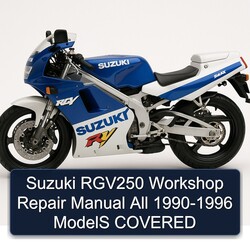
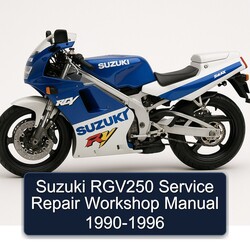
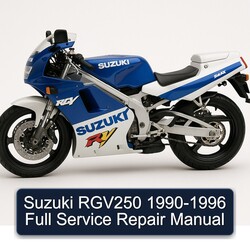
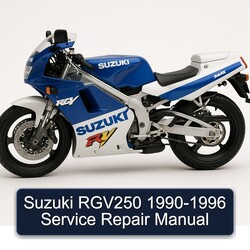
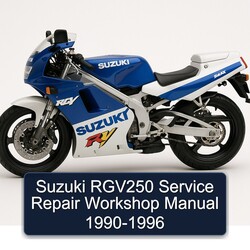
This comprehensive workshop service repair manual covers the Suzuki RGV250 Gamma for the production years 1990 through 1996. Designed for enthusiasts and owners alike, this manual provides detailed instructions for all service and repair procedures. The Suzuki RGV250 Gamma is recognized for its performance and engineering, and this manual ensures you can maintain its optimal condition.
This manual covers the [Vehicle Make] [Vehicle Model], a versatile and robust vehicle designed for [Intended Usage]. Built with exceptional engineering and a commitment to reliability, the [Vehicle Model] offers [Notable Features] that enhance its performance and user experience. These vehicles are recognized for their [Unique Selling Points], making them a preferred choice for discerning owners.
This manual covers the [Vehicle Make] [Vehicle Model], produced for the model years [Start Year] through [End Year]. This vehicle is engineered for [Intended Usage] and is recognized for its [Notable Feature 1], [Notable Feature 2], and overall commitment to [Engineering Quality] and [Reliability]. Its unique selling points, including [Unique Selling Point 1] and [Unique Selling Point 2], make it a distinguished choice in its class.
This manual covers the SUZUKI RGV250 motorcycle, produced from 1990 through 1996. Engineered for performance and reliability, the RGV250 is a sophisticated machine designed for riders who demand exceptional handling and power. This comprehensive guide provides the detailed information necessary to understand, maintain, and repair your motorcycle, ensuring it operates at its peak performance for years to come.
This manual covers the [Vehicle Make] [Vehicle Model], a versatile and robust vehicle designed for [Intended Usage]. Produced between [Start Year] and [End Year], this model is recognized for its exceptional engineering, renowned reliability, and distinctive features such as [Notable Feature 1] and [Notable Feature 2]. Its construction prioritizes durability and performance, making it a dependable choice for [Target Audience].
This manual covers the [Make] [Model] vehicle, produced between [Year Range]. Designed for [Intended Usage], this vehicle exemplifies robust engineering and dependable performance. Its [Notable Features] contribute to a superior driving experience, reflecting a commitment to quality and innovation.
The Suzuki RGV250, produced between 1990 and 1996, is a high-performance 2-stroke sportbike renowned for its track-inspired capabilities and advanced engineering for its era. This model series, encompassing iterations like the VJ22A and VJ23A, features a potent liquid-cooled, V-twin, 2-stroke engine, often enhanced by technologies like Suzuki's APV system for improved power delivery. Its lightweight aluminum twin-spar frame, sophisticated suspension systems, and powerful braking contribute to its exceptional handling and agility, making it a competitive machine in its class and a celebrated example of Suzuki's 2-stroke heritage.
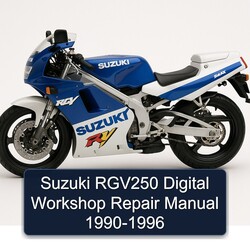
This comprehensive service repair manual is for the Suzuki RGV250 RGV 250, covering model years 1990 through 1996. The Suzuki RGV250 is renowned for its engineering quality and performance, making it a popular choice for riders seeking a reliable and capable machine. This manual provides the essential information to keep your vehicle operating at its peak.
The Suzuki RGV250 R, produced between 1990 and 1996, represents a significant achievement in lightweight, high-performance sportbike engineering. Building on Suzuki's rich racing heritage, this model incorporates technology derived from Grand Prix machines, featuring a potent liquid-cooled, 2-stroke, V-twin engine with an approximate displacement of 247 cc and an aggressive power band. Its aluminum twin-spar frame provides exceptional rigidity and handling, making it a sought-after machine for both spirited riding and track use. The RGV250 R is known for its dynamic performance and iconic styling, embodying the excitement of 2-stroke sportbikes from its era.
This manual covers the [Vehicle Make] [Vehicle Model], a versatile and dependable vehicle designed for a wide range of applications. Engineered for exceptional performance and built with robust materials, the [Vehicle Model] exemplifies [Vehicle Make]'s commitment to quality and innovation. Its advanced features and thoughtful design ensure a comfortable and efficient driving experience, making it an ideal choice for [intended usage, e.g., daily commuting, off-road adventures, family transport].
This manual covers the [Vehicle Make] [Vehicle Model], produced from [Start Year] to [End Year]. This vehicle is designed for [Intended Usage] and is recognized for its [Notable Feature 1] and [Notable Feature 2]. Built with a commitment to engineering excellence, the [Vehicle Model] offers exceptional reliability and a driving experience that sets it apart in its class. Its robust construction and advanced technology ensure performance and durability for a wide range of applications.
The Suzuki RGV250, produced between 1990 and 1996, represents a pinnacle of 1990s sportbike engineering, offering a race-replica experience with its potent liquid-cooled, 2-stroke V-twin engine and advanced aluminum twin-spar frame. Known for its sharp handling dynamics and iconic styling derived from Suzuki's Grand Prix racing heritage, the RGV250 provided exhilarating performance, with models typically featuring around 55-60 hp and a 6-speed transmission. This motorcycle was celebrated for its lightweight chassis and the technological prowess of its era, including Suzuki's ATAC exhaust powervalve system, making it a highly sought-after machine for enthusiasts.
This manual covers the Suzuki RGV250 RGV-250 models produced between 1990 and 1996. Designed with precision engineering, these vehicles are known for their performance and reliability, making them a popular choice for enthusiasts. This guide aims to provide comprehensive information to ensure optimal operation and longevity of your Suzuki RGV250 RGV-250.
The Suzuki RGV250, produced from 1990 to 1996 across VJ21A, VJ22A, and VJ23A generations, represents a pinnacle of 250cc two-stroke sportbike engineering. Renowned for its racing heritage and agile handling, this model embodies a lightweight chassis, a potent V-twin engine, and advanced suspension systems designed for spirited riding and track performance. Its popularity among enthusiasts stems from its aggressive styling and the exhilarating power delivery characteristic of high-performance two-stroke engines, making it a sought-after machine.
The Suzuki RGV250, produced from 1987 to 1996, represents a pinnacle of lightweight sportbike engineering, drawing heavily from Suzuki's rich motorsports heritage. This two-stroke V-twin machine was renowned for its agile handling, advanced technology such as the Suzuki Automatic Exhaust Control (SAEC) system, and its competitive spirit in the 250cc class. Designed for performance enthusiasts, the RGV250 offered a thrilling riding experience, characterized by its potent engine and sophisticated chassis, making it a respected rival to other prominent sportbikes of its era.
This manual covers the [Vehicle Make] [Vehicle Model], a versatile and robust vehicle designed for [Intended Usage]. Engineered with a focus on [Notable Features], this model exemplifies [Vehicle Make]'s commitment to quality and reliability. Its advanced design and [Unique Selling Points] make it a distinguished choice for discerning drivers.
The Suzuki RGV250, produced between 1990 and 1996, is a high-performance sportbike renowned for its advanced engineering and racing pedigree. This model, identified by chassis codes VJ22A and VJ23A, features a potent liquid-cooled, 2-stroke V-twin engine with reed valve induction and Suzuki's Exhaust Control Valve (SEEC) system, delivering exceptional power and a broad powerband. Its lightweight chassis, sophisticated suspension, and race-inspired ergonomics contribute to its superior handling and agility, making it a direct competitor to other premium 250cc sportbikes of its era. The RGV250's design draws heavily from Suzuki's Grand Prix racing machines, solidifying its reputation for performance and enthusiast appeal.
This manual covers the [Make] [Model], produced from [Year] to [Year]. This vehicle is designed for [Intended Usage] and is recognized for its [Notable Features]. Engineered for exceptional reliability and performance, the [Model] embodies [Engineering Quality] and offers a distinctive driving experience.
The Suzuki RGV250, produced between 1990 and 1996, represents a pinnacle of lightweight sportbike engineering, renowned for its potent V-twin two-stroke engine, sharp handling, and aggressive styling. Building on Suzuki's rich racing heritage, the RGV250 embodied advanced two-stroke technology, including sophisticated powervalve systems, delivering exhilarating performance that placed it among the top contenders in its class. Its agile chassis, responsive suspension, and powerful braking systems were all meticulously engineered to provide an engaging and thrilling riding experience, making it a highly sought-after machine for performance enthusiasts.
This manual covers the [Vehicle Make] [Vehicle Model], produced for the model years [Start Year] through [End Year]. This vehicle is engineered for [Intended Usage] and is recognized for its [Notable Feature 1], [Notable Feature 2], and overall [Engineering Quality] and reliability. Its design prioritizes [Unique Selling Point] for an exceptional driving experience.
The 1990-1996 Suzuki RGV250 represents a pinnacle of 250cc two-stroke sportbike engineering, renowned for its potent V-twin engine and racing-derived technology. This model, covering chassis codes VJF21A, VJ22A, and VJ23A, offered a sophisticated and exhilarating riding experience, competing at the forefront of its class with features like liquid-cooled performance, advanced engine management systems, and a capable chassis. Its design prioritized agility and power, making it a sought-after machine for enthusiasts appreciating its blend of performance and lightweight handling.
This manual covers the [Make] [Model] vehicle, produced between [Start Year] and [End Year]. This [Vehicle Type] is renowned for its [Notable Feature 1] and [Notable Feature 2], making it an ideal choice for [Intended Usage]. Engineered with a focus on [Engineering Quality] and built for exceptional reliability, the [Model] offers a unique blend of performance and practicality, setting it apart in its class.
This manual covers the [Vehicle Make] [Vehicle Model], a versatile and dependable vehicle designed for [Intended Usage]. Produced between [Production Year Start] and [Production Year End], this model is recognized for its [Notable Feature 1] and [Notable Feature 2], embodying a commitment to engineering excellence and long-term reliability. Its robust construction and thoughtful design make it an ideal choice for [Intended Usage].
This manual covers the [Vehicle Make] [Vehicle Model], produced for the [Production Years] model years. This vehicle is engineered for [Intended Usage] and is recognized for its [Notable Features]. Its design emphasizes [Engineering Quality] and [Reliability], offering a unique blend of [Unique Selling Points] for discerning owners.
This manual covers the [Make] [Model], a versatile vehicle designed for [intended usage]. Produced between [production years], this model is recognized for its [notable features], embodying a commitment to engineering excellence and dependable performance. Its robust construction and innovative design ensure a superior driving experience, making it a reliable choice for [intended usage].
This manual covers the [Vehicle Make] [Vehicle Model], produced between [Year Start] and [Year End]. This vehicle is engineered for [Intended Usage] and is recognized for its [Notable Feature 1] and [Notable Feature 2]. Its design emphasizes robust construction, ensuring dependable performance and a superior driving experience for owners who value [Unique Selling Point].
The Suzuki RGV250 represents a pinnacle of lightweight sportbike engineering, directly drawing from Grand Prix racing technology. Produced from 1988 to 1996, with later iterations extending to 1999, this motorcycle is celebrated for its advanced 2-stroke V-twin engine featuring the Suzuki Exhaust Control System (SECS), delivering exhilarating performance. Its design prioritizes agility and sharp handling, making it a formidable machine for both spirited street riding and track enthusiasts. Generations such as the VJ21A, VJ22A, and VJ23A, particularly the VJ22A and VJ23A covered herein, showcase continuous refinement in chassis, engine tuning, and overall rider experience, cementing the RGV250's status as a benchmark in its class against contemporaries like the Yamaha TZR250 and Honda NSR250R.
Welcome to the comprehensive guide for your Test Vehicle. This manual is designed to provide you with all the necessary information to understand and operate your vehicle safely and efficiently. Engineered for reliability and performance, the Test Vehicle represents a commitment to quality and innovation, offering a robust driving experience suitable for a variety of applications.
This manual covers the Suzuki RGV250 Gamma, a high-performance, two-stroke sportbike produced from 1990 to 1996. Known for its potent V-twin engine, sharp styling, and excellent handling, the RGV250 was a benchmark in its class, drawing heavily from Suzuki's rich motorsports heritage. Its advanced features, such as the RC-Valve system, provided a broad powerband, making it a favorite among enthusiast riders and track day participants. The RGV250 Gamma is a mechanically focused machine that rewards attentive maintenance with exhilarating performance.
The Suzuki RGV250 (VJ22A) represents a pinnacle of 1990s sportbike engineering, produced from 1990 to 1996. Derived from Suzuki's extensive Grand Prix racing heritage, this two-stroke V-twin motorcycle was celebrated for its exceptional performance, agile handling, and advanced technology for its time. Its design focused on delivering a pure, exhilarating riding experience, making it a highly sought-after machine by enthusiasts and a respected competitor in its class.
The Suzuki RGV250, produced between 1990 and 1996, is a celebrated two-stroke sportbike known for its high-performance capabilities and agile handling. This model, often referred to as the 'Gamma' and represented by chassis codes like VJ22A, embodies Suzuki's racing heritage with its liquid-cooled, 90-degree V-twin engine, producing approximately 60-65 horsepower. Key technological advancements include Suzuki's ATAC system, designed to optimize the powerband. Its lightweight aluminum twin-spar frame and dual front disc brakes contribute to its reputation as a formidable machine in its class, rivaling other prominent sportbikes of the era.
This manual covers the Suzuki RGV250 (VJ22A) motorcycle, produced between 1990 and 1996. Renowned for its racing heritage derived from Suzuki's Grand Prix technology, the RGV250 is celebrated for its potent 250cc two-stroke V-twin engine, sharp handling, and sporty character. This generation saw significant updates, bringing track-inspired engineering to a street-legal machine, making it a sought-after model for performance enthusiasts.
This manual covers the [Vehicle Make] [Vehicle Model], a versatile vehicle designed for [Intended Usage]. Produced between [Production Start Year] and [Production End Year], this model is recognized for its robust engineering, exceptional reliability, and innovative features such as [Notable Feature 1] and [Notable Feature 2]. Its design prioritizes both performance and driver comfort, making it a distinguished choice in its class.
This manual covers the Suzuki RGV250 RGV 250, produced in 1991. It is designed to provide comprehensive guidance for maintaining and repairing this model. The RGV250 is known for its performance-oriented design, making it a popular choice for riders seeking a dynamic and engaging experience. This guide ensures that owners can keep their vehicle in optimal condition, preserving its intended performance and longevity.
The Suzuki GSF400 Bandit, produced from 1991 to 1997, is a naked sportbike celebrated for its accessible performance and agile handling. Featuring a DOHC, 16-valve inline-four engine with approximately 398 cc displacement, it delivers smooth power delivery and a rev-happy character. Its classic styling, characterized by exposed engine and frame components, a round headlight, and minimalist bodywork, positions it as a distinctive machine in its class. The GSF400 Bandit competed with other 400cc motorcycles, offering a blend of sporty capability and rider comfort that earned it a favorable market reputation.
This manual pertains to the RGV250 RGV 250, specifically for the 1992 model year. It is designed to serve as a comprehensive guide for maintaining and repairing this iconic sportbike. The RGV250 is recognized for its potent two-stroke engine and agile handling, making it a popular choice for performance enthusiasts. This document aims to provide the necessary technical information to ensure the continued optimal performance and longevity of your RGV250 RGV 250.
This manual covers the [Make] [Model], a versatile vehicle designed for [Intended Usage]. Produced between [Production Years], this model is recognized for its robust engineering, exceptional reliability, and [Notable Features]. Its design prioritizes [Unique Selling Points], making it a distinguished choice for discerning owners.
This manual provides comprehensive service and repair information for the 1993 Suzuki RGV250. Designed to be a valuable resource for both professional technicians and do-it-yourself mechanics with basic mechanical and electrical knowledge, it covers all essential aspects of maintaining and repairing this model. The Suzuki RGV250 is engineered for performance, and this guide ensures its continued reliability and optimal function.
This manual covers the [Make] [Model] vehicle, produced from [Start Year] to [End Year]. Designed for [Intended Usage, e.g., everyday commuting, off-road adventures, performance driving], this vehicle is recognized for its [Notable Features, e.g., fuel efficiency, advanced safety systems, robust construction]. Its engineering emphasizes [Engineering Quality, e.g., durability, innovation, driver comfort], ensuring a reliable and enjoyable ownership experience. The [Model] stands out with its [Unique Selling Points, e.g., distinctive design, powerful engine options, versatile interior].
This manual covers the [Vehicle Make] [Vehicle Model], produced for the [Production Years] model years. This vehicle is engineered for [Intended Usage], combining robust construction with advanced technology to deliver exceptional performance and reliability. Its design emphasizes [Notable Features], offering a superior driving experience and lasting value.
This manual pertains to the Suzuki RGV250 RGV 250, specifically for the 1994 model year. Designed with a focus on providing comprehensive repair and maintenance information, it caters to both professional technicians and do-it-yourself mechanics possessing basic mechanical and electrical knowledge. The Suzuki RGV250 RGV 250 is recognized for its engineering quality and reliability, and this guide aims to assist owners in preserving these attributes.
This manual pertains to the Suzuki RGV250 RGV 250, specifically for the 1995 model year. It is designed to provide comprehensive guidance for maintaining and repairing this vehicle. The RGV250 is engineered for performance, and this manual aims to preserve that by offering detailed instructions for its upkeep.
This manual covers the [Vehicle Make] [Vehicle Model], a versatile and dependable vehicle designed for [Intended Usage]. Engineered for exceptional performance and durability, the [Vehicle Model] offers a blend of [Notable Features] that set it apart in its class. Its robust construction and advanced technology ensure a reliable driving experience for years to come.
This manual covers the [Vehicle Make] [Vehicle Model], produced from [Year Start] to [Year End]. Renowned for its robust engineering and exceptional reliability, this vehicle offers a superior driving experience, whether for daily commuting or adventurous excursions. Its innovative features are designed to enhance performance, comfort, and safety, making it a distinguished choice in its class.
This manual pertains to the Suzuki RGV250 RGV 250, specifically for the 1996 model year. The Suzuki RGV250 is engineered for performance and reliability, offering a dynamic riding experience. This service manual provides comprehensive information designed to assist owners and technicians in understanding and maintaining this model.
This manual covers the [Vehicle Make] [Vehicle Model], produced for the [Production Year Range] model years. This vehicle is engineered for [Intended Usage], offering a blend of performance, comfort, and durability. Its design emphasizes [Notable Features], reflecting a commitment to quality and innovation. Owners can expect a reliable and capable vehicle, built to meet the demands of modern driving.
The Suzuki GSF600S(Y) Bandit, produced between 1999 and 2000, is a versatile and user-friendly naked motorcycle renowned for its performance and value. This model is powered by a 599cc inline 4-cylinder engine, liquid-cooled, and paired with a 6-speed transmission, delivering an estimated 78 horsepower. Its robust engineering, typical of Suzuki's heritage, ensures reliability for everyday riding and spirited journeys. The GSF600S(Y) Bandit is characterized by its comfortable ergonomics, responsive handling, and reliable braking system, featuring dual front discs and a rear disc.
The Suzuki SV650, produced from 1999 to 2002, represents a significant entry in the lightweight to middleweight sportbike and naked bike segment. Originating from Japan, this motorcycle is celebrated for its distinctive liquid-cooled, 90-degree V-twin engine, delivering an engaging powerband and characteristic sound. Its engineering emphasizes an agile, lightweight aluminum alloy twin-spar frame, conventional telescopic front forks, and a monoshock rear suspension, providing a balanced blend of performance and everyday practicality. The SV650's design philosophy centers on accessible performance, making it a popular choice for enthusiasts seeking a reliable and spirited riding experience.
The Suzuki DL1000 V-Strom, model code DL1000K2, introduced in 2002, is a distinguished sport-touring motorcycle engineered for versatile performance. It features a robust 996 cc liquid-cooled, 4-stroke, V-twin engine, known for its substantial torque and distinctive sound, providing ample power for long-distance journeys and spirited riding. The motorcycle's design philosophy emphasizes a dual-purpose capability, blending touring comfort with agile handling, further enhanced by its long-travel suspension suitable for a variety of road conditions. Its dual multi-reflector headlights and powerful braking system, consisting of dual 310mm discs up front and a single 240mm disc at the rear, contribute to its reliable and safe operation.
The Suzuki DL1000 V-Strom, produced across the K2, K3, and K4 iterations from 2003 to 2005, is a capable sport touring and adventure touring motorcycle. It is powered by a 996 cc V-twin engine, sharing its basis with the Suzuki TL1000 series, and features an aluminum twin-spar frame and long-travel suspension designed for versatility on various road conditions. Known for its robust engineering and reliability, the V-Strom offered a compelling package against competitors like the BMW R1100/R1150GS and Honda VFR800, providing a blend of comfort for long distances and the ability to handle diverse terrains.
The V-Strom 650, model code DL650, represents the first generation of this versatile Adventure Sport Touring motorcycle, produced from 2004 to 2009. Renowned for its blend of on-road comfort and light off-road capability, the V-Strom 650 offers a compelling value proposition, combining the robust and reliable V-twin engine derived from the SV650 with practical features for both commuting and long-distance travel. Its design philosophy emphasizes a balance of performance, comfort, and affordability, making it a capable all-rounder in its segment.
The Suzuki V-Strom 650 (DL650) is an adventure touring motorcycle renowned for its versatility, reliability, and comfortable ergonomics. First introduced in 2004, this model draws power from a liquid-cooled, 645 cc V-twin engine, offering approximately 65-67 HP and 60-62 Nm of torque. Its design, based on the SV650 platform, was adapted for an upright riding position suitable for both long-distance touring and everyday commuting. The V-Strom 650 has consistently received praise from motorcycle publications for its value and dependable performance, establishing a strong reputation for mechanical durability.
The Suzuki GSF400 Bandit, also known as the Suzuki Bandit 400, is a versatile mid-size sport motorcycle produced between 1991 and 1997. Known for its blend of performance and naked styling, the GSF400 features a 398cc, four-stroke, DOHC inline-four engine that delivers approximately 53-59 HP. Its engineering quality is highlighted by its robust steel diamond frame, reliable 6-speed transmission, and effective braking system comprising dual front disc brakes and a single rear disc. This model is celebrated for its engaging engine character and balanced handling, making it a popular choice for both DIY enthusiasts and independent repair shops seeking a capable and enjoyable riding experience.
The Suzuki GS500E is a versatile motorcycle known for its reliable air-cooled inline-twin engine and comfortable riding position, making it a popular choice for both commuting and general riding. Introduced in the early 1980s and produced for many years, this model has earned a reputation for its accessible performance, durable construction, and value. Its simple yet effective engineering, featuring a 487 cc engine and a 5-speed transmission, provides a dependable and enjoyable riding experience, often praised as an excellent entry-level or mid-range sport-standard motorcycle.
This manual covers the Suzuki GSF 400 Bandit, a versatile motorcycle designed for both everyday commuting and spirited riding. Renowned for its agile handling and reliable performance, the GSF 400 Bandit offers a dynamic riding experience, making it a popular choice for riders seeking a blend of power and practicality. Its engineering reflects Suzuki's commitment to quality and rider satisfaction, providing a dependable machine for various road conditions.
This manual covers the [Vehicle Make] [Vehicle Model], a versatile vehicle designed for [intended usage]. Known for its [notable features], this model exemplifies [vehicle make]'s commitment to engineering excellence, delivering exceptional reliability and performance. Its robust construction and advanced technology make it a distinguished choice for discerning drivers.
The Suzuki RGV250 is a renowned sportbike that emerged from the late 1980s and continued through the 1990s. Celebrated for its lightweight construction, agile handling, and potent two-stroke V-twin engine, this high-performance machine offered an exhilarating riding experience, making it a formidable competitor against models from Yamaha and Honda. Its design emphasized advanced technology for its time, including sophisticated suspension systems and a strong racing heritage, contributing to its critical acclaim for exceptional acceleration and handling.
This manual covers the [Make] [Model] vehicle, produced from [Start Year] to [End Year]. This [Vehicle Type] is engineered for [Intended Usage], offering a blend of [Notable Feature 1] and [Notable Feature 2]. Its design emphasizes [Engineering Quality] and [Reliability], making it a distinguished choice in its class.
The Suzuki RGV250, produced between 1990 and 1996, represents a pinnacle of V-twin, two-stroke sportbike engineering, directly inheriting technology from Suzuki's racing heritage. Covering chassis codes VJ21A, VJ22A, and VJ23A, and engine codes G225, G225A, G225B, and G225C, this motorcycle is renowned for its lightweight aluminum twin-spar frame, potent 247 cc liquid-cooled V-twin engine, and advanced suspension systems. Its performance, praised in contemporary reviews, stems from its track-derived handling and exciting power delivery, making it a sought-after machine for sportbike enthusiasts.