The A Models category encompasses a range of Suzuki motorbikes designed for diverse riding experiences, from agile urban commuting to spirited performance on open roads. These models are characterized by their innovative engineering, reliable powertrains, and distinctive styling, reflecting Suzuki's commitment to delivering quality and performance. Their applications span daily transportation, recreational riding, and enthusiast pursuits, making them a significant segment within the Suzuki motorcycle lineup.
Comprehensive documentation is available for A Models, including detailed owner's manuals, service and repair guides, and technical specification sheets. These resources provide essential information for routine maintenance, in-depth troubleshooting, and accurate repair procedures. Mechanics and...
The A Models category encompasses a range of Suzuki motorbikes designed for diverse riding experiences, from agile urban commuting to spirited performance on open roads. These models are characterized by their innovative engineering, reliable powertrains, and distinctive styling, reflecting Suzuki's commitment to delivering quality and performance. Their applications span daily transportation, recreational riding, and enthusiast pursuits, making them a significant segment within the Suzuki motorcycle lineup.
Comprehensive documentation is available for A Models, including detailed owner's manuals, service and repair guides, and technical specification sheets. These resources provide essential information for routine maintenance, in-depth troubleshooting, and accurate repair procedures. Mechanics and owners alike can rely on these manuals to ensure optimal performance, longevity, and safety of their A Models motorbikes.
This manual covers the Suzuki GS/GSX Twins motorcycles, including the 250, 400, and 450 model variants produced between 1979 and 1985. These motorcycles are recognized for their air-cooled, 4-stroke, inline-twin engines, typically featuring a 5-speed transmission and wet multi-plate clutch. Known for their reliability and performance during the Universal Japanese Motorcycle era, the GS/GSX line offered a balanced riding experience and served as Suzuki's primary offering in the middleweight segment.
The 1980 Suzuki GS1000 is a classic motorcycle renowned for its powerful air-cooled, 4-stroke, DOHC inline-4 cylinder engine, displacing 998 cc. This model, part of Suzuki's pioneering GS series, was celebrated in its era for exceptional performance, handling, and a smooth power delivery, making it a significant offering in the larger displacement motorcycle market. Its robust engineering and inline-four configuration contributed to its reputation for reliability and a positive reception from motorcycle enthusiasts and reviewers alike.
This manual covers the Suzuki GSX750-ES Sport Motorcycle, manufactured between 1984 and 1986, including variants GSX750EE, GSX750ESE, GSX750EFE, GSX750SE, GSX750EF, GSX750ESF, GSX750EFF, and GSX750ESG. The GSX750-ES represents a significant model from the mid-1980s Japanese Sportbike Era, known for its 747 cc 4-stroke, DOHC, air-cooled inline-4 engine and 6-speed transmission. It features a robust chassis with telescopic front forks and a monoshock rear suspension, often utilizing Suzuki's Full Floater system. This motorcycle was designed to compete in the highly competitive 750cc class, offering performance and handling capabilities characteristic of Suzuki's innovative sportbike development.
This manual provides comprehensive service and repair information for the Suzuki GSX 750, covering model years from 1984 through 1999. This iconic motorcycle series, known for its inline-four engine and sporting capabilities, includes specific variants such as the GSX 750 EE, ESE, EFE, SE, EF, ESF, EFF, and ESG. Engineered by Suzuki Motor Corporation, the GSX 750 has been a staple in performance motorcycling, offering a blend of power and handling that has earned it historical acclaim.
The 1986 Suzuki Samurai, chassis code SJ410 / SJ413, is a compact SUV renowned for its go-anywhere capability, rugged simplicity, and excellent off-road articulation. Powered by the G13A 1.3L inline 4-cylinder engine, this vehicle was designed as a lightweight, highly capable off-road machine, often referred to as a 'mini-ute.' Its compact dimensions, body-on-frame construction, and two-speed transfer case with part-time 4WD contribute to its distinctive appeal for enthusiasts and off-roaders. The Samurai offers a unique blend of affordability and authentic factory repair data, making it a sought-after vehicle for those who value its rugged heritage and go-anywhere spirit.
The Suzuki GSX-R1100H, produced for the 1986, 1987, and 1988 model years, represents a significant entry in the late 1980s sportbike era. This motorcycle established Suzuki's reputation in the hypersport segment, known for its potent 1075 cc V-profile 4-cylinder engine, lightweight aluminum alloy frame, and racing-inspired performance. Its design philosophy focused on mass centralization, aerodynamic efficiency, and a high power-to-weight ratio, making it a formidable competitor against other liter-class superbikes of its time.
This manual covers the GSX-R750, a renowned supersport motorcycle celebrated for its performance and engineering. Spanning production years from 1988 through 2010, this iconic sportbike has evolved significantly, from its initial air/oil-cooled configurations to sophisticated liquid-cooled machines featuring advanced chassis designs and fuel injection systems. Known for its 'King of Sportbikes' heritage, the GSX-R750 has consistently been recognized for its race-derived technology, powerful inline-four engines, and agile handling, making it a benchmark in its class throughout its development.
This manual covers the Suzuki GSX1100FK Katana, a 1989 model known for its distinctive styling and robust engineering. Building on Suzuki's heritage of high-performance motorcycles, the GSX1100FK represents a refined iteration of the iconic Katana line, offering enhanced performance and reliability. Its four-stroke, air-cooled, DOHC inline-four engine, with a displacement of 1075 cc, is paired with a 5-speed constant mesh transmission and a wet multi-plate clutch, making it a capable machine for enthusiasts. The motorcycle features dual front disc brakes and a rear disc brake for effective stopping power.
This manual covers the Suzuki GSX-R 1100, a high-performance sportbike produced between 1989 and 1992. Renowned for its powerful 1075 cc air-oil cooled engine and race-bred handling, the GSX-R 1100 established the 'open-class' sportbike category and was a benchmark in motorcycle design for its era. Its aluminum alloy twin-spar frame, dual 310 mm front discs with 4-piston calipers, and 170/60ZR17 rear tire contributed to its exceptional performance and braking capabilities.
This manual covers the GSX1100F, a distinguished motorcycle produced from 1989 to 1994. Renowned for its powerful inline-four engine and balanced sport-touring capabilities, the GSX1100F built upon a legacy of high-performance engineering. Its robust chassis and comfortable ergonomics made it a capable machine for both spirited riding and longer journeys. This documentation is intended for owners and technicians seeking to understand and maintain this iconic model, reflecting a commitment to reliability and rider satisfaction.
This manual provides comprehensive service and repair information for the Suzuki Katana 750, covering production years 1989 through 1995. Engineered for performance and reliability, the Katana 750 is a distinguished motorcycle known for its distinctive styling and dynamic capabilities. This guide is designed to assist owners and technicians in understanding and maintaining this exceptional machine.
This manual covers the Suzuki Katana 750 (model code GSX750F) from its first generation, produced between 1989 and 1995. Renowned for its distinctive styling and performance, the Katana line has a rich heritage within Suzuki's history. This particular model features an inline four-cylinder, liquid-cooled, DOHC 16-valve engine with a displacement of approximately 748cc, delivering around 85-95 horsepower and 60-65 lb-ft of torque. Its engineering quality and reliability are hallmarks of Suzuki's commitment to performance and rider satisfaction, making it a sought-after motorcycle for enthusiasts.
This workshop repair service manual provides comprehensive coverage for the Suzuki Katana 750, produced between 1989 and 1995. Known for its distinctive, aerodynamic styling and a blend of performance and sport-touring capability, the Katana 750 is powered by a 750cc, oil-cooled, inline four-cylinder engine. This model, often identified by the GSX750F chassis code, features a 6-speed transmission and dual disc front brakes, reflecting Suzuki's heritage of performance and innovation in motorcycle manufacturing.
This manual covers the Suzuki Katana 750, model code GSX750F, for the production years 1989 through 1995. Building on Suzuki's heritage of performance and distinctive design, the Katana 750 is a sport-touring motorcycle known for its unique faired aesthetic and capable 748cc DOHC, 4-cylinder engine. This generation represents an evolution of the iconic Katana nameplate, offering a blend of style and practicality for riders. The motorcycle features a 6-speed transmission, wet multi-plate clutch, and chain final drive, with disc brakes front and rear providing stopping power.
The Suzuki GS500E is a renowned motorcycle celebrated for its reliability, user-friendliness, and enduring design, making it a popular choice for both new riders and experienced enthusiasts. Produced between 1989 and 1999, this iteration of the GS500 line features an air-cooled, 4-stroke, parallel-twin engine with a displacement of 487 cc, delivering a balanced performance suitable for commuting and sport-touring. Its robust engineering, characterized by a simple yet effective parallel-twin configuration and a 6-speed transmission, contributes to its high reputation for durability and ease of maintenance. The GS500E exemplifies Suzuki's commitment to producing accessible and dependable two-wheeled transportation.
This manual covers the Suzuki GSX750FM Katana, produced in 1991. The GSX750FM is a notable motorcycle from Suzuki, a manufacturer with a strong heritage in performance-oriented vehicles. Known for its distinctive styling and engineering quality, the Katana line has historically been recognized for its performance capabilities. This model features an inline four-cylinder, DOHC, 4-stroke engine with approximately 750 cc displacement, air cooling, and electronic ignition. Its robust construction includes a steel twin-spar frame, dual hydraulic disc brakes at the front, and a single hydraulic disc brake at the rear, ensuring reliable performance for riders.
The Suzuki GSF400, also known as the Bandit 400, is a versatile motorcycle introduced in the late 1980s and produced through the 1990s, with specific models covering the years 1991, 1992, and 1993. Characterized by its inline-four, air-cooled engine and a robust steel frame, this model was celebrated for its sporty performance and competent handling, making it a popular choice, especially in the Japanese domestic market. Its design emphasizes a balance of power and rider control, making it suitable for both spirited riding and everyday use. The heritage in performance motorcycles is evident in the GSF400's engineering, offering a reliable and engaging riding experience.
This manual covers the Suzuki GSF400 Bandit, a lightweight naked sportbike produced from 1991 to 1997, specifically the GK75A Series. Renowned for its accessible performance, distinctive styling, and a blend of sporty handling with everyday usability, the GSF400 Bandit has earned a reputation for reliability and robust engineering. Its inline-four cylinder, liquid-cooled engine, coupled with a 6-speed transmission and chain drive, provides an engaging riding experience. The Bandit series, a staple in Suzuki's motorcycle lineup, is recognized for offering good value and capable performance, making it a popular choice for riders seeking a well-rounded machine.
This workshop service repair manual provides comprehensive information for the 1992 motorcycle. As part of the iconic series, this model is recognized for its distinctive styling and sportbike performance. Engineered by , the GSX600FN Katana features an Inline-Four, 4-stroke engine with a displacement of 599 cc, a 6-speed constant mesh transmission, and a wet multi-plate clutch. Its robust steel diamond frame and dual hydraulic disc front brakes, along with a rear hydraulic disc, contribute to its performance and handling.
This manual covers the [Make] [Model] vehicle, produced between [Start Year] and [End Year]. Renowned for its [Notable Feature 1] and [Notable Feature 2], this vehicle is engineered for [Intended Usage]. Its robust construction and commitment to reliability ensure a dependable driving experience, making it a distinguished choice for discerning owners.
The Suzuki GSX-R1100, produced from 1993 to 1995, was a highly regarded sportbike renowned for its powerful engine and performance-oriented design, competing with other premier superbikes of its era. This model, often identified by its 'G' generation code, featured a liquid-cooled inline-four engine, typically around 937cc, delivering impressive horsepower and torque, housed within an aluminum twin-spar frame. Its engineering emphasized rider engagement and track capability, making it a sought-after machine for enthusiasts and riders who appreciated its blend of speed, handling, and Suzuki's heritage in performance motorcycle manufacturing.
The Suzuki GSX1100FP Katana, a 1993 sportbike, stands as an icon of 1980s and 1990s motorcycle design, distinguished by its unique, aircraft-inspired aerodynamic styling and a potent air-cooled, 4-stroke, DOHC inline-four engine displacing 1075 cc. This model competed with other high-performance superbikes of its era, offering a blend of striking aesthetics and robust performance. Suzuki's legacy in producing innovative and powerful motorcycles is evident in the Katana's engineering, which prioritizes both rider engagement and enduring reliability.
This service and repair manual provides comprehensive guidance for GSX-R750 sportbike models produced between 1993 and 2010. Renowned for its performance-oriented design and engineering, the GSX-R750 has evolved significantly, offering a thrilling riding experience. This manual covers a crucial period of its development, from carbureted systems to advanced fuel injection, and addresses various chassis and engine configurations that have defined its legacy as a flagship supersport motorcycle.
This manual pertains to the A100S, a model produced between 1994 and 1995. The A100S is recognized for its practical design and reliability, often serving as a dependable choice for everyday transportation. As part of a legacy of producing quality motorcycles, the A100S embodies a commitment to functional engineering. Its specific attributes and intended use reflect the era's demand for efficient and accessible personal mobility.
This manual covers the A100S, a lightweight, two-stroke, air-cooled motorcycle produced between 1994 and 1995. Known for its reliability and performance in its class, the A100S was a popular choice for commuting and recreational riding, embodying a heritage of producing durable and capable machines. Its simple yet effective engineering, featuring a 6-speed transmission and a CDI ignition system, contributed to its reputation for being a dependable and accessible motorcycle.
The Suzuki GSX750FS Katana, produced in 1995, is a high-performance sport motorcycle recognized for its distinctive, aerodynamic styling and advanced engineering for its time. As a significant model in Suzuki's heritage of producing powerful motorcycles, the Katana line was renowned for its radical design philosophy, directly inspired by the original Katana concept bike. This model competed with other prominent 750cc sportbikes of the era, offering a blend of speed and distinctive aesthetics that appealed to riders seeking a capable and stylish machine.
The 1997 Suzuki GSF400 Bandit is a naked sportbike motorcycle, distinguished by its liquid-cooled, DOHC inline-four engine, known for smooth power delivery and a rev-happy nature. Featuring a steel twin-spar frame for agile handling and classic styling with exposed engine elements, this model was designed for riders seeking a versatile machine suitable for commuting and spirited riding. The GSF400 Bandit competed in the 400cc class, offering a blend of performance, practicality, and value, and is a testament to Suzuki's engineering heritage in creating reliable and enjoyable motorcycles.
The Suzuki VZ800 Marauder, produced from 1997 to 2002, is a cruiser motorcycle celebrated for its distinctive styling and the robust performance of its 795 cc V-twin engine. Designed to appeal to riders seeking a blend of classic cruiser aesthetics with modern engineering, the Marauder offers a comfortable riding position and solid build quality, making it a compelling choice in its segment. Its unique selling points, including its powerful V-twin motor and eye-catching design, have cemented its place among riders who appreciate both form and function in their motorcycles.
Welcome to the comprehensive service and repair manual for the TL1000SR, covering model years 1997 through 2002. The TL1000SR, a variant of the renowned sportbike, is powered by a robust 996 cc V-twin engine, known for its strong performance and distinctive character. This model offers a blend of power and handling that made it a notable entry in the sportbike segment of its era. This manual provides in-depth information for owners and technicians alike, ensuring the continued reliability and optimal performance of your TL1000SR.
This manual covers the Suzuki GSX750F, a sportbike produced between 1998 and 2002, often associated with the 'Katana' styling cues. Known for its inline-four, air/oil-cooled 748cc engine, this model offered a balance of performance and practicality, competing with other 600-750cc sportbikes of its era. Engineered with Suzuki's reputation for reliability and performance, the GSX750F features a robust steel diamond frame, a 6-speed transmission, and effective dual hydraulic disc brakes at the front and a single disc at the rear. Its design reflects late 1990s sportbike aesthetics, making it a capable machine for both spirited riding and sport-touring.
This manual covers the [Vehicle Make] [Vehicle Model], produced for the model years [Start Year] through [End Year]. This vehicle is engineered for [Intended Usage] and is recognized for its [Notable Feature 1], [Notable Feature 2], and exceptional [Engineering Quality]. Built with a commitment to reliability and performance, the [Vehicle Model] offers a unique blend of [Unique Selling Point 1] and [Unique Selling Point 2], making it a distinguished choice in its class.
The Suzuki GSX1300R Hayabusa, produced from 1999 to 2003, represents a pinnacle of sportbike engineering from its era. Renowned for its groundbreaking speed and aerodynamic design, the Hayabusa, identified by chassis code A1, established itself as the fastest production motorcycle upon its debut. This iconic machine, powered by a 1299 cc inline 4-cylinder engine, delivers exceptional performance, making it a legend in the hyperbike category. Its robust construction, featuring an aluminum alloy tension member frame, contributes to its acclaimed rigidity and stability, solidifying Suzuki's reputation for high-performance motorcycles.
This manual covers the sportbike motorcycles produced for the years 2000, 2001, and 2002. As a high-performance machine, the GSXR750 is engineered for track performance and spirited road riding, featuring a potent liquid-cooled inline-four cylinder engine with fuel injection and a lightweight aluminum alloy twin-spar frame for exceptional rigidity and handling. Its heritage is rooted in a commitment to delivering cutting-edge sportbike technology, making it a benchmark in its class during the early 2000s, known for its power, agility, and rider feedback.
The Bandit 600, produced between 2000 and 2004, is a mid-size naked sportbike celebrated for its robust engineering, approachable power delivery, and versatility for both commuting and spirited riding. Building on Suzuki's legacy, this model offers a balanced blend of performance, reliability, and value, making it a popular choice in its segment. Its DOHC inline-4 cylinder, oil-cooled engine, coupled with a 6-speed transmission and reliable chassis components, ensures a rewarding riding experience.
The Suzuki GSX-R1000, produced for the 2001-2002 model years, represents a significant entry in the supersport motorcycle segment. Engineered with a high-performance inline-four cylinder engine, this model is renowned for its lightweight, track-focused design and impressive power-to-weight ratio. Building on Suzuki's strong racing heritage, the GSX-R1000 (AD chassis code, K1/K2 engine codes) was designed to compete with leading sportbikes of its era, offering enthusiasts a potent combination of speed and agility. Its 998cc engine, coupled with advanced suspension and braking systems, positions it as a capable machine for both spirited riding and demanding track conditions.
This manual covers the ATV, produced between 2003 and 2006. Engineered for reliability and performance, the LTZ 400 is designed for demanding off-road use. Its robust construction and advanced features have made it a popular choice for riders seeking a capable and enjoyable ATV experience. This comprehensive guide is tailored to ensure you can maintain and operate your vehicle to its full potential, reflecting the quality engineering inherent in the brand.
The 2004 Suzuki DL650 V-Strom is a versatile adventure touring motorcycle known for its comfortable ergonomics, reliable V-twin engine, and excellent fuel economy, making it suitable for both long-distance touring and daily commuting. Building on Suzuki's heritage of producing performance-oriented motorcycles, the DL650 V-Strom offers a blend of approachable rider dynamics and robust engineering, positioning it as a strong contender in its segment against competitors like the BMW F650GS and Kawasaki KLR650. Its strengths lie in its all-around capability and value, earning it a consistent reputation for reliability and user-friendliness among riders of various skill levels.
The Suzuki GSXR750, produced for the 2004-2005 model years, stands as a testament to Suzuki's legacy in high-performance sport motorcycles. Renowned for its exceptional blend of power, precise handling, and aerodynamic efficiency, this generation of the GSXR line is celebrated for its track-day prowess and exhilarating ride experience. Its engineering quality and reliability are hallmarks of the GSXR lineage, making it a favored choice for riders seeking a potent and responsive machine.
The Suzuki DL650 V-Strom, first introduced between 2004 and 2011, is a highly regarded middleweight adventure tourer. This versatile motorcycle, powered by a 647 cc V-twin engine, is celebrated for its reliability, comfort on long journeys, and capability across various road conditions. Its design philosophy emphasizes a balance of performance and practicality, making it a popular choice for both commuting and extended touring. The V-Strom has earned a strong market reputation for its value and dependability, often compared to other models in its class for its blend of features and user-friendliness.
The Suzuki GSF650 Bandit, produced for the 2005 and 2006 model years, is a mid-size naked sportbike renowned for its blend of performance, comfort, and practicality. Featuring a torquey, liquid-cooled, 4-stroke, DOHC inline-four engine with a displacement of 656 cc, this motorcycle offers a balanced riding experience suitable for commuting, touring, and spirited rides. Its design philosophy emphasizes versatility, making it a strong contender against models like the Yamaha FZ6, Honda CB600F Hornet, and Kawasaki Z750. The Bandit is celebrated for its reliable performance and comfortable ergonomics, establishing it as a popular choice among a wide range of riders.
The Suzuki GSXR600, produced for the 2006 and 2007 model years (K6/K7 generation), is a supersport motorcycle renowned for its performance and handling. Building on Suzuki's heritage in the sportbike segment, this model features a 599 cc, liquid-cooled, inline-four engine with electronic fuel injection and a 6-speed transmission. Its advanced twin-spar frame, fully adjustable suspension, and dual hydraulic disc front brakes contribute to its exceptional agility and track capability, making it a strong competitor in its class.
The Suzuki XL7, produced for the 2007 and 2008 model years, represents the second generation of this mid-size crossover SUV. Built on a global platform shared with Chevrolet and Pontiac, it offers a versatile utility for families and individuals, featuring available 5- or 7-seater configurations and a robust 3.6L V6 engine delivering 250 horsepower. Its design prioritizes comfort and practicality, with a spacious interior and ample cargo capacity, complemented by a suite of safety features including standard ABS, traction control, and electronic stability control, contributing to its strong safety ratings from NHTSA and IIHS.
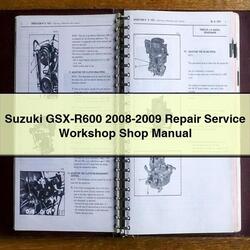
The Suzuki GSX-R600, produced for the 2008-2009 model years, represents a pinnacle of supersport motorcycle engineering, renowned for its agile handling, powerful inline-four engine, and track-ready performance. This generation features the Suzuki Ram Air Direct (SRAD) induction system, enhancing high-rpm power output, and an advanced chassis design that contributes to its exceptional responsiveness. Building on Suzuki's rich heritage in performance motorcycling, the GSX-R600 is positioned as a high-performance machine for experienced riders and track enthusiasts, competing directly with other leading supersport models. Its design philosophy emphasizes mechanical prowess and rider engagement, offering a thrilling experience for both street and circuit use.
This manual covers the motorcycles produced between 2004 and 2005, identified by model codes K4/K5. Renowned for its track-bred performance and advanced engineering, the GSX-R750 has consistently earned accolades from the motorcycle press for its power, handling, and overall capability. This generation represents a significant evolution, featuring chassis improvements, refined engine tuning, and aerodynamic enhancements, solidifying its reputation as a premier sportbike.
This manual covers the [Make] [Model], a versatile vehicle designed for [intended usage, e.g., daily commuting, off-road adventures, family transport]. Produced between [production years, e.g., 2018 and 2023], this model is recognized for its [notable features, e.g., fuel efficiency, advanced safety systems, powerful engine performance]. Its engineering prioritizes [engineering quality, e.g., robust construction, driver comfort, innovative technology], ensuring a reliable and enjoyable ownership experience. The [Model] stands out due to its [unique selling points, e.g., exceptional handling, spacious interior, cutting-edge infotainment].
This manual covers the [Make] [Model] vehicle, produced from [Year] to [Year]. Designed for [Intended Usage], this vehicle is recognized for its [Notable Features] and exceptional engineering. It embodies a commitment to reliability and performance, offering a superior driving experience through its advanced design and robust construction.
This manual covers the [Vehicle Make] [Vehicle Model], a versatile vehicle designed for [Intended Usage]. Produced between [Production Year Start] and [Production Year End], this model is recognized for its robust engineering, exceptional reliability, and innovative features such as [Notable Feature 1] and [Notable Feature 2]. Its design prioritizes [Unique Selling Point 1] and [Unique Selling Point 2], making it a distinguished choice in its class.
The Suzuki GSF 600 Bandit is a versatile naked sportbike known for its reliable inline-4 engine, user-friendly handling, and value. Produced from the early 1990s through the mid-2000s, this model evolved with updates, including the transition to fuel injection on later variants. Its approximately 599 cc engine, typically DOHC and air/oil cooled, delivered around 78 horsepower, making it suitable for both commuting and spirited riding. The GSF 600 Bandit has earned a reputation as an accessible and dependable motorcycle, praised for its balanced performance and ease of maintenance.
This manual covers the Suzuki GSX-R1000, also known as the Gixxer 1000, produced for the 2003 and 2004 model years, identified by chassis codes K3 and K4 respectively. This supersport motorcycle is renowned for its powerful inline-four engine, delivering significant horsepower and torque for its era, complemented by a stiff twin-spar aluminum frame and advanced suspension for precise, confidence-inspiring handling. Its engineering quality is evident in features like the Suzuki Dual Throttle Valve (SDTV) fuel injection system, which optimizes throttle response and combustion efficiency. The GSX-R1000 has a strong reputation for track-focused performance and has been a consistent performer against competitors such as the Yamaha YZF-R1, Honda CBR1000RR Fireblade, and Kawasaki ZX-10R Ninja.