The KR1 KR250 series encompasses a range of high-performance sport motorcycles designed for exhilarating riding experiences. These models are characterized by their potent two-stroke engines, lightweight chassis, and advanced suspension systems, making them ideal for track days, spirited road riding, and enthusiasts seeking a dynamic and responsive machine. Their design prioritizes agility, acceleration, and precise handling, establishing them as notable contenders in their performance segment.
Comprehensive technical documentation is available for the KR1 KR250 series, including detailed service manuals that outline routine maintenance schedules, diagnostic procedures, and complete repair instructions. Owners and technicians can also access parts catalogs, wiring diagrams, and...
The KR1 KR250 series encompasses a range of high-performance sport motorcycles designed for exhilarating riding experiences. These models are characterized by their potent two-stroke engines, lightweight chassis, and advanced suspension systems, making them ideal for track days, spirited road riding, and enthusiasts seeking a dynamic and responsive machine. Their design prioritizes agility, acceleration, and precise handling, establishing them as notable contenders in their performance segment.
Comprehensive technical documentation is available for the KR1 KR250 series, including detailed service manuals that outline routine maintenance schedules, diagnostic procedures, and complete repair instructions. Owners and technicians can also access parts catalogs, wiring diagrams, and troubleshooting guides to effectively maintain, repair, and optimize these motorcycles. These resources are crucial for ensuring the longevity, safety, and peak performance of the KR1 KR250.
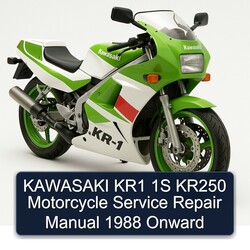
This manual covers the sportbike, produced from 1988 onward. Known for its performance-oriented design, it is a testament to engineering prowess in the 250cc class. Featuring a liquid-cooled, two-stroke parallel-twin engine with reed valve induction and likely a power valve system, it delivers engaging power delivery characteristic of its era. Its agile handling is supported by a telescopic front fork and a rear suspension system, complemented by dual hydraulic disc front brakes and a single rear disc for effective stopping power.
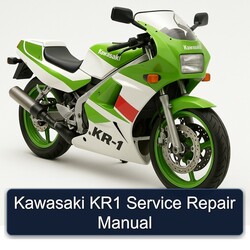
The Kawasaki KR-1, including models KR250-B1 and KR250-B2, represents a significant entry in the 250cc sportbike category from the late 1980s. Produced between 1988 and 1990, this first-generation model is a testament to Kawasaki's heritage in performance motorcycle engineering, drawing inspiration from Grand Prix racing technology. Known for its aggressive styling and potent two-stroke parallel-twin engine, the KR-1 offered an exhilarating riding experience, celebrated for its sharp handling and impressive acceleration. Its aluminum twin-spar frame and powerful braking system contributed to its agile performance, making it a favored choice for riders seeking a spirited and track-focused machine.
The Kawasaki KR-1, produced for the 1988, 1989, and 1990 model years, is a distinguished 2-stroke, liquid-cooled, parallel-twin motorcycle renowned for its performance-oriented design. Featuring a 249 cc engine, dual Keihin CVK34 carburetors, and a 6-speed transmission, the KR-1 embodies a legacy in the sportbike segment. Its engineering emphasizes lightweight construction and responsive handling, making it a sought-after machine for enthusiasts. This model was celebrated for its potent power delivery and agile chassis, reflecting a commitment to high-performance two-wheeled vehicles of its era.
The Kawasaki KR-1, produced between 1988 and 1990 with model codes KR250-B1 and KR250-B2, stands as a significant entry in the lightweight sportbike segment. This motorcycle is engineered for performance, featuring a potent 249cc liquid-cooled, two-stroke parallel-twin engine with reed valve induction and Kawasaki's K-CAS system. Its design prioritizes agile handling, precise feedback, and responsive power delivery, making it a compelling choice for enthusiast riders and track day participants. The KR-1's lightweight chassis, combined with advanced suspension and braking systems for its era, contributes to its reputation for exceptional performance and a thrilling riding experience, positioning it as a standout in its competitive class.
The Kawasaki KR-1, KR-1S, and KR250 models, produced between 1988 and 1991, represent a pinnacle of lightweight, high-performance two-stroke sportbike engineering. Renowned for their sharp handling, potent parallel-twin engines featuring the Kawasaki Integrated Power Valve System (KIPS), and aggressive styling, these motorcycles were designed for enthusiasts seeking exhilarating performance and track-day capability. Their engineering quality and reliability, hallmarks of Kawasaki's legacy in sportbike development, positioned them as formidable competitors in their class, earning critical acclaim and cult classic status among riders who appreciate their raw power and agile dynamics.
The Kawasaki Z750, produced between 2003 and 2007, represents the first generation of this popular naked sportbike. Characterized by its aggressive styling and a performance-oriented 750cc inline-four engine, the Z750 offers accessible power and sporty handling, positioning it as a strong contender in its segment. Its design philosophy emphasizes a dynamic riding experience, making it a favored choice for enthusiast riders seeking a blend of performance and everyday usability. The model's heritage is rooted in Kawasaki's long-standing reputation for producing potent motorcycles.
This manual covers the [Vehicle Make] [Vehicle Model], a versatile and dependable vehicle designed for a wide range of applications. Produced between [Production Start Year] and [Production End Year], this model is renowned for its robust engineering, exceptional reliability, and innovative features that enhance both performance and driver experience. Whether for daily commuting, family transport, or demanding work, the [Vehicle Model] offers a superior combination of comfort, efficiency, and durability, reflecting a commitment to automotive excellence.
This manual provides comprehensive service and repair information for the KR250, specifically the KR1 Grand Prix model, covering production years 1975 through 1982. Engineered for racing, the KR250 is a two-stroke, twin-cylinder motorcycle renowned for its performance and success in Grand Prix events, securing three World Championships. Its design prioritizes speed and handling, characteristic of dedicated racing machines from its era, making it a significant piece of motorsport history. This manual is intended for owners and technicians who wish to maintain and restore this iconic racing motorcycle.
This manual covers the KR1 and KR250, sportbikes renowned for their performance and handling, produced from the late 1980s into the early 1990s. These two-stroke, liquid-cooled parallel-twin motorcycles, typically featuring 249cc displacements and around 45-55 horsepower, were developed with input from racing heritage. They are characterized by their lightweight construction, often around 130-140 kg dry weight, and advanced features for their era, such as dual front disc brakes and a 6-speed transmission, making them highly competitive in the sportbike segment.
This manual covers the KR1 and KR250 models, including the KR250-B1 and KR250-B2 variants, which were prominent sportbikes of the late 1980s and early 1990s. These motorcycles are known for their aggressive styling, high-performance two-stroke engines, and agile handling, representing a significant era in sportbike development. The KR series, particularly the KR1, established a reputation for potent power delivery and a thrilling riding experience, making them sought after by enthusiasts. This workshop service repair manual is designed to provide comprehensive information for maintaining and repairing these iconic machines.
This manual covers the Kawasaki ZX6R, a high-performance supersport motorcycle renowned for its agile handling, potent engine performance, and aerodynamic efficiency. First introduced in 1995, the ZX6R has evolved through multiple generations, consistently emphasizing Kawasaki's racing heritage. It is engineered for track days and spirited road riding, competing with other 600cc supersport motorcycles. This manual empowers owners for DIY servicing and repairs, fostering a deeper understanding of the machine.
This manual provides essential guidance for the Kawasaki ZX-6R Ninja and ZX-10R Ninja models from 2011. These motorcycles represent Kawasaki's commitment to high-performance sportbikes, known for their advanced engineering, powerful inline-four engines, and agile handling. The ZX-6R, with its 599cc engine, offers exhilarating performance in the supersport class, while the 998cc ZX-10R dominates the superbike arena with its cutting-edge technology and aggressive design. Both models feature sophisticated Electronic Fuel Injection (EFI) systems that contribute to their impressive power delivery and efficiency.