The Kawasaki GPX Models category encompasses a range of sportbike motorcycles designed for performance and agile handling. These models are characterized by their aerodynamic fairings, powerful four-stroke engines, and advanced suspension systems, making them suitable for both spirited road riding and track day enthusiasts. The GPX series represents a significant lineage within Kawasaki's sportbike offerings, known for delivering a blend of cutting-edge technology and exhilarating riding experiences.
Documentation for Kawasaki GPX Models typically includes comprehensive service manuals detailing routine maintenance schedules, engine overhaul procedures, and electrical system diagnostics. Repair guides provide step-by-step instructions for component replacement and troubleshooting common issues. Technical...
The Kawasaki GPX Models category encompasses a range of sportbike motorcycles designed for performance and agile handling. These models are characterized by their aerodynamic fairings, powerful four-stroke engines, and advanced suspension systems, making them suitable for both spirited road riding and track day enthusiasts. The GPX series represents a significant lineage within Kawasaki's sportbike offerings, known for delivering a blend of cutting-edge technology and exhilarating riding experiences.
Documentation for Kawasaki GPX Models typically includes comprehensive service manuals detailing routine maintenance schedules, engine overhaul procedures, and electrical system diagnostics. Repair guides provide step-by-step instructions for component replacement and troubleshooting common issues. Technical specifications outline engine performance, chassis dimensions, and suspension settings. These resources are essential for owners, authorized technicians, and mechanics to ensure the optimal performance, safety, and longevity of their GPX motorcycles.
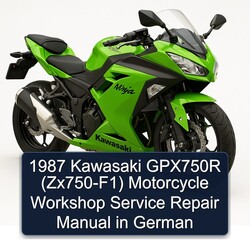
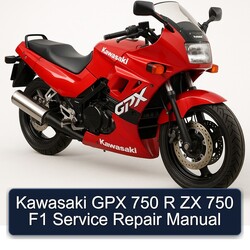
The Kawasaki GPX750R (model code Zx750-F1), produced in 1987, represents a significant entry in the sportbike segment of its era, embodying Kawasaki's commitment to performance and engineering excellence. As a sportbike of the late 1980s, it bridged the gap between earlier models and more advanced superbike technology, competing with notable contemporaries. Its design emphasized agility and power, featuring a liquid-cooled, four-stroke inline-four engine with a displacement of 749 cc, producing approximately 90-100 horsepower. Key technological advancements for its time included the Uni-Trak rear suspension system and a robust chassis designed for spirited riding.
The Kawasaki GPX750R, model code ZX750-F1, is a 1987 sportbike renowned for its DOHC inline-four engine, advanced aerodynamics for its era, and sharp handling. It was positioned as a competitive offering in the mid-1980s sportbike class, blending performance with distinctive styling. This model represents Kawasaki's dedication to engineering excellence, building upon its heritage in performance motorcycles and serving as a precursor to later iconic models.
The Kawasaki GPX250R EX250F is a sport motorcycle that has been a popular choice for riders seeking accessible performance and sporty styling. Known for its parallel-twin, liquid-cooled engine, this model offers smooth power delivery suitable for both daily commuting and spirited riding. Its design philosophy emphasizes a balance of performance and handling, making it a reliable and enjoyable machine. Kawasaki's legacy in motorcycle manufacturing further underpins the GPX250R's reputation for quality engineering and dependability within its class.
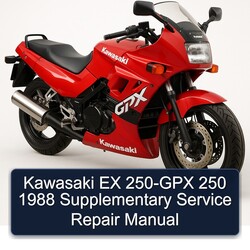
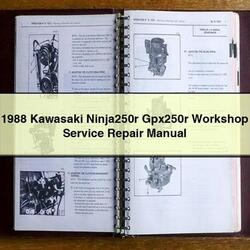
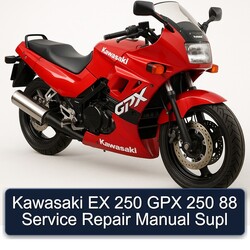
This manual covers the 1988 Kawasaki EX250-GPX250, a lightweight sportbike renowned for its approachable performance and sporty aesthetics, serving as an excellent entry point into motorcycling. As part of Kawasaki's esteemed GPZ lineage, this model offers a blend of engineering quality and reliability characteristic of the brand. Its 248 cc parallel-twin engine, coupled with a 6-speed transmission, provides an engaging riding experience suitable for both commuting and recreational use.
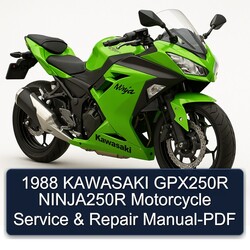
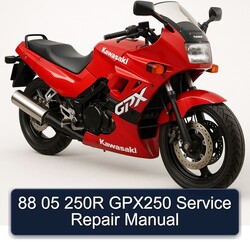
This manual covers the Kawasaki GPX250R Ninja 250R, a motorcycle produced in Japan, first introduced in 1986 and with this specific model year being 1988. Known for its beginner-friendly nature and sporty styling, the GPX250R Ninja 250R features a liquid-cooled, 4-stroke, DOHC, parallel-twin engine with a displacement of 248 cc, producing an estimated 30 HP. Its engineering quality and reliability have made it a popular choice for riders.
The 1988 Kawasaki Ninja 250R, also known as the GPX250R with chassis code EX250-E, represents the inaugural generation of Kawasaki's highly successful lightweight sportbike lineage. Engineered with a liquid-cooled, 4-stroke, DOHC parallel-twin engine displacing 248cc, this model was designed for agility and rider enjoyment, establishing a strong foundation for future iterations. Its high-tensile steel diamond frame and capable suspension systems, including telescopic front forks and a Uni-Trak rear monoshock, contribute to its reputation for reliable handling and performance, making it a notable entry in the sportbike market of its era.
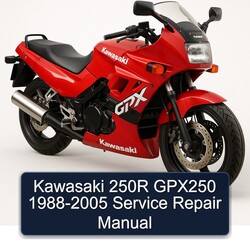
The GPX250-R, commonly known as the Ninja 250R, is a lightweight sportbike that enjoyed a significant production run from 1988 to 2005. This model, particularly the second generation identified by chassis code EX250-F, is celebrated for its nimble handling, approachable power delivery from its liquid-cooled, 249cc parallel-twin engine, and sporty styling. It has been a popular choice for new riders, commuters, and enthusiasts seeking an affordable and reliable sportbike, praised for its fuel efficiency and overall durability. The legacy in performance motorcycles underpins the GPX250-R's reputation for engineering quality and longevity, making it a consistently recommended entry-level option in its class.
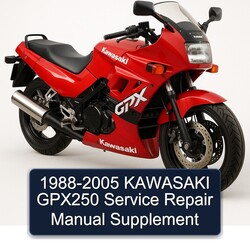
The Kawasaki GPX250, also known as the Ninja 250 in certain markets, is a versatile motorcycle produced from 1988 to 2005. This model is recognized for its entry-level sportbike appeal, offering a blend of manageable power, sporty styling, and efficient performance, making it an excellent choice for both new riders and those seeking a reliable commuter. Built with Kawasaki's reputation for engineering quality and reliability, the GPX250 provides an engaging riding experience characterized by its liquid-cooled, parallel-twin engine and agile chassis. Its design prioritizes affordability and ease of maintenance, contributing to its enduring popularity in the lightweight motorcycle segment.
This manual covers the Kawasaki GPX 750 R, also known by its model code ZX750F1. As the first generation of this model, produced in Japan during the mid to late 1980s, it represents a significant step in Kawasaki's motorcycle engineering. The GPX 750 R is characterized by its inline 4-cylinder, liquid-cooled engine, a 6-speed transmission, and a robust steel perimeter frame, designed for performance and reliability. Its engineering quality is evident in its robust construction and the detailed specifications provided, making it a capable machine for its intended use.
The GPX250R, produced from approximately 1988 to 2007, is a sporty, faired motorcycle known for its aerodynamic styling and capable parallel-twin engine. This model offers a reliable and engaging riding experience, making it a popular choice for both new riders and experienced enthusiasts seeking an entry-level sportbike. Its development focused on providing a competent machine with a blend of performance and practicality, reflecting engineering quality.
This manual covers the 1988 sportbike known for its agile handling, aerodynamic fairing, and reliable parallel-twin engine. The model was a significant model in the 250cc sportbike lineup, offering sporty aesthetics and performance that made it popular among entry-level and intermediate riders. Its engineering quality and distinctive styling for the era contributed to its market appeal, positioning it as a competitive option against other sportbikes of its class.
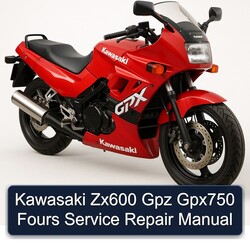
This service and repair manual provides comprehensive information for the Ninja ZX-600 GPz and GPX750 motorcycles, likely from the mid-1980s to early 1990s. Kawasaki has a strong heritage in producing high-performance sportbikes, and the GPz and GPX series exemplified this with advanced engineering for their time. These models were known for their powerful inline-four engines, liquid-cooling systems, and competitive performance in the sportbike segment, offering riders a thrilling experience. The GPz line pioneered technologies that became hallmarks of Kawasaki sportbikes, while the GPX750 further refined this performance focus.