



CB Series

The Honda CB Series encompasses a diverse range of motorcycles known for their versatility and performance. These models are designed for a wide array of riding experiences, from daily commuting and urban exploration to spirited weekend rides and longer touring journeys. Characterized by their reliable engines, balanced chassis, and often iconic styling, CB Series motorcycles have established a strong reputation for offering a compelling blend of practicality, enjoyment, and Honda's signature engineering quality.
Comprehensive documentation is available for the Honda CB Series to support owners and technicians. This includes detailed owner's manuals covering operation and basic maintenance, as well as service...

$16.99
This service repair manual provides comprehensive guidance for the 1960 C72, C77, CB72, CB77, CS72, and CS77 motorcycles. These models represent early success in the global motorcycle market, establishing a reputation for quality and performance. The C series offered standard touring capabilities, the CB series focused on sportier performance, and the CS series provided scrambler or dual-purpose variants. This manual is a critical resource for enthusiasts, collectors, and independent mechanics, enabling them to maintain and preserve these historically significant machines.
$16.99
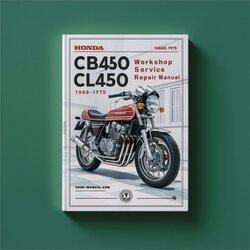
This manual covers the Honda CB450 and CL450 motorcycles, produced between 1968 and 1975. Known by their nicknames "Black Bomber" and "Scrambler" respectively, these bikes represent a significant era in Honda's engineering prowess. The CB450, introduced as Honda's flagship, featured a powerful 444cc DOHC parallel-twin engine and set new standards for performance. The CL450 variant offered a scrambler configuration with enhanced off-road capabilities. Both models are recognized for their robust build quality and a reputation for reliability when properly maintained, reflecting Honda's commitment to engineering excellence.
$16.99
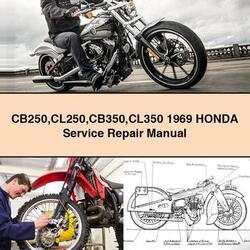
This manual covers the Honda CB250, CL250, CB350, and CL350 motorcycles from 1969, identified by chassis codes CB250K0, CL250K0, CB350K0, and CL350K0. These air-cooled, 4-stroke parallel-twin motorcycles, featuring OHC engines with displacements of 247cc for the CB250 and 348cc for the CB350, were known for their engineering quality and reliability, contributing to Honda's strong reputation in the motorcycling world. The CB series offered performance-oriented standard motorcycles, while the CL series provided versatile scrambler models suitable for various riding conditions.
$16.99
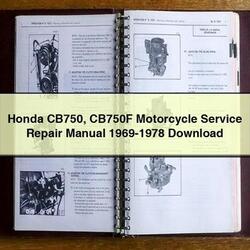
The Honda CB750F, produced between 1969 and 1978, stands as a revolutionary machine, often credited as the first true superbike. This iconic motorcycle popularized the inline-four engine configuration and advanced disc brake technology, setting new benchmarks for performance and reliability in its era. Its engineering quality and impact on the motorcycle industry are undeniable, making it a significant model for enthusiasts and collectors alike.
$16.99
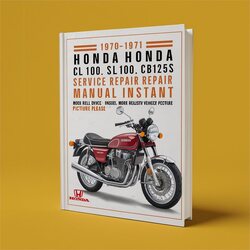
This manual covers the CB100, CL100, SL100, CB125S, CD125S, and SL125 lightweight motorcycles produced in 1970 and 1971. These air-cooled, 4-stroke single-cylinder motorcycles, with displacements of 99cc and approximately 123cc, were designed for commuting and recreational riding. Known for their reliability and accessibility, these models represent an important era in the history of producing practical and user-friendly motorcycles. They feature a 5-speed manual transmission, wet multi-plate clutch, and drum brakes, embodying the straightforward engineering characteristic of their time.
$16.99
This manual covers the CB100, CL100, SL100, CB125S, CD125S, and SL125 motorcycles produced in 1971. These models represent robust engineering and commitment to reliability, offering a range of versatile motorcycles that were popular for their performance and ease of use in the 1970s. The CB series provided standard, dependable transportation, while the CL and SL variants offered variations suited for different riding styles. These motorcycles are characterized by their efficient 4-stroke engines, with displacements of 99cc for the 100cc variants and 122cc for the 125cc variants, typically paired with 4- or 5-speed transmissions and chain drive.

$16.99
This manual covers the 1971 Honda CB100, CL100, SL100, CB125S, CD125S, and SL125 motorcycles. These models represent Honda's established reputation for quality and reliability in the 1970s, offering accessible and user-friendly lightweight street, scrambler, and dual-sport options. Known for their efficient four-stroke, single-cylinder engines, these motorcycles were designed for dependable performance and ease of operation, making them popular choices for riders of the era.
$16.99
This manual covers the Honda CB125K1, CB125K2, CB125K3, CL125K1, CL125K3, CB175K, CB175K3, CB175K4, CL175K, CL175K3, and CL175K4 models from 1971. These motorcycles, featuring 125cc and 175cc 4-stroke, air-cooled engines with overhead camshafts, were popular for their reliability and engineering. The CB series offered street performance, while the CL variants provided a scrambler style. These models represent Honda's strong legacy in producing accessible and well-built motorcycles for various riding needs.
$16.99
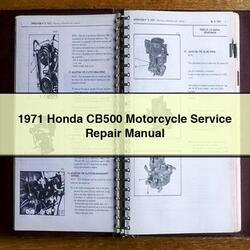
The Honda CB500, produced from 1971 to 1977, was a pivotal motorcycle in the middleweight segment, offering a blend of accessible performance and Honda's renowned reliability. Featuring a smooth 498 cc parallel-twin engine with SOHC valve actuation and a 5-speed transmission, it provided an engaging riding experience for both new and experienced enthusiasts. Its design emphasized user-friendliness and robust engineering, making it a popular choice that bridged the gap between smaller commuter bikes and larger, more powerful machines, establishing Honda's strong presence in the motorcycle market.
$16.99
The 1971 Honda CB500 is a significant motorcycle that marked Honda's entry into the larger displacement segment, blending performance and reliability. Building on Honda's reputation for engineering quality, this parallel-twin OHC model offered a refined riding experience and challenged its European contemporaries. Key features include a smooth 498cc engine, a front disc brake for enhanced stopping power, and a comfortable riding position, all contributing to its appeal in the motorcycle market of its era.
$16.99
This manual covers the Honda CB125, CB175, CL125, and CL175 motorcycle models produced between 1971 and 1974. These versatile motorcycles, available in street (CB) and scrambler (CL) variants, represent Honda's reputation for quality engineering and reliability during the early 1970s Japanese motorcycle boom. Known for their user-friendly parallel-twin engines and stylish designs, these models offered a blend of performance and practicality, making them popular choices for both everyday riders and enthusiasts. Their robust construction and straightforward mechanicals contributed to their enduring appeal as classic Japanese motorcycles.
$16.99
This manual covers the Honda CB125, CB175, CL125, and CL175 models produced between 1971 and 1974. These motorcycles are recognized for their reliable performance and robust engineering, embodying Honda's reputation for quality in the motorcycle industry during the 1970s. The CB series offered smooth parallel-twin engines, while the CL series provided a scrambler-style option. These bikes were popular for commuting and recreational riding, appreciated for their simplicity and dependable operation.
$16.99
This manual covers a range of motorcycles, including the CB100, CL100, SL100, CB125S, CD125S, and SL125, produced between 1971 and 1975. These versatile machines, available in Street, Scrambler, and Dual-Sport variants, are celebrated for their reliable air-cooled, four-stroke OHC engines, ranging from 99cc to 124cc. Known for their robust engineering and accessibility, these models established a strong market presence, offering efficient transportation and enjoyable riding experiences for a wide audience. Their historical impact is significant, contributing to the brand's reputation for quality and innovation in the small-displacement motorcycle segment.
$16.99
This manual covers a range of motorcycles produced between 1971 and 1975, including the CB100, CL100, SL100, CB125S, CD125S, and SL125. These models represent a successful entry into the lightweight, user-friendly motorcycle segment during a period of significant global growth for the brand. Known for their reliability and economical operation, these air-cooled, four-stroke machines, with displacements of 99cc and 124cc, offered versatile options for both commuting and recreational riding, building on a reputation for engineering quality.
$16.99
The Honda CB500F, produced from 1971 to 1976, represents a significant entry in the mid-size Universal Japanese Motorcycle segment. This model is celebrated for its robust parallel-twin engine, a front disc brake, and a well-engineered chassis that contributes to its stable handling and comfortable ride, making it a versatile choice for both commuting and touring. Its excellent build quality and reliability have cemented its reputation, offering a balanced blend of performance and practicality that defined many Honda motorcycles of its era.

$16.99
This manual covers the 1972 Honda CB125 and CB160 motorcycles. Honda motorcycles from this era are recognized for their engineering quality and reliability, establishing the brand as a leader in the motorcycle market. The CB series, including the CB125 and CB160, were popular street motorcycles known for their versatility and innovative designs, with manufacturing originating in Japan. These models likely featured air-cooled, four-stroke, parallel-twin cylinder engines and were built to high standards, contributing to their enduring popularity and reputation for user-friendliness.
$16.99
The 1972 Honda CB125 and CB160 represent a significant era in lightweight motorcycle design, embodying Honda's established reputation for engineering excellence and reliability. These models were crafted to offer accessible, user-friendly, and economical transportation, appealing to a wide range of riders. Known for their smooth operation and ease of maintenance, the CB series motorcycles from this period were a cornerstone of Honda's global success, competing effectively in the small-displacement segment with their balanced performance and fuel efficiency.
$16.99
This manual provides comprehensive service information for the 1972 motorcycles. These iconic machines represent a pivotal era in motorcycle legacy, particularly the groundbreaking which defined the superbike category. Known for their robust engineering, smooth inline-four engines, and reliable performance, these models continue to be cherished by enthusiasts. The models also offer accessible yet capable riding experiences, embodying a commitment to quality across its motorcycle lineup. This manual is an essential resource for understanding and maintaining the intricate mechanical and electrical systems that define these classic motorcycles.
$16.99
This manual covers the Honda CB350F, CB500F, and CB750F models from the 1972 model year. These motorcycles represent Honda's pioneering efforts in developing sophisticated inline-four engine configurations, building upon the revolutionary impact of the original CB750 Four. The CB750F established the superbike benchmark with its powerful performance and refined engineering, while the CB350F and CB500F offered the characteristic smoothness and high-revving nature of the inline-four layout in more accessible packages. Known for their reliability and engineering quality, these early Honda fours were designed to deliver a superior riding experience, setting new standards for the motorcycle industry.
$16.99
This manual covers the Honda CB350F and CB400F models from 1972. These motorcycles are renowned for their air-cooled, DOHC inline-four cylinder engines, offering a smooth and refined riding experience characteristic of Honda's engineering prowess. The CB350F, introduced in 1972, and its successor, the CB400F, represent a significant chapter in Honda's motorcycle history, bringing sophisticated multi-cylinder technology to a broader audience. Their robust construction and classic styling have made them enduring favorites among enthusiasts and collectors.

$16.99
This manual covers the 1972 Honda CB350F and CB400F motorcycles. These models represent Honda's significant entry into the multi-cylinder motorcycle market of the early 1970s, offering a refined riding experience characterized by smooth inline-four engines and sophisticated styling. The CB400F, in particular, was noted for its European-inspired design and engineering prowess. These motorcycles are appreciated for their performance and reliability, making them a significant part of Honda's heritage.
$16.99
This workshop service repair manual covers the Honda CB350F, CB500F, and CB750F models produced between 1972 and 1975. These motorcycles, particularly the CB750, revolutionized motorcycling with their robust engineering and performance, establishing Honda's reputation for reliability and innovation. The CB350F and CB500F offered accessible performance across different displacement classes, appealing to a wide range of riders. This manual provides comprehensive information for maintaining and repairing these iconic machines, ensuring their continued performance and longevity.
$16.99
This manual provides comprehensive coverage for the four-cylinder motorcycles produced between 1972 and 1975. These iconic machines, particularly the CB750F, revolutionized motorcycle performance and design, establishing a reputation for engineering excellence and reliability. The CB350F, CB500F, and CB750F represented an innovative approach to multi-cylinder motorcycle development, offering a range of power and styling options that appealed to a wide audience.
$16.99
This manual covers the 1973 Honda 250/300 Series motorcycles, specifically the C72, C77, CS72, CS77, CB72, and CB77 models. These motorcycles represent a significant era in Honda's development, known for their reliable parallel-twin engines and advanced engineering for their time. The 250cc variants typically offered around 20-25 horsepower, while the 300cc models, including the CB77, provided approximately 25-30 horsepower, featuring SOHC configurations and dual carburetors. This documentation is designed for owners, independent repair shops, and vintage motorcycle enthusiasts seeking to maintain the performance and longevity of these classic machines.
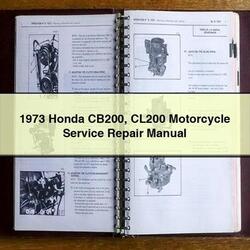
$16.99
The 1973 Honda CB200 and CL200 represent a significant chapter in Honda's motorcycle legacy, offering a blend of reliable performance and accessible engineering. The CB200, with its sleeker road-focused styling, and the CL200, featuring scrambler aesthetics for light off-road capability, both utilized a compact, lightweight, and user-friendly design. These parallel-twin, air-cooled four-stroke motorcycles, powered by a 198cc engine, were developed to provide dependable transportation and light touring, appealing to a broad range of riders. Their construction emphasized Honda's commitment to quality and durability, making them enduring models in the early 1970s motorcycle landscape.
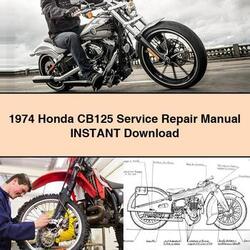
$16.99
The 1974 Honda CB125 represents a significant entry in Honda's legacy of reliable and accessible motorcycles. Built with Honda's renowned engineering quality, this model was designed to offer dependable performance for everyday riders and enthusiasts alike. Its compact size and efficient engine made it a popular choice for commuting and recreational riding, embodying Honda's commitment to innovation and user-friendly design. The CB125's enduring appeal stems from its straightforward mechanics and the robust construction that has come to define the Honda brand.
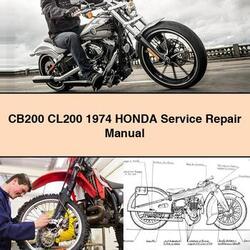
$16.99
This manual covers the Honda CB200 and CL200 models produced around 1974. These motorcycles, known for their air-cooled, 4-stroke, parallel-twin engines, offered a blend of performance and efficiency characteristic of Honda's robust engineering. The CB200 served as a capable street motorcycle, while the CL200, a scrambler variant, provided a more rugged aesthetic. Both models are recognized for their historical reputation for reliability and ease of maintenance within their class, embodying Honda's commitment to quality.
$16.99
This manual covers the Honda CB200 and CL200 models produced from 1974 through 1979. These motorcycles, powered by a 198 cc parallel-twin engine, are known for their reliable engineering and classic styling, offering a blend of performance and everyday usability that has made them enduring favorites. The CB200 represents a standard motorcycle, while the CL200 variants typically feature scrambler-style enhancements. Honda's reputation for quality is evident in these models, which continue to be appreciated by riders for their straightforward mechanics and enjoyable riding experience.
$16.99
This manual covers the Honda CB200 and CL200 motorcycles produced between 1974 and 1979. These parallel-twin, 4-stroke motorcycles are known for their balance of performance and efficiency, making them versatile for various riding needs. With an OHC engine design and a 5-speed transmission, the CB200 and CL200 series exemplify Honda's reputation for reliable engineering and quality construction from the mid to late 1970s.
$16.99
This service repair manual covers the 1976 Honda CB250, CB360, CL360 Scrambler, CJ250T, and CJ360T models. These motorcycles represent Honda's popular mid-size parallel-twin offerings from the mid-1970s, known for their reliability, fuel efficiency, and versatile performance. The CB series provided a solid street riding experience, while the CL variant offered a 'scrambler' style for varied terrain. These models were engineered with Honda's hallmark quality, competing effectively in the 250-400cc segment with their dependable parallel-twin engines and distinctive styling.
$16.99
The 1977 Honda CB500, CB550, CB550F, and CB550K motorcycles represent a significant era in Japanese motorcycle engineering, known for their smooth inline-four engines and reliable performance. These models, characterized by their air-cooled, DOHC configurations, offered a refined riding experience that made them popular in the mid-1970s sport bike market. Their robust chassis design and Honda's commitment to quality manufacturing established a reputation for durability and consistent performance, making them enduring classics for enthusiasts and everyday riders alike.
$16.99
This service repair manual provides comprehensive coverage for the Honda CB400T Hawk and CB400A Hawk motorcycles produced in 1978 and earlier. These motorcycles are known for their reliable 4-stroke, 2-cylinder, OHC, air-cooled engines, offering a balanced performance suitable for various riding conditions. The Hawk series represents robust engineering and commitment to quality in the middleweight motorcycle segment of its era, featuring both manual and automatic transmission options to cater to different rider preferences.
$16.99
This service repair manual provides comprehensive coverage for the Honda CB400S and CM400S models produced between 1978 and 1981. These motorcycles, powered by a 395 cc, 4-stroke, air-cooled parallel-twin engine, are known for their reliability and smooth operation, making them popular choices for riders seeking a versatile and enjoyable riding experience. The CB series typically features a standard motorcycle configuration, while the CM series offers a cruiser-style aesthetic. Both models represent a significant part of Honda's heritage in the mid-size motorcycle segment, characterized by robust engineering and accessible performance.
$16.99
This manual covers the Honda CB650 motorcycle, including Standard, Custom, and Nighthawk variants, produced between 1978 and 1985. The CB650 was designed as a versatile middleweight sport-touring machine, succeeding the CB550 and known for its reliable DOHC inline-four engine, smooth power delivery, and practical design. Its engineering reflects Honda's commitment to quality and performance, making it a well-regarded motorcycle of its era.
$16.99
The Honda CB650, produced from 1978 to 1985, represents a significant entry in the late 1970s and early 1980s middleweight motorcycle market. Available in standard and Custom variants, this series, including models designated RC03 and RC05, is characterized by its smooth, air-cooled inline-four engine, comfortable ergonomics, and the renowned reliability of Honda engineering. As a competitor to other four-cylinder middleweights of its era, the CB650 series offered a compelling blend of performance and rider comfort, making it a popular choice for enthusiast owners and a solid platform for restoration specialists.
$16.99
The Honda CB650, produced between 1978 and 1985, represents a significant model in Honda's motorcycle lineage, building upon the company's reputation for engineering reliability and performance. This mid-capacity inline-four motorcycle, featuring a DOHC, air-cooled engine with a displacement of 626 cc, was designed to offer a balance of power and smooth operation, making it a popular choice for riders seeking a capable and dependable machine. Its robust construction and thoughtful design contributed to its enduring appeal and established Honda's dominance in the four-cylinder motorcycle market during its production years.
$16.99
The Honda CB750F Super Sport, produced for the 1979 and 1980 model years, represents a significant evolution in performance motorcycle design. Building on the legacy of the iconic CB750 Four, the CB750F offered a sportier aesthetic and enhanced handling, positioning it as a capable machine for both spirited riding and everyday use. Its air-cooled, four-stroke, DOHC inline four-cylinder engine, displacing 748 cc, delivered approximately 70-75 horsepower, making it a competitive offering against rivals like the Kawasaki KZ750 and Yamaha XS750. Honda's renowned engineering quality and reliability are hallmarks of this model, which features a robust steel frame, dual front disc brakes, and a 5-speed transmission, all contributing to its enduring appeal among enthusiasts.
$16.99
The 1980 Honda CB650Z is a mid-size sport motorcycle known for its reliable performance and classic styling. Powered by a 647cc DOHC inline-four engine, this Japanese-manufactured machine offers approximately 60 horsepower and is designed for riders seeking a blend of dependable engineering and an engaging riding experience. Its classic sportbike design emphasizes rider ergonomics, making it a capable and stylish option within its segment, competing with models like the Yamaha XS650 Special and Kawasaki KZ650.
$16.99
The Honda CB900C Custom and CB900F Super Sport motorcycles, produced between 1980 and 1982, represent a significant step in Honda's lineage of larger displacement inline-four motorcycles. These models, part of the first generation CB900 series, offered enhanced performance and touring capabilities, building upon the success of the iconic CB750. Known for Honda's commitment to reliable engineering, the CB900 series provided a powerful and stylish riding experience, with the Custom variant offering distinct styling and the Super Sport focusing on sportier aesthetics and performance.

$16.99
This manual covers the Honda CB900C Custom and CB900F Super Sport models produced for the 1980, 1981, and 1982 model years. These motorcycles are celebrated for their robust DOHC inline-four engines, known for strong mid-range torque and smooth power delivery, building on Honda's legacy of engineering excellence and reliability. The CB900 series, including these variants, was a significant development in large-displacement motorcycles, offering a refined riding experience and establishing Honda's reputation in the Universal Japanese Motorcycle segment.
$16.99
This manual covers the Honda CB450S and CM450S models, produced primarily in the years 1982, 1983, and 1985. These motorcycles represent Honda's commitment to engineering excellence and reliability in the mid-size motorcycle segment. Featuring a 447cc air-cooled, inline-twin engine, they offered a balanced blend of performance and manageable power, appealing to riders seeking classic styling and dependable operation. Honda's strong reputation for quality construction and smooth engine performance was a significant selling point for these models, which competed with other offerings in the 400-500cc class.
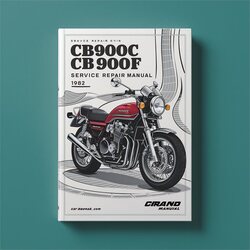
$16.99
This manual covers the CB900C (Custom) and CB900F (Sport) motorcycles produced in 1982. These models represent a commitment to engineering excellence and performance, offering a powerful inline-four engine and robust chassis designs for riders seeking a classic motorcycle experience. Known for their reliability and smooth power delivery, the CB900 series provides an engaging ride, whether for cruising or spirited performance, building on an esteemed legacy in motorcycle manufacturing.
$16.99
The 1982-1986 Honda CB750SC represents a significant offering in its class, engineered for reliability and performance. This model is designed to provide a robust riding experience, combining advanced engineering with a focus on rider comfort and control. Its distinctive features and build quality make it a notable choice for enthusiasts and everyday riders alike, showcasing Honda's commitment to producing high-caliber motorcycles.
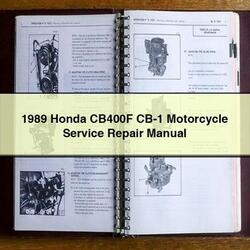
$16.99
The 1989 Honda CB400F CB-1 is a mid-weight sport-standard motorcycle, celebrated for its compact, lightweight design and versatile performance. As part of Honda's esteemed lineage of inline-four motorcycles, it embodies the brand's commitment to engineering excellence, reliability, and rider-focused dynamics. This model offers a balanced blend of sporty handling and everyday usability, making it a compelling choice for enthusiasts. Its robust inline-four engine, precise chassis, and responsive braking system contribute to an engaging riding experience, reflecting Honda's long-standing reputation for innovation and quality in the motorcycle industry.
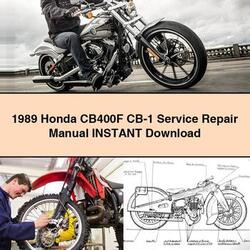
$16.99
The 1989 CB400F CB-1, chassis code NC27, is a compact inline-four sportbike renowned for its sophisticated engineering and reliable performance. This model showcases a commitment to delivering a balanced and engaging riding experience, featuring a 399 cc liquid-cooled engine producing approximately 50-55 horsepower, coupled with a smooth 6-speed transmission. Its design emphasizes agility and rider comfort, making it suitable for both spirited riding and everyday commuting. The CB400F CB-1 builds upon a rich heritage in motorcycle innovation, offering a blend of accessible power and enduring build quality characteristic of the brand.
$16.99
This manual covers the Honda CB400F CB-1, produced from 1989 to 1994, chassis code NC27. Known for its inline-four cylinder, DOHC, 4-stroke engine with a displacement of 399 cc and PGM-FI fuel injection, this motorcycle offers a balanced blend of performance and handling. Honda's reputation for engineering excellence and reliability underpins the CB-1, making it a notable model within the company's esteemed CB series. Its design emphasizes sporty performance and versatility, suitable for both spirited riding and daily commuting.

$16.99
This manual covers the Honda CB400F CB-1 motorcycle, produced from 1988 to 1990. As a compact, lightweight, and nimble sportbike, the CB-1 was designed to offer accessible performance. It features a DOHC inline-four cylinder engine with a displacement of 399 cc, liquid cooling, and a 6-speed manual transmission with a wet multi-plate clutch. The motorcycle is equipped with hydraulic disc brakes on both the front and rear, a telescopic front fork, and a Pro-Link single shock absorber at the rear, all contributing to its agile handling and reliable performance.
$16.99
This manual covers the Honda CB400F / CB-1, a first-generation (NC27) sport motorcycle produced in 1989. Known for its 399 cc liquid-cooled, inline-four engine, this model offers a responsive ride characterized by its smooth power delivery and nimble handling, making it a popular choice for enthusiasts and riders seeking spirited performance in its class. The engineering quality and reliability are hallmarks of Honda's reputation, providing a dependable platform for both daily commuting and recreational riding.

$16.99
This manual pertains to the 1989 Honda CB400F CB-1, chassis code NC27. As a successor to the iconic CB400F, the CB-1 represented a contemporary interpretation, featuring liquid cooling and a more compact, sporty design. This motorcycle, powered by a 399cc inline-four engine, was lauded for its refined performance and agile handling, making it a notable entry in the 400cc sportbike category during its production years from 1989 to 1994. Its engineering quality and reliability are hallmarks of Honda's commitment to performance and rider satisfaction.
$16.99
This manual covers the 1989 Honda CB400F / CB-1, also known internally by its NC27 code. Produced by Honda, this motorcycle is part of the esteemed CB series, celebrated for its balanced blend of sporty performance and dependable engineering. The CB400F/CB-1 is equipped with a 399cc inline-four, liquid-cooled engine, a 6-speed transmission, and dual front disc brakes with a rear disc brake, all housed within a robust steel diamond frame. Its design prioritizes agile handling and a responsive power delivery, making it suitable for both spirited riding and daily commuting. The model is recognized for its reliability and is a popular choice among enthusiasts.
$16.99
This manual covers the Honda CBR600F, model code CBR600Fm, for the years 1989 and 1990. Known for its smooth 598cc inline-four engine and capable handling, this mid-size sportbike was praised for its blend of performance and everyday usability. The CBR600F established a benchmark in its class, offering a comfortable riding experience alongside sporty capabilities, making it a popular choice for enthusiasts. Its engineering quality and reliability are hallmarks of the Honda brand, reflecting a commitment to durable and high-performing motorcycles.
$16.99
This manual covers the 1992 Honda CB250N, a reliable and versatile mid-size motorcycle from Honda Motor Company, Ltd. Known for its engineering excellence, the CB250N is part of Honda's tradition of producing robust machines, often serving as a capable commuter or entry-level sportbike. This particular model, produced during the early 1990s, embodies Honda's commitment to quality and durability, making it a popular choice for riders seeking dependable performance.
$16.99
The Honda CB500 Twin Motorcycle, produced between 1993 and 2001, represents a significant entry in the mid-size naked sportbike segment. Known for its reliable parallel-twin engine, comfortable ergonomics, and user-friendly handling, this model was designed to offer a balanced blend of performance and economy, making it a popular choice for commuting, sport touring, and general riding. Its robust build quality and engineering excellence are hallmarks of Honda's reputation, ensuring dependability and accessible performance for riders. The CB500 Twin offered a compelling alternative to its contemporaries, providing a user-focused experience that contributed to high owner satisfaction.
$16.99
The CBR900RR, also known as the Fireblade, represents a significant achievement in sportbike engineering, particularly the Second Generation (SC33) models produced from 1996 to 1998. Renowned for its groundbreaking lightweight chassis and potent inline-four engine, the CBR900RR delivered exceptional handling and a remarkable power-to-weight ratio for its era, establishing it as a benchmark in the superbike segment. This performance-oriented motorcycle was designed to offer exhilarating riding experiences, competing effectively with other leading sportbikes of the time.
$16.99
This manual covers the 1998 motorcycle, a popular naked sportbike celebrated for its agile handling and accessible performance. The reputation for engineering excellence and reliability is evident in the motorcycle, which offers a liquid-cooled, 4-stroke, DOHC, inline-four cylinder engine with a displacement of 599 cc. Its design prioritizes rider engagement and a dynamic riding experience, making it a favored choice for both everyday commuting and spirited riding.
$16.99
The CB600F, produced in 1998 under the PC34 chassis code, is a naked sportbike renowned for its user-friendly nature, reliability, and capable inline-four engine. This model is celebrated for its versatility, serving effectively for both daily commuting and spirited sport riding. Its engineering quality, a hallmark of the brand, is evident in its balanced performance and forgiving handling characteristics, making it a popular choice among motorcycle enthusiasts.
$16.99
This manual covers the 1998 Honda CB600Fw Hornet motorcycle. Designed for riders seeking a blend of performance and everyday usability, the CB600Fw Hornet is recognized for its agile handling and responsive engine. Its engineering emphasizes reliability and a straightforward riding experience, making it a capable machine for both commuting and recreational use. The model's design prioritizes rider comfort and control, contributing to its enduring appeal.
$16.99
The Honda CB600FW, produced in 1998, is a first-generation motorcycle belonging to the esteemed Hornet lineage. This naked sportbike, built on the PC34 chassis derived from the CBR600F, offers a harmonious blend of sporty handling and upright ergonomics, making it a versatile machine for various riding scenarios. Its liquid-cooled, four-stroke, DOHC inline-four engine, displacing 599 cc, delivers accessible yet exhilarating performance, complemented by a robust steel diamond frame engineered for rigidity and precise rider feedback. Honda's long-standing reputation for exceptional reliability and engineering quality is a hallmark of this model, ensuring a dependable and enjoyable riding experience.
$16.99
The CB600F (Hornet) is a naked sportbike renowned for its agile handling, responsive inline-four engine, and overall value. Produced between 1998 and 2006, this model offers a dynamic riding experience suitable for both spirited daily commuting and weekend excursions. Its engineering quality is a hallmark, providing a reliable platform that has earned consistent praise for its sporty performance and user-friendliness among enthusiasts and riders alike.
$16.99
The 1999 Honda CB1100SFy is a high-performance sportbike, representing Honda's commitment to engineering excellence and reliability. Known for its robust inline-four engine and refined handling, this model was designed for discerning riders seeking a potent and dependable machine. Building on Honda's rich heritage in motorcycle manufacturing, the CB1100SFy embodies the brand's reputation for quality construction and innovative design, positioning it as a refined choice within the sportbike segment of its era.
$16.99
This manual covers the CB900F Hornet and CB919 models from 2000 onwards, renowned for their robust 919cc inline-four engines, sporty handling, and signature reliability. These motorcycles are celebrated for their balanced performance, making them suitable for a wide range of riding conditions, from daily commuting to spirited weekend rides. The engineering quality is evident in the durable construction and the smooth power delivery of the liquid-cooled, DOHC engine, which typically produces around 98-100 horsepower.
$16.99
The Honda CB900F Hornet, also known as the 919, was produced between 2000 and 2001. This naked sportbike, or streetfighter, is characterized by its smooth inline-four engine, minimalist styling, and a comfortable riding position suitable for a sport-oriented motorcycle. Built upon Honda's legacy of reliable and innovative engineering, the CB900F Hornet offers a potent combination of performance and versatility, making it a compelling choice for riders seeking a powerful and dependable machine. Its design emphasizes a strong engine derived from the CBR1000F, delivering an estimated 93.3 horsepower and 78.2 Nm of torque, all housed within a rigid steel diamond-tube frame.
$16.99
This manual covers the CB1100SF and CB1100SFY models produced between 2000 and 2003. Known for a legacy of reliable and high-performance motorcycles, the CB1100SF is a naked sportbike that offers significant power and distinctive styling. It features an inline 4-cylinder, liquid-cooled engine with a displacement of 1098 cc, delivering approximately 100-110 horsepower. The motorcycle is equipped with a 6-speed transmission, wet multi-plate clutch, and final drive via an O-ring sealed chain. For braking, it utilizes dual front disc brakes and a single rear disc brake, complemented by telescopic front forks and a rear monoshock suspension system.
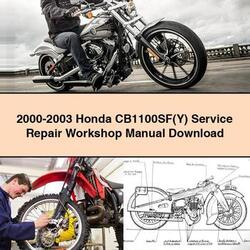
$16.99
This manual covers the motorcycle, produced for the 2000, 2001, 2002, and 2003 model years. Known for its 1100cc inline-four cylinder engine, the model represents a commitment to engineering excellence and rider satisfaction in the sport-touring or naked bike segment. Building upon a rich heritage in motorcycle manufacturing, this model offers refined performance and is designed for comfortable riding. Its robust construction and reliable engineering ensure a rewarding ownership experience.
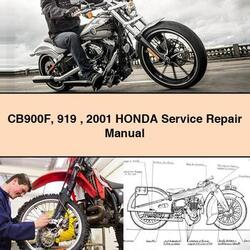
$16.99
This manual covers the motorcycle, produced in 2001. Known for its approachable power delivery and comfortable riding position, this model is a modern interpretation of the classic Universal Japanese Motorcycle concept, featuring a 919cc V-twin engine. The line is recognized for its solid all-around performance, making it a popular choice for various riding styles. The legacy in motorcycle manufacturing is built on innovation, reliability, and performance, qualities reflected in this versatile machine.
$16.99
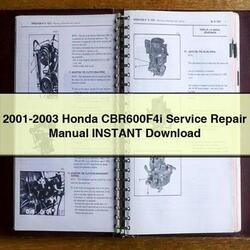
The Honda CBR600F4i, produced for the 2001, 2002, and 2003 model years, represents a significant evolution in the sportbike segment. Renowned for its balanced performance, this motorcycle excels in delivering a refined and capable riding experience, making it a popular choice for both street enthusiasts and track day participants. Its inline-four, liquid-cooled engine, coupled with a sophisticated chassis and suspension, provides smooth power delivery and exceptional handling dynamics. The CBR600F4i builds upon Honda's established reputation for engineering excellence, reliability, and innovation, offering a compelling package that was a benchmark in its class.
$16.99
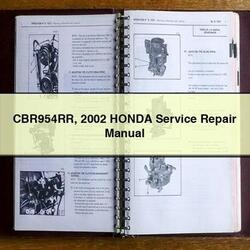
This manual covers the Honda CBR954RR Fireblade, model code SC48, produced for the 2002 model year. As a flagship supersport motorcycle, the CBR954RR is renowned for its high-performance inline-four engine, advanced aluminum twin-spar frame, and sophisticated Pro-Link rear suspension. Building on the legacy of the CBR900RR series, this model offers exceptional power and handling, making it a benchmark in its class. Its engineering quality and reputation for performance are hallmarks of Honda's commitment to sportbike development.
$16.99
This manual covers the Honda CB1300 and CB1300F models produced for the 2002 and 2003 model years, chassis code SC40. As a product of Honda Motor Company, renowned for its reliability and engineering innovation, the CB1300 represents a modern interpretation of a classic large-displacement naked sportbike. Its inline 4-cylinder, liquid-cooled engine, displacing 1284 cc, delivers robust performance, complemented by a stable steel diamond frame designed for rider control. Key features include a 5-speed transmission, wet multi-plate clutch, and the Honda Ignition Security System (HISS) for enhanced security.

$16.99
The Honda CB900F 919 Hornet, produced for the 2002 and 2003 model years, is a naked sportbike celebrated for its potent 919cc liquid-cooled V-twin engine, delivering strong, usable torque and responsive performance. Designed with a focus on rider enjoyment and ease of maintenance, it offers a robust and performance-oriented experience, making it an attractive option for those seeking a versatile motorcycle for both commuting and spirited riding. Its simple, reliable engineering and competitive price point contribute to its appeal among riders looking for a powerful yet accessible machine.
$16.99
This manual covers the motorcycle, produced for the 2002 and 2003 model years. The 919 is a naked sportbike renowned for its smooth, torquey 919cc inline-four engine, balanced chassis, and overall reliability, making it a versatile machine for various riding needs. Its design philosophy emphasizes performance and rider engagement, drawing inspiration from a legacy of powerful sportbikes. The CB900F 919 was generally well-received for its practicality and robust engineering, reflecting a commitment to quality.
$16.99
The Honda CB900F 919, produced for the 2002 and 2003 model years, represents Honda's interpretation of a versatile naked sportbike, offering accessible performance and comfortable ergonomics. This model is powered by a torquey 900cc liquid-cooled inline-four engine, featuring a programmed fuel injection system, and is known for its minimalist styling and capable handling. Building on Honda's rich heritage of engineering excellence and renowned reliability, the CB900F 919 aimed to provide a balanced riding experience suitable for both everyday commuting and spirited excursions, effectively bridging the gap between lighter sportbikes and more specialized touring machines.
$16.99
This manual covers the Honda CB900F 919, also known as the 919, for the 2002 and 2003 model years. As part of Honda's esteemed CB series, this motorcycle represents a modern take on the classic UJM concept. It is powered by a liquid-cooled, 919cc inline-four engine, delivering robust performance suitable for both daily commuting and spirited riding. Known for its smooth power delivery, comfortable ergonomics, and dependable Honda engineering, the CB900F 919 is a practical and enjoyable naked sportbike. Its reputation is built on solid build quality and a reliable, torquey engine.
$16.99
The Honda CBR954RR, also known as the Fireblade, is a high-performance super sport motorcycle produced from 2002 to 2004. This model, identified by the chassis code prefix SC50, represents a significant evolution in Honda's sportbike lineage, building upon the engineering excellence and reliability that the brand is renowned for. It features a potent 954 cc liquid-cooled, four-stroke, DOHC inline-four engine, delivering approximately 145.1 horsepower, coupled with a lightweight aluminum twin-spar frame and an advanced Pro-Arm single-sided swingarm for exceptional handling and stability. Its design prioritizes performance enthusiasts and track day riders, offering a compelling blend of power, agility, and braking capabilities that earned it widespread acclaim during its production era.

$16.99
This service repair manual provides comprehensive information for the Honda CB600F, also known as the Hornet, covering model years 2003 through 2006. As a naked sportbike, the CB600F is celebrated for its agile handling and spirited performance, powered by a 599cc inline four-cylinder engine. Honda's commitment to engineering excellence and reliability is evident in this model, which offers a compelling blend of power and user-friendliness for enthusiasts and everyday riders alike. The PC36 chassis code denotes this generation, known for its refined styling and performance characteristics, positioning it as a strong contender in its market segment.
$16.99
The Honda CB600F Hornet, produced between 2004 and 2006, is a versatile naked sportbike renowned for its agile handling and spirited performance. This model, identified by chassis code PC36, builds upon Honda's legacy of engineering excellence, offering a 599cc liquid-cooled V-Four engine that delivers approximately 96-98 horsepower. Its design prioritizes a balance of sportiness and everyday usability, making it a popular choice for riders seeking an engaging yet reliable machine for both commuting and spirited riding. The CB600F Hornet is celebrated for its responsive throttle, comfortable riding position, and the characteristic blend of power and control that Honda is known for.
$16.99
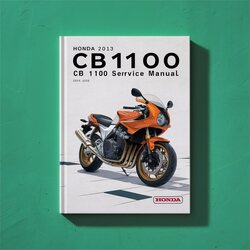
The Honda CB1100, produced between 2013 and 2015, is a modern interpretation of the classic Universal Japanese Motorcycle. It features an air-cooled inline-four DOHC engine, renowned for its smooth power delivery and classic aesthetic, a rarity in contemporary motorcycle design. The CB1100 prioritizes rider engagement and quality craftsmanship, offering a refined experience that pays homage to Honda's rich heritage. This model, identified by chassis code SC65, was available in Standard and ABS variants, catering to riders who appreciate timeless styling combined with dependable Honda engineering.
$16.99
This manual provides comprehensive service and repair information for the Honda CB1100 motorcycle, covering model years 2013 through 2016. The CB1100 is a modern interpretation of Honda's classic CB series, featuring a 1097cc air-cooled inline-four engine, a 6-speed transmission, and a steel diamond frame. Known for its retro styling and engineering quality, the CB1100 offers a blend of classic aesthetics and reliable performance, making it a popular choice for motorcycle enthusiasts. This manual is designed to assist owners and technicians in maintaining the integrity and performance of this iconic motorcycle.
$16.99
The CB1100, produced from 2013 to 2016, is a retro-styled naked sportbike that pays homage to esteemed CB lineage. Featuring a sophisticated air-cooled, 16-valve inline-four engine with a displacement of 1140 cc, it delivers approximately 95 PS and 104 Nm of torque, paired with a 6-speed manual transmission and a wet, multi-plate clutch. Known for its classic aesthetics, comfortable ergonomics, and robust build quality, the CB1100 appeals to riders seeking a blend of vintage charm and modern engineering. Variants include the CB1100, CB1100A, and CB1100SA, with the latter two offering available Anti-Lock Brake System (ABS) for enhanced safety.
$16.99
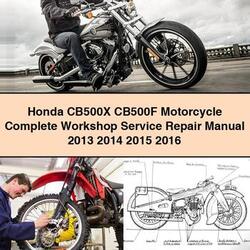
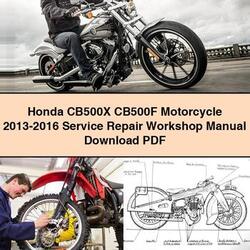
This manual covers the Honda CB500X and CB500F, versatile motorcycles powered by a reliable parallel-twin engine. The CB500X is designed as an adventure-sport crossover, while the CB500F offers a naked sportbike experience. Both models are recognized for their cost-effective ownership, user-friendly nature for riders of all skill levels, and excellent fuel economy, building on Honda's legacy of engineering excellence and dependable performance.
$16.99
This manual covers the Honda CB500X and CB500F motorcycles produced between 2013 and 2016. These versatile middleweight bikes are known for their accessible performance, fuel efficiency, and Honda's renowned reliability and engineering quality. The CB500X, a capable adventure-touring machine, and the CB500F, a sporty naked bike, share a common platform and a 471cc parallel-twin engine, making them suitable for a wide range of riding experiences.
$16.99
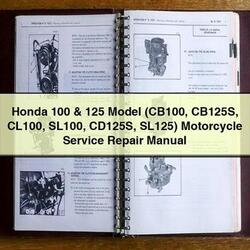
This comprehensive service and repair manual covers the Honda CB100, CB125S, CL100, SL100, CD125S, and SL125 motorcycle models, primarily manufactured in the mid-1970s to early 1980s. These motorcycles are celebrated for their engineering quality, reliability, and accessibility, making them popular for urban commuting, light trail riding, and as foundational models in Honda's global success. The manual provides essential technical data for maintaining and repairing these classic machines, catering to enthusiasts, DIY mechanics, and restoration specialists.
$16.99
This manual covers the Honda CB250, CB350, CL250, CL350, and SL350 motorcycle models, produced generally from the 1960s through the early 1980s. These motorcycles, including various chassis codes such as CB250K, CB350F, CL350K, and SL350K, represent Honda's significant contribution to the 250cc and 350cc segments. Known for their engineering quality and reliability, these models offered diverse riding experiences, from the road-focused CB series to the scrambler CL and off-road SL variants, establishing Honda's global reputation.
$16.99
This manual covers the Honda CB250K, CB350K, CL250K, and CL350K series motorcycles produced from the mid-1960s to the early 1970s. These reliable and stylish parallel-twin motorcycles were instrumental in Honda's global expansion, competing with other major manufacturers of the era. The CB models offered classic roadster styling, while the CL variants provided a 'scrambler' aesthetic for light off-road capability. Their robust engineering and appealing design have made them desirable classic machines for enthusiasts and collectors alike.
$16.99
The Honda CB600F, also commonly known as the Hornet 600, is a versatile naked sportbike that first entered the market in 1998. Built with renowned engineering quality and commitment to reliability, this model offers a compelling blend of performance and everyday usability. Its steel diamond frame and liquid-cooled, 599 cc V-twin engine, derived from the CBR600F, deliver an engaging riding experience, making it suitable for both commuting and spirited rides. The CB600F has been recognized for its agile handling and lively power delivery, establishing itself as a capable and enjoyable machine for riders seeking a balance of sportiness and practicality.
$16.99
This manual covers the 1971 CB100, CL100, SL100, CB125S, CD125S, and SL125 models. These motorcycles are recognized for their air-cooled, four-stroke, OHC twin-cylinder engines, offering reliable performance and fuel efficiency, characteristic of the esteemed brand heritage from the early 1970s. Designed for accessibility and ease of use, these models have become sought-after by enthusiasts of classic motorcycles, representing successful expansion into various market segments. Their engineering quality and user-friendly design contribute to their enduring appeal and collectibility.

$16.99
This manual covers the motorcycles, produced between 1972 and 1977. These models are distinguished by their air-cooled, inline-four cylinder engines, offering a sophisticated riding experience characteristic of engineering prowess during that era. The CB350F, with its 347cc engine, produced approximately 34 horsepower, while the CB400F featured a 408cc engine delivering around 37 horsepower. Both models utilize a 6-speed constant mesh manual transmission and a wet, multi-plate clutch, with final drive via an O-ring sealed chain. Known for their smooth power delivery and classic styling, these motorcycles represent a significant part of heritage in the mid-sized motorcycle segment.
$16.99
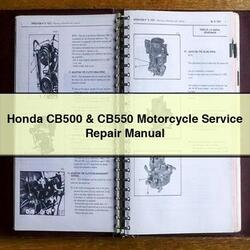
The Honda CB500 and CB550 motorcycles, produced during the 1970s, represent a significant chapter in Honda's motorcycle engineering history. The CB500 features a 497cc DOHC parallel-twin engine, while the CB550 offers a larger 544cc DOHC inline-four, both renowned for their smooth power delivery and reliability. These models competed effectively in the middleweight segment, appreciated for their quality construction, accessible performance, and rider-focused design. Their legacy is built on a foundation of dependable engineering, making them enduring classics for riders seeking a blend of vintage charm and functional performance.
