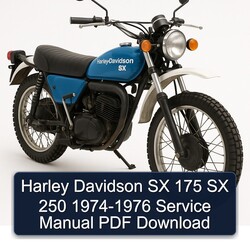
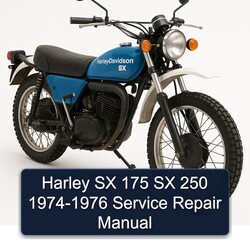
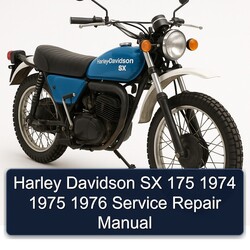
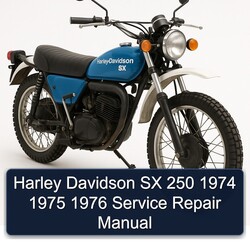
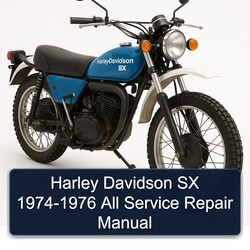
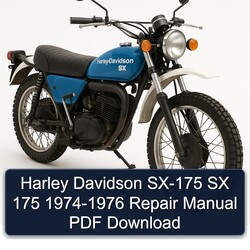
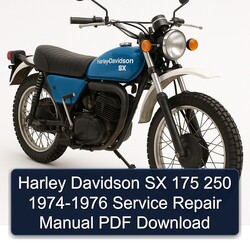
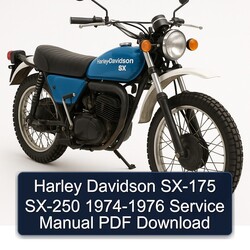
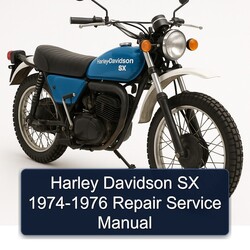
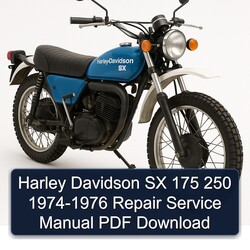
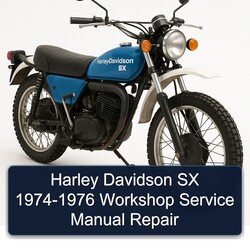
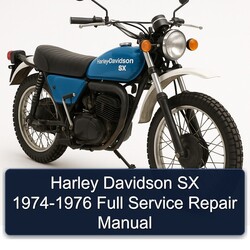
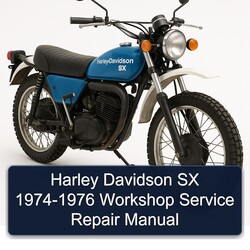
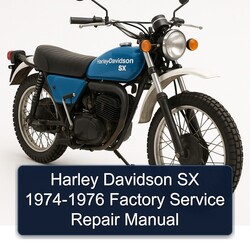
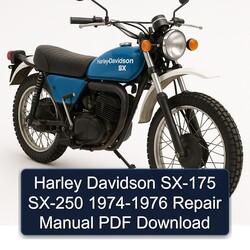
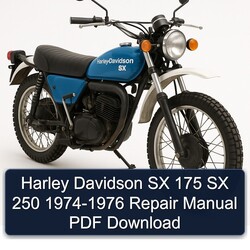
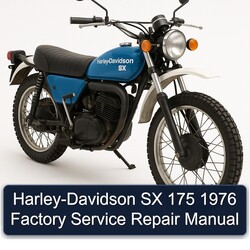
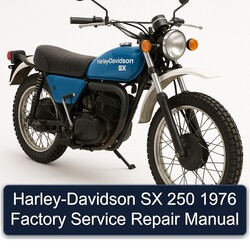
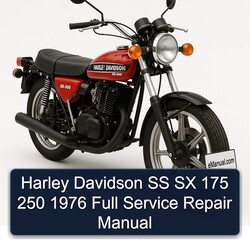
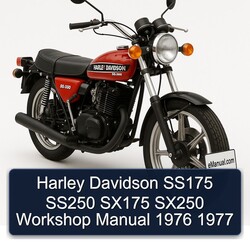
The SX category encompasses a specific line of Harley-Davidson motorcycles designed for performance and agility. These models are characterized by their lightweight frames, powerful engines, and sport-oriented riding positions, making them suitable for spirited road riding and occasional track use. Their design prioritizes handling and responsiveness, offering riders an engaging and dynamic experience. The SX series represents a distinct offering within the Harley-Davidson lineup, catering to enthusiasts who seek a blend of power and maneuverability.
Documentation for SX models includes comprehensive service manuals detailing routine maintenance, engine overhauls, and electrical system diagnostics. Repair guides provide step-by-step instructions for component replacement and...
The SX category encompasses a specific line of Harley-Davidson motorcycles designed for performance and agility. These models are characterized by their lightweight frames, powerful engines, and sport-oriented riding positions, making them suitable for spirited road riding and occasional track use. Their design prioritizes handling and responsiveness, offering riders an engaging and dynamic experience. The SX series represents a distinct offering within the Harley-Davidson lineup, catering to enthusiasts who seek a blend of power and maneuverability.
Documentation for SX models includes comprehensive service manuals detailing routine maintenance, engine overhauls, and electrical system diagnostics. Repair guides provide step-by-step instructions for component replacement and troubleshooting common issues. Technical specifications sheets offer detailed information on performance metrics, dimensions, and material compositions. These resources are essential for owners and certified technicians to ensure the longevity, optimal performance, and safe operation of SX motorcycles, facilitating both routine upkeep and complex repairs.
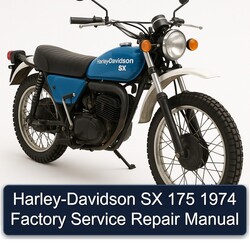
This manual covers the Harley-Davidson SX 175, a lightweight off-road motorcycle produced in 1974. As part of Harley-Davidson's effort to enter the growing dirt bike market, the SX 175 utilized Aermacchi technology, offering a distinct alternative to the brand's larger cruiser models. This 175cc two-stroke, single-cylinder machine was designed for trail and off-road use, competing with other contemporary lightweight motorcycles. Its engineering focused on providing robust performance and maneuverability in demanding conditions, reflecting a unique chapter in Harley-Davidson's diverse history.
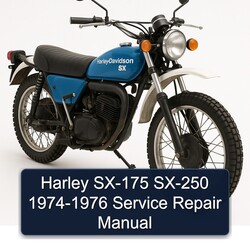
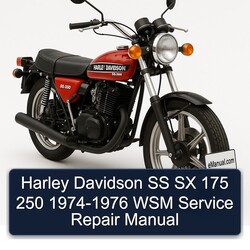
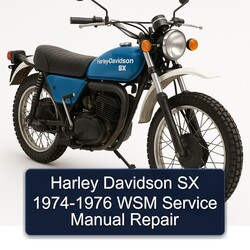
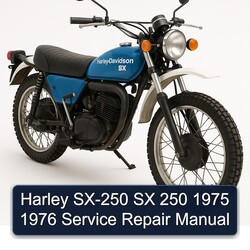
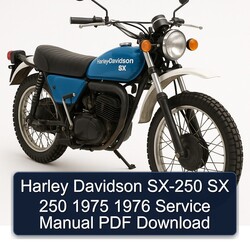
This manual covers the Harley-Davidson SX-175 and SX-250 models produced between 1974 and 1976. These motorcycles, originating from the USA and likely incorporating Italian manufacturing expertise, represented Harley-Davidson's foray into the lightweight off-road and dual-sport segment. Known for their two-stroke, single-cylinder engines and rugged construction, the SX series, with dry weights around 235-245 lbs, offered a distinct alternative to the brand's traditional cruiser offerings. This manual provides comprehensive factory service information designed to maintain the reliability and performance of these vintage machines.
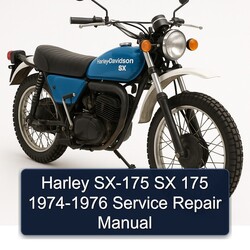
This manual provides comprehensive service and repair information for the Harley-Davidson SX-175, produced between 1974 and 1976. The SX-175 represents Harley-Davidson's engagement with the dual-sport and off-road motorcycle market, often leveraging Italian Aermacchi designs and manufacturing. Known for its two-stroke, single-cylinder engine and 6-speed transmission, this model was an effort to capture a different segment of the motorcycle industry during the 1970s. Its robust construction and relatively simple mechanicals made it a capable machine for its intended use.
This manual covers the SX-175 motorcycle, produced between 1974 and 1976. The SX-175 represents a heritage in developing versatile motorcycles, often with Italian engineering collaborations, suitable for various riding conditions. This model typically features a single-cylinder, two-stroke engine with a displacement of 175cc, designed for reliable performance.
This manual covers the SX 175 and SX 250 motorcycles produced between 1974 and 1976. These models represent an entry into the dual-sport and motocross market during the 1970s, often incorporating technology from Italian manufacturer Aermacchi. The SX series was designed for versatility, suitable for both on-road and off-road use, offering a robust platform for riders seeking adventure and performance.
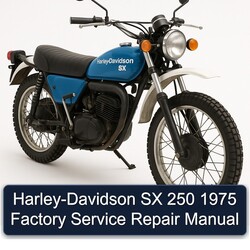
This factory service repair manual covers the Harley-Davidson SX 175 and SX 250 motorcycles from the 1974, 1975, and 1976 model years, representing the First Generation SX Series. These dual-sport motorcycles, drawing on Harley-Davidson's association with Italian engineering, were designed for off-road and versatile riding. They feature two-stroke, air-cooled, single-cylinder engines, manual transmissions with wet multi-plate clutches, and disc brakes, offering a blend of performance and reliability for their era.
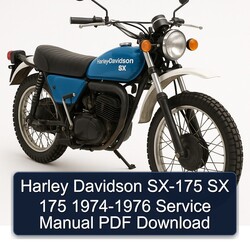
This manual covers the Harley-Davidson SX 175 motorcycle, produced for the model years 1974, 1975, and 1976. The SX 175 was Harley-Davidson's entry into the lightweight dual-sport and off-road market of the 1970s, offering a blend of on-road usability and off-road capability. Known for its rugged construction and relative simplicity, it competed with other 175cc dual-sport motorcycles of its era. As a two-stroke, single-cylinder, air-cooled machine, it represented a diversification for a brand historically focused on V-twin cruisers.
This workshop service manual provides comprehensive repair and maintenance information for the Harley-Davidson SX 250 motorcycle, covering model years 1974, 1975, and 1976. The SX 250 represents Harley-Davidson's entry into the dual-sport and off-road motorcycle market, often leveraging Aermacchi technology. This model is characterized by its single-cylinder, 2-stroke, air-cooled engine, designed for versatility. The manual details the intricacies of this machine, offering insights into its engineering and intended use.
This manual covers the Harley-Davidson SX models from 1974, 1975, and 1976, belonging to the Early SX Series generation. Harley-Davidson, a historic American motorcycle manufacturer, is renowned for its V-twin engines and iconic designs. The SX model line represented the company's expansion into lighter, more agile motorcycles, often suited for dual-purpose riding. This era marked a period of evolution for Harley-Davidson, and the SX models were part of their diversified product strategy.
This manual covers the SX-175, produced from 1974 to 1976. The SX-175 was part of an initiative to enter the trail bike market, often leveraging Italian Aermacchi technology. Designed as a lightweight and agile motorcycle, it offered versatility for recreational riding and trail exploration. As an iconic American manufacturer, the brand is known for its robust engineering and reliable machines, and the SX-175 embodies this heritage with its spirited two-stroke, parallel-twin engine and straightforward design.
This manual covers the SX 175 and SX 250 models produced between 1974 and 1976. These motorcycles represented an entry into the dual-sport and motocross market, often utilizing components from an Italian affiliate. Known for their 2-stroke, air-cooled engines, these models offered a distinct experience from traditional offerings and are appreciated by enthusiasts for their historical significance in the brand's evolution.
This manual covers the SX-175 and SX-250 models produced between 1974 and 1976. These motorcycles represented an expansion into the off-road and dual-sport market, offering a departure from traditional cruiser offerings. The SX series was engineered to appeal to a broader audience and different riding styles, leveraging an established reputation for quality and reliability.
This manual covers the Harley-Davidson SX models produced between 1974 and 1976. The Harley-Davidson SX line represented the brand's venture into lighter, more agile motorcycles, often suited for off-road or dual-purpose use, offering a distinct alternative within the manufacturer's heritage. These models typically feature an air-cooled V-twin engine, with displacements commonly around 125cc or 175cc, and are equipped with manual gearboxes. The engineering quality and reliability associated with the Harley-Davidson name are evident in these machines, which continue to be appreciated by enthusiasts.
This manual covers the SX 175 and SX 250 models manufactured between 1974 and 1976. These motorcycles represent an entry into the dual-sport and off-road market, offering a blend of performance and versatility. Known for their robust two-stroke, single-cylinder engines, available in 175cc and 250cc displacements, these bikes were designed for riders seeking adventure both on and off the pavement. The SX series, a significant part of history during a period of evolution, provided riders with capable machines for various terrains.
This workshop service manual covers the Harley-Davidson SX Series motorcycles produced between 1974 and 1976. The SX series represented Harley-Davidson's entry into the off-road and desert racing market, characterized by lighter frames and potent V-twin engines. Known for its robust engineering and iconic American motorcycle heritage, Harley-Davidson built these models to perform in demanding conditions. This manual provides in-depth technical information to ensure these machines are maintained and repaired to their original specifications, preserving their legacy and performance.
This manual covers the Harley-Davidson SX motorcycle, produced for the model years 1974, 1975, and 1976. The SX series represented Harley-Davidson's entry into smaller displacement, more versatile motorcycles, often aimed at a broader audience than their traditional cruiser models. These motorcycles are characterized by their V-Twin engines, known for their distinctive styling and robust low-end torque, and were typically air-cooled. While specific horsepower figures varied, models from this era generally produced between 20 to 40 horsepower. The SX line, with its focus on maneuverability and a blend of on-road and potential light off-road capability, stood apart in Harley-Davidson's lineup during a period of significant company evolution.
This manual covers the Harley-Davidson SX models manufactured between 1974 and 1976. These motorcycles are known for their V-twin, air-cooled OHV engines, typically producing around 50-65 horsepower and 60-75 lb-ft of torque, paired with a 4-speed manual transmission and a wet, multi-plate clutch. The SX line represented Harley-Davidson's expansion into lighter, more versatile motorcycles, diverging from their larger cruiser offerings. With a focus on core mechanical and electrical function, these bikes embody the brand's heritage of robust engineering and distinctive styling, offering a unique riding experience for their era.
This manual provides comprehensive service and repair information for the Harley-Davidson SX series motorcycles produced between 1974 and 1976. The SX models represent Harley-Davidson's diversification efforts during the mid-1970s, often utilizing Sportster platforms adapted for different purposes, making them a unique part of the company's heritage. These motorcycles are known for their robust V-twin engine architecture and classic American styling, embodying the spirit of the era. This factory service repair manual is designed to assist owners and technicians in maintaining the integrity and performance of these iconic machines.
This manual covers the SX-175 and SX-250 models produced between 1974 and 1976. These motorcycles represent a foray into the dual-sport and off-road market of the 1970s, often leveraging Italian Aermacchi technology. Designed for versatility, these air-cooled, two-stroke machines offered riders a capable option for both on-road and light off-road use. This first-generation series showcases an ambition to expand its product line and appeal to a broader range of riders during a significant period of market evolution.
This manual covers the SX 175 and SX 250 models produced between 1974 and 1976. The SX series represented an entry into the off-road and dual-sport segments, often featuring collaboration with Italian manufacturers. These motorcycles, equipped with two-stroke, air-cooled, single-cylinder engines ranging from approximately 175cc to 250cc, utilized a 6-speed constant mesh transmission and chain drive. Notable features include drum brakes for stopping power and a focus on robust, functional design suitable for various riding conditions.
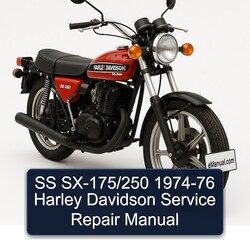
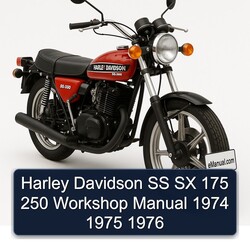
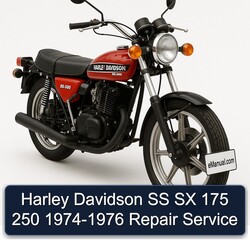
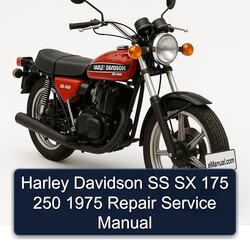
This manual covers the Harley-Davidson SS, SX-175, and SX-250 models produced between 1974 and 1976. These motorcycles represent Harley-Davidson's foray into smaller displacement, performance-oriented machines, likely featuring two-stroke, air-cooled engines with carbureted fuel systems. The SX designations suggest capabilities for off-road or dual-sport use, broadening the brand's appeal during the 1970s. This manual provides comprehensive service and repair information for these historically significant models.
The SS SX, produced from 1974 to 1976, offered riders a lighter and more agile option within the iconic brand's lineup. Available with 175cc and 250cc engine variants, these motorcycles were a testament to efforts to expand its market reach during the mid-1970s, often drawing upon collaboration with Aermacchi for their engineering. These models are appreciated for their historical significance and represent a unique chapter in the company's diverse product development, catering to a segment of riders seeking nimble performance and the distinctive heritage.
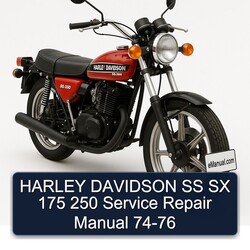
This manual covers the Harley-Davidson SS SX 175 and SX 250 models produced between 1974 and 1976. These motorcycles represent Harley-Davidson's foray into the dual-sport market, often featuring European engineering influences and designed for versatile on-road and light off-road use. Known for their lighter weight and spirited performance, these models were a departure from Harley-Davidson's traditional cruiser offerings, providing a more agile and accessible riding experience.
This manual covers the SS SX 175 and SS SX 250 models produced between 1974 and 1976. These lightweight, sporty motorcycles were designed for the emerging street scrambler and trail bike market of the mid-1970s, offering a blend of simplicity, off-road capability, and street-legal functionality. Representing a venture into smaller displacement, multi-purpose segments, often drawing from Italian Aermacchi designs, these models were characterized by their two-stroke, air-cooled single-cylinder engines, typically around 175cc or 250cc, and a focus on mechanical performance.
This manual covers the SS SX, including the 175 and 250cc variants, produced between 1974 and 1976. These motorcycles represent a foray into lighter, more agile machines, often incorporating European engineering expertise. Designed for versatile use, the SS SX models are known for their spirited performance and responsive handling within their displacement class. This guide delves into the engineering and operational aspects of these iconic two-stroke machines, providing essential information for owners and enthusiasts.
This manual covers the Harley-Davidson SS SX 175 and 250 models produced between 1974 and 1976. These motorcycles represent a unique chapter in Harley-Davidson's history, offering smaller displacement, two-stroke performance that contrasted with the brand's traditional large-displacement V-twin offerings. Designed for sport-oriented riding and a younger demographic, the SS SX line, often benefiting from Italian engineering through Aermacchi, provided a distinct riding experience. Understanding the intricacies of these models is key to preserving their performance and historical significance.
This manual covers the Harley-Davidson SX Series motorcycles produced for the model years 1974, 1975, and 1976. These motorcycles, often incorporating Italian Aermacchi engineering, represented Harley-Davidson's entry into the off-road and trail riding market. Known for their robust, performance-oriented design typical of the Harley-Davidson legacy, the SX models provided a competitive option in their segment. This workshop service manual is an essential resource for understanding and maintaining these classic machines.
This manual covers the SS/SX 175 and 250 models produced between 1974 and 1978. These lightweight motorcycles, with roots in the Aermacchi era, offered a blend of performance and off-road capability, making them popular for recreational use. The SS and SX lines represent engagement with the smaller displacement, two-stroke market of the 1970s, drawing on Italian design and engineering.
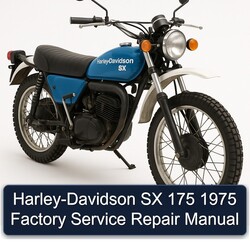
This manual provides comprehensive technical information for the 1975 Harley-Davidson SX 175. As an iconic American manufacturer, Harley-Davidson has a rich heritage, and the SX series represented a diversification into smaller-displacement, off-road focused motorcycles during the mid-1970s. The SX 175, powered by a two-stroke, air-cooled, single-cylinder engine, was designed for recreational and off-road use. This factory service repair manual is an essential resource, offering detailed procedures and specifications to ensure the proper maintenance and repair of this classic machine.
This manual covers the Harley-Davidson SX 250, a unique model produced in 1975. As part of Harley-Davidson's exploration into the dual-sport market, the SX 250 drew inspiration from Italian Aermacchi designs, offering a departure from the brand's traditional cruiser offerings. This two-stroke, single-cylinder motorcycle, featuring a 247cc engine and a 5-speed transmission, was engineered for agility and performance within its segment. Its steel tube frame and air-cooled engine are hallmarks of its 1970s design, providing a distinct riding experience for enthusiasts of vintage motorcycles.
This manual covers the Harley-Davidson SS SX models from 1975, available with 175cc and 250cc engine variants. These motorcycles represent Harley-Davidson's historical expansion into smaller displacement, sport-oriented machines, designed for off-road and performance riding. The SS SX series, characterized by its air-cooled, two-stroke engines and 5-speed transmissions, offered a distinct alternative in the motorcycle market of its era.
This manual covers the Harley-Davidson SX-250, produced for the 1975 and 1976 model years. The SX-250 represents Harley-Davidson's entry into the off-road and motocross market, a departure from their traditional cruiser offerings, leveraging designs from their association with Aermacchi. These bikes were engineered for performance and competition in the burgeoning dirt bike segment of the era, featuring a 250cc single-cylinder engine, likely air-cooled and paired with a manual transmission. The SX series was a significant, albeit brief, chapter in Harley-Davidson's history, showcasing their engineering capabilities in a different performance arena.
The SX-250, part of the SX Series, was produced from 1974 to 1976. This motorcycle represents a foray into the off-road and trail bike market of the 1970s. While specific performance figures are detailed within this manual, the SX-250 likely features a 250cc, single-cylinder engine typical of its era, coupled with a multi-speed manual transmission and a carbureted fuel system. Its robust construction and engineering quality are hallmarks of the legacy, making it a notable machine for enthusiasts and collectors of vintage motorcycles.
Welcome to the comprehensive service manual for the SX-250, covering models produced between 1975 and 1976. The SX-250 represents a significant entry into the dual-purpose and off-road motorcycle market of the 1970s, offering agility and performance. These motorcycles were engineered to provide an exciting riding experience, expanding the diverse product line. This manual is designed to assist owners and technicians in understanding and maintaining these classic machines.
This manual covers the 1976 Harley-Davidson SX 175, a lightweight dual-purpose motorcycle designed for agility and off-road capability. As part of Harley-Davidson's venture into smaller displacement segments, the SX 175 featured an air-cooled, two-stroke single-cylinder engine and telescopic front forks, differentiating it from the brand's traditional cruiser offerings. Produced during a competitive era in the motorcycle industry, this model emphasized maneuverability and performance, representing a strategic diversification for Harley-Davidson.
The Harley-Davidson SX 250, produced around 1976, was a significant model for the iconic American manufacturer, marking their entry into the off-road and trail bike market. Designed to offer a robust, American-built alternative to European and Japanese competitors, this motorcycle featured a durable 2-stroke, air-cooled, single-cylinder engine with a displacement of approximately 247 cc. Its engineering emphasized reliability for trail use, distinguishing it with Harley-Davidson's characteristic build quality in a segment not typically associated with the brand. The SX 250 aimed to broaden Harley-Davidson's appeal, providing a unique option for riders seeking a versatile machine for off-road adventures.
This manual covers the Harley-Davidson SS SX models, produced in 1976, featuring 175 and 250cc engine variants. These motorcycles represented Harley-Davidson's entry into the sport bike segment, offering a more agile riding experience compared to their larger cruiser offerings. Known for their distinct two-stroke engines and 5-speed manual transmissions, the SS SX series were designed for riders seeking performance and a connection to the road. This manual provides comprehensive technical information for these historically significant machines.
This workshop service repair manual provides comprehensive coverage for the 1976 and 1977 SS175, SS250, SX175, and SX250 models. These motorcycles, representing a venture into lightweight and dual-purpose segments, are characterized by their two-stroke, air-cooled engines and manual transmissions. The SS and SX series were designed for versatility, appealing to riders seeking capable machines for both street and off-road use during their production period. This manual serves as an essential resource for understanding the engineering and maintenance requirements of these historically significant models.
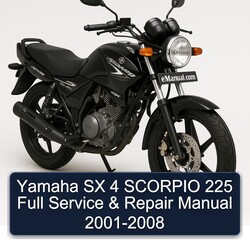
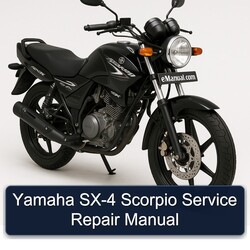
This manual covers the SX-4 Scorpio 225, a motorcycle produced from 2001 through 2008. A renowned manufacturer, is known for its commitment to engineering quality and reliability. The SX-4 Scorpio line typically represents performance-oriented variants, suggesting a focus on rider experience and dynamic capability. This model is designed for enthusiasts who appreciate a blend of sporty performance and practical usability.
This manual covers the SX 4 Scorpio 225, produced between 2001 and 2008. A manufacturer renowned for its engineering excellence and reliability, has a rich heritage in performance vehicles. The SX 4 Scorpio 225 is designed for riders seeking a blend of performance and practicality, embodying a commitment to quality craftsmanship. This factory service and repair workshop manual provides comprehensive guidance for maintaining and repairing this specific model.
This manual covers the 125 RT SX SM motorcycle from 2003. A historic German manufacturer, is known for robust engineering. The RT, SX, and SM variants likely represent different configurations tailored for specific riding styles, such as road, sport, or supermoto. This 125cc model offers a balance of performance and maneuverability, making it suitable for urban commuting, recreational riding, and potentially entry-level track or off-road use depending on its specific variant.
The MZ 125 RT SX SM motorcycle, produced in 2003, represents a blend of historical German engineering from MZ Motorradwerk Zschopau with a focus on performance and distinctive European styling. Known for its robust construction and innovative designs, MZ offered the 125cc lineup in various configurations, including the RT for road use, and SX/SM variants tailored for supermoto and supermotard riding. These motorcycles typically feature a liquid-cooled, single-cylinder, approximately 125cc engine, likely a 2-stroke, paired with a 6-speed sequential manual transmission and a wet, multi-plate clutch, delivering an engaging riding experience.
This comprehensive service repair workshop manual covers the Yamaha SR230, AR230, and SX 230 boat models manufactured between 2004 and 2006. These vessels are engineered for recreational use, offering reliable performance and a range of features designed to enhance the boating experience. This manual provides the detailed information necessary to understand and maintain the unique aspects of these Yamaha watercraft, ensuring their continued operational excellence.
This comprehensive service manual covers the Yamaha SR230, AR230, and SX 230 models manufactured between 2004 and 2006. These vessels are engineered for reliable performance and enjoyable watercraft experiences, embodying Yamaha's commitment to quality and innovation. This manual is designed to assist owners and technicians in understanding and maintaining these specific Yamaha models.
This manual covers the 250F Series, encompassing various models such as EXC, SX, SXS, XC, and XCF, produced between 2005 and 2010. These high-performance off-road motorcycles are engineered with the 'Ready to Race' philosophy, emphasizing potent power delivery, agile handling, and robust suspension systems for competitive riding. Renowned for their advanced engineering and durability, these 250cc four-stroke machines are built for demanding off-road disciplines, including motocross and enduro, and have a proven track record of success in motorsport.
The Aprilia RX 125 / SX 125, produced in 2009, represents a versatile Dual-Sport Motorcycle designed for both on-road commuting and light off-road excursions. Building on Aprilia's rich motorsport heritage, these models offer aggressive, modern styling and are powered by a liquid-cooled, single-cylinder, two-stroke engine, typically a Rotax 125, known for its performance within the 125cc segment. Engineered for rider engagement and capable handling, the RX 125 / SX 125 are well-suited for beginner to intermediate riders seeking a sporty and adaptable machine.
This manual covers the [Make] [Model] vehicle, produced between [Year] and [Year]. Designed for [Intended Usage], this vehicle exemplifies [Engineering Quality] and [Reliability]. Its unique selling points include [Notable Features], making it a distinguished choice in its class.
This service manual pertains to the Pioneer SX-980, a vintage audio receiver renowned for its robust engineering and reliable performance. Designed for audiophiles and enthusiasts seeking exceptional sound quality, this unit delivers 85 Watts per channel into 8 ohms and 110 Watts per channel into 4 ohms, with a wide frequency response of 20Hz - 20kHz and a low total harmonic distortion of 0.03%. Its comprehensive input selection, including multiple line-level and switchable MM/MC phono inputs, alongside a microphone input, makes it a versatile centerpiece for any audio system.
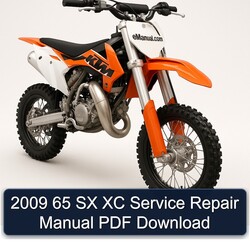
This manual covers the 2009 65 SX and 65 XC models, designed as entry-level performance motocross and off-road competition bikes for young riders. Embodying a 'Ready to Race' philosophy, these models feature lightweight design, powerful 65cc two-stroke engines, and high-quality components aimed at competitive performance. With a 6-speed transmission and hydraulic disc brakes, the 65 SX and XC are built for agility and control on the track and trails, continuing a strong heritage in youth motorsports.
This manual covers the SX-4 Scorpio, a compact SUV produced primarily in the late 1990s and early 2000s. Designed with practicality, reliability, and fuel efficiency in mind, the SX-4 Scorpio served as a versatile transportation option for small families and urban commuters, often competing with models like the Toyota RAV4 and Honda CR-V. Its engineering leveraged robust manufacturing capabilities, offering a compact footprint with available All-Wheel Drive and a choice of manual or automatic transmissions, powered by an efficient 1.6L inline 4-cylinder engine.