The 350 series encompasses a range of iconic Ducati motorcycle models known for their distinctive design and performance characteristics. These machines, often celebrated for their sporting heritage and engaging riding experience, are suitable for both spirited road riding and occasional track use. Key features typically include robust engine configurations, advanced suspension systems, and a focus on rider feedback, making them a significant part of Ducati's historical and contemporary lineup.
Documentation for the 350 series is comprehensive, providing essential information for owners and technicians. This includes detailed service and repair manuals outlining routine maintenance, engine overhauls, and component-specific procedures. Technical specifications, electrical...
The 350 series encompasses a range of iconic Ducati motorcycle models known for their distinctive design and performance characteristics. These machines, often celebrated for their sporting heritage and engaging riding experience, are suitable for both spirited road riding and occasional track use. Key features typically include robust engine configurations, advanced suspension systems, and a focus on rider feedback, making them a significant part of Ducati's historical and contemporary lineup.
Documentation for the 350 series is comprehensive, providing essential information for owners and technicians. This includes detailed service and repair manuals outlining routine maintenance, engine overhauls, and component-specific procedures. Technical specifications, electrical diagrams, and troubleshooting guides are also readily available, ensuring that the unique engineering of these Ducati models can be properly understood, maintained, and repaired to preserve their performance and longevity.
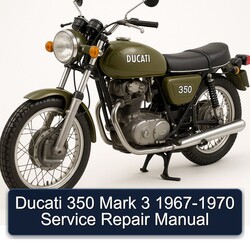
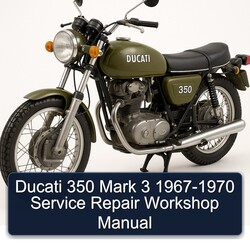
This manual covers the Ducati 350 Mark 3 motorcycle, produced between 1967 and 1970. Known for its Italian engineering and the development of Ducati's signature L-twin engine configuration, the 350 Mark 3 represents a significant piece of the brand's heritage. This model is designed for riders who appreciate classic performance and the distinct character of vintage motorcycles.
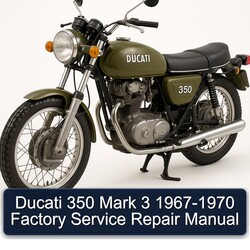
This manual covers the Ducati 350 Mark 3, produced for the model years 1967 through 1970. The 350 Mark 3 represents a significant part of Ducati's heritage, known for its sporty performance and reliable engineering characteristic of the brand. This model, powered by a ~350cc air-cooled V-twin engine, offers an engaging riding experience, embodying the spirit of classic Italian motorcycles. Its design and construction reflect Ducati's commitment to quality and performance, making it a sought-after machine for enthusiasts and collectors.
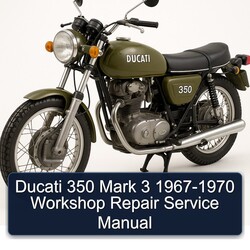
This manual covers the 350 Mark 3 for the production years 1967 through 1970. As a significant model in history, the 350 Mark 3 embodies the legacy of performance and engineering innovation, particularly with its characteristic desmodromic valve actuation. This motorcycle is designed for enthusiasts and riders who appreciate classic Italian engineering and a spirited riding experience. Its robust construction and focus on mechanical integrity have made it a sought-after machine for both everyday use and historical appreciation.
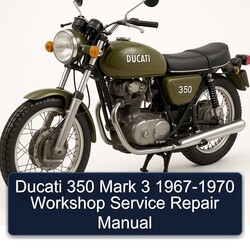
This workshop repair service manual provides comprehensive guidance for the Ducati 350 Mark 3, covering models produced between 1967 and 1970. Known for its sporting heritage and engineering quality, the 350 Mark 3 represents a significant part of Ducati's history in single-cylinder motorcycles. This manual is designed to be an essential resource for owners and technicians, offering factory-level information to ensure the continued performance and reliability of this classic machine.
The Ducati 350 Mark 3, produced between 1967 and 1970, is a distinguished Italian motorcycle known for its air-cooled, four-stroke L-twin engine featuring the hallmark desmodromic valve actuation. This model, with an approximate displacement of 340 cc, offered around 28-30 horsepower, delivering a sporting experience characteristic of Ducati's heritage. Its engineering quality and reliability, combined with its compact yet potent design, made it a notable entry in the motorcycle market of its era, appealing to riders seeking performance and the unique character of Ducati engineering.
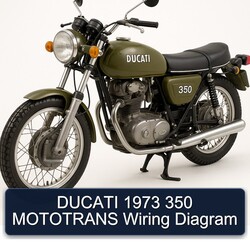
This manual covers the 350 Mototrans, a motorcycle produced in 1973. As a product of Mototrans, a Spanish manufacturer, this model represents a blend of Italian design and Spanish production from the early to mid-1970s. It is recognized as a classic motorcycle, appreciated by vintage enthusiasts for its agility and distinctive styling. The 350 Mototrans typically features an air-cooled, four-stroke V-twin engine with a displacement of approximately 350cc, a 5-speed gearbox, and a wet multi-plate clutch, all driven by a chain to the rear wheel.
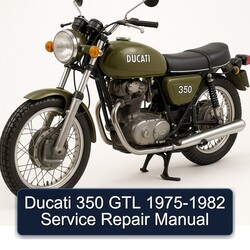
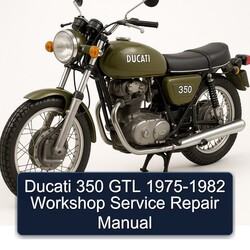
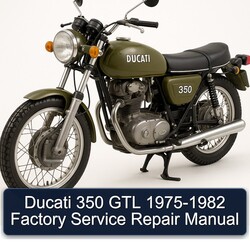
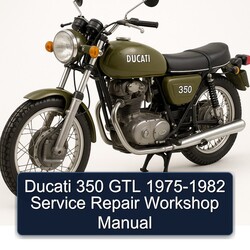
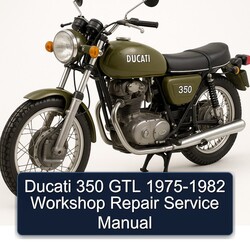
This manual covers the 350 GTL, produced between 1975 and 1982. The manufacturer is renowned for its sporty motorcycles, performance engineering, and distinctive V-twin engines, often featuring Desmodromic valve actuation. The 350 GTL represented the manufacturer's offering in the sport-touring segment, balancing performance with comfort. This factory service repair manual provides comprehensive, factory-level detail for all styles of the 350 GTL within its production years, offering a cost-effective and convenient alternative to traditional printed manuals.
This manual covers the Ducati 350 GTL, produced from 1975 to 1982. The 350 GTL is a sport-touring motorcycle recognized for its performance-oriented L-twin, four-stroke Desmodromic engine, a hallmark of Ducati engineering. This model typically features a dry, multi-plate clutch and a 5-speed gearbox, driven by a chain. Ducati's legacy is built on innovation and a commitment to delivering engaging riding experiences, and the 350 GTL exemplifies this tradition.
This manual covers the Ducati 350 GTL, produced from 1975 to 1982. The 350 GTL is characterized by its air-cooled, 4-stroke, 2-valve per cylinder Desmodromic V-twin engine, typically producing around 25-30 horsepower and known for strong low-to-mid-range torque. Its design, often featuring dual Dell'Orto carburetors and a 5-speed gearbox, reflects Ducati's heritage of performance-oriented motorcycles, offering an accessible entry point to the brand. The 'GTL' designation suggests a focus on Gran Turismo comfort, making it suitable for touring.
The Ducati 350 GTL, produced between 1975 and 1982, is a testament to Italian engineering, featuring an air-cooled, four-stroke, L-twin Desmodromic engine with approximately 340cc displacement. Renowned for its sporty yet comfortable touring capabilities, this model embodies Ducati's legacy of performance and distinctive engine design. The 350 GTL is appreciated by enthusiasts for its unique engineering and the characteristic sound and feel of its L-twin configuration, representing a significant part of Ducati's heritage from the 1970s and 1980s.
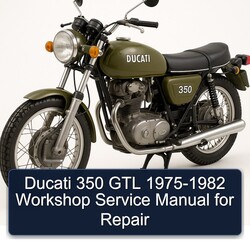
The Ducati 350 GTL, produced between 1975 and 1982, represents a significant chapter in Ducati's heritage of performance-oriented motorcycles. As part of the GTL Series, this model embodies Ducati's renowned engineering quality, featuring an air-cooled, 4-stroke, V-twin engine with a displacement of approximately 340cc, typically producing between 20-30 horsepower. Known for its characteristic sound and agile handling, the 350 GTL was designed as a versatile road bike, balancing sporty performance with everyday usability. Its construction, including a steel tube frame and a wet multi-plate clutch, reflects the robust engineering characteristic of Ducati motorcycles from this era.
The Ducati 350 GTL, produced between 1975 and 1982, is a classic European sportbike celebrated for its distinctive V-twin engine and engaging riding experience. This model represents a significant part of Ducati's heritage, offering a blend of accessible performance and timeless Italian design. Its engineering quality and reliability are hallmarks of the brand, making it a sought-after machine for enthusiasts and collectors. The 350 GTL is characterized by its air-cooled, 2-valve per cylinder, Desmodromic V-twin engine, typically producing between 20-30 horsepower, with a focus on mid-range torque.
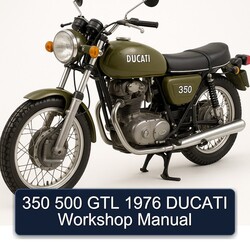
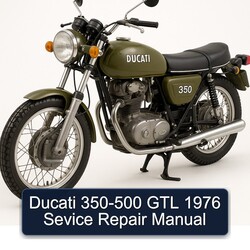
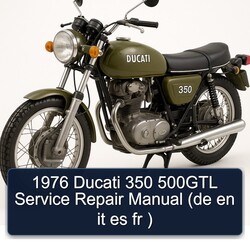
This manual covers the Ducati 350 GTL and 500 GTL models from 1976. Ducati, an Italian manufacturer, is renowned for its performance motorcycles, characterized by iconic V-twin engines and the distinctive Desmodromic valve system. The GTL designation signifies a Gran Turismo Lusso, or touring variant, often featuring enhanced comfort and practicality. These models represent a significant era in Ducati's engineering evolution, with their air-cooled, 4-stroke L-twin engines and 5-speed gearboxes. This workshop manual provides comprehensive information for owners and technicians alike, detailing the maintenance, servicing, diagnostics, and repair of these classic Italian machines.
This manual covers the Ducati 350 GTL and 500 GTL models from 1976. These Italian-designed motorcycles are characterized by their L-twin engine configuration, featuring Ducati's signature desmodromic valve actuation, which ensures precise valve timing and allows for higher engine speeds. The 350 GTL, with its approximately 340 cc displacement, offers around 28-30 horsepower, while the 500 GTL, at roughly 497 cc, produces approximately 38-40 horsepower. Both models utilize a 5-speed constant mesh transmission and chain drive, embodying Ducati's sporting heritage and engineering prowess of the era.
This manual covers the 1976 Ducati 350 GTL and 500 GTL models. These motorcycles are powered by air-cooled, 4-stroke, 90-degree V-twin engines, featuring desmodromic valve actuation, a hallmark of Ducati engineering. Known for their sporty character and robust build, these models represent Ducati's heritage in performance and design. The GTL designation suggests a focus on comfortable touring capabilities, making them suitable for both spirited riding and longer journeys.
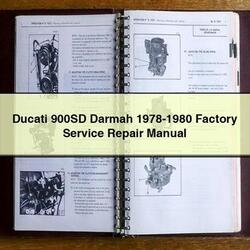
The Ducati 900SD Darmah, produced from 1978 to 1980, represents a significant piece of Italian motorcycle engineering. Characterized by its air-cooled, 90-degree V-twin engine featuring the signature Desmodromic valve actuation, the Darmah offered a unique blend of performance and distinctive styling. This classic Italian machine, with its robust steel tube frame and dual disc braking system, was designed for enthusiasts who appreciated its character and the brand's racing heritage. Its approximately 860 cc displacement and emphasis on mechanical precision made it a notable competitor in its era, embodying Ducati's commitment to performance-oriented motorcycles.
This manual provides comprehensive guidance for the Ducati 900SD Darmah, a significant model in the brand's air-cooled V-twin heritage, produced approximately between 1977 and 1982. Featuring a 900cc L-twin Desmodromic engine, this motorcycle represents a pivotal era in Ducati's development. Its distinctive styling and performance-oriented engineering made it a sought-after machine. This workshop service repair manual is an essential reference for owners and technicians seeking to maintain and understand this iconic Italian motorcycle.
This manual covers the Ducati 750SS and 900SS models from 1991, featuring the iconic Desmodromic L-Twin air-cooled engine. These sport-touring motorcycles are renowned for their distinctive engine character, Italian performance heritage, and capable handling for their era. The 750SS offers approximately 69 hp, while the 900SS delivers around 83 hp, both providing characteristic torque delivery.
This manual covers the Ducati 750SS and 900SS SuperSport models produced between 1991 and 1996. These iconic sportbikes are characterized by Ducati's signature trellis frame and the unique Desmodromic valve actuation system in their L-twin engines. Known for their agile handling, strong mid-range torque, and distinctive Italian styling, these motorcycles offered a compelling blend of performance and rider engagement, competing with other premium sportbikes of their era.
This manual covers the Ducati 750SS and 900SS models from 1991 to 1998, representing the Second Generation (DS/FE) of these iconic Italian sportbikes. Engineered with a performance-oriented design philosophy, these motorcycles are characterized by their air-cooled, 90° V-twin engines featuring the unique Desmodromic valve actuation system. This technology contributes to their high-revving capabilities and precise engine control, offering a distinct V-twin character. The 750SS models are equipped with a 750cc engine, while the 900SS features a 904cc variant, both delivering impressive power and torque for their class. These machines are celebrated for their agile handling, thanks to their trellis frame, and their aggressive, stylish Italian design, making them a significant presence in the sportbike segment.
The 1995 Ducati 750SS and 900SS represent the pinnacle of the SuperSport lineage, embodying Ducati's rich heritage of performance and distinctive Italian design. These models are celebrated for their engaging riding experience, characterized by the signature desmodromic valve actuation system, a robust trellis frame, and potent L-twin engines. The 750SS, with its 748 cc displacement, and the 900SS, featuring a 904 cc engine, offered a compelling blend of sporty handling, responsive braking from Brembo components, and a unique V-twin character that appealed to discerning riders seeking an authentic motorcycle experience.
The Ducati 996SPS, produced in 2000 for the European market, is a high-performance sportbike renowned for its L-twin, liquid-cooled, four-stroke engine featuring Desmodromic valve actuation. Building on the legacy of the 916 series, the 996SPS was engineered for track-day prowess and exhilarating street riding, offering approximately 124 hp and a torque of 97 Nm. Its design emphasizes a tubular steel trellis frame for rigidity and rider feedback, and it was a direct competitor to other prominent sportbikes of its era. The 'SPS' designation signifies a performance-oriented variant, often homologated for racing with specialized engine and chassis enhancements, reflecting Ducati's rich heritage in motorsports, particularly in World Superbike Championship.
This document pertains to the Ducati M900 S, a performance naked sportbike produced in 2000. As a foundational model in the iconic Ducati Monster series, the M900 S is recognized for its distinctive Italian design and potent V-twin engine, featuring a 904 cc air-cooled, 4-stroke, 90° V-twin configuration with Desmodromic valve actuation. This model represents Ducati's legacy of motorsport influence and minimalist styling, offering a compelling riding experience for enthusiast owners. Its robust steel trellis frame and capable braking system, comprising dual 320mm discs at the front and a single 245mm disc at the rear, contribute to its dynamic performance and handling characteristics.
This manual covers the Ducati 999RS, a high-performance motorcycle produced between 2000 and 2006. As a homologation special, the 999RS was engineered for racing and represents a significant advancement in Ducati's superbike lineage, featuring the potent Testastretta engine, advanced electronics, and a refined chassis. Its design and engineering reflect Ducati's rich racing heritage and commitment to delivering exceptional performance and handling for discerning riders and enthusiasts.
This manual covers the Ducati 999RS, a high-performance sportbike produced for the model years 2000 through 2006. Known for its distinctive L-twin Desmodromic engine and advanced chassis, the 999RS represents a pinnacle of Italian engineering, designed for both track dominance and exhilarating road performance. Its legacy is rooted in Ducati's rich racing heritage, with the RS variant often signifying a homologation special featuring upgraded components and refined tuning, distinguishing it from standard models. This machine is engineered for enthusiasts who appreciate precision handling, potent power delivery, and the iconic Ducati riding experience.
The Ducati 998R, produced in 2002, represents a peak in superbike engineering, a homologation special built with racing in mind. Featuring a powerful 998cc Testastretta Desmodromic L-twin engine, renowned for its substantial torque and performance, this model embodies Ducati's rich heritage in motorsport. Its exceptional engineering is further highlighted by premium Öhlins suspension components, a potent Brembo braking system, and the extensive use of lightweight materials like carbon fiber. The 998R was designed to compete at the highest levels of motorcycle racing, offering unparalleled rider feedback and track capability.
The Ducati 998R, produced in 2002, represents the pinnacle of Ducati's superbike engineering from its era. As a limited, high-performance variant, it draws heavily from the brand's World Superbike racing heritage, building upon the successful 996 platform. This Italian masterpiece is characterized by its Testastretta Desmodromic L-Twin engine, renowned for its exotic design and track-focused dynamics, offering 136 horsepower and 103 Nm of torque. Its aggressive styling, advanced technology for the time, and exceptional handling cemented its status as an ultimate superbike, directly competing with other premier sportbikes of the period.
The 2002 Ducati Monster M900 ie represents a significant iteration of Ducati's iconic naked sportbike line, known for its distinctive trellis frame, air-cooled L-twin engine, and minimalist Italian styling. This model, produced in Bologna, Italy, features a 904cc engine with electronic fuel injection, radial-mount front brake calipers, and an upright riding position, offering a blend of performance and accessible Ducati character. It competed in an era of European naked bikes, standing out with its unique design and a characterful engine that influenced the broader motorcycle industry.
This manual covers the Ducati M1000 Dark, a sportbike produced in 2003. Known for its performance, handling, and distinctive Italian styling, the M1000 is a significant model in Ducati's Monster lineage. It features an air-cooled, L-twin engine with a displacement of 992 cc, delivering approximately 84-87 horsepower and 67-70 lb-ft of torque. The motorcycle is equipped with a 6-speed manual transmission, a wet, multi-plate clutch, and chain drive. Its chassis includes a 43mm Marzocchi upside-down fork and a progressive linkage rear monoshock, complemented by Brembo braking systems.
This manual covers the Ducati M620 i.e., a middleweight naked sportbike produced in 2003. As part of the iconic Ducati Monster family, the M620 embodies Italian flair with its minimalist styling and accessible performance, powered by a torquey, air-cooled, 618 cc L-twin engine featuring Desmodromic valve actuation. Known for its engaging urban and spirited riding characteristics, the M620 i.e. offers a distinctive riding experience, complemented by a lattice-trellis frame and capable suspension.
The Ducati M800 Dark, produced in 2003, is a naked motorcycle renowned for its distinctive Ducati trellis frame and the characteristic performance of its Desmodromic 2-valve air-cooled V-twin engine. With a displacement of 799 cc, it offered approximately 73 HP and 70 Nm of torque, delivering a visceral riding experience with strong mid-range power. Positioned as an accessible yet performance-oriented machine within the iconic Monster family, it appealed to riders seeking the brand's unique engineering and handling. This model competed in the mid-displacement naked motorcycle segment, known for its rider engagement and stylish, minimalist design.
This manual covers the Ducati 749R motorcycle, produced for the model years 2003 through 2006. The 749R represents a pinnacle of Ducati’s engineering, designed for performance enthusiasts and track-day riders. Its advanced features and meticulous construction ensure a rewarding riding experience, reflecting Ducati's commitment to quality and innovation in the sportbike category.
The Ducati 999RS, produced from 2003 to 2006, stands as a testament to Italian engineering prowess, specifically designed as a homologation special for racing, particularly in the Superbike World Championship. This high-performance motorcycle features a distinctive L-Twin Testastretta engine with desmodromic valve actuation, a monocoque frame, and premium suspension and braking components, embodying the brand's commitment to performance and track capability. It was engineered to compete at the highest levels, offering an aggressive aesthetic and a riding experience focused on precision and power.
The Ducati 999RS, produced between 2003 and 2006, represents a pinnacle of Italian engineering, specifically designed as a homologation special for World Superbike racing. This L-twin, liquid-cooled motorcycle, powered by a 998cc Desmodromic engine, delivers an estimated 140-150 horsepower, making it a formidable machine for both road and track enthusiasts. Its design emphasizes performance and handling, featuring a steel trellis frame, advanced suspension components, and powerful radial-mount Brembo brakes. The 'RS' designation highlights its race-derived pedigree and performance-focused enhancements, positioning it as a highly desirable machine for collectors and experienced riders.
The Ducati GT1000, produced from 2006 to 2010, is a retro-styled motorcycle that captures the essence of classic '70s sportbikes. Inspired by iconic Ducati racing heritage, it features a powerful air-cooled 1000cc Desmodromic L-twin engine, premium Öhlins suspension, and a distinctive steel trellis frame. This model appeals to enthusiasts who value classic aesthetics and a characterful V-twin riding experience, positioning itself as a stylish alternative in the retro motorcycle market. Its design, which evokes cafe racer culture, is a key selling point for riders seeking a blend of vintage charm and engaging performance.
This manual covers the 2006 Ducati GT1000, a retro-styled motorcycle that blends classic aesthetics with modern engineering. Known for its distinctive trellis frame and air-cooled L-twin engine, the GT1000 offers a unique riding experience, appealing to enthusiasts who appreciate its performance heritage and iconic Italian design. This model represents Ducati's foray into the neo-retro segment, drawing inspiration from the brand's 1970s sport-classic lineage.
The 2006 Ducati Sport1000 is a naked sportbike that pays homage to classic Ducati styling from the 1970s and 80s. As part of the SportClassic family, it features a modern interpretation of iconic design, targeting enthusiasts who appreciate retro aesthetics combined with performance. Powered by an air-cooled, L-twin 992cc engine with Desmodromic valve actuation, it produces 95 horsepower and 68 lb-ft of torque, delivered through a 6-speed transmission. Notable features include Brembo brakes, Öhlins suspension on the 'S' model, and a fuel tank capacity of 15 liters. Its engineering emphasizes a balance of classic form and functional performance, making it a distinctive choice in the retro sportbike segment.
The Ducati SCGT1000 S, produced in 2007, is a retro-styled sport-naked motorcycle that embodies classic Ducati performance with iconic styling reminiscent of 1970s superbikes. Featuring a 992 cc Desmodromic L-twin engine, this model offers a blend of authentic Ducati heritage and a comfortable riding experience suitable for enthusiasts and restoration projects. Its engineering quality is evident in its performance-oriented design, including a 6-speed manual transmission and advanced suspension components like Marzocchi upside-down forks and Öhlins adjustable monoshocks on the S variant.
This manual covers the [Make] [Model] vehicle, produced from [Year] to [Year]. This model is recognized for its [Notable Feature 1] and [Notable Feature 2], making it an excellent choice for [Intended Usage]. Engineered for durability and performance, the [Model] embodies [Engineering Quality] and a commitment to [Reliability]. Its unique approach to [Unique Selling Point] sets it apart in its class.
This manual covers the [Vehicle Make] [Vehicle Model], produced from [Production Year Start] to [Production Year End]. Designed for [Intended Usage], this vehicle exemplifies [Engineering Quality] and [Reliability]. Its unique selling points include [Notable Features].
This manual covers the [Vehicle Make] [Vehicle Model], produced between [Start Year] and [End Year]. This vehicle is engineered for [Intended Usage], offering a blend of [Notable Feature 1] and [Notable Feature 2]. Its design emphasizes robust construction and dependable performance, making it a reliable choice for [Target Audience]. The [Vehicle Model] stands out for its [Unique Selling Point], reflecting a commitment to quality and driver satisfaction.
This manual covers the [Vehicle Make] [Vehicle Model], a versatile automobile designed for [Intended Usage]. Produced between [Production Years], this vehicle is recognized for its robust engineering, dependable performance, and innovative features such as [Notable Features]. It represents a commitment to quality and driver satisfaction, offering a reliable and enjoyable experience for everyday commuting and extended journeys.
This manual, titled "Community Education and Crime Prevention: Confronting Foreground and Background Causes of Criminal Behavior," authored by Carolyn Siemens Ward, details a comprehensive approach to crime prevention. It focuses on community-based problem solving and education, incorporating insights from community members to address both immediate and underlying causes of criminal behavior. The methodology employed is participatory action research, aiming to reduce criminal activity through informed strategies. While initially developed for the Hyde Park neighborhood in St. Louis, its principles and findings are applicable to all communities seeking to enhance urban life and public safety.
This manual covers the Developing Arts Loving Readers, a program designed to foster children's innate understanding and appreciation of the arts. Developed by Nan L. McDonald, this approach emphasizes involvement and immersion as key methods for children to explore their creative potential and connect with artistic expression. The program's core philosophy suggests that children possess a natural capacity for learning about the arts, which can be effectively nurtured through active participation and a rich, supportive environment.
This manual covers the Diverse Early Childhood Education Policies and Practices, a comprehensive exploration of early childhood education and teacher preparation across five distinct Asian countries: India, Singapore, China, Sri Lanka, and the Maldives. It delves into observed classroom practices within these nations, offering insights into the unique pedagogical approaches and policy frameworks that shape early learning experiences. The content is designed to provide a detailed understanding of the current landscape of early childhood education in these regions.
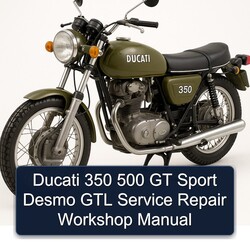
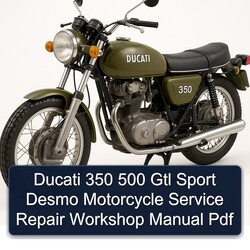
This manual covers the 350, 500 GT Sport Desmo GTL, designed for enthusiasts seeking performance and classic Italian engineering. These motorcycles are renowned for their distinctive Desmodromic valve system, offering a unique riding experience and a testament to commitment to innovation. Whether for spirited rides or display, the GT Sport models embody a rich heritage in motorcycle design and technology.
This manual covers the Ducati 350 GTL Sport Desmo and 500 GTL Sport Desmo, classic Italian sport motorcycles produced primarily during the late 1970s and 1980s. These models are renowned for their distinctive L-twin engine configuration and the signature Desmodromic valve actuation system, a testament to Ducati's engineering prowess and racing heritage. Designed for performance and style, these motorcycles offer a unique riding experience and represent a significant chapter in Ducati's history.
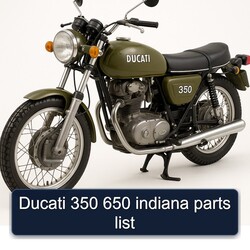
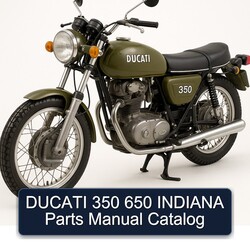
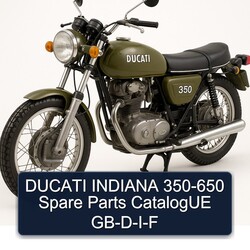
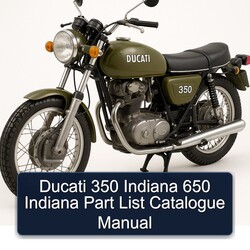
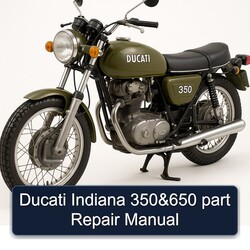
This manual covers the Ducati Indiana, a cruiser-style motorcycle produced in the mid-1980s, available in 350 Indiana and 650 Indiana variants. These models are characterized by their air-cooled, four-stroke, 90° V-twin engines featuring Ducati's signature desmodromic valve actuation. The Indiana series aimed to blend Italian engineering and distinctive styling, offering a unique V-twin experience with a relaxed riding posture, spoked wheels, and comfortable ergonomics. Its development represented Ducati's expansion into the cruiser market, appealing to enthusiasts seeking a stylish and performance-oriented machine.
This comprehensive parts manual provides detailed information for a wide range of vehicle components. It is designed to assist owners and technicians in identifying, ordering, and understanding the assembly of various parts. The manual features manufacturer part numbers and exploded diagrams for every component, allowing for clear visualization of even the smallest parts, which is invaluable for disassembly and reassembly processes. The information contained within is presented in an easy-to-read format, ensuring efficient use.
The 748R is a high-performance Italian sportbike motorcycle, renowned for its race-derived engineering and exceptional handling dynamics. As an evolution of the celebrated 748 model, itself stemming from the legendary 916, the 748R features a liquid-cooled, 90-degree V-twin engine with Desmodromic valve actuation, delivering approximately 103-107 horsepower. Its signature Trellis frame, coupled with adjustable Ohlins suspension and high-performance Brembo brakes, provides a sharp, agile, and communicative riding experience, making it a sought-after machine for enthusiast riders and track day participants. This model represents a commitment to performance and deep roots in racing heritage.
The Ducati 748R is a high-performance sportbike, a homologation special produced approximately between 1999 and 2002, built upon the renowned 748 platform. Originating from Italy, this model embodies Ducati's philosophy of performance and racing heritage, featuring a liquid-cooled, L-twin engine with Desmodromic valve actuation, displacing 748 cc. Its design prioritizes track-focused capabilities, evident in its fully adjustable suspension, powerful Brembo braking system, and lightweight trellis frame. The 748R represents an evolution of Ducati's successful racing lineage, offering exclusivity and a direct connection to the brand's Superbike racing pedigree.
The Ducati 749R, produced from approximately 2004 to 2006, represents a pinnacle of Italian sportbike engineering, specifically developed as a homologation special for racing. Featuring a 748cc V-twin Testastretta Evoluzione engine with desmodromic valve actuation and a Marelli electronic fuel injection system, this model was designed to meet the stringent technical regulations of series like the Superbike World Championship. Known for its sharp handling, potent mid-range torque, and distinctive L-twin character, the 749R offered enhanced performance and premium components over its standard counterparts, catering to a niche market of discerning enthusiasts and racers. Its design emphasizes rider feedback and mechanical control, embodying Ducati's rich heritage in motorsport and commitment to engineering excellence.
The Ducati 749R, a homologation special produced between 2004 and 2006, represents the pinnacle of Ducati's supersport engineering for its era. Developed with direct input from their World Superbike racing program, this track-focused road bike features a potent 748cc Desmodromic L-Twin Testastretta engine, delivering 110 HP and 75 Nm of torque. Its exceptional handling is attributed to premium Öhlins suspension components and a rigid steel trellis frame, complemented by high-performance Brembo radial monobloc brakes for superior stopping power. The aggressive aerodynamic design and racing heritage underscore its position as a highly capable machine, built for discerning riders who value performance and precision.
The Ducati 800SS and 1000SS, part of the Second Generation SS lineup produced primarily from the late 1990s through the early to mid-2000s, represent a significant evolution of Ducati's renowned sportbike heritage. These motorcycles are characterized by their iconic L-twin engines, featuring desmodromic valve actuation, and a rigid tubular steel trellis frame, embodying Ducati's commitment to performance and distinctive Italian engineering. Designed for riders seeking spirited performance coupled with Ducati's signature V-twin character, the 800SS and 1000SS offer an engaging riding experience suitable for both daily use and spirited excursions. Their timeless styling and accessible performance have made them a popular choice for enthusiasts appreciating the brand's legacy.
The Ducati 860 GT and GTS models represent a significant era in the Italian manufacturer's history, introducing their iconic V-twin engine architecture to a broader audience. Produced approximately between 1975 and 1979, these motorcycles were engineered with a distinct focus on performance and Italian design, appealing to enthusiasts and touring riders alike. Characterized by their air-cooled, 90-degree V-twin configuration and the innovative desmodromic valve actuation, these machines offered a unique riding experience for their time, distinguishing themselves from competitors like Moto Guzzi and BMW. Their sporting heritage and advanced chassis dynamics, coupled with a relatively low production volume, have cemented their status as collectible classic motorcycles.
The Ducati 959 Panigale is a high-performance Italian sportbike motorcycle, part of the Panigale series, powered by a 955 cc Superquadro L-twin engine. Known for its sophisticated design and exhilarating riding experience, it competes in the middleweight supersport category with features such as a monocoque frame, advanced electronics suite including traction control and ABS, and a powerful Superquadro engine. This model represents an evolution of performance-focused sportbike heritage, offering a blend of cutting-edge technology and aggressive styling for discerning riders.
The Ducati 996SPS, produced between 1999 and 2001, represents a pinnacle of sportbike engineering from its era. As a homologation special, it was designed with racing regulations in mind, offering enhanced performance and handling characteristics over its standard counterparts. Key features include a potent 996cc Desmodromic L-twin engine, fully adjustable Ohlins suspension, and high-performance Brembo brakes, all housed within Ducati's signature Trellis frame. This model embodies the brand's rich racing heritage and commitment to delivering an engaging and exhilarating riding experience, making it a highly desirable machine for enthusiasts.
The Ducati 996S, produced between 1999 and 2001, represents a pinnacle of Italian sportbike engineering. As a limited-production variant derived from the iconic 916 platform, the 996S was designed with enhanced track capability and street performance in mind, featuring upgraded Öhlins suspension and lighter Marchesini wheels. Its potent 996cc L-twin engine, employing Desmodromic valve actuation and Weber-Marelli fuel injection, delivers approximately 124 horsepower, embodying Ducati's renowned racing heritage and distinctive character. This model stands as a testament to the brand's legacy in Superbike racing, offering a pure, unadulterated riding experience for discerning enthusiasts.
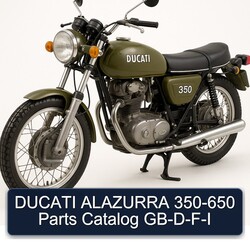
This manual pertains to the Ducati Alazurra, a motorcycle renowned for its sporting heritage and distinctive Italian design. While specific production years are not detailed, the inclusion of carburetor components suggests coverage of models from the late 1980s to the early 2000s. The Alazurra likely features a V-twin engine configuration, possibly with desmodromic valve actuation, and is built upon Ducati's signature trellis frame, contributing to its structural integrity and rider feedback. This parts catalog is an invaluable resource for Ducati owners, independent repair shops, and enthusiasts, enabling cost savings by ensuring the procurement of correct components for maintaining the vehicle in optimal condition.
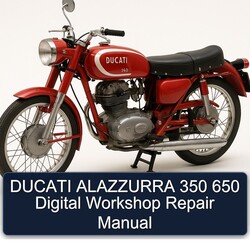
The Ducati Alazzurra, produced in the mid-1980s to early 1990s, represents a significant offering in the sport-touring motorcycle segment. Available in 350cc and 650cc variants, these models are powered by Ducati's characteristic air-cooled, 2-valve per cylinder, Desmodromic L-twin engines, delivering a unique Italian riding experience. Known for their distinctive styling and robust engineering, the Alazzurra line aimed to blend performance with touring comfort, competing effectively against other European and Japanese marques of its era.
This manual provides comprehensive information for the [Vehicle Make] [Vehicle Model], produced between [Start Year] and [End Year]. Designed for [Intended Usage, e.g., everyday commuting, off-road adventures, performance driving], this vehicle is recognized for its [Notable Feature 1, e.g., advanced safety systems, fuel efficiency, robust construction] and [Notable Feature 2, e.g., innovative technology, spacious interior, powerful engine]. Its engineering emphasizes [Engineering Quality, e.g., durability, performance, comfort], ensuring a reliable and enjoyable ownership experience.
This manual covers the [Vehicle Make] [Vehicle Model], a versatile vehicle designed for [Intended Usage]. Produced between [Production Year Start] and [Production Year End], this model is recognized for its [Notable Feature 1] and [Notable Feature 2]. It exemplifies robust engineering, offering exceptional reliability and performance tailored to meet the demands of [Target Audience].
This study guide, developed by Cram101 Textbook Reviews, is designed to supplement the textbook "Foundations of American Education" by Mark Ryan. It serves as an academic study aid, offering a comprehensive approach to learning the material. The digital study material is presented in English and aims to enhance the student's understanding and retention of the subject matter, eliminating the need for extensive manual highlighting of the primary text.
This study guide, published by Cram......, is designed to supplement academic learning for the subject of Gas Turbine Theory. It focuses on providing key facts and outlines derived from the main textbook, offering a concise overview for students. The guide is presented in a study guide format, intended for academic study and educational support.
This study guide, developed by Cram101 Textbook Reviews, is designed to assist students in their academic pursuits related to the textbook "Who am I in the Lives of Children? An Introduction to Early Childhood Education." It focuses on providing key facts and outlines derived directly from the primary textbook, ensuring comprehensive coverage of its core content. The material is pre-organized, eliminating the need for user highlighting and streamlining the study process.
This study guide is designed to assist students in their comprehension of "The Sociology of Education: A Systematic Analysis" by Jeanne H. Ballantine. Developed by Cram101 Textbook Reviews, this English-language resource offers a streamlined approach to mastering the textbook's content. Its primary purpose is to eliminate the need for manual book highlighting by providing structured outlines, key concept highlights, and practice quizzes for effective self-assessment.
This educational ebook serves as a comprehensive selling guide designed for beginner eBay sellers. It offers a step-by-step approach to becoming a savvy eBay seller, providing instructional content in an easy-to-follow format. The material is text-based and written in English, aiming to equip users with the knowledge and skills necessary to commence selling on the eBay platform.
This manual serves as a comprehensive guide to understanding and utilizing the resources available within the field of alternative health. It is designed to assist students and holistic healers by providing essential information on postgraduate training programs, categorizing various therapeutic modalities and their current trends, and identifying valuable networking opportunities. The content aims to offer a foundational understanding of the diverse landscape of alternative health careers and the pathways to professional development.
This manual covers the Ducati 350 GTL and 500 GTL Sport motorcycles, produced from the late 1970s to the early 1980s. These Italian-made V-twin motorcycles are renowned for their sporting heritage and the signature Desmodromic valve actuation system, which ensures precise valve control. The GTL models offered a blend of performance and touring capability, competing in a segment that valued distinctive character and engineering. Their air-cooled engines, typically paired with 5-speed gearboxes and chain drive, provided a unique riding experience characteristic of Ducati's performance-oriented philosophy.
This document provides comprehensive parts catalog information for the Ducati Indiana, a sporting motorcycle originating from Italy. Available in 350cc and 650cc engine variants, the Indiana was designed with a focus on performance and Italian style, appealing to the cruiser and custom market. While production years are not precisely specified, models typically date from the mid-1980s. The Ducati Indiana is known for its L-twin engine, chain drive, and 5-speed transmission, offering a unique riding experience within its segment.
This document provides essential information for the 350 Indiana and 650 Indiana, also known as the Indiana Series. Produced in the mid-1980s, these models represented an entry into the cruiser and custom motorcycle market, offering a distinct departure from their sportbike heritage with more relaxed ergonomics. Known for their air-cooled V-twin engines, featuring the signature desmodromic valve actuation, these motorcycles embody a commitment to performance and engineering. The Indiana Series is characterized by its steel trellis frame and often wire-spoke wheels, contributing to its unique styling and riding experience.
This manual covers the Indiana, a motorcycle produced in the mid-to-late 1980s. Available in 350cc and 650cc engine displacements, the Indiana represented a foray into the cruiser market, offering a distinct departure from traditional sportbike focus. It is characterized by Italian engineering, known for performance and unique L-twin engine architecture, featuring Desmodromic valve actuation. This manual is designed for enthusiasts and owners aiming to maintain and understand their vintage motorcycle.
This Technical Education Manual covers Maytag Epic dryers, specifically models MED / GD 9700S and MED / GD 9600S. These appliances are engineered for efficient laundry care, utilizing a dual power source system that combines gas for heating and electric power for the motor and controls. This design ensures robust performance and reliability in handling various fabric types. The Maytag Epic series is known for its advanced features and durable construction, making it a dependable choice for household needs.
This manual provides comprehensive documentation for the Ducati 350 Mototrans, a classic motorcycle produced during the 1970s and early 1980s. Mototrans, a Spanish manufacturer, built these bikes utilizing Ducati designs, offering a unique blend of Italian engineering adapted for the Spanish market. The 350 Mototrans typically features an air-cooled, 4-stroke V-twin engine of approximately 350cc, producing around 20-25 horsepower and 25-30 Nm of torque. Its robust construction and classic V-twin configuration make it a sought-after model for enthusiasts and collectors.
This document serves as a comprehensive guide for the TOEFL iBT® test, featuring five authentic retired test forms. Developed by ETS, the creators of the test, these forms provide a realistic experience of the reading, listening, speaking, and writing sections. Each complete test form includes an answer key, offering valuable insights for preparation and practice.
This manual covers the Ducati 350 motorcycle, a model from the renowned Italian manufacturer celebrated for its performance and engineering. While specific production years are not detailed, the 350 designation typically refers to smaller displacement models designed for broad market appeal, sharing the core design and technological philosophies of larger Ducati bikes. These motorcycles are known for their distinctive style and robust construction, embodying Ducati's heritage of innovation and quality.
This electronic owner's manual provides comprehensive information for your Motor Bike. It is designed to help you understand and operate your vehicle's driving controls and convenience features. By familiarizing yourself with this manual, you can enhance your riding experience and ensure the proper enjoyment of your motor bike.
This manual provides comprehensive guidance for the [Vehicle Make] [Vehicle Model], produced between [Production Year Start] and [Production Year End]. Designed for [Intended Usage, e.g., everyday commuting, off-road adventures, performance driving], this vehicle is recognized for its [Notable Feature 1, e.g., advanced safety systems, fuel efficiency, powerful engine] and [Notable Feature 2, e.g., spacious interior, innovative technology]. Its engineering reflects a commitment to quality and reliability, offering a unique driving experience built on [Unique Selling Point, e.g., robust construction, cutting-edge design, exceptional performance].
This guide, published by Palgrave Macmillan, is an Academic Book designed for teaching religious literacy and spiritual diversity in higher education. It provides resources, initiatives, and sample curricula to equip educators and foster understanding. The content describes conceptual foundations, includes a facilitator guide, and offers assessment tools, making it an invaluable resource for curriculum development and pedagogical approaches in higher education.
The Ducati ST3-S ABS is a sport-touring motorcycle designed to blend performance with long-distance comfort. Featuring Ducati's renowned L-twin engine, a trellis frame, and integrated ABS, this model offers a dynamic riding experience. Its engineering emphasizes Ducati's heritage of performance and distinctive Italian design, making it a capable machine for both spirited riding and extended journeys. The ST3-S ABS was produced within the ST3 range from 2004 to 2007, with the 'S' variant incorporating enhanced features like adjustable suspension.
This manual covers the [Vehicle Make] [Vehicle Model], a versatile and reliable vehicle designed for [Intended Usage]. Produced between [Start Year] and [End Year], this model is recognized for its [Notable Feature 1] and [Notable Feature 2], embodying [Vehicle Make]'s commitment to engineering excellence and driver satisfaction. Its robust construction and advanced technology ensure a dependable and enjoyable ownership experience for various driving needs.
This manual covers the [Make] [Model], produced between [Year Range]. This vehicle is engineered for [Intended Usage], offering a blend of [Notable Features]. Its design prioritizes [Engineering Quality] and [Reliability], making it a distinguished choice in its class.
This document, the National Health Education Standards: Achieving Excellence, Second Edition, is a comprehensive standards document developed by an expert panel of health education professionals and supported by the American Cancer Society. It serves as a reference document, intended to establish and promote high-quality health education across all educational settings. The document is the result of a rigorous two-year review and revision process, reflecting a commitment to achieving excellence in the field.
This manual covers the [Make] [Model] vehicle, produced between [Year Start] and [Year End]. Renowned for its [Notable Feature 1] and [Notable Feature 2], this vehicle offers exceptional [Engineering Quality] and proven [Reliability]. Designed for [Intended Usage], it represents a significant advancement in automotive engineering, combining performance with practicality. Its unique selling points, such as [Unique Selling Point], make it a distinguished choice for discerning drivers.
This manual covers the principles and practices related to understanding the psychophysiology of trauma and its manifestations. It aims to illuminate the physiological impact of trauma, providing valuable insights for both clinicians and their clients. The content focuses on the profound effects trauma can have on an individual's well-being and offers guidance on addressing these manifestations.
This manual covers the [Vehicle Make] [Vehicle Model], produced between [Start Year] and [End Year]. Designed for [Intended Usage, e.g., family transportation, off-road adventure, performance driving], this vehicle is recognized for its [Notable Feature 1] and [Notable Feature 2]. Its engineering emphasizes [Engineering Quality, e.g., robust construction, fuel efficiency, advanced technology], ensuring a [Reliability Aspect, e.g., dependable performance, long lifespan] for its owners. This model represents a significant achievement in [Unique Selling Point, e.g., automotive innovation, driver comfort, environmental consciousness].
This manual pertains to the Book model, published in 2010. It offers a comprehensive historical analysis of post-World War II Japan, specifically focusing on the period between 1945 and 1952. The work delves into the profound societal transformation and regime change that occurred during the American occupation, examining the intricate interplay between education and politics. It highlights the significant shift in the Japanese mindset from a wartime mentality to one of peace, driven by American influence. The analysis is presented in English and comprises 316 pages, bound in a hardcover format.