The C Models category encompasses a range of premium scooters designed for urban mobility and touring. These vehicles are characterized by their advanced engineering, comfortable riding positions, and robust performance, offering a sophisticated alternative to traditional motorcycles. They are ideal for daily commuting, longer journeys, and recreational riding, providing a blend of practicality and dynamic capability. The C Models represent a significant segment within the scooter market, emphasizing innovation and rider experience.
Documentation for C Models typically includes comprehensive owner's manuals detailing operation, features, and basic maintenance. Detailed service and repair manuals provide step-by-step instructions for diagnostics, component replacement, and system...
The C Models category encompasses a range of premium scooters designed for urban mobility and touring. These vehicles are characterized by their advanced engineering, comfortable riding positions, and robust performance, offering a sophisticated alternative to traditional motorcycles. They are ideal for daily commuting, longer journeys, and recreational riding, providing a blend of practicality and dynamic capability. The C Models represent a significant segment within the scooter market, emphasizing innovation and rider experience.
Documentation for C Models typically includes comprehensive owner's manuals detailing operation, features, and basic maintenance. Detailed service and repair manuals provide step-by-step instructions for diagnostics, component replacement, and system adjustments, essential for qualified technicians. Technical specification sheets offer precise data on performance, dimensions, and electrical systems. Troubleshooting guides are also available to assist users and mechanics in identifying and resolving common issues, ensuring optimal performance and longevity of the vehicles.
The BMW C1, produced from 1999 onwards, represents a unique approach to urban mobility, blending the convenience of a scooter with enhanced safety features. This model is distinguished by its integrated safety cage, car-like windshield, and roof, offering a protected riding experience unlike conventional two-wheeled vehicles. Engineered by BMW Motorrad, the C1 was designed to provide a safer alternative for city commuting, featuring a 125cc liquid-cooled engine and an automatic CVT transmission. Its innovative design and focus on rider protection set it apart in the premium urban mobility segment.
The BMW C1, produced from 2000 to 2003, represents a unique fusion of scooter agility and automotive safety. Available with 125cc and 200cc engine variants, this premium scooter was engineered with BMW Motorrad's philosophy of applying automotive standards to two-wheeled transport. Its most distinctive feature is the integrated safety cage, complete with a seatbelt and crumple zones, offering unparalleled protection for riders. This innovative design, along with an enclosed cockpit and windshield, provided exceptional weather protection and a sense of security, setting the C1 apart in the market as a forward-thinking solution for urban commuters seeking enhanced safety.
The BMW C1, introduced in 2000, represents a unique approach to urban mobility, merging the agility of a scooter with enhanced safety features. Designed as a safer alternative to traditional scooters, it incorporates an integrated safety cell, often referred to as a roll cage, and a car-like seat with a seatbelt, offering unprecedented occupant protection for its class. This innovative model was available with 125cc and 200cc engine variants, chassis codes C1-125 and C1-200 respectively, and featured a distinctive design philosophy focused on stability and weather protection. Its engineering quality and reliability are hallmarks of the brand, aiming to provide a secure and comfortable commuting experience.
The BMW C1 and C1 200 represent a unique approach to urban mobility, blending the agility of a scooter with the safety features typically found in automobiles. Produced from 2000 onwards, these models were designed to offer a protected and secure riding experience for city commuters. Key innovations included an integrated safety cell, a three-point seatbelt, and rollover protection, setting them apart from conventional two-wheeled vehicles. With their distinctive enclosed design, these vehicles aimed to provide a practical and safe solution for navigating urban environments, combining the convenience of a scooter with enhanced rider protection against the elements and potential accidents.
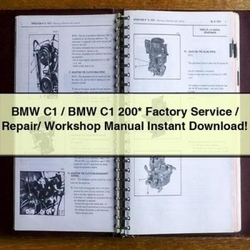
The BMW C1 and C1 200, produced from 2000 to 2003, represent a unique approach to urban mobility, offering an enclosed cockpit with an integrated safety cage and seatbelt for enhanced rider protection and weather resistance. These models, built on a legacy of engineering quality, aimed to provide a secure and comfortable alternative to traditional scooters and motorcycles, particularly for city commuting. The C1 featured a four-stroke, single-cylinder engine with a displacement of 176 cc, while the C1 200 offered increased power with its 198 cc engine, both utilizing electronic fuel injection and liquid cooling.
The BMW C1 200, produced in 2000, represents a unique approach to urban mobility, blending the agility of a scooter with enhanced safety features. This compact, city-focused personal mobility vehicle is engineered with an innovative safety cell, providing a level of occupant protection uncommon in its class. Designed to offer car-like safety alongside motorcycle maneuverability, the C1 200 features a distinctive integrated safety cage and a 3-point safety belt, aiming to make two-wheeled transport more secure and accessible. Its design philosophy prioritizes rider safety and weather protection, setting it apart from conventional scooters.
Welcome to the comprehensive service and repair manual for the 2000 Motorcycle Scooter. This innovative vehicle represented a unique approach to urban mobility, blending the agility of a scooter with the enhanced safety and weather protection typically found in enclosed vehicles. Its distinctive enclosed cockpit, roll cage structure, and integral windshield offered riders a significantly more secure and comfortable experience compared to traditional motorcycles, making it an ideal choice for urban commuters seeking an advanced personal transport solution.
The BMW C1 2000 is a distinctive scooter model from the early 2000s, recognized for its innovative approach to urban mobility. This scooter integrates a unique safety cell, akin to a roll cage, and an enclosed cockpit design, offering enhanced rider protection and weather resistance, setting it apart from conventional scooters. Built upon BMW's legacy of engineering excellence, the C1 2000 was designed to provide a premium, secure, and comfortable commuting experience, making it a notable entry in the scooter market.
The BMW C1, produced between 2000 and 2003, represents a unique segment in personal urban mobility. Available in C1 125 and C1 200 variants, this scooter is distinguished by its innovative safety cage, offering a level of protection and weather resistance uncommon in its class. Engineered by BMW's renowned Motorrad division, the C1 combines the practicality of a scooter with advanced safety features like a three-point safety harness and an optional airbag, aiming to provide urban commuters with a secure and comfortable alternative to traditional two-wheeled transport. Its design prioritizes rider safety and convenience, setting it apart from conventional scooters and motorcycles.
The BMW C1, produced between 2000 and 2003, represents a unique approach to urban mobility, offering scooter-like convenience with an emphasis on enhanced rider safety through its distinctive integrated safety cage. Available in C1 125 and C1 200 variants, these scooters were engineered with a focus on innovative design and robust construction, setting them apart in the market. Their advanced features, including optional seatbelts and a roll-over protective structure, aimed to provide a more secure commuting experience, reflecting BMW's commitment to quality and pioneering solutions in personal transportation.
The BMW C1, produced between 2000 and 2003, represents a unique approach to urban mobility, merging scooter convenience with automotive-inspired safety. This model, available in C1 125 and C1 200 variants, features an innovative integrated safety cage with roll-over protection and a three-point seatbelt, setting it apart from conventional scooters. Its design prioritized rider safety and comfort, offering a distinctive solution for commuters seeking enhanced protection in city environments. The C1 is powered by a liquid-cooled, fuel-injected single-cylinder engine, with the 125cc version producing approximately 15 HP and the 200cc version around 18 HP, both coupled with a CVT automatic transmission.
The BMW C1, produced from 2000 to 2003, represents a unique approach to urban mobility, offering the agility of a scooter with enhanced safety features typically found in automobiles. Available in C1 125 and C1 200 variants, this premium vehicle was engineered to provide commuters with a more secure and weather-protected riding experience. Its standout feature is the integrated safety cell, often referred to as a roll cage, complemented by a three-point seatbelt and optional Anti-lock Braking System (ABS). This focus on safety, combined with its distinctive design and reputation for engineering quality, positioned the C1 as an innovative solution for urban transport.
The BMW C1 125, produced between 2000 and 2003, represents a unique approach to urban mobility. This scooter, model code C1 125 (E1) and chassis code E1, was engineered with a distinct focus on rider safety, incorporating an integrated safety cage and a three-point seatbelt system, setting it apart from conventional scooters. Its design philosophy blended motorcycle-like stability with scooter convenience, targeting commuters seeking a secure and practical transport solution. The C1 125 is powered by a liquid-cooled, single-cylinder 125cc four-stroke engine, delivering approximately 15 PS and capable of speeds around 100-110 km/h. Its robust construction and innovative safety features, including standard ABS, underscore BMW's commitment to engineering excellence.
The BMW C1 125, produced between 2000 and 2003, represents a distinctive approach to urban mobility, integrating a unique safety cell and roll-over protection into its enclosed scooter design. This innovative vehicle aimed to provide enhanced rider safety and weather protection, setting it apart from conventional scooters and small motorcycles of its era. Powered by a 125 cc four-stroke single-cylinder engine, it offered a practical solution for city commuting, combining BMW's engineering heritage with a forward-thinking concept.
This manual covers the BMW C1, a unique vehicle produced between 2000 and 2003, available in 175cc and 200cc variants. The C1 is distinguished by its innovative design, which blends the agility of a scooter with the safety features of a car, including an integrated safety cell, crumple zones, and seatbelts. This model was engineered for urban commuters seeking enhanced protection and weather resistance, offering a practical and secure alternative to traditional two-wheeled transport. Its distinctive enclosed bodywork and optional airbags set it apart in its niche market.
This manual covers the BMW C1 200, produced between 2000 and 2003. The C1 200 is distinguished by its unique safety cage and seatbelt system, offering occupant protection comparable to automotive standards. Engineered for reliability, this model features a single-cylinder, 199 cc engine with fuel injection and an automatic Continuously Variable Transmission, designed for urban mobility and everyday use.
The BMW C1 200, produced between 2000 and 2003, represents a unique approach to urban mobility. This microcar-segment vehicle offered enclosed weather protection and a distinctive safety cell with a roll-over protection structure, a significant selling point that set it apart from conventional scooters and maxi-scooters of its time. Designed for urban commuters seeking a practical and secure alternative, the C1 200 combined car-like controls with the agility of a scooter, featuring a four-stroke, single-cylinder engine with electronic fuel injection and an automatic Continuously Variable Transmission (CVT) for optimized performance and efficiency.
This service repair manual covers the BMW C1 and C1 200, produced between 2000 and 2003. These unique urban mobility vehicles, often described as scooter-car hybrids, were engineered by BMW Motorrad to offer enhanced safety and weather protection for city commuters. They distinguished themselves with a car-like enclosed cockpit, an integrated safety cage structure, and a three-point seatbelt system, setting them apart from conventional scooters and motorcycles. The C1 and C1 200 provided a compact footprint for maneuverability while incorporating innovative safety features designed to exceed the standards of their class, making them a pioneering solution for urban transportation.
The BMW C1 and C1 200, produced between 2000 and 2003, represent a unique approach to urban mobility, blending the agility of a scooter with car-like safety features. These models are distinguished by their innovative safety cell, offering rollover protection and a level of rider security previously unseen in the scooter market. Their enclosed cockpit provides superior weather protection and comfort, setting them apart from conventional scooters and small motorcycles. Engineered with BMW's renowned commitment to quality and reliability, the C1 and C1 200 were designed to offer a premium, safe, and practical solution for city commuting.
The BMW C1 200, produced between 2000 and 2003, represents a unique approach to personal mobility, blending scooter convenience with enhanced safety features. This maxi-scooter segment vehicle is distinguished by its innovative safety cage, offering a level of protection uncommon in its class, alongside a motorcycle-style riding position and a robust 199 cc liquid-cooled engine. Designed for commuters seeking a secure and comfortable ride, the C1 200 embodies BMW Motorrad's commitment to engineering excellence and rider safety, setting it apart from traditional scooters and motorcycles.
The BMW C1 Scooter, produced between 2000 and 2003, represents a distinctive approach to urban mobility. This model, identified by chassis code C1 (E26), was engineered with a premium commuter focus, integrating a unique safety cell for enhanced rider protection, a feature rarely seen in scooters. Its design philosophy prioritized rider safety and comfort, offering car-like ergonomics and a stylish, reliable alternative for city travel. Built in Germany, the C1 aimed to blend the agility of a scooter with a higher level of occupant safety, setting it apart from competitors in the premium scooter segment.
The BMW C1, produced between 2000 and 2003, represents a unique approach to urban mobility, blending the agility of a scooter with enhanced safety features. This innovative vehicle is characterized by its enclosed cabin structure, offering a degree of weather protection and a built-in safety cell designed to provide car-like protection for the rider. With its distinctive design philosophy, the C1 aimed to address commuting concerns by integrating motorcycle-like maneuverability with advanced safety systems, setting it apart in its segment.
The BMW C1, produced in 2001, represents a unique approach to urban mobility, distinguished by its integral safety cage designed to offer enhanced rider protection and a more enclosed commuting experience. Available with 125cc and 200cc liquid-cooled, four-stroke engine options, the C1 blends the agility of a scooter with car-like safety features, including a seatbelt and a reinforced structure. This innovative design aimed to provide a secure and weather-resistant alternative to traditional two-wheeled transportation, positioning it as a forward-thinking solution for city travel.
The BMW C1-200, produced from 2000 to 2005, represents a unique approach to urban mobility, blending the agility of a scooter with enhanced safety features. This innovative vehicle, often described as a maxi-scooter or urban mobility concept, offered a car-like safety cell, a three-point seatbelt, and an enclosed cockpit, providing weather protection and a roll-over structure. Designed for urban commuters seeking a safer and more comfortable alternative to traditional scooters, the C1-200 featured a 199 cc four-stroke single-cylinder engine with electronic fuel injection, delivering reliable performance for city travel. Its distinctive design, including the integrated safety cage and aerodynamic windscreen, set it apart in the market, highlighting a commitment to pioneering new concepts in personal transportation.
This manual covers the C1 and C1 200, produced around 2001. These compact sports roadsters, built on the Z3 platform, are recognized for their distinctive styling and performance-oriented design, aiming to provide an engaging driving experience. The C1 features a 1.9-liter inline 4-cylinder engine, while the C1 200 offers a 2.0-liter inline 6-cylinder engine, both delivering a spirited performance characteristic of engineering.
This service repair manual covers the 2001 BMW C1 and C1-200 models. These vehicles are engineered for reliable performance and offer a unique blend of functionality and rider protection. This manual provides comprehensive information to ensure your vehicle is maintained to the highest standards, reflecting the quality and innovation characteristic of BMW's design.
The BMW C1, produced between 2000 and 2003, represents a unique approach to urban mobility. This specialized vehicle combined the agility of a scooter with enhanced safety features typically found in cars, such as an enclosed cockpit, an integrated safety cage for rollover protection, and a four-point seatbelt system. Its innovative design and car-like controls offered a distinctive commuting solution for city environments, distinguishing it from conventional two-wheeled transport.
The BMW C1, produced in 2002, represents a unique approach to urban personal mobility, blending the agility of a scooter with enhanced safety features. This model, available with 125cc and 200cc engine options, was engineered with a distinctive safety cage structure, offering integrated roll-over protection and an automotive-style seating position with an integrated seatbelt. Its innovative design was intended to provide a more secure and comfortable riding experience for European commuters. Renowned for its engineering excellence, the C1 was introduced to address safety concerns prevalent in the scooter market, setting it apart from conventional maxi-scooters of its era through its focus on rider protection and unique form factor.
The BMW C1, produced from 2000 to 2003, represents a unique approach to urban mobility, offering an innovative blend of scooter agility and enhanced safety. This distinctive vehicle, available with 125cc and 200cc engine variants, features an integral safety cage, an automotive-style seatbelt, and weather protection, setting it apart in the personal commuter market. Its engineering quality and reliability are hallmarks of BMW's heritage, providing a secure and comfortable riding experience for city travel.
The BMW C1, available in 125 and 200 variants, represents a unique approach to urban mobility, first introduced in 2000 and produced until 2004. This 2003 model year exemplifies BMW's engineering prowess by offering a premium scooter experience that prioritizes rider safety through its distinctive integrated steel safety cage and a four-point seatbelt system, bridging the gap between traditional scooters and micro-cars. Its design, often praised for innovation, provides enhanced protection and a more enclosed riding experience, setting it apart in its market segment.
The BMW C1 200, produced in 2003, represents a unique innovation in urban mobility, blending the agility of a scooter with enhanced safety features. This model is distinguished by its integrated safety cage, complete with crumple zones and a three-point seat belt, offering a level of occupant protection previously unseen in its class. Its enclosed cockpit and windscreen also provide superior weather protection for urban commuters. Powered by a four-stroke single-cylinder engine with approximately 176cc displacement and an automatic CVT transmission, the C1 200 offers a balance of performance and practicality for city travel, distinguishing itself from conventional scooters and smaller motorcycles.
The BMW C1, produced in 2003, represents a distinctive approach to urban personal mobility. This unique vehicle, often categorized as a scooter or microcar, was engineered with a strong emphasis on rider safety, integrating features such as a roll cage and optional airbags, setting it apart from conventional two-wheeled transport. Designed for efficient city commuting, the C1 offered a protected environment, blending the agility of a scooter with the security typically found in smaller automobiles. Its innovative safety cell and robust construction reflect BMW's commitment to engineering excellence and rider protection in a compact urban package.
The BMW C600 Sport, produced for the 2012 and 2013 model years, represents BMW Motorrad's foray into the premium maxi-scooter segment. Developed in Germany, this scooter combines BMW's renowned engineering quality and sporty handling characteristics with practical urban commuting and touring capabilities. Notable features include an aluminum composite frame, optional ABS and Automatic Stability Control (ASC), and available technologies such as a Head-Up Display, heated grips, and a heated seat, positioning it as a sophisticated and performance-oriented choice for riders.
This manual covers the maxi-scooter, produced for the 2012 and 2013 model years. Known internally by its chassis code K18, this model represents a foray into the sport-oriented urban mobility segment, designed for agility and performance. It features an inline 2-cylinder, 4-stroke, liquid-cooled engine with a displacement of 647 cc, producing approximately 60 hp and 49 lb-ft of torque, managed by an Electronic Fuel Injection (EFI) system and a Continuously Variable Transmission (CVT). The C 600 Sport is characterized by its sophisticated engineering, offering a blend of practical commuting capabilities with a sporty riding experience, setting it apart in its class.
The BMW C650GT, a premium maxi-scooter produced for the 2012 and 2013 model years, is engineered for discerning riders seeking comfort, performance, and utility for both touring and commuting. This model, internally designated as K19, offers powerful performance with its 647 cc inline two-cylinder engine, delivering approximately 60 horsepower and 70 Nm of torque. Notable features include its comfortable ergonomics, extensive storage capacity, and advanced technology such as standard ABS. Building on a heritage of engineering excellence, the C650GT stands out in the competitive maxi-scooter segment for its blend of luxury and practicality, making it an ideal choice for long-distance rides and urban navigation.
The C 650 GT, produced for the 2012 and 2013 model years, is a premium maxi-scooter engineered for comfort-oriented touring. This model, internally designated K19, showcases a commitment to quality and rider experience, featuring a parallel-twin, four-stroke 647 cc engine producing 60 hp and 70 Nm of torque. Its design prioritizes rider comfort and practicality, making it a strong contender in the maxi-scooter market, known for its advanced features and robust build.
The BMW C1, produced from 2000 to 2003, represented a unique approach to urban mobility, often described as a micro-car or enclosed scooter. It was engineered with a focus on practicality, maneuverability, and safety, offering a weather-protected riding experience with car-like safety features, including a roll cage and seatbelt. The C1-200 variant, powered by a 168.9 cc single-cylinder, liquid-cooled engine, delivered approximately 15 horsepower and 17 Nm of torque, featuring electronic fuel injection and a continuously variable transmission. Its innovative design, which included an enclosed cockpit and a robust safety cell, set it apart from traditional scooters and small vehicles, earning it design accolades and favorable safety test results.
The BMW C1 and C1 200, produced between 2000 and 2003, represent a unique approach to urban mobility, blending the agility of a scooter with enhanced safety features. These models are characterized by their innovative integrated safety cage, a substantial polycarbonate windscreen, and a three or four-point seatbelt system, offering a level of protection unprecedented in the scooter market. Powered by either a 125cc or a 168cc single-cylinder, four-stroke, liquid-cooled engine, and equipped with a Continuously Variable Transmission (CVT), the C1 series was designed for urban commuting, prioritizing rider safety and weather protection. Its distinct enclosed cockpit and robust construction set it apart from conventional two-wheeled vehicles, making it a standout in its segment.
The BMW C1 200 represents a pioneering approach to urban mobility, merging the agility of a scooter with enhanced safety features. Introduced in the early 2000s, this unique vehicle is distinguished by its integrated safety cell, complete with a seatbelt, offering a level of protection significantly beyond traditional two-wheeled transport. Designed for urban commuters, the C1 200 features a single-cylinder, four-stroke, liquid-cooled engine of approximately 200cc, delivering power through a Continuously Variable Transmission (CVT) for smooth acceleration. Its innovative design, including an optional convertible roof for weather protection and agile handling, positioned it as a distinctive choice in the market, aiming to provide a secure and comfortable commuting experience.
The BMW C1 200 is a distinctive maxi-scooter produced between 2000 and 2003, engineered for urban mobility with a strong emphasis on rider safety. This model stands out with its integrated safety cage and seatbelt system, a groundbreaking feature that offered a level of protection uncommon in the scooter market. Its design prioritizes rider comfort and weather protection through a comfortable seating position and an enclosed fairing. The C1 200, built upon the BMW C1 Platform chassis, represents BMW's commitment to innovation and rider well-being, offering a unique alternative to conventional scooters and competing in a segment that included models from Yamaha, Suzuki, and Honda.
The C1 and C1 200 represent a unique approach to urban mobility, introduced around the year 2000. These models offer a distinctive blend of scooter and motorcycle characteristics, featuring an enclosed safety cell, automotive-style steering, and a compact design ideal for city environments. Engineered by a company known for its commitment to quality and innovation, the C1 models were designed to provide a safer and more comfortable commuting experience compared to traditional two-wheeled vehicles. Available with engine displacements of 125cc and 200cc, they offered around 15 to 18 horsepower, powered by single-cylinder, four-stroke engines, typically featuring fuel injection and an automatic CVT transmission for smooth operation.
The BMW C1, produced from 2000 to 2003, is a distinctive urban mobility scooter renowned for its innovative safety features, including an integrated safety cage and a three-point seatbelt system. This design offered a level of rider protection previously unseen in the scooter segment, positioning it as a secure alternative for city commuting. Its unique construction, featuring a large windscreen for weather protection and ample under-seat storage, contributed to its practical appeal. The C1 aimed to provide a stable and secure riding experience, setting it apart from conventional scooters and smaller motorcycles of its time.
The BMW C1 200, produced between 2001 and 2004 under the chassis code E26, represents a unique approach to urban mobility. This motor scooter was engineered with a distinct focus on rider safety and comfort, featuring an integrated roll cage and seatbelt system, along with a partial enclosure for enhanced weather protection. Its innovative design aimed to combine the agility of a scooter with the security of a car, setting it apart in the market. Powered by a liquid-cooled, single-cylinder engine with electronic fuel injection, the C1 200 offered reliable performance for daily commuting.
The BMW C1, specifically the C1 200 model (chassis code R12), represents a unique approach to urban mobility, produced in Germany between 2000 and 2003. This innovative vehicle combines the agility and efficiency of a scooter with car-like safety features, including an integrated safety cell, a 4-point seatbelt, and optional airbags, setting it apart in the niche urban commuter segment. Its design prioritizes occupant protection through features like crumple zones and a robust windshield, making it a distinctive option for city travel. The C1 200 is powered by a 176.1 cc single-cylinder, four-stroke engine with electronic fuel injection, delivering approximately 15 horsepower and 15 Nm of torque, paired with an automatic continuously variable transmission (CVT).
The BMW C1-C1 200, produced between 2001 and 2004, represents a unique approach to urban mobility, combining the agility of a scooter with enhanced safety features. This model is distinguished by its integrated safety cage and rollover protection, setting it apart in its class. Powered by a 200cc single-cylinder, four-stroke engine, the C1-C1 200 was engineered for reliable performance and efficient urban commuting. Its innovative design prioritizes occupant safety and comfort, making it a distinctive choice for riders seeking a secure and practical mode of transport.
This manual covers the scooter, also known as the scooter. This innovative model, part of a motorcycle heritage, offered a unique enclosed design for urban mobility. The first generation of this scooter was designed with a focus on engineering excellence and rider safety.
The BMW C1, specifically the C1-200 variant, represents a unique approach to urban mobility, produced between 2000 and 2003. This innovative vehicle blended the agility of a scooter with the safety features of a car, most notably its integrated steel safety cage and three-point seatbelt system. Designed for European markets, the C1 offered a distinct alternative for city commuting, powered by a liquid-cooled, four-stroke, single-cylinder gasoline engine available in 125cc and 176cc displacements. The C1-200 variant typically produced around 18 horsepower, delivered through an automatic Continuously Variable Transmission (CVT) with belt drive. Its engineering focused on safety and practicality, making it a pioneering vehicle in its niche.
The BMW C1 / C1-200 represents a unique segment in the maxi-scooter market, produced between 2000 and 2004. This model distinguished itself with an innovative enclosed cockpit and an integrated roll cage, offering a level of safety previously unseen in scooter design, aiming to provide car-like protection for urban commuters. Engineered by BMW Motorrad, the C1 and C1-200 models were built with a focus on rider safety, comfort, and premium features, blending the practicality of a scooter with the performance characteristics of a motorcycle. Available with displacements of 125cc and 176cc, these scooters were designed for commuters seeking a secure and comfortable alternative for city travel.
The BMW C1 and C1-200 represent a unique approach to urban transportation, produced between 2000 and 2003. These enclosed, scooter-like vehicles were engineered with a strong emphasis on safety, featuring an integral safety cage, a car-like seating position, and a unique rollover protection system. The C1-200 model offered enhanced power, delivering approximately 18 hp from its liquid-cooled, single-cylinder, four-stroke engine. This innovative design aimed to provide a secure and comfortable alternative for single-person urban mobility, occupying a distinct niche between traditional scooters and micro-cars.
This manual covers the BMW C1 C200, a unique urban mobility solution produced around the early 2000s. Renowned for its distinctive enclosed design, the C1 series offered a blend of scooter agility with car-like safety features, including a safety cell and integrated seatbelt system. The C200 variant is equipped with an approximate 200cc engine, designed for efficient and distinctive city commuting. BMW's heritage of engineering quality is evident in the C1's innovative approach to personal transportation, setting it apart from conventional scooters and compact vehicles of its era.
The BMW C1 200, chassis code K52, is a premium maxi-scooter produced in Germany during the early 2000s. This innovative model, designed with a unique safety cage and automotive-style seating, aimed to redefine urban commuting by prioritizing rider safety and comfort. Its distinctive design, featuring a roll-over protection structure and integrated seatbelt, set it apart in the European market. Powered by a liquid-cooled, 176cc four-stroke single-cylinder engine with electronic fuel injection, the C1 200 offers approximately 15 hp and is equipped with an automatic CVT transmission. Notable features include under-seat storage and optional ABS, making it a practical and secure choice for urban riders.
The BMW C1, produced from 2007 to 2013 under the E70 chassis code, represents BMW's entry into the full-size luxury Sport Activity Vehicle segment. This model seamlessly blends the practicality and elevated stance of an SUV with BMW's renowned driving dynamics and engineering prowess. It was offered with a range of powerful V8 gasoline engines, including naturally aspirated and twin-turbocharged variants, as well as robust inline-6 and V8 turbodiesel options, all paired with the intelligent xDrive all-wheel-drive system. Notable features include advanced chassis tuning, optional adaptive suspension, and sophisticated electronic control systems, all designed to deliver a superior driving experience.
The BMW C1, produced between 2001 and 2004, represents a unique and innovative approach to urban mobility. Available in 125cc and 200cc variants, this motorcycle repair manual covers a vehicle engineered with a distinctive integrated safety cage, offering a level of protection and weather resistance far beyond traditional scooters. Its design philosophy aimed to bridge the gap between motorcycles and cars, incorporating features such as a seatbelt and optional air conditioning, setting it apart in the market. The C1's robust construction and forward-thinking safety features underscore BMW's commitment to engineering excellence and rider well-being.