



Ajs 14

The AJS 14 is a specific model of motorcycle, representing a particular iteration within the AJS brand's historical lineup. These machines were typically designed for road use, offering a balance of performance and practicality for their era. Key characteristics often included their engine displacement, frame design, and suspension systems, all contributing to their riding experience and intended purpose as reliable personal transportation or for recreational riding. Understanding the AJS 14 involves appreciating its place in motorcycle history and its engineering specific to that model.
Documentation for the AJS 14 model is crucial for owners and mechanics. This includes detailed workshop manuals...
$16.99
This manual covers a range of motorcycle models produced between 1945 and 1957. A respected British manufacturer is known for its sporting and reliable machines, particularly from the post-war era. This period saw significant innovation and recovery for the company, with models like the G50 and the iconic Porcupine racer emerging. These motorcycles, powered by single-cylinder and parallel-twin engines of various displacements, represent a key era in British motorcycle history, and this manual provides essential information for their upkeep and restoration.
$16.99
This manual provides comprehensive service, maintenance, and troubleshooting information for all models produced in 1957. A prominent British motorcycle manufacturer with a strong racing pedigree, produced robust road bikes during this era. The 1957 models represent a period of refinement in British motorcycle design, bridging pre-war technology with more modern advancements. This workshop service repair manual is an essential technical resource for owners and mechanics, enabling proper maintenance and repair to preserve the value and usability of these classic machines.
$16.99
This workshop service repair manual covers the AJS G80, G80S, G80CS, and TCS models produced between 1957 and 1966. These classic British motorcycles, manufactured by Associated Motorcycles Group, represent a significant era in motorcycle development, known for their robustness and performance. The G80 designation typically refers to a 500cc model, with variants offering different specifications and capabilities for road use and clubman racing. This manual is designed to provide comprehensive information for maintaining and repairing these iconic machines.
$16.99
This manual covers the AJS G80 models produced between 1957 and 1966. As a product of a notable British manufacturer, the AJS G80 was a robust and well-regarded motorcycle, often favored for its performance and durability in touring and general riding applications. These single-cylinder, four-stroke, overhead valve motorcycles were known for their torquey engines and were manufactured in the United Kingdom. The G80 line represented a commitment to producing reliable, larger-displacement single-cylinder machines for its era.
$16.99
This manual covers AJS motorcycles from 1958, a period when AJS was a respected British manufacturer known for its performance and reliability. Associated with the Associated Motorcycles group, AJS bikes competed with other prominent marques of the era. This workshop service and repair manual provides essential technical information for maintaining and repairing these classic machines, making it a valuable resource for collectors and restorers. The manual details various common AJS engine configurations from 1958, including single-cylinder 350cc and 500cc models, as well as parallel-twin 350cc and 500cc variants.
$16.99
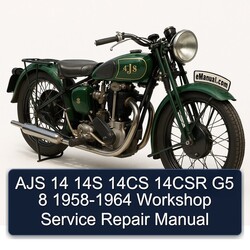
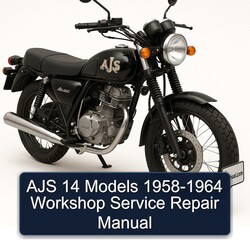
This manual covers the AJS 14, 14S, 14CS, 14CSR, G5, and 8 models produced between 1958 and 1964. AJS, a renowned British motorcycle manufacturer with a rich heritage, produced these robust and reliable machines, which represent a period of evolution in motorcycle design. The vehicles were intended for practical transportation and recreational riding, embodying the engineering quality characteristic of their era. This workshop service repair manual is an essential resource for owners and enthusiasts dedicated to the maintenance, repair, and restoration of these classic British motorcycles.
$16.99
This workshop service repair manual provides comprehensive coverage for the 14 Series vehicles produced between 1958 and 1964. A British manufacturer historically known for its motorcycles, also produced automobiles, and the 14 Series represents a segment of their automotive output from the late 1950s to early 1960s. These vehicles typically featured compact, overhead valve (OHV) engines, likely in an inline configuration, designed for efficient operation. The manual is intended for owners, enthusiasts, and independent mechanics who maintain and repair these classic vehicles, offering specialized technical data to ensure proper upkeep and longevity.
$16.99
This manual covers AJS motorcycles from 1960, encompassing all styles and variants produced that year. AJS motorcycles, originating from the United Kingdom and part of a larger manufacturing group, are known for their robust British engineering and a rich heritage that includes notable racing success. These machines were built for durability and performance, reflecting the technological advancements and design philosophies of the mid-20th century. Whether for daily transport or spirited riding, the 1960 AJS models represent a significant chapter in motorcycle history.
$16.99
This manual covers the 1961 AJS Range of motorcycles, manufactured in the United Kingdom. AJS was a renowned British motorcycle manufacturer with a history of innovation and sporting success. The 1961 models represent a period of significant technological advancement in motorcycling, building upon established designs to offer reliable and capable machines. This workshop service repair manual provides comprehensive documentation for all models, engines, and trim levels within the 1961 AJS lineup, reflecting the brand's reputation for robust engineering.
$16.99
This manual covers the 1962 Models, renowned British motorcycles known for their sporting heritage and robust engineering. During 1962, the brand continued its legacy of producing reliable and capable machines, often seen in road and competition environments. These motorcycles represent a significant era in British two-wheeled history, valued for their distinctive character and performance. This service repair workshop manual provides comprehensive information essential for the maintenance and repair of these classic vehicles.
$16.99
This factory service repair manual provides comprehensive coverage for various 1964 motorcycle models. , a manufacturer with a rich heritage dating back to the early 20th century, was renowned for its innovative designs and success in motorsports. The 1964 models represent a significant period in British motorcycle engineering, offering a range of single and parallel-twin cylinder machines. This manual is an essential resource for enthusiasts and mechanics dedicated to maintaining the authenticity and performance of these classic motorcycles.
$16.99
This manual covers the AJS 1965 motorcycle, a product of the United Kingdom's rich automotive heritage. AJS motorcycles, originating from the legacy of Albert John Stevens, were known for their sporting and versatile machines. The 1965 models represent a significant period in motorcycling history, blending robust British engineering with the evolving landscape of the era, competing against brands like BSA, Triumph, and Norton. This workshop service repair manual provides essential, factory-level technical information to maintain, repair, and restore these classic bikes, enabling owners to keep their machines in optimal running condition.
$16.99
This manual provides comprehensive guidance for AJS 1966 motorcycles, a model representing a significant point in the British manufacturer's history known for its innovative designs. AJS motorcycles have a rich heritage in engineering and performance, and this guide is tailored for owners, mechanics, restorers, and enthusiasts seeking to maintain and understand these vehicles. It covers all essential aspects of the motorcycle, ensuring that users have the necessary information to preserve the integrity and functionality of their AJS.
$16.99
This manual covers the Undetermined (Pre-WWII Motorcycle) from 1931. Motorcycles from this era were renowned for their engineering quality and success in competition, including the Isle of Man TT, reflecting high performance standards. This particular model, typical of pre-World War II production in the United Kingdom, likely features a single-cylinder or parallel twin engine and a chain drive system, embodying the robust construction characteristic of British motorcycles of the period.
$16.99
This manual pertains to the 1938 Overhead Valve (OHV) Models, produced by the esteemed British motorcycle manufacturer. Known for their performance and engineering quality, motorcycles of this era were competitive against other prominent marques of the period. The OHV engine designs offered enhanced power and efficiency over earlier configurations, making these models sought after for their sporting capabilities and robust construction. This parts manual catalog serves as a vital resource for owners, restorers, and enthusiasts aiming to maintain or rebuild these classic machines, ensuring the preservation of their historical significance and operational integrity.
$16.99
This manual pertains to motorcycles manufactured in 1939. A distinguished British motorcycle manufacturer was renowned for its performance-oriented and reliable road machines. The 1939 models represent a significant era in motorcycle engineering, preceding and during the early stages of World War II, with the company producing a range of motorcycles across various engine capacities. This guide is designed for owners seeking to maintain and repair their vintage motorcycle, offering comprehensive information to preserve its operational integrity and historical value.
$16.99
This document provides specialized repair instructions for the Big-End Replacement Procedure. A historic British motorcycle manufacturer produced a range of sporting and road machines. This manual focuses on a critical internal engine component repair, specifically addressing the crankshaft, connecting rod, and big-end bearing assembly. Proper big-end assembly is vital for engine longevity, smooth operation, and preventing catastrophic failure, making this guide essential for enthusiasts and mechanics maintaining these classic motorcycles.
$16.99
This technical compendium delves into the rich technological history of two-wheelers, a brand renowned for its sporting performance and engineering innovation. The collection documents patented developments, highlighting design elements, mechanical components, and engine technologies that defined motorcycles across various eras. From advancements in chassis and suspension to innovations in braking and electrical systems, this resource offers a deep dive into the patented solutions that contributed to the brand's legacy in the motorcycle industry. It is intended for engineers, historians, collectors, and enthusiasts seeking an in-depth understanding of the brand's engineering achievements and historical technical evolution.
